
It’s important to know the difference between Acute Kidney Injury (AKI) and Chronic Kidney Disease (CKD). Both affect the kidneys but in different ways. AKI happens suddenly and might get better with quick treatment. CKD, on the other hand, gets worse over time due to conditions like high blood pressure or diabetes.
AKI’s sudden drop in kidney function usually has a clear reason. It can often be fixed with the right care. CKD, though, comes on slowly and is often linked to long-term health issues.
Knowing the difference between AKI and CKD is key for the right treatment. This affects how well a patient does. We’ll look into what makes AKI and CKD different, including their causes and how they impact care.
Key Takeaways
- AKI is a sudden loss of kidney function, often reversible.
- CKD is a gradual decline in kidney function over time.
- AKI and CKD have different causes and risk factors.
- Understanding the differences is vital for effective treatment.
- Accurate diagnosis greatly impacts patient outcomes.
Understanding Acute Renal Failure and Chronic Kidney Disease
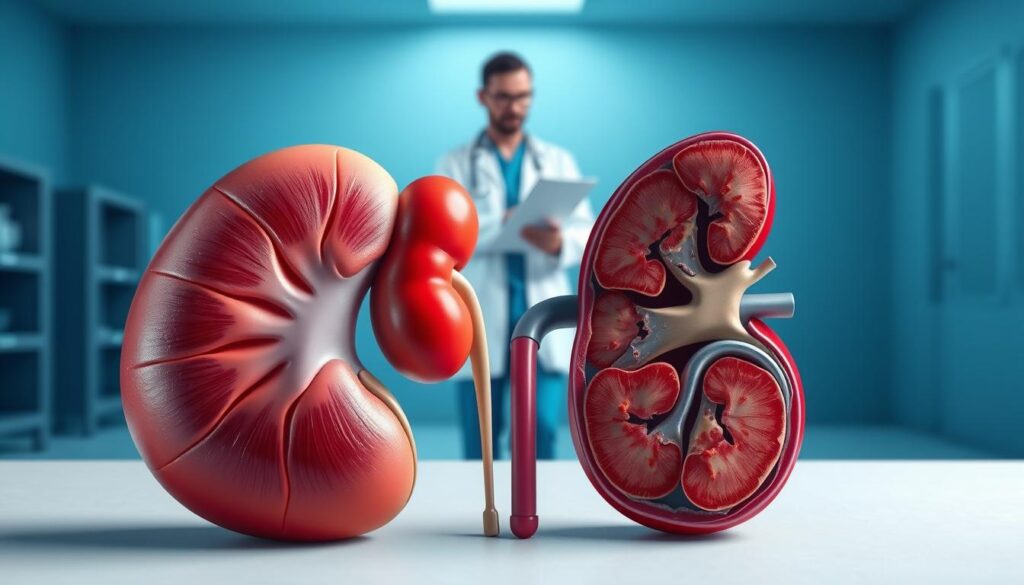
It’s important to know the difference between acute renal failure and chronic kidney disease. This knowledge helps us give the right treatment and care to our patients.
What is Acute Kidney Injury (AKI)?
Acute Kidney Injury (AKI) is when the kidneys suddenly stop working. It can happen due to dehydration, certain medicines, or blockages in the urinary tract. If not treated, AKI can cause serious problems.
The causes of AKI fall into three main groups: prerenal, intrinsic, and postrenal. Prerenal issues are about decreased blood flow to the kidneys. Intrinsic problems damage the kidney tissue itself. Postrenal issues are due to blockages in the urinary tract.
Key risk factors for AKI include:
- Severe dehydration
- Medications such as NSAIDs and certain antibiotics
- Blockages in the urinary tract
- Critical illness
What is Chronic Kidney Disease (CKD)?
Chronic Kidney Disease (CKD) is a long-term condition where the kidneys slowly lose function. It’s often caused by diabetes, high blood pressure, and glomerulonephritis. Unlike AKI, CKD cannot be reversed, but its progress can be slowed down with proper care.
For more information on CKD, you can visit our detailed blog post on acute and chronic kidney.
Common causes and risk factors of CKD include:
- Diabetes
- High blood pressure
- Family history of kidney disease
- Obesity and smoking
“Early detection and management of CKD can significantly improve the quality of life for patients and reduce the risk of complications.” –
Why Understanding These Differences Matters
Knowing the difference between AKI and CKD is key because their treatments and outcomes are different. AKI needs quick action to fix the kidneys, while CKD requires ongoing care to slow its progress. This knowledge helps us tailor our care to meet each patient’s needs, improving their health and life quality.
By understanding AKI and CKD, we can better tackle these conditions. This way, we can provide more effective care for our patients.
5 Key Differences Between AKI and CKD

It’s important to know the differences between Acute Kidney Injury (AKI) and Chronic Kidney Disease (CKD). These two conditions affect the kidneys in different ways. This affects how we treat and manage them.
1. Onset and Development Timeline
AKI and CKD have different timelines. AKI happens suddenly, often in hours or days. CKD, on the other hand, develops slowly over months or years.
Healthline notes that AKI can be reversed if treated quickly. This shows how critical early diagnosis and treatment are.
2. Underlying Causes and Risk Factors
The causes and risk factors for AKI and CKD are different. AKI can be caused by severe dehydration, medication toxicity, or sepsis. CKD, by contrast, is often due to long-term conditions like diabetes and hypertension.
3. Reversibility and Treatment Approaches
AKI and CKD have different treatment options. AKI can often be reversed with quick treatment. CKD, while not reversible, can be managed to slow its progression. Treatment for AKI focuses on addressing the immediate cause, while CKD management involves lifestyle changes and medication.
“Early detection and management of CKD can significantly improve patient outcomes by slowing disease progression and reducing the risk of complications.”
4. Clinical Manifestations and Diagnostic Criteria
The signs and diagnostic criteria for AKI and CKD are different. AKI is diagnosed by a quick drop in kidney function, shown by serum creatinine levels. CKD is diagnosed if there’s kidney damage or decreased function for three months or more.
Conclusion: Implications for Patient Care and Prevention
It’s key to know the difference between AKI and CKD for better patient care. The way we treat these conditions affects how well patients do. By understanding each condition’s unique traits, doctors can create better plans to manage them.
Preventing AKI and CKD is also important. Finding out what causes these problems can help stop them from getting worse. We need to focus on what each patient needs, making our care more effective.
As we learn more about CKD and AKI, we can make patient care even better. By focusing on the differences between these conditions, we can help patients live healthier lives. This improves their overall well-being and quality of life.
FAQ
What is the main difference between Acute Kidney Injury (AKI) and Chronic Kidney Disease (CKD)?
AKI happens suddenly and can often be reversed. CKD, on the other hand, is a slow decline in kidney function over time.
Can AKI occur in patients with pre-existing CKD?
Yes, it’s possible for patients with CKD to also have AKI. This is called Acute Kidney Injury Superimposed on Chronic Kidney Disease.
How do the treatment approaches differ between AKI and CKD?
AKI needs quick and strong treatment to fix the problem. CKD is managed over time to slow its progress and control symptoms.
Are the risk factors for AKI and CKD the same?
Some risks, like diabetes and high blood pressure, are common to both. But AKI is often caused by sudden events like surgery or severe illness. CKD is more related to long-term health issues and lifestyle choices.
Can patients with AKI develop CKD?
Yes, people with AKI might be more likely to get CKD or see their kidney function drop over time. This is why follow-up care is important.
How is Acute on Chronic Kidney Disease managed?
Managing Acute on Chronic Kidney Disease means treating both the sudden injury and the long-term condition. This might include dialysis, changing medications, and supportive care.
What are the implications of misdiagnosing AKI as CKD or vice versa?
Getting the diagnosis wrong can lead to the wrong treatment. This can make things worse for the patient. It’s key to get the diagnosis right to help the patient recover or manage their condition effectively.
How do clinical manifestations differ between AKI and CKD?
AKI shows up suddenly with changes in urine, electrolyte imbalances, and fluid issues. CKD starts slowly with symptoms like tiredness, swelling, and changes in how often you pee.



 Departments
 Related Videos
 Our Doctors
 News
News