
Chronic Kidney Disease (CKD) is a big health problem worldwide. It causes a slow drop in kidney function and damage that lasts for at least 3 months. Knowing how CKD works is key, as it affects about 9.1% to 13.4% of people globally.
CKD affects 788 million people worldwide. It’s important to catch it early and treat it. At Liv Hospital, we offer top-notch nephrology care. We use the latest tests and tailor treatments to each patient.
Key Takeaways
- CKD is a progressive condition affecting millions worldwide.
- Understanding CKD pathophysiology is key for early detection.
- Liv Hospital offers advanced nephrology care and personalized treatment.
- Early intervention can help keep kidney function.
- CKD can cause serious damage if not treated.
Understanding Chronic Kidney Disease
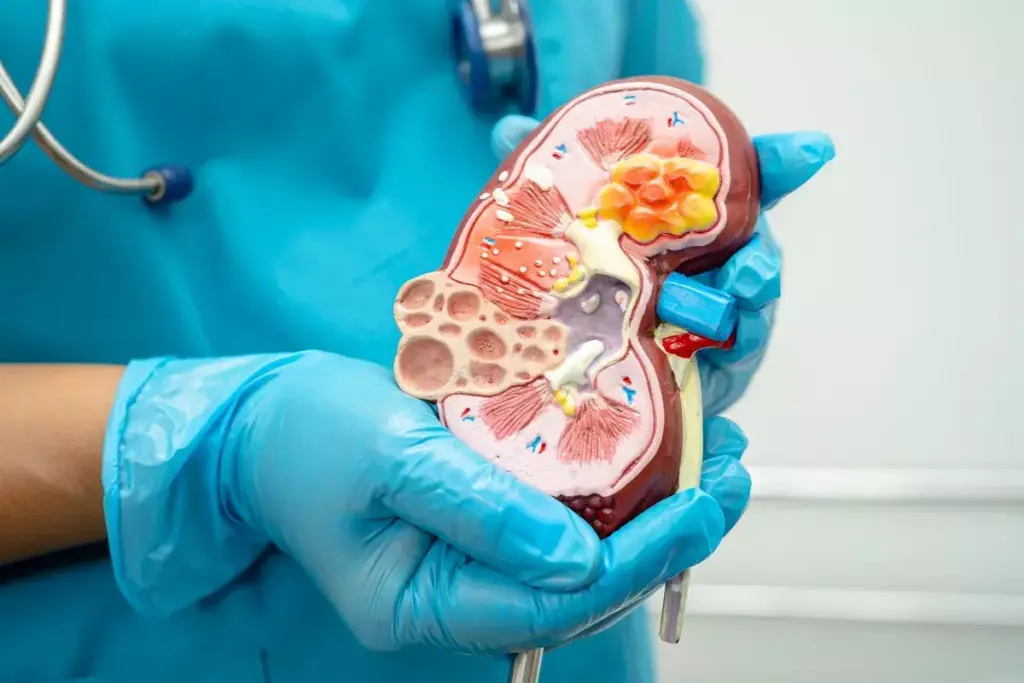
Chronic kidney disease (CKD) affects millions worldwide. It’s important to understand its causes and effects. CKD is complex, needing a detailed approach to fully comprehend it.
Definition and Global Prevalence
CKD slowly damages the kidneys, leading to end-stage renal disease (ESRD) if not treated. It’s common globally, with different rates in different places. Diabetes and high blood pressure are the main causes.
“The growing burden of CKD is a major public health concern,” experts say. Early detection and treatment are key to slowing the disease.
Underlying Mechanisms of Kidney Damage
CKD’s causes are complex, involving many factors. A key factor is the decline in glomerular filtration rate (GFR). This decline leads to scarring and damage in the kidneys.
Proteinuria, or excess protein in the urine, is a sign of kidney damage. It also raises the risk of heart disease. Controlling proteinuria is vital in treating CKD.
Primary Etiologies and Risk Factors
<FEB-3059_image_3>The main causes of CKD are diabetic nephropathy, hypertensive kidney disease, and glomerulonephritis. Diabetes is the top cause, affecting both type 1 and type 2 diabetics. High blood pressure also speeds up kidney damage.
Other risk factors include a family history of kidney disease, obesity, and certain genes. Knowing these risks helps in early prevention and treatment.
Key risk factors for CKD include:
- Diabetes
- Hypertension
- Family history of kidney disease
- Obesity
- Genetic predispositions
Healthcare providers can use this knowledge to develop better strategies. This helps in slowing CKD and improving patient outcomes.
The Pathophysiology of Chronic Kidney Disease: 5 Progressive Stages
Chronic kidney disease (CKD) is a slow loss of kidney function. The 2012 KDIGO classification helps us understand and stage CKD. It looks at glomerular filtration rate (GFR) levels and albuminuria. CKD has five stages, from mild damage in Stage 1 to failure in Stage 5.
The disease’s progression leads to complex changes in the kidneys. As CKD worsens, the kidneys can’t filter waste and excess fluids well. This causes toxins to build up in the body. In Stage 5, patients might need dialysis or a kidney transplant to survive.
Knowing the stages of CKD is key to managing it. We track GFR levels and albuminuria to find the disease’s stage. This helps us create a good treatment plan. For those on hemodialysis, regular sessions are vital for their health.
Managing CKD requires a team effort. This includes lifestyle changes, medications, and sometimes dialysis or a transplant. Understanding CKD helps doctors find better ways to help patients.
FAQ
What is chronic kidney disease (CKD) and how is it defined?
CKD is long-term kidney damage or decreased function lasting over three months, often measured by GFR or markers of kidney damage.
What are the primary causes of CKD?
Diabetes, high blood pressure, glomerulonephritis, and polycystic kidney disease are the main causes.
How does CKD progress, and what are its stages?
CKD progresses gradually from mild kidney damage (stage 1) to kidney failure (stage 5) based on declining GFR.
What is the role of GFR in CKD diagnosis and progression?
GFR estimates kidney function and helps classify CKD stages and monitor disease progression.
What are the treatment options for advanced CKD?
Advanced CKD may require dialysis, kidney transplant, medications, and strict management of complications.
How can CKD progression be slowed or managed?
Controlling blood pressure, blood sugar, diet, and avoiding nephrotoxic drugs can slow CKD progression.
What is the significance of understanding CKD pathophysiology?
Understanding CKD pathophysiology helps target treatments, prevent complications, and predict outcomes.
What are the clinical implications of each CKD stage?
Each CKD stage guides monitoring, treatment intensity, and timing of dialysis or transplant.