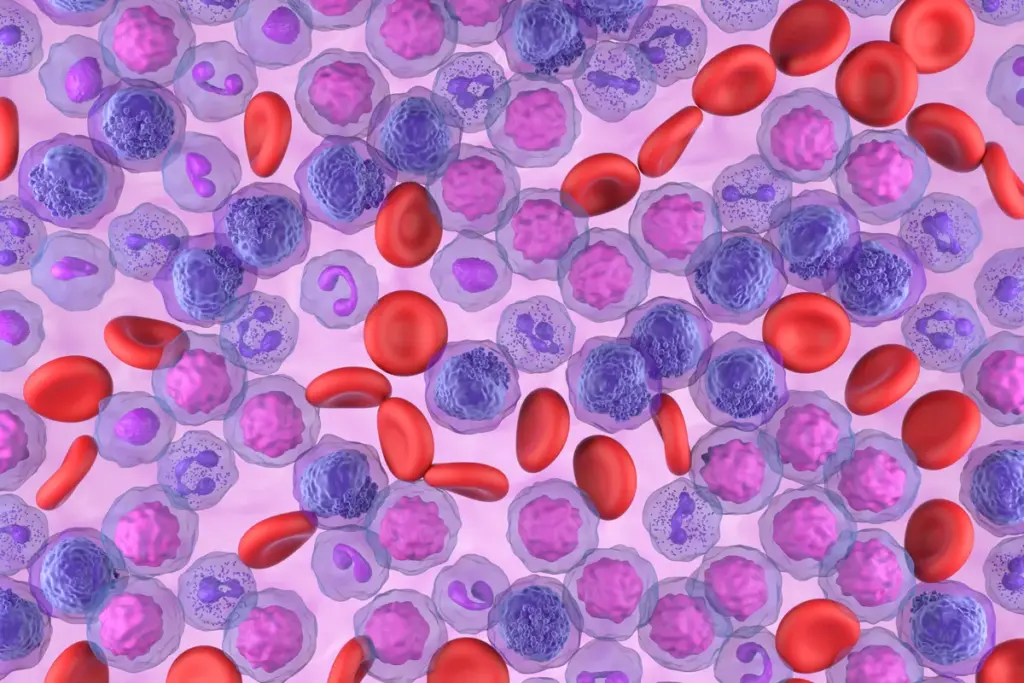
Acute Myeloid Leukemia (AML) is a serious blood cancer that needs quick and strong treatment. Chemotherapy is key in AML treatment. The number of rounds needed changes based on the patient’s risk, age, and genetic makeup.
We will dive into the details of chemotherapy for AML. The first phase, induction therapy, usually has two rounds. Knowing what affects the number of rounds is key for a good treatment plan.
Key Takeaways
- The number of chemotherapy rounds for AML varies based on patient-specific factors.
- Induction therapy is a critical initial phase of AML treatment.
- Genetic mutations and patient health play a significant role in determining treatment protocols.
- Consolidation therapy follows induction therapy to ensure remission.
- Latest research informs the optimal number of chemotherapy rounds for AML.
Understanding Acute Myeloid Leukemia (AML)

Acute Myeloid Leukemia (AML) is a complex cancer. It happens when immature cells grow out of control in the bone marrow. This leads to too many abnormal cells in the blood.
What is AML and How Does it Develop?
AML starts when young blood cells turn cancerous. They keep growing but don’t become healthy blood cells. Genetic mutations are key in AML’s growth. Some mutations help doctors decide how to treat it.
The growth of AML involves many steps. These include genetic changes and changes in the bone marrow. These steps make AML hard to diagnose and treat.
Common Symptoms and Diagnosis
AML symptoms vary but often include fatigue, weight loss, and infections. Doctors use a bone marrow biopsy and genetic tests to diagnose it. These tests look for specific mutations and changes in chromosomes.
Doctors also check the patient’s health and medical history. They use tests like complete blood counts (CBC) and blood smears. Accurate diagnosis is key for the right treatment.
Risk Factors and Classification
Some risk factors increase AML chances. These include chemicals, radiation, and past treatments. AML is more common in older people and those with certain genetic conditions.
AML types are classified by the French-American-British (FAB) and World Health Organization (WHO) systems. These systems look at cell shape, chemical makeup, and genetics. Knowing the AML type helps doctors choose the best treatment.
The Standard Treatment Approach for AML

Acute Myeloid Leukemia (AML) treatment is complex and tailored to each patient. It involves different phases, each with its own goals. This approach helps manage the disease effectively.
Overview of Treatment Phases
AML treatment has several phases: induction, consolidation, and sometimes maintenance. Induction therapy aims to kill leukemia cells in the bone marrow and blood. This phase is key to achieving remission.
Consolidation therapy comes after induction. It targets any remaining leukemia cells that could cause a relapse. This phase is vital to prevent the disease from coming back.
- Induction therapy: The initial treatment aimed at achieving remission.
- Consolidation therapy: Treatment given after induction to eliminate any remaining leukemia cells.
- Maintenance therapy: Some patients may receive maintenance therapy to help prevent relapse.
The Role of Chemotherapy in AML
Chemotherapy is a key part of AML treatment. It uses drugs to kill leukemia cells. The specific drugs and treatment intensity depend on the patient’s health and AML subtype.
The choice of chemotherapy drugs and treatment intensity are based on the patient’s risk category and other factors. For example, patients with certain genetic mutations may need a different chemotherapy approach.
Treatment Goals and Expected Outcomes
The main goal of AML treatment is to achieve complete remission. This means no leukemia cells are found in the bone marrow or blood. The bone marrow should function normally.
Another important goal is to prevent relapse by eliminating any remaining leukemia cells. By understanding AML treatment, including chemotherapy and treatment phases, patients and healthcare providers can work together for the best outcomes.
Typical Number of Chemotherapy Rounds for AML
Chemotherapy for AML is given in two main phases: induction and consolidation therapy. Each phase has its own treatment plan. Knowing about these phases and the usual number of rounds is key for both patients and doctors to manage AML treatment well.
Standard Protocol: Two Rounds of Induction
Induction therapy is the first step in AML treatment, aiming for remission. Most patients get two rounds of induction chemotherapy. The first round is very intense, aiming to kill leukemia cells. The second round targets any remaining cancer cells.
The drugs and doses used can change based on the patient’s health and AML type.
Consolidation Rounds: Typically Three to Four
After remission from induction therapy, consolidation therapy follows to get rid of any leftover leukemia cells. Typically, patients get three to four rounds of consolidation chemotherapy. This phase is vital for lowering relapse risk and boosting long-term survival chances.
The exact number of consolidation rounds may vary. It depends on how well the patient responds to induction therapy and genetic factors.
When Additional Rounds May Be Necessary
Sometimes, more chemotherapy rounds are needed beyond the standard plan. This choice is made based on how well the patient responds to treatment. Factors like measurable residual disease (MRD) and genetic mutations can affect the need for extra treatment. Doctors keep a close eye on patients to figure out the best treatment length.
Induction Therapy: The First Phase of AML Treatment
AML treatment starts with induction therapy, a chemotherapy plan to get the disease into remission. This first step is key in managing the disease and preparing for more treatments.
Standard Induction Chemotherapy Protocols
Induction chemotherapy uses anthracyclines and cytarabine. Anthracyclines like daunorubicin or idarubicin stop DNA and RNA making. Cytarabine is a nucleoside analog that kills cells by stopping DNA making.
The drugs and doses depend on the patient’s age, health, and genetic mutations in the leukemia cells.
Duration and Intensity of Induction Treatment
Induction therapy lasts from several days to a few weeks. The treatment is intense, needing close watch for side effects and complications.
Patients are often in the hospital to handle risks like severe neutropenia and infections.
Measuring Response to Induction Therapy
After induction therapy, patients get checked to see how they responded. This involves bone marrow tests to see if leukemia cells are there.
Complete remission means no leukemia cells in the bone marrow and normal blood counts. This is a big win, showing the treatment worked.
But, if there’s measurable residual disease (MRD), more treatment might be needed. This could include consolidation therapy or targeted treatments.
Consolidation Therapy: Strengthening the Treatment Response
Consolidation therapy is a key part of AML treatment. It aims to get rid of any leftover leukemia cells.
Purpose of Consolidation Therapy
The main goal of consolidation therapy is to lower the risk of AML coming back. It’s very important for those who have already gotten better after the first treatment. This phase helps kill any remaining leukemia cells, making the treatment more effective and improving long-term results.
High-dose chemotherapy is often used in consolidation therapy. A common choice is high-dose cytarabine. It has been proven to help reduce the chance of AML coming back in patients.
High-Dose Cytarabine Regimens
High-dose cytarabine is a mainstay of consolidation therapy for AML. These treatments use much more cytarabine than the first round. High-dose cytarabine has been linked to better outcomes, mainly for those with favorable or intermediate-risk AML.
“The use of high-dose cytarabine during consolidation therapy has become a standard approach in the treatment of AML, giving patients a better chance of long-term remission.”
NCCN Guidelines
Determining the Appropriate Number of Cycles
The number of consolidation cycles needed can change based on several things. These include the patient’s health, the type of AML, and how well they responded to the first treatment. Usually, patients get three to four cycles of consolidation therapy. But, this can be adjusted based on the patient’s specific needs and how well they can handle the treatment.
|
Risk Category |
Typical Number of Consolidation Cycles |
Treatment Considerations |
|---|---|---|
|
Favorable Risk |
3-4 cycles |
High-dose cytarabine is often used |
|
Intermediate Risk |
3-4 cycles |
May involve high-dose cytarabine or other regimens |
|
Poor Risk |
Variable, may include stem cell transplant |
Treatment approach is highly individualized |
Finding the right number of consolidation cycles is complex. It needs careful thought about many factors. By customizing the treatment to each patient, we can increase the chances of long-term remission and better survival rates.
Research Findings on Optimal Chemotherapy Rounds
The UK National Cancer Research Institute AML17 trial has given us key insights into AML treatment. It showed how many rounds of chemotherapy are best. This helps doctors find the right balance between treating the disease well and not overdoing it.
The UK National Cancer Research Institute AML17 Trial
The AML17 trial was a big study on AML treatment. It looked at how many rounds of chemotherapy are best. The goal was to find the most effective way to help patients.
The trial found that more consolidation rounds can lower relapse rates and improve survival. This is important for doctors to consider when planning AML treatment.
“The AML17 trial demonstrated that additional consolidation rounds can improve outcomes for AML patients, but the benefits may vary depending on individual patient factors.”
AML Researcher
Evidence for Three vs. Four Rounds of Consolidation
The AML17 trial compared three vs. four rounds of consolidation therapy. It found that both can work well, but outcomes differ based on the number of rounds.
|
Number of Consolidation Rounds |
Relapse Rate |
Relapse-Free Survival |
|---|---|---|
|
Three Rounds |
35% |
55% |
|
Four Rounds |
25% |
65% |
As the table shows, four rounds of consolidation therapy have a lower relapse rate and better survival. But, it’s important to think about each patient’s needs when deciding on rounds.
Diminishing Returns Beyond Four Rounds
More consolidation rounds can help, but there’s a point where the benefits stop growing. After four rounds, the extra treatment might not be worth the risks and side effects.
When thinking about more than four rounds, we must weigh the benefits against the risks. This decision should be made carefully, considering the patient’s health, how they’re doing with treatment, and other important factors.
In summary, the AML17 trial and other studies have helped us understand the best number of chemotherapy rounds for AML. By looking at the evidence and each patient’s situation, doctors can create better treatment plans.
Risk-Based Approach to AML Treatment Duration
Knowing a patient’s risk category is key to figuring out the best AML treatment time. Acute Myeloid Leukemia (AML) is complex and needs a treatment plan that fits each person. This plan considers genetic mutations, age, and how much disease is left after treatment.
AML is different for everyone, so treatment should match each person’s risk level. This approach helps us find the right balance between treatment strength and length. It aims to be effective while avoiding too much harm.
Low-Risk AML: Treatment Considerations
Low-risk AML patients usually get less intense chemotherapy. They often have good genetics and respond well to initial treatment.
- Reduced Intensity: Less intense treatments help avoid long-term side effects.
- Close Monitoring: Regular MRD checks help adjust treatment as needed.
Intermediate-Risk AML: Balancing Intensity
Intermediate-risk AML patients face a challenge because their treatment response can vary. Treatment length for them depends on several factors and genetic markers.
When planning treatment, we look at:
- Genetic mutations that affect treatment response.
- How much disease is left after initial treatment.
- The patient’s health and how well they can handle treatment.
High-Risk AML: Aggressive Treatment Approaches
High-risk AML patients need aggressive treatment. This might include strong chemotherapy and stem cell transplant for some.
Key considerations include:
- Intensive Induction: Strong chemotherapy to control the disease quickly.
- Consolidation Therapy: High-dose cytarabine or other strong treatments.
- Stem Cell Transplantation: Allogenic stem cell transplant for those who can to lower relapse risk.
Acute Myeloid Leukemia Treatments: Standard and Emerging Options
The treatment for Acute Myeloid Leukemia (AML) is changing fast. New therapies are coming along to help with the old ways of treating it. As we learn more about AML, we’re making treatments better for patients.
Evolution of AML Treatment Protocols
For a long time, AML treatment was mostly chemotherapy. But now, we have new, targeted ways to fight the disease. Targeted therapies aim at the specific genetic problems in AML.
“Targeted therapies have changed AML treatment for the better,” says a top hematologist. This move towards personalized care is a big step forward.
Targeted Therapies Complementing Chemotherapy
Targeted therapies are meant to work alongside chemotherapy, not replace it. This mix can make treatments more effective. For example, FLT3 inhibitors are helping AML patients with certain genetic changes.
- FLT3 inhibitors target the FLT3 gene mutation, which is common in AML patients.
- IDH1/2 inhibitors are another class of targeted therapies showing promise in trials.
Immunotherapy Approaches for AML
Immunotherapy, which uses the immune system to fight cancer, is being looked at for AML. CAR-T cell therapy is being tested in trials and looks promising.
“Immunotherapy is a new area in AML treatment, with the chance for better results and longer survival,” says an expert in blood cancers.
As research goes on, we’ll see even more new treatments for AML patients.
Genetic Mutations and Their Impact on Treatment Decisions
Understanding AML’s genetic mutations is key to creating personalized treatment plans. These mutations greatly affect how AML behaves and responds to treatment.
FLT3, NPM1, and CEBPA Mutations
Genetic mutations like FLT3, NPM1, and CEBPA play a big role in AML treatment. For example, FLT3 mutations often mean a tougher fight against the disease. This might lead to more aggressive treatments, like FLT3 inhibitors.
NPM1 mutations usually point to a better outlook, even without FLT3. Patients with NPM1 mutations might do well with standard chemotherapy. CEBPA mutations also suggest a good prognosis. Double CEBPA mutations can help fine-tune treatment plans further.
|
Mutation |
Prognostic Impact |
Treatment Implications |
|---|---|---|
|
FLT3 |
Poor prognosis |
Consider FLT3 inhibitors, intensive chemotherapy |
|
NPM1 |
Favorable prognosis (without FLT3) |
Standard chemotherapy |
|
CEBPA |
Favorable prognosis |
Standard chemotherapy, potentially less intensive |
IDH1/2 and Other Actionable Mutations
Other mutations, like IDH1 and IDH2, are also key in AML treatment. IDH1/2 mutations can be targeted with specific drugs. This opens up new treatment options for those with these mutations.
Our knowledge of AML’s genetic mutations is growing. This lets us tailor treatments to each patient’s unique genetic makeup.
Tailoring Chemotherapy Rounds to Genetic Profile
The number of chemotherapy rounds needed can change based on the patient’s genetic profile. For instance, patients with NPM1 or CEBPA might need standard chemotherapy. But those with high-risk mutations like FLT3 might need more intense or targeted therapies.
By knowing the genetic details of AML in each patient, we can make better decisions about chemotherapy. This can lead to better treatment results.
Measurable Residual Disease (MRD) and Treatment Adjustments
Measurable residual disease (MRD) testing is key in managing AML. It helps doctors see how well treatment is working and make changes as needed. MRD is the small number of cancer cells left in the body after treatment.
Understanding MRD Testing in AML
MRD testing looks for cancer cells in blood or bone marrow samples. It uses advanced methods like flow cytometry, PCR, or NGS. These tests find cancer cells at very low levels, giving a clear view of treatment success.
Key aspects of MRD testing include:
- Sensitivity: MRD tests can spot one cancer cell among millions of normal cells.
- Specificity: These tests look for specific genetic or immunophenotypic markers of AML cells.
- Quantification: MRD testing not only finds residual disease but also measures its amount.
How MRD Results Affect Treatment Duration
MRD test results are vital in deciding how long and intense AML treatment should be. Patients with no MRD after initial treatment usually have a better outlook. They might need less intense follow-up therapy. On the other hand, those with MRD might need more aggressive or longer treatment.
MRD results can influence treatment decisions in several ways:
- Guiding consolidation therapy: MRD status helps decide if and how intense consolidation chemotherapy should be.
- Informing stem cell transplantation decisions: Patients with positive MRD might be considered for stem cell transplantation.
- Adjusting maintenance therapy: MRD results help decide when and for how long to use maintenance therapies like Onureg.
Monitoring for Relapse After Treatment
MRD testing remains important even after initial treatment ends. Regular MRD checks can spot early signs of relapse, allowing for quick action.
Key considerations for MRD monitoring include:
- Frequency: How often MRD testing is done can depend on individual risk factors and treatment plans.
- Thresholds: Setting the right MRD positivity thresholds is key for making clinical decisions.
- Integration with other assessments: MRD results are usually looked at along with other clinical factors, like patient symptoms and bone marrow biopsy findings.
Stem Cell Transplantation and Its Relationship to Chemotherapy
Stem cell transplantation is a key part of AML treatment. It offers a chance for patients to avoid more chemotherapy. This is important for those with high-risk AML or who didn’t respond well to first treatments.
When Transplantation Replaces Additional Chemotherapy
For some AML patients, stem cell transplantation is a good choice for follow-up treatment. It might replace the need for more chemotherapy. This choice depends on the patient’s health, AML type, and how they did with the first treatment.
Choosing stem cell transplantation means looking at many things. This includes the patient’s genes, any cancer left behind, and other important factors.
Pre-Transplant Conditioning Regimens
Before the transplant, patients get a conditioning regimen. This is to get their body ready for the new stem cells. It usually includes strong chemotherapy and sometimes radiation to kill cancer cells and weaken the immune system.
The type of conditioning regimen depends on the patient’s age, health, and AML details. Some regimens are stronger, while others are gentler, to avoid too many side effects.
Post-Transplant Maintenance Therapy
After the transplant, some patients need maintenance therapy to prevent AML from coming back. This can include drugs like hypomethylating agents or targeted therapies. They help keep the cancer away and support the body’s immune response.
The length and type of maintenance therapy depend on the patient’s risk and how they did with the transplant. It’s important to watch for signs of cancer coming back or GVHD during this time.
Onureg and Other Maintenance Therapies for AML
Onureg, an oral azacitidine formulation, has been approved for AML maintenance therapy. This marks a shift towards more sustainable treatment options. It offers patients a potentially more manageable way to keep treatment responses and prevent relapse.
The Role of Oral Azacitidine in AML
Oral azacitidine, known as Onureg, is key in AML maintenance therapy. Its oral form makes treatment easier for patients who have reached remission after chemotherapy. Onureg has been shown to improve survival in some patients, making it a valuable part of AML treatment.
Duration of Maintenance Treatment
The length of Onureg maintenance treatment varies by patient and response. Treatment usually goes on until disease progression or unacceptable side effects. Studies support Onureg’s effectiveness in keeping remission long-term, but the best treatment length is being studied.
Other Maintenance Approaches Under Investigation
Onureg is not the only option for AML maintenance therapy. Researchers are exploring targeted and immunotherapies to better patient outcomes. They aim to find the most effective maintenance strategies for each patient, considering genetic mutations and other factors.
The treatment landscape for AML is changing, with maintenance therapy playing a bigger role. We can expect more personalized treatments, possibly combining different therapies for better results.
Special Considerations for Elderly AML Patients
Treating Acute Myeloid Leukemia (AML) in older adults needs careful thought. We must consider their health, other health issues, and how well they can handle treatment. As more people live longer, treating AML in older adults is more important. We need to adjust treatment plans to fit their needs.
Modified Treatment Approaches and Reduced Intensity
Older AML patients often can’t handle the strong chemotherapy used for younger people. So, we make treatment plans gentler but effective. We look at the patient’s health, other health issues, and the AML type to choose the best treatment.
Using less chemotherapy or different treatments can help. For example, we might use lower doses or different drugs to reduce side effects. This way, we can fight the disease without harming the patient too much.
Venetoclax Combinations for Older Adults
Venetoclax, a new drug, has changed how we treat older AML patients. It’s often used with other drugs like azacitidine. Venetoclax has shown great results in helping patients live longer and have fewer symptoms.
|
Treatment Regimen |
Complete Remission Rate |
Median Overall Survival |
|---|---|---|
|
Venetoclax + Azacitidine |
66% |
14.7 months |
|
Venetoclax + Decitabine |
61% |
17.5 months |
|
Venetoclax Monotherapy |
19% |
8.4 months |
Balancing Efficacy and Quality of Life
For older AML patients, we aim for remission and a good quality of life. We balance treatment’s benefits with its side effects. This means choosing the right treatment and supporting the patient’s daily life.
By customizing treatment for each patient, we can improve their chances of a good outcome. We also make sure they can enjoy their life as much as possible.
Relapsed and Refractory AML: Additional Treatment Rounds
Patients with relapsed or refractory Acute Myeloid Leukemia (AML) often need more treatment to get into remission. Relapsed AML comes back after treatment and a break. Refractory AML doesn’t respond to first treatment. In both cases, new treatment plans are needed.
Salvage Chemotherapy Approaches
Salvage chemotherapy is a common treatment for relapsed or refractory AML. The goal is to get a second remission, which can be tough. Salvage chemotherapy protocols use many agents to fight leukemia cells better. For example, fludarabine, cytarabine, and G-CSF (FLAG) is used in some cases.
A study in Haematologica shows different salvage chemotherapy regimens have different success rates. This depends on the patient and the disease.
Novel Agents for Resistant Disease
New treatments are being developed for relapsed or refractory AML. These include targeted therapies that target specific genetic mutations in leukemia cells. For example, FLT3 inhibitors like midostaurin and gilteritinib work well in FLT3-mutated AML.
Other new treatments include immunotherapies like checkpoint inhibitors and CAR-T cell therapy. These are being tested in clinical trials to see if they can improve AML treatment.
Clinical Trial Opportunities
For many with relapsed or refractory AML, clinical trials offer new treatments. Clinical trials are key to finding better AML treatments. They give patients new options.
Patients and doctors can find clinical trials on ClinicalTrials.gov. This site lists ongoing studies and who can join. Talking to a healthcare provider about these options can help decide the best treatment.
Conclusion: Personalizing AML Treatment Approaches
Personalized AML treatment is key to better patient care and quality of life. Treatment plans change a lot based on things like risk level, age, genetic changes, and disease presence.
By making treatment plans fit each patient’s needs, we can use fewer chemotherapy rounds. We also add new therapies like targeted treatments and immunotherapy.
New research on genetic changes and disease presence helps guide treatment choices. As we learn more about AML, we can make treatment plans even better. This leads to better care for patients.
In the end, personalized AML treatment helps us give patients more precise and effective care. This leads to better results for those with this complex disease.
FAQ
What is Acute Myeloid Leukemia (AML) and how is it treated?
Acute Myeloid Leukemia (AML) is a serious blood cancer. It needs quick and effective treatment. Treatment often includes chemotherapy. The number of rounds needed depends on several factors.
How many rounds of chemotherapy are typically needed for AML?
For AML, chemotherapy rounds can vary. But, usually, two rounds of induction therapy are followed by three to four rounds of consolidation therapy.
What is the purpose of induction therapy in AML treatment?
Induction therapy is the first step in AML treatment. It aims to remove leukemia cells from the bone marrow.
How is the number of consolidation therapy cycles determined?
The number of consolidation therapy cycles depends on several factors. These include the patient’s response to induction therapy and their risk category.
What is the role of Onureg in AML treatment?
Onureg, or oral azacitidine, is used as maintenance therapy. It helps keep treatment responses going and prevent relapse in AML patients.
How do genetic mutations impact AML treatment decisions?
Genetic mutations, like FLT3, NPM1, and IDH1/2, play a big role in AML treatment. Treatment plans are made based on the patient’s genetic profile.
What is measurable residual disease (MRD) and how does it affect treatment?
Measurable residual disease (MRD) is when leukemia cells are left after treatment. MRD testing helps track treatment success and detect relapse. It can change treatment plans.
What are the treatment options for relapsed and refractory AML?
For relapsed and refractory AML, treatment options include salvage chemotherapy, new drugs, and clinical trials.
How is AML treatment personalized for individual patients?
AML treatment is tailored to each patient. It considers factors like risk category, age, genetic mutations, and treatment response. This approach aims to improve outcomes and quality of life.
What are the special considerations for elderly AML patients?
Elderly AML patients may need special treatment plans. This could include less intense chemotherapy or using venetoclax. The goal is to balance treatment effectiveness and quality of life.
What is the role of stem cell transplantation in AML treatment?
Stem cell transplantation is an option for some AML patients. It replaces more chemotherapy. Pre-transplant and post-transplant care are key parts of treatment.
References
• PMC. Efficacy and Safety of Venetoclax plus Hypomethylating Agents in Relapsed/Refractory Acute Myeloid Leukemia: A Multicenter Real‑Life Experience. https://pmc.ncbi.nlm.nih.gov/articles/PMC11045980/
• Haematologica. Outcomes with intensive treatment for acute myeloid leukemia: an analysis of two decades of data from the HARMONY Alliance. https://haematologica.org/article/view/haematol.2024.285805
• American Cancer Society. Response Rates for Acute Myeloid Leukemia Treatment. https://www.cancer.org/cancer/types/acute-myeloid-leukemia/treating/response-rates.html
• U.S. National Cancer Institute (NIH). AML Treatment PDQ. https://www.cancer.gov/types/leukemia/patient/aml-treatment-pdq
• Blood Cancer Journal. Genomic risk stratification and survival outcomes in AML: meta‑analysis of multicenter trials. https://www.bloodcancerjournal.org/articles/10.1038/s41408‑021‑00493‑x
National Center for Biotechnology Information. Evidence-Based Medical Insight. Retrieved from https://pmc.ncbi.nlm.nih.gov/articles/PMC4786761/