


Cardiology specialist at Liv Hospital.
View doctor profile →


At Liv Hospital, we know how vital accurate diagnosis is in aortic emergencies. Advanced imaging techniques are key in spotting and tracking aortic aneurysms.
We use state-of-the-art CT and MRI scans to help make treatment choices. Our skill in aortic aneurysm imaging helps us give top-notch care to patients from around the world.
Getting precise abdominal aneurysm CT scans is key for diagnosis and planning before surgery. This lets us achieve better results for our patients.
Key Takeaways
- Advanced imaging techniques are vital in finding and tracking aortic aneurysms.
- Liv Hospital uses top CT and MRI scans for diagnosis and treatment.
- Accurate abdominal aneurysm CT scans are essential for diagnosis and planning before surgery.
- Our expertise in aortic aneurysm imaging boosts patient outcomes.
- We offer complete care for international patients looking for advanced medical treatments.
Understanding Aortic Aneurysms and Their Clinical Significance
Aortic aneurysms are serious vascular conditions. They happen when the aorta, the main artery, gets too big. This can lead to serious and life-threatening problems.
It’s important to know about aortic aneurysms. We need to understand their definition, how they happen, and their impact. This helps us find them early and treat them well.
Definition and Pathophysiology of Aortic Aneurysms
An aortic aneurysm is when the aorta gets bigger than normal. It’s at least 1.5 times its usual size. This happens because the aortic wall gets weak.
The wall gets weak because of many reasons. These include inflammation, damage to the aorta’s structure, and cell death. These problems can make the aorta get bigger and bigger, until it might burst.
Epidemiology and Risk Factors
Men over 65 are more likely to get aortic aneurysms, like abdominal aortic aneurysms (AAAs). Other big risks are high blood pressure, smoking, and having a family history of aneurysms.
| Risk Factor | Description | Impact on Aneurysm Development |
|---|---|---|
| Age | Increased risk with advancing age | Higher incidence in individuals over 65 |
| Smoking | Significant risk factor due to vascular damage | Increases the risk of aneurysm formation and rupture |
| Hypertension | Chronic high blood pressure | Contributes to the weakening of the aortic wall |
Clinical Presentation and Natural History
Aortic aneurysms can show up in different ways. Many don’t show symptoms until they burst. This is a medical emergency with a lot of pain and unstable blood pressure.
Knowing how aortic aneurysms progress is key. The bigger they get, the higher the risk of bursting. So, finding them early and keeping an eye on them is very important.
The Importance of Aortic Aneurysm Images in Clinical Management
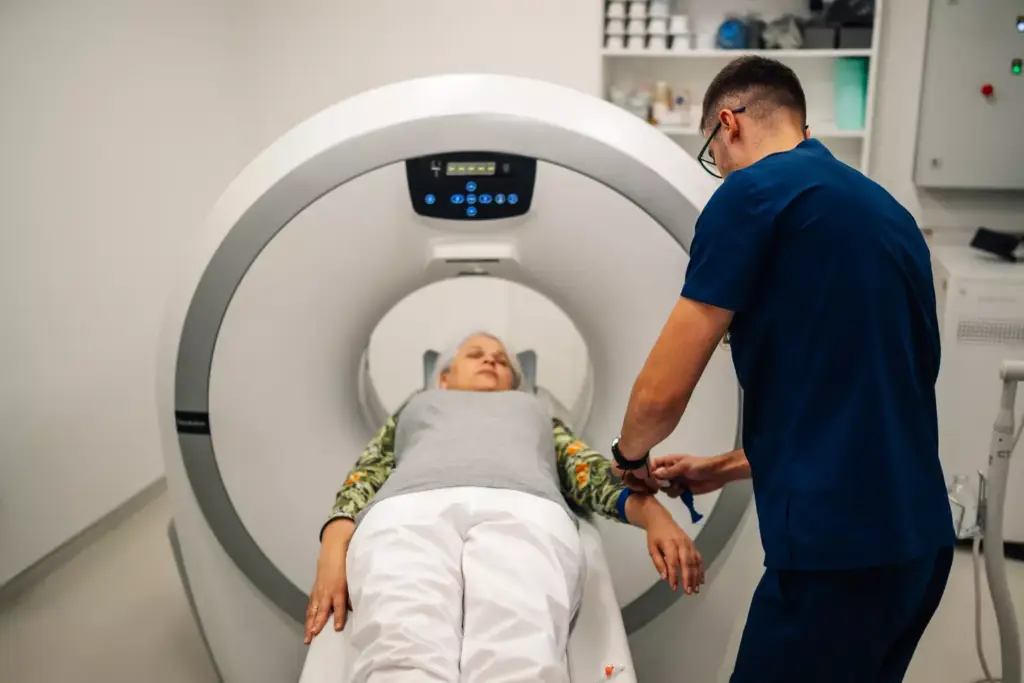
Imaging techniques like CT scans and MRI are key for diagnosing and managing aortic aneurysms. They help us make treatment plans, track how the disease progresses, and prepare for surgery.
Screening and Early Detection Protocols
Screening is vital for catching aortic aneurysms early. We often use CT scans of abdominal aortic aneurysms to screen people at high risk. This includes those with a family history or smokers. Catching it early means better treatment options and outcomes.
CTA AAA (CT Angiography for Abdominal Aortic Aneurysm) gives us detailed views of the aorta. This lets us see the aneurysm’s size, shape, and where it is. Knowing this helps us decide the best treatment.
Monitoring Disease Progression
Keeping an eye on aortic aneurysms is key to see if they’re getting bigger. We use aortic aneurysm CT scans to check on them regularly. This helps us see if they’re getting too big or if they might burst.
By looking at these images, we can spot problems early. This means we can act fast to prevent serious issues. It really helps patients do better.
Pre-operative Planning and Post-operative Surveillance
Before surgery, abdominal aorta imaging is very important. It helps us plan the best way to fix the aneurysm. We look at how it affects nearby areas and plan the best approach.
After surgery, we keep watching patients with more images. This helps us catch any problems, like leaks or stent issues. It’s key to making sure the surgery works well in the long run.
CT Imaging: The Gold Standard for Abdominal Aneurysm CT Scans
CT imaging, like CT angiography, has changed how we look at abdominal aortic aneurysms. It gives us key details for making treatment plans. CT scans show us the size, shape, and any problems with the aneurysm.
CT Angiography (CTA AAA) Technique and Protocol
CT angiography uses contrast to see the aorta and its branches clearly. The steps for a CTA AAA scan include:
- Non-contrast CT to find calcifications and other issues
- Contrast-enhanced CT angiography to measure the aneurysm and check branches
- Delayed phase imaging to spot endoleaks or other issues
This method helps us fully check abdominal aortic aneurysms. It guides us in deciding the best treatment and planning surgery.
Non-contrast vs. Contrast-enhanced CT Imaging
Non-contrast and contrast-enhanced CT scans both help with abdominal aortic aneurysm checks. Non-contrast CT finds wall calcification and measures size without contrast. Contrast-enhanced CT shows more about the aneurysm’s shape, including thrombi and branch involvement.
Key differences between non-contrast and contrast-enhanced CT include:
| Imaging Type | Advantages | Limitations |
|---|---|---|
| Non-contrast CT | No contrast needed, quick calcification check | Less detail on aneurysm shape |
| Contrast-enhanced CT | More detailed aneurysm shape, branch checks | Needs contrast, might cause kidney issues |
3D Reconstruction and Centerline Analysis
3D reconstruction and centerline analysis add to our aneurysm checks. They give us precise info on size, shape, and direction. This helps in accurate measurements and planning for surgery.
Using these advanced imaging methods, we can better diagnose and treat abdominal aortic aneurysms. This leads to better patient care.
MRI in Aortic Aneurysm Evaluation: Applications and Benefits
Magnetic Resonance Imaging (MRI) is a key tool for checking aortic aneurysms. It’s a non-invasive way to see the aorta without using harmful radiation. This makes MRI a good choice for some patients.
Abdominal Aortic Aneurysm MRI Techniques
Techniques for MRI of abdominal aortic aneurysms have improved a lot. We use ECG-gated MRI sequences to get clear images of the aorta. Contrast-enhanced MRI helps us see blood flow and check for leaks in stent grafts.
We keep improving our MRI methods. This lets us give more accurate info on aneurysm size and shape. This info is key for planning treatment and tracking the disease.
Advantages for Young Patients and Contrast-Allergic Individuals
MRI is great for young patients and those allergic to contrast. It avoids harmful radiation and contrast agents. A study found MRI is safe and effective for monitoring young patients with aortic aneurysms.
“The use of MRI in vascular diseases has revolutionized the way we diagnose and manage aortic aneurysms, particular in populations that are sensitive to radiation or contrast agents.”
Specialized MRI Sequences for Wall Characterization
Special MRI sequences help us understand the aortic wall and aneurysm shape. We use black-blood imaging to check wall thickness and look for inflammation. 4D flow MRI helps us see blood flow and find unstable areas.
These advanced MRI methods give us a full view of aortic aneurysms. They help us make better treatment plans and improve patient care.
Ultrasound Imaging for AAA: Screening and Limitations
Ultrasound is a key tool for finding AAA. It’s non-invasive and easy to use. This makes it a top choice for screening.
AAA Ultrasound Images: Acquisition and Interpretation
Getting AAA ultrasound images needs a careful method. Sonographers must know how to spot the aorta and measure it right. They also need to understand what’s normal and what’s not.
The quality of these images is very important. Things like how fat the patient is and gas in the bowel can mess with the image.
Sensitivity and Specificity in Different Patient Populations
Ultrasound’s ability to find AAA changes with different people. It works well in thin folks but not as much in fat ones.
It’s really good for checking older men for AAA. This is because they are more likely to have it.
Point-of-Care Ultrasound in Emergency Settings
Point-of-care ultrasound is used in emergencies to check for AAA. It helps doctors make quick decisions. This can save lives, like in cases of a ruptured aneurysm.
Even though ultrasound imaging for AAA has its downsides, it’s very useful in emergencies. It’s key to know its limits and use it as part of a full check-up.
Interpreting Aortic Aneurysm Images: Size, Shape, and Location
Understanding aortic aneurysm images is key for making treatment plans. We look at size, shape, and where it is. These details help us decide on treatment and how risky it is.
Finding 1: Aneurysmal Dilation Beyond 3cm
When the aorta gets bigger than 3cm, it’s a big deal. This size increase raises the risk of it bursting. CT imaging helps us measure this accurately. We use abdominal aortic aneurysm CT images to check the size and watch for changes.
Finding 2: Morphological Patterns (Fusiform vs. Saccular)
The shape of an aortic aneurysm tells us a lot about its risk. Fusiform aneurysms grow evenly, while saccular aneurysms are more localized. Knowing this helps us figure out the best way to manage it.
Finding 3: Anatomical Distribution and Branch Vessel Involvement
Where the aneurysm is and how it affects nearby vessels is very important. We check if it’s near big arteries like the renal or visceral arteries. This affects how we plan surgery. Interpreting aortic aneurysm images means knowing the aorta’s layout well.
By looking closely at aortic aneurysm CT images, we make better choices for patients. We weigh the risks and benefits of each treatment option carefully.
Wall Abnormalities and Complications on CT and MRI
Aortic aneurysm wall abnormalities seen on CT and MRI give us important insights. These tests help us see complications that affect treatment plans.
Finding 4: Mural Thrombus Formation and Significance
Mural thrombus formation in aortic aneurysms is common and detectable on CT and MRI. The presence of a mural thrombus greatly affects risk assessment and treatment.
CT angiography (CTA) is key for spotting mural thrombi. It’s very sensitive and specific. The size and location of the thrombus are critical for understanding the risk of embolization or aneurysm rupture.
| Thrombus Characteristic | Clinical Significance |
|---|---|
| Size | Larger thrombi may increase the risk of embolization |
| Location | Thrombi near branch vessels may increase the risk of organ infarction |
Finding 5: Wall Calcification Patterns and Distribution
Wall calcification is a key feature seen on CT scans. The pattern and distribution of calcification offer insights into the aneurysm’s stability and rupture risk.
A study on Mayo Clinic shows that calcification extent and distribution relate to rupture risk.
“The presence of extensive calcification in the aneurysm wall may indicate a more stable lesion, though not always.”
Finding 6: Inflammatory Changes and Periaortic Fibrosis
Inflammatory changes and periaortic fibrosis are serious complications of aortic aneurysms. MRI and CT scans can detect these, with MRI being better for inflammation extent.
Inflammatory aortic aneurysms have a thickened wall and surrounding inflammation. This can cause issues like ureteral obstruction or vascular stenosis.
Managing inflammatory aneurysms often involves medical therapy to reduce inflammation and surgery to address the aneurysm.
Critical Signs of Rupture and Instability on Aortic Aneurysm Images
It’s vital to spot signs of rupture and instability in aortic aneurysm images quickly. A ruptured aortic aneurysm is a serious condition that needs immediate care. Imaging helps doctors find these signs and decide on the best treatment.
The “Draped Aorta” Sign and Its Significance
The “draped aorta” sign is a key warning of an unstable aneurysm. It shows the aorta covering the vertebral bodies, meaning it’s lost its usual shape. This means the aneurysm is at high risk of bursting.
Retroperitoneal Hemorrhage Detection
Retroperitoneal hemorrhage is a sign of aneurysm rupture. On scans, it looks like a blood collection in the back of the abdomen. Finding it fast is critical for emergency care.
- Key Features: Hyperdense collection on CT, indicating blood
- Location: Retroperitoneal space, often near the aorta
- Clinical Implication: Indicates rupture, requiring immediate surgery
Rapid Expansion and Growth Rate Assessment
An aortic aneurysm growing fast is a sign of instability. It’s important to keep an eye on how big it gets. If it grows more than 5 mm in 6 months, it’s a big deal.
- Regular imaging checks are key for at-risk aneurysms.
- Watching how fast it grows helps plan when to act.
Post-EVAR Complications and Endoleak Classification
EVAR is a common treatment for aortic aneurysms. But, complications like endoleaks can happen. Endoleaks are divided into types based on why they happen.
| Type | Description |
|---|---|
| Type I | Leak at the proximal or distal graft attachment site |
| Type II | Retrograde flow from branch vessels |
| Type III | Leak through graft fabric or junctional separation |
Knowing these signs and complications is key to managing aortic aneurysms well. Quick detection and the right treatment can greatly improve patient results.
Conclusion: From Imaging Findings to Clinical Decision-Making
Imaging findings are key in deciding how to treat aortic aneurysms. Information from scans like the abdominal aortic aneurysm CT scan helps doctors choose the best treatment. We’ve talked about how CT angiography and MRI help in this process.
Good decision-making in healthcare depends on accurate imaging results. Knowing the aneurysm’s size, shape, and location helps doctors plan treatment. This might include surgery, endovascular repair, or watching and waiting.
Using imaging findings helps doctors give the best care for aortic aneurysm patients. Advanced imaging helps improve patient results and lowers risks. As we keep improving in treating aortic aneurysms, imaging will stay a big part of making decisions.
What is an aortic aneurysm, and how is it diagnosed?
An aortic aneurysm is when the aorta gets too big, bigger than 3cm. Doctors use CT scans, MRI, or ultrasound to find it. CT scans are the best way to see it.
What is the role of CT imaging in managing abdominal aortic aneurysms?
CT imaging, like CT angiography (CTA), is key in finding and managing aortic aneurysms. It shows the size, shape, and where the aneurysm is. This helps doctors decide how to treat it.
How does MRI compare to CT in evaluating aortic aneurysms?
MRI is a good choice for looking at aortic aneurysms, mainly for young people or those allergic to contrast. It shows detailed pictures of the aneurysm without using harmful radiation.
What are the advantages and limitations of using ultrasound for AAA screening?
Ultrasound is good for checking for aortic aneurysms because it’s safe and doesn’t use radiation. But, it might not catch every case, mainly in heavy people or those with complex anatomy.
How are aortic aneurysm images interpreted to guide clinical decision-making?
Doctors look at images to see how big, shaped, and located the aneurysm is. They also check for things like blood clots or signs of a rupture. This helps decide if surgery is needed.
What is the significance of the “draped aorta” sign on CT scans?
The “draped aorta” sign on CT scans means the aneurysm might burst or is about to. Seeing this sign is very important for quick action.
How are post-EVAR complications and endoleaks classified on imaging studies?
After EVAR, doctors use CT angiography to check for problems and endoleaks. They classify them based on type and location. This helps decide what to do next.
What is the role of 3D reconstruction and centerline analysis in evaluating aortic aneurysms?
3D reconstruction and centerline analysis help doctors understand the aneurysm’s shape and size. They also see how it affects nearby blood vessels. This helps plan treatment.
How do imaging findings influence treatment decisions for aortic aneurysms?
What imaging shows is very important for deciding how to treat aortic aneurysms. It helps doctors know the risk and plan the best treatment. It also helps keep track of how the disease is changing.
References
- Kumar, Y., & Sharma, S. (2017). Abdominal aortic aneurysm: Pictorial review of common imaging findings. Journal of Clinical Imaging Science, 7, 1–8. https://doi.org/10.4103/jcis.JCIS_35_17
- Schwartz, S. A., & McGahan, J. P. (2007). CT findings of rupture, impending rupture, and contained rupture of abdominal aortic aneurysm. American Journal of Roentgenology, 188(6), 1483–1491. https://doi.org/10.2214/AJR.05.1554
- Radiopaedia.org. (n.d.). Abdominal aortic aneurysm rupture. Retrieved October 23, 2025, from https://radiopaedia.org/articles/abdominal-aortic-aneurysm-rupture-2
- Life in the Fast Lane (LITFL). (2024, June 3). Abdominal CT: Aortic aneurysm. Retrieved October 23, 2025, from https://litfl.com/abdominal-ct-aortic-aneurysm/
- American Journal of Roentgenology. (2007). CT findings of rupture, impending rupture, and contained rupture of abdominal aortic aneurysm. American Journal of Roentgenology, 188(6), 1483–1491. https://doi.org/10.2214/AJR.05.1554


