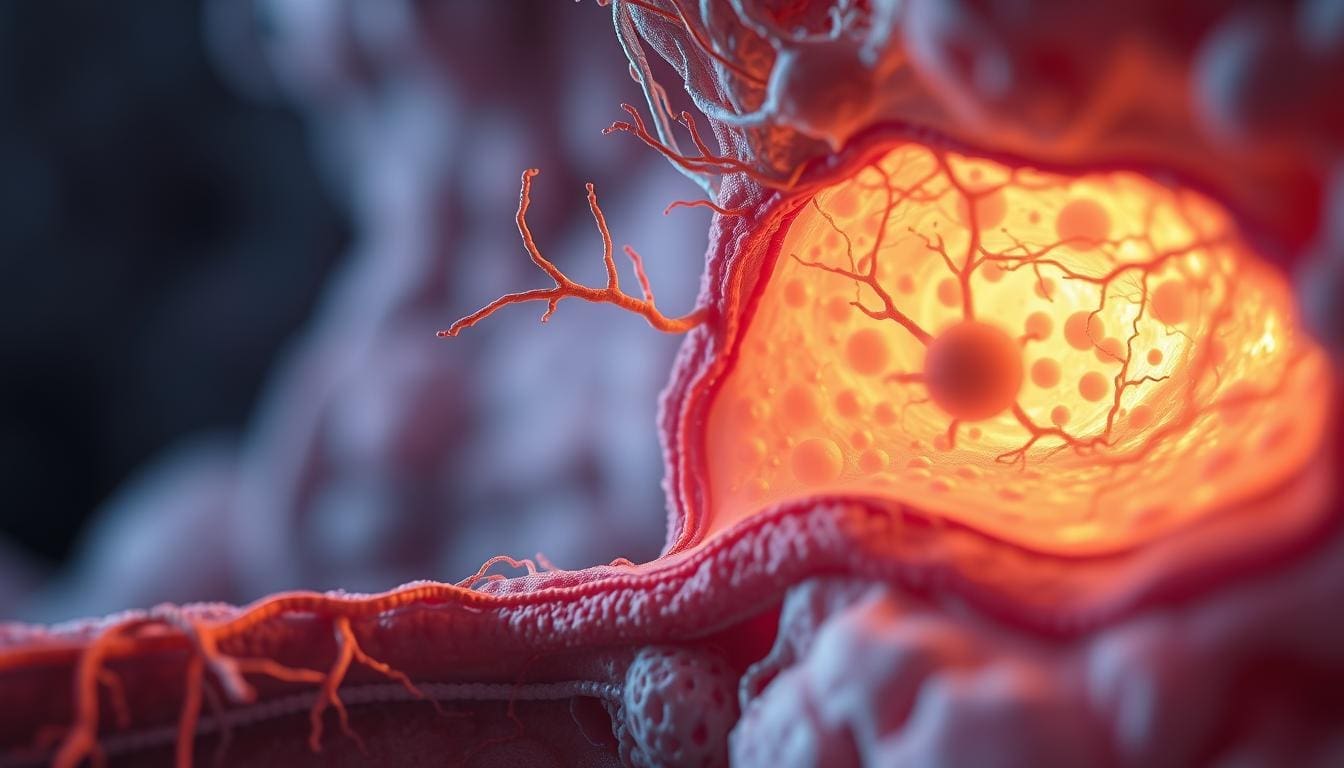
We dive into the key role of stroma in biology. It’s a vital part that supports life at the cellular level in both plants and animals. The stroma structure is essential for support and helps with many cellular processes.
In plant cells, chloroplasts have stroma. This fluid-filled area is key for carbon fixation in photosynthesis. It shows how important stroma function is for plants to make energy.
At Liv Hospital, we stress the need to know about stroma. It’s vital for keeping tissues healthy and helping cells talk to each other.
Key Takeaways
- The stroma is a vital connective framework in both plant and animal tissues.
- Stroma in chloroplasts is key for carbon fixation during photosynthesis.
- Understanding stroma structure and function is essential for insights into cellular processes.
- Stroma plays a vital role in tissue repair and intercellular communication.
- Liv Hospital provides authoritative insights into the role of stroma in health and disease.
The Fundamental Nature of Stroma in Biological Systems
Stroma is a key part of biology, acting as a support for cells and keeping tissues in shape. It’s not just a simple structure; it’s active in many biological processes. This includes cell signaling, metabolism, and managing the extracellular matrix.
Definition and Evolutionary Significance
The term “stroma” describes the tissue that surrounds cells and organs. In chloroplasts, it’s the area where photosynthesis happens. The evolution of stroma is linked to the development of life, showing its vital role.
“The stroma is a critical component in the biology of cells and tissues, providing not only structural support but also playing a key role in cellular homeostasis and function.”
The history of stroma is tied to the rise of eukaryotic cells. It has been essential for integrating various cell functions.
Stroma as a Biological Framework
In both plants and animals, stroma acts as a framework for cell activities. In plants, it’s vital for photosynthesis, housing enzymes for the Calvin cycle. In animals, it supports structure and aids in repair and regeneration.
| Organism | Role of Stroma | Key Functions |
|---|---|---|
| Plants | Photosynthetic Stroma | Calvin Cycle, Photosynthesis |
| Animals | Stromal Tissue | Tissue Repair, Structural Support |
The stroma’s role is complex, supporting cell structure and enabling biochemical processes.
Understanding stroma’s role is key to seeing its importance in biology. By looking at its functions in different organisms, we learn about its universal and specific roles.
Understanding Biology Stroma in Plants and Animals
In biology, stroma has different meanings for plants and animals. We’ll look at what makes stroma special in each group. We’ll see what’s alike and what’s different.
Distinguishing Characteristics in Different Organisms
Stroma in plants and animals has unique traits. In plants, it’s a part of chloroplasts filled with important stuff for photosynthesis. Animals have stroma made of connective tissue and fibers, helping with structure and function.
The makeup of stroma is quite different. Plant stroma has enzymes for photosynthesis. Animal stroma has fibroblasts, collagen, and more for support.
Functional Similarities and Differences
Stroma in plants and animals has some common uses. It helps with structure and supports cell functions. But, their main jobs are different based on the organism’s needs.
| Characteristics | Plant Stroma | Animal Stroma |
|---|---|---|
| Location | Within chloroplasts | Connective tissue |
| Composition | Enzymes, DNA, ribosomes | Fibroblasts, collagen, extracellular fibers |
| Primary Function | Photosynthesis, carbon fixation | Tissue structure, support, and repair |
Plant stroma is key for photosynthesis. Animal stroma is important for tissue health and repair. Knowing these differences helps us understand stroma’s role in biology.
Chloroplast Stroma: The Powerhouse of Photosynthesis
Chloroplast stroma is where photosynthesis’s light-independent reactions happen. It’s a key part of turning light into chemical energy. This supports life on Earth.
The stroma is filled with enzymes, like ribulose-1,5-bisphosphate carboxylase/oxygenase (rubisco). Rubisco is vital for turning CO2 into organic compounds. This is key for photosynthesis.
Molecular Composition and Organization
The stroma’s molecular makeup is complex. It has many enzymes and proteins for photosynthesis. It also has chloroplast DNA and ribosomes for making proteins.
These parts are organized well. This helps energy move and store efficiently. The enzymes and proteins work together to keep reactions running smoothly.
Genetic Material Within the Stroma
The stroma has chloroplast DNA. This DNA carries the genes for proteins needed in photosynthesis. It also has ribosomes to make these proteins.
This genetic material lets the stroma make its own proteins. This is important for photosynthesis to work well. It helps chloroplasts function efficiently.
The Calvin Cycle: Stroma’s Role in Carbon Fixation
The stroma in chloroplasts is key in fixing CO2 into organic compounds. It uses ATP and NADPH energy from the light-dependent reactions. This shows how vital the stroma is in photosynthesis.
Biochemical Pathways in the Stroma
The Calvin cycle happens in the stroma of chloroplasts. It’s a complex process that turns CO2 into glyceraldehyde 3-phosphate (G3P) with ATP and NADPH energy. This is essential for making glucose and other organic compounds.
The cycle has three stages: carbon fixation, reduction, and regeneration. In the first stage, CO2 is turned into 3-phosphoglycerate (3-PGA) by RuBisCO. The second stage uses ATP and NADPH to change 3-PGA into G3P. The third stage regenerates RuBP for the cycle to keep going.
Energy Transfer and Storage Mechanisms
ATP and NADPH from the light-dependent reactions are key for the Calvin cycle. ATP gives energy for changing 3-PGA into 1,3-bisphosphoglycerate (1,3-BPG). NADPH is the reducing agent for changing 1,3-BPG into G3P. This energy transfer is vital for fixing CO2 into organic compounds.
The G3P molecules are used to make glucose and other carbs. These carbs store energy for the plant. They also support herbivores and, in turn, carnivores in the food chain.
Animal Stromal Architecture and Extracellular Matrix
The stroma in animals is a complex network that supports organs and tissues. It’s vital to understand its interactions to see its health role.
Fibroblasts: The Architects of Animal Stroma
Fibroblasts are key cells that make and organize the extracellular matrix in animal stroma. They are essential for keeping tissue structure and helping with repairs. These cells are not just passive; they actively shape their environment with various matrix components.
The work of fibroblasts shapes the stroma’s characteristics. For example, they turn into myofibroblasts to close wounds by contracting them. This shows how important fibroblasts are in healing and regenerating tissues.
Structural Components and Their Organization
The extracellular matrix has components like collagen, glycoproteins, and proteoglycans. The way these components are arranged is key for mechanical support and cell migration. The specific arrangement of these molecules greatly affects the stroma’s function.
- Collagen fibers give the stroma tensile strength.
- Glycoproteins, like fibronectin, help cells stick and move.
- Proteoglycans, such as hyaluronic acid, add hydration and elasticity.
It’s important to understand the complex organization of these components. This helps us see the stroma’s role in animal tissues. We keep studying stromal architecture to understand its health and disease significance.
Structural Support and Organ Integrity Functions
The stroma is key in keeping organs working right. It gives structural support that keeps organs and tissues in shape. This support is vital for their proper function.
Anchoring Mechanisms for Organs and Tissues
The stroma holds organs and tissues in place. It acts like a scaffold, keeping them where they need to be. This is important to stop them from moving around and to make sure they work well.
In organ transplants, the stroma’s role is even more critical. It helps the new organ stay in place and blend in with the body. Experts say, “The stromal layer is key for the graft to heal and work right with the host.”
“The integrity of the stromal layer is vital for tissue engineering and regenerative medicine to succeed.”
| Organ/Tissue | Stromal Function | Anchoring Mechanism |
|---|---|---|
| Liver | Supports hepatocytes | Fibroblastic connections |
| Kidney | Maintains renal architecture | Extracellular matrix |
| Heart | Facilitates cardiac function | Collagenous framework |
Vascular and Neural Network Support
The stroma also helps organize blood and nerve networks. This is key for getting oxygen, nutrients, and signals to cells. It keeps tissues healthy.
Supporting blood vessel growth is a big part of the stroma’s job. This is essential for fixing and growing tissues.
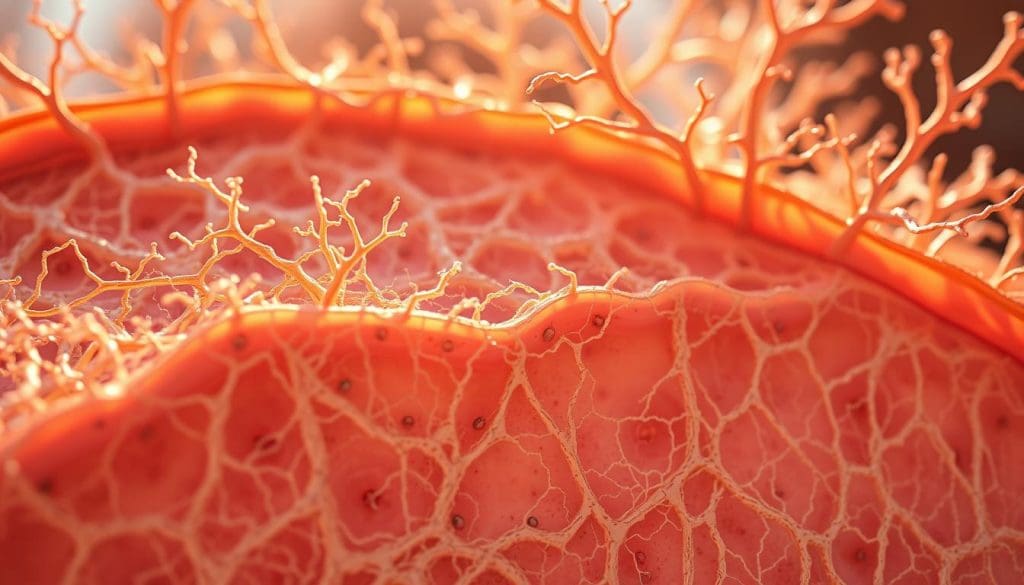
The stroma does a lot to keep organs healthy. It supports their structure and helps with blood and nerve systems. Knowing how it works is important for new treatments that target the stroma.
Stroma’s Critical Role in Tissue Repair and Regeneration
The stroma is key in tissue repair and regeneration. It helps the healing process by using many cellular and molecular ways. These work together to fix the tissue.
When a wound heals, the stroma helps in many steps. It’s involved in the inflammatory response, tissue remodeling, and making new tissue parts. This is vital for fixing tissue function and helping it grow back.
Wound Healing Cascade and Stromal Involvement
The wound healing process is complex and well-organized. It involves many cell types, like fibroblasts, endothelial cells, and immune cells. The stroma gives these cells a place to move, grow, and change, helping fix the tissue.
Fibroblasts, important cells in the stroma, make new tissue parts. They create collagen and other proteins in the extracellular matrix. This is key for making the tissue strong and functional again.
Inflammatory Response Regulation
The stroma also controls the inflammatory response during healing. The stromal cells work with immune cells. They help keep the inflammation in balance.
If the inflammation gets out of balance, healing can be slow. This shows how important the stroma is in keeping the tissue healthy. By managing the inflammation, the stroma helps the healing process go smoothly.
Intercellular Communication Through the Stromal Network
The stroma is a key part of how cells talk to each other. It has many signaling molecules and growth factors. These help cells share important information and affect their actions.
Signaling Pathways and Molecular Mediators
The stromal matrix is full of signaling molecules. These include growth factors, cytokines, and chemokines. They are vital for cell communication and control many cell processes.
These molecules can come from cells in the stroma or from other tissues. They create a network of signals. This network helps cells work together.
There are many ways these signals can work. Cells can send signals to nearby cells or to themselves. This helps cells respond to their environment.
| Signaling Molecule | Function | Cellular Source |
|---|---|---|
| Growth Factors (e.g., VEGF, FGF) | Promote cell proliferation and differentiation | Fibroblasts, Endothelial Cells |
| Cytokines (e.g., IL-1, TNF-α) | Regulate immune responses and inflammation | Immune Cells, Fibroblasts |
| Chemokines (e.g., CXCL12) | Direct cell migration and recruitment | Endothelial Cells, Fibroblasts |
Cell-to-Cell Interactions in the Stromal Matrix
The stromal matrix does more than just hold cells together. It also helps cells talk to each other. Cells can touch each other or send signals through the matrix.
These interactions are key for keeping tissues healthy. They help tissues respond to damage and control how cells behave. The complex relationship between cells and the matrix is vital for tissue function.
Adaptive Responses to Environmental Stress
The stroma is key in handling adaptive responses to fight off environmental stress. This is vital for keeping cells balanced and the whole organism healthy.

Protective Mechanisms Under Extreme Conditions
When things get tough, the stroma uses protective mechanisms to protect cells. It turns on stress-response pathways and makes protective proteins.
| Protective Mechanism | Function |
|---|---|
| Stress-response pathways | Activate cellular defense mechanisms |
| Production of protective proteins | Shield cells from damage |
| Antioxidant defenses | Neutralize harmful free radicals |
Metabolic Adjustments in Response to Stress
When faced with environmental stress, the stroma makes big metabolic adjustments. It changes genes and enzymes to keep cells stable.
- Changes in gene expression to modulate stress responses
- Alterations in enzyme activity to optimize metabolic pathways
- Shifts in energy metabolism to support cellular defense mechanisms
Through these strategies, the stroma is essential in safeguarding cells and tissues from environmental stress.
Cutting-Edge Research in Stroma Biology
New imaging and molecular techniques have changed how we study the stroma. These advances have greatly improved our understanding of the stroma. They have shown us new things about its function and how it works.
Advanced Imaging and Molecular Techniques
Super-resolution microscopy and live-cell imaging have made it easier to see the stroma. These tools have given us important details about how stromal cells interact with their surroundings. Single-cell RNA sequencing has also helped us learn more about the stroma’s genetic makeup.
Recent studies have used these advanced methods to study the stroma’s role in cell communication and stress response. For example, the stroma helps control inflammation and aids in tissue repair. These discoveries are important for understanding diseases and finding new treatments.
Recent Discoveries in Stromal Function
Recent research has shown that the stroma is more than just a passive structure. It actively participates in cell communication and adaptation. Stromal cells can send signals to nearby cells, influencing their growth and development.
Studies have also found that the stroma is involved in diseases like cancer and fibrosis. Knowing how the stroma affects these conditions is key to creating effective treatments. As we learn more about the stroma, we’re finding new ways to treat diseases.
Stroma in Disease Processes and Therapeutic Applications
The stroma is more than just a simple structure. It plays an active role in disease, opening up new ways to treat illnesses. We’re learning how changes in the stroma affect different diseases. This knowledge is vital for creating better treatments.
Stromal Alterations in Pathological Conditions
Many diseases, like cancer and fibrosis, are linked to changes in the stroma. In cancer, the stroma helps tumors grow and spread. Understanding these changes is essential for making targeted treatments.
In fibrotic diseases, too much extracellular matrix harms organs. The stroma’s role in inflammation and repair is key. Changing how stromal cells work might stop or reverse these diseases.
Targeting Stroma for Therapeutic Interventions
Targeting the stroma for treatments is a promising area. Scientists are looking into ways to change stromal cell activity and the extracellular matrix. This could help prevent or treat diseases.
- Stromal cell therapy: Using stromal cells for healing and controlling the immune system.
- Extracellular matrix targeting: Creating therapies to change the ECM and fix tissue problems.
- Anti-fibrotic therapies: Trying to stop too much ECM buildup in fibrotic diseases.
By focusing on the stroma, we can find new ways to treat diseases. This approach can help with conditions that are hard to manage now.
Conclusion
We’ve looked into the complex world of biology stroma. It’s a key part of both plant and animal tissues. The stroma helps keep cells balanced, deals with stress, and supports many cell activities.
The stroma’s role is clear in photosynthesis, fixing tissues, and talking between cells. Knowing about biology stroma helps us see how important it is for organs and tissues to stay healthy.
As we learn more about stroma biology, we find out how it affects diseases and new treatments. Its complex nature makes it a vital area to study. It helps us understand biology and medicine better.
By understanding stroma’s role, we see the detailed ways living things work. It’s a fascinating area that helps us grasp the complexity of life.
FAQ
What is the primary function of the stroma in biological systems?
The stroma acts as a framework for cells. It supports organelles and helps with processes like photosynthesis and tissue repair. It also aids in communication between cells.
How does the stroma contribute to photosynthesis in plants?
In plants, the stroma in chloroplasts is key for photosynthesis. It has enzymes like rubisco that turn CO2 into organic compounds. It also holds chloroplast DNA and ribosomes for making proteins.
What is the role of the stroma in animal tissues?
In animals, the stroma is made of connective tissue cells and matrix. It gives structural support and helps with tissue repair and regeneration. It also plays a big role in immune responses.
How does the stroma facilitate intercellular communication?
The stroma helps cells talk to each other by exchanging signals and molecules. It has signaling molecules and growth factors in its matrix. These influence cell behavior and keep tissues in balance.
What is the significance of the stroma in maintaining organ integrity?
The stroma supports the structure of organs and tissues. It helps organize vascular and neural networks. It also ensures cells get oxygen, nutrients, and signals.
How does the stroma respond to environmental stress?
The stroma can adjust its metabolism to handle stress. It changes gene expression and enzyme activity. This protects cells and tissues from harm.
What is the relationship between the stroma and disease processes?
Changes in the stroma are linked to many diseases. Targeting the stroma could offer new ways to prevent or treat diseases.
What recent advances have enhanced our understanding of stroma biology?
New imaging and molecular techniques have greatly improved our knowledge of stroma biology. They’ve given us new insights into its function and regulation. They’ve also shown its complex roles in various biological processes.