
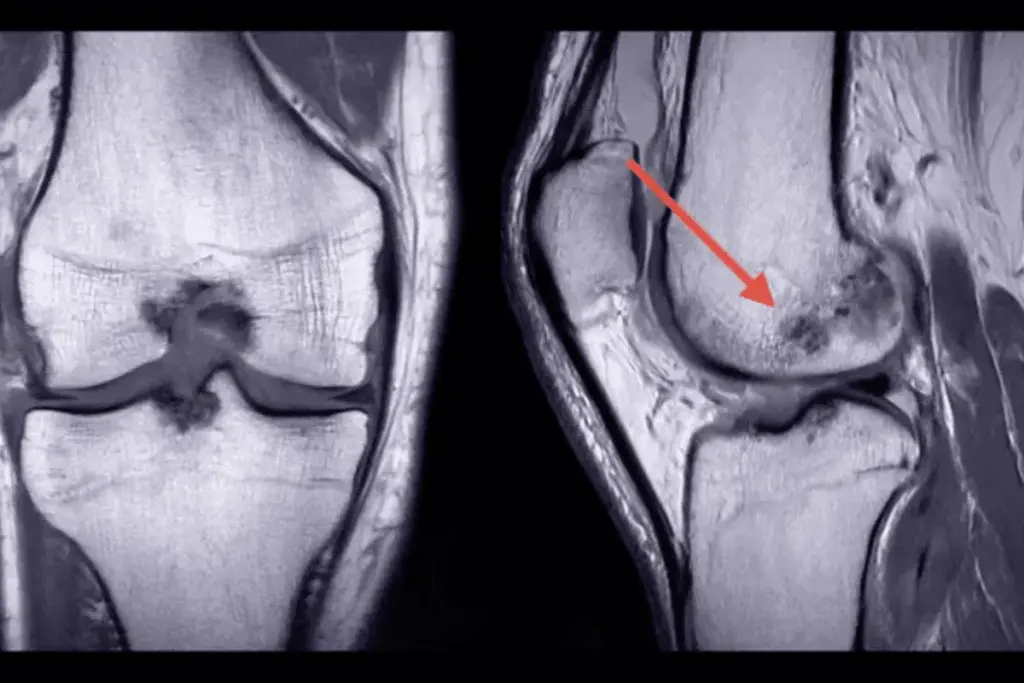
Arthritis mainly affects the joints. But, recent studies show a strong link between arthritis and changes in the bone marrow. Bone marrow lesions (BMLs) near joints are key to understanding arthritis pain and how it gets worse.
Osteoarthritis, a common arthritis type, is closely tied to these BMLs. Advanced imaging and genetic studies have found BMLs to be important signs for diagnosing and treating osteoarthritis. This shows how complex arthritis is and why we need a full approach to manage it.bone marrow edemaHow Painful Is Bone Marrow Donation: Blood Markers For Hepatoblastoma
Key Takeaways
- Arthritis is linked with changes in bone marrow, specially through bone marrow lesions (BMLs).
- Osteoarthritis is closely associated with BMLs, affecting joint health.
- Advanced imaging and genetic studies are key in understanding and managing osteoarthritis.
- BMLs are important markers for diagnosing and managing osteoarthritis.
- A full approach is needed to manage arthritis effectively.
The Relationship Between Arthritis and Bone Marrow

Arthritis and bone marrow are closely linked. This connection helps us understand bone marrow edema. Understanding the fundamentals of arthritis and bone marrow is essential.
Defining Arthritis and Its Common Types
Arthritis includes over 100 conditions affecting joints and tissues. The main types are osteoarthritis (OA) and rheumatoid arthritis (RA). Osteoarthritis breaks down cartilage, causing bone pain. Rheumatoid arthritis is an autoimmune disease that inflames joints, leading to damage if untreated.
Knowing the type of arthritis is key. Each type affects bone marrow differently. For example, osteoarthritis impacts the subchondral bone, which is rich in bone marrow.
The Structure and Function of Bone Marrow
Bone marrow is spongy tissue in bones like hips and thighbones. It makes blood cells. Its health is vital for overall well-being and affects joints.
In arthritis, bone marrow is not just a passive bystander. It plays a role, like in osteoarthritis, where changes in the subchondral bone marrow are linked to disease progression.
How Joints and Bone Marrow Interact
The interaction between joints and bone marrow is complex. Healthy joints have cartilage and synovial fluid to reduce friction. But in arthritic joints, this balance is disrupted. Inflammation and cartilage loss can change bone marrow, causing bone marrow edema.
Bone marrow edema worsens joint pain and dysfunction. This creates a cycle that makes treating arthritis harder. Understanding this interaction is key to finding effective treatments.
Bone Marrow Edema: What It Is and How It Relates to Arthritis

Understanding bone marrow edema is key to treating arthritis well. It’s when fluid builds up in the bone marrow, seen on MRI scans. This is often linked to arthritis, like osteoarthritis.
Definition and Characteristics of Bone Marrow Edema
Bone marrow edema means fluid builds up in the bone marrow. It can happen from injury, inflammation, or lack of blood flow. MRI scans show this fluid as bright spots in the bone marrow.
The type of bone marrow edema depends on the cause. Injury might cause it in one spot, while inflammation can spread it across more of the bone marrow.
How Bone Marrow Edema Differs from Arthritis
Bone marrow edema and arthritis are related but different. Arthritis is inflammation in the joints, causing pain and stiffness. Bone marrow edema is fluid in the bone marrow itself.
The main difference is where they happen. Arthritis affects the joints and around them. Bone marrow edema is inside the bone marrow. But, arthritis can cause bone marrow edema because of the inflammation.
|
Condition |
Primary Location |
Characteristics |
|---|---|---|
|
Arthritis |
Joint space and surrounding tissues |
Inflammation, pain, stiffness |
|
Bone Marrow Edema |
Within the bone marrow |
Fluid accumulation, visible on MRI |
The Significance of Marrow Meaning in Medical Context
“Marrow” means the spongy tissue in bones that makes blood cells. In medicine, knowing about bone marrow health is vital. It helps diagnose and treat conditions like bone marrow edema and arthritis.
Bone marrow edema is important because it shows health problems like osteoarthritis or injury. Accurate diagnosis and treatment are key to avoiding more issues and helping patients get better.
Bone Marrow Lesions (BMLs): The Missing Link
Bone marrow lesions play a big role in joint diseases like osteoarthritis. We’ll look into what BMLs are, their link to joint diseases, and how they’re different from edema.
What Are Bone Marrow Lesions?
Bone marrow lesions are spots in the bone marrow that show up on MRI scans. They have changes in the bone marrow signal, which can mean there’s something wrong.
These lesions aren’t just random findings. They’re linked to joint diseases, including osteoarthritis. Having BMLs means you might face a higher risk of your disease getting worse and causing more damage to your joints.
The Connection Between BMLs and Joint Diseases
Studies have found a strong link between BMLs and osteoarthritis. They often appear around joints and help break down joint tissues.
BMLs affect the joint environment in a bad way. They cause inflammation and more damage. This creates a cycle that makes the disease worse.
Differentiating Between Edema and Lesions
Edema and lesions are both found in the bone marrow, but they’re different. Edema is fluid buildup in the bone marrow, usually from inflammation or injury.
Lesions, though, are structural changes. They can be linked to many conditions, including osteoarthritis. Knowing the difference between edema and lesions is key for the right diagnosis and treatment.
|
Characteristics |
Bone Marrow Edema |
Bone Marrow Lesions |
|---|---|---|
|
Nature |
Fluid accumulation |
Structural changes |
|
Causes |
Inflammation, injury |
Various pathologies, including osteoarthritis |
|
Clinical Significance |
Often reversible, may indicate underlying issues |
Can be associated with disease progression and joint damage |
Research Findings: Progression Patterns of Bone Marrow Lesions
Recent studies have shed light on bone marrow lesions (BMLs). They are key to understanding osteoarthritis. BMLs are linked to joint health and degenerative joint diseases.
The Three Common Progression Patterns
Research has found three main BML progression patterns. These patterns help doctors predict osteoarthritis in patients.
- Mild-stable pattern: Small, stable BMLs that don’t grow much over time.
- Moderate-stable pattern: Moderate-sized BMLs that stay mostly the same, with some changes.
- Rapid-rise pattern: BMLs grow a lot quickly, showing a high risk of osteoarthritis.
Statistical Breakdown of BML Progression
Statistical analysis has given us insights into BML progression. Here’s a summary:
|
BML Progression Pattern |
Percentage of Patients |
Osteoarthritis Development Risk |
|---|---|---|
|
Mild-stable |
30% |
Low |
|
Moderate-stable |
45% |
Moderate |
|
Rapid-rise |
25% |
High |
Implications for Osteoarthritis Development
BML progression patterns are important for osteoarthritis. Patients with rapid-rise patterns are at higher risk. Early treatment can help.
Understanding BML progression helps healthcare providers manage care. It can slow osteoarthritis. More research will improve patient care.
Risk Factors for Developing Bone Marrow Abnormalities
It’s important to know the risk factors for bone marrow abnormalities. This knowledge helps in early detection and prevention. Bone marrow issues can greatly affect a person’s life, so managing these risks is key.
Demographic Risk Factors
Some demographic factors can raise the risk of bone marrow problems. For example, female sex is linked to a higher risk of bone marrow lesion (BML) progression. Age also plays a big role, as the risk grows with age.
- Female sex
- Advanced age
Lifestyle and Environmental Risk Factors
Lifestyle choices and environmental factors also impact bone marrow health. Smoking and alcohol consumption are linked to BML progression. These habits can worsen the condition and harm bone health.
- Smoking
- Alcohol consumption
Pre-existing Medical Conditions
Existing medical conditions can also increase the risk of bone marrow issues. For instance, meniscal tears are associated with BML progression. It’s important to manage these conditions to prevent further problems.
- Meniscal tears
- Other joint-related conditions
Understanding and tackling these risk factors is essential for preventing and managing bone marrow abnormalities. Early detection and action are critical for better outcomes for those at risk.
Types of Bone Marrow Edema and Their Causes
It’s important to know the different types of bone marrow edema to treat it well. This condition can come from many causes. By dividing it into types, we can better understand and manage it.
Traumatic Bone Marrow Edema
Traumatic bone marrow edema happens when a bone gets hurt. It’s common in athletes or anyone who has had a big injury. The injury causes swelling and pain in the bone marrow.
Key characteristics of traumatic bone marrow edema include:
- It’s linked to recent injuries
- You’ll feel pain and swelling
- It might come with fractures or bruises
Inflammatory Bone Marrow Edema
Inflammatory bone marrow edema is linked to inflammation in the bone marrow. This can be from arthritis, infections, or other inflammatory diseases. The inflammation causes swelling and pain.
The underlying causes of inflammatory bone marrow edema can include:
- Rheumatoid arthritis and other autoimmune diseases
- Infections that harm the bone
- Other inflammatory diseases that affect the bone marrow
Ischemic Bone Marrow Edema
Ischemic bone marrow edema is caused by poor blood flow to the bone marrow. This leads to ischemia and swelling. It’s often seen in osteonecrosis, where bone tissue dies from lack of blood.
Factors contributing to ischemic bone marrow edema include:
- Blocked or damaged blood vessels
- Sickle cell disease and other blood flow issues
- Medications like corticosteroids that harm bone health
Knowing about these types of bone marrow edema and their causes is key for doctors. It helps them find the right treatment. This way, they can help patients feel better and recover well.
Can Bone Marrow Edema Be Cancer? Understanding the Connection
Bone marrow edema might be a sign of cancer, which is a big deal in medicine. We look into how bone marrow edema and cancer are linked. We also talk about the challenges in diagnosing and why it’s so important to get it right.
Differentiating Between Benign and Malignant Causes
Bone marrow edema can come from many sources. It can be from harmless things like injuries or inflammation, or from cancer. It’s key to tell the difference to treat it right. Benign causes usually have clear signs and images that show they’re not cancer.
Red Flags That Suggest Malignancy
Some signs, like unexplained weight loss, constant pain, or other body-wide symptoms, might mean cancer is involved. If you see these, it’s time to dig deeper.
Diagnostic Approach When Cancer Is Suspected
If cancer is thought of, doctors use a detailed plan to check it out. This includes MRI scans, biopsies, and blood tests. This way, they can figure out what’s causing the bone marrow edema and decide on the best treatment.
Diagnosing Bone Marrow Edema and Related Conditions
To diagnose bone marrow edema, doctors use advanced imaging and clinical checks. This condition is linked to arthritis and other joint issues. Accurate diagnosis is key for treatment.
MRI as the Gold Standard for Detection
Magnetic Resonance Imaging (MRI) is the top choice for spotting bone marrow edema. Its ability to see changes in bone marrow makes it vital for diagnosis.
Key benefits of MRI include:
- High-resolution images of bone marrow
- Ability to detect early changes in bone marrow
- Non-invasive, reducing the risk of complications
Other Diagnostic Methods
While MRI is the top pick, other methods can help or replace it. These include:
- X-ray: Good for first checks but not as good for bone marrow.
- Computed Tomography (CT) scans: Show bone details well but not soft tissue or marrow.
- Bone Scintigraphy: Finds areas of high bone activity.
Differential Diagnosis Considerations
When diagnosing bone marrow edema, it’s important to rule out other conditions. Osteoarthritis, fractures, and infections can look similar. A detailed history, physical exam, and imaging are needed to narrow down the causes.
Considering the patient’s overall health, symptoms, medical history, and lifestyle is also key. This ensures a correct diagnosis.
Bone Marrow Edema in Specific Joints
Bone marrow edema can happen in many joints like the knee, ankle, spine, and hip. Each joint has its own unique signs and symptoms. Knowing these differences is key to getting the right treatment.
Knee Bone Marrow Edema
Knee bone marrow edema often comes from injuries, like sprains or fractures. It can also show up in people with osteoarthritis. Symptoms include pain and swelling, making it hard to move around.
Doctors use MRI to see how bad the edema is. Treatment can be simple, like physical therapy, or more serious, like surgery.
Ankle and Foot Bone Marrow Edema
Ankle and foot bone marrow edema can be caused by injuries, too much use, or conditions like osteochondritis dissecans. Patients often report pain and stiffness, worse after they’ve been active.
Doctors might tell patients to rest, use ice, compress, and elevate (RICE) their ankle or foot. They might also prescribe anti-inflammatory drugs. Sometimes, surgery is needed to fix the problem.
Spine and Sacral Edema
Spine and sacral bone marrow edema can be linked to degenerative disc disease, fractures, or inflammatory conditions. Symptoms can include back pain and limited mobility.
Doctors use MRI and clinical checks to diagnose. Treatment might include physical therapy, pain management, and sometimes surgery.
Hip and Pelvic Bone Marrow Edema
Hip and pelvic bone marrow edema can come from injuries, stress fractures, or conditions like osteonecrosis. Patients may experience hip pain and difficulty walking.
Treatment varies based on the cause. It might be rest and physical therapy, or sometimes surgery is needed.
|
Joint |
Common Causes |
Symptoms |
Treatment Approaches |
|---|---|---|---|
|
Knee |
Trauma, Osteoarthritis |
Pain, Swelling |
Conservative management, Surgery |
|
Ankle/Foot |
Trauma, Overuse |
Pain, Stiffness |
RICE, Anti-inflammatory meds, Surgery |
|
Spine/Sacrum |
Degenerative disc disease, Fractures |
Back pain, Limited mobility |
Physical therapy, Pain management, Surgery |
|
Hip/Pelvis |
Trauma, Stress fractures |
Hip pain, Difficulty walking |
Rest, Physical therapy, Surgery |
Treatment Approaches for Bone Marrow Edema
There are many ways to treat bone marrow edema, from simple methods to surgery. The right treatment depends on the cause, how bad it is, and the patient’s health.
Conservative Management Strategies
For bone marrow edema, the first step is often to just rest and avoid activities that make it worse. This helps reduce pain and aids in healing without surgery.
- Rest and activity modification
- Pain management using over-the-counter pain relievers
- Physical therapy to improve joint mobility and strength
These methods work well for mild to moderate cases. But, more serious cases might need more help.
Pharmacological Interventions
If resting and avoiding activities don’t help, doctors might suggest medicines. These can include:
- Nonsteroidal anti-inflammatory drugs (NSAIDs) to reduce inflammation and pain
- Corticosteroid injections to decrease inflammation
- Biologic agents that target specific pathways involved in inflammation
Medicines can really help with bone marrow edema, and they work best when used with rest and avoiding activities.
Surgical Options for Severe Cases
If medicines and rest don’t work, surgery might be needed. Surgery can include:
- Core decompression to relieve pressure within the bone
- Joint replacement surgery in advanced cases
- Other surgical procedures to address underlying causes or structural issues
Surgery is usually for the most severe cases that haven’t gotten better with other treatments.
|
Treatment Approach |
Description |
Typical Use Case |
|---|---|---|
|
Conservative Management |
Non-invasive methods to reduce symptoms and promote healing |
Mild to moderate bone marrow edema |
|
Pharmacological Interventions |
Medications to reduce inflammation and pain |
Moderate to severe bone marrow edema |
|
Surgical Options |
Surgical procedures to address underlying causes or structural issues |
Severe bone marrow edema unresponsive to other treatments |
The Role of Inflammation in Bone Marrow and Arthritis
Inflammation in bone marrow is linked to arthritis. It’s a key part of how osteoarthritis starts and grows. This complex response affects many types of arthritis.
Inflammatory Processes in the Bone Marrow
In the bone marrow, inflammation starts with immune cells turning on. They release cytokines that cause trouble. This messes up the bone marrow, leading to edema and lesions.
Key inflammatory mediators like TNF-alpha and IL-1β make things worse. They fuel inflammation and harm joints.
How Inflammation Contributes to Joint Damage
Inflammation in the bone marrow harms joints in several ways. It breaks down cartilage and bone with its cytokines. It also creates bone marrow lesions, causing pain and damage.
- Cartilage degradation due to inflammatory mediators
- Bone erosion resulting from chronic inflammation
- Formation of bone marrow lesions
Soft Tissue Edema and Its Relationship to Bone Marrow Edema
Soft tissue edema is linked to bone marrow edema. Both happen due to inflammation and injury. Soft tissue swelling shows a strong inflammatory response, which is bad for joints.
Understanding the relationship between soft tissue edema and bone marrow edema is key. It helps in finding better treatments for arthritis.
Preventing Bone Marrow Lesions and Arthritis Progression
To stop bone marrow lesions and slow arthritis, we need a mix of lifestyle changes and specific actions. Knowing what causes these issues helps us find ways to lessen their effects.
Lifestyle Modifications
Changing our lifestyle is key to preventing bone marrow lesions and slowing arthritis. Keeping a healthy weight is important because extra weight can stress joints more. Also, quitting smoking improves health and lowers arthritis risk.
Managing stress is another big part. Stress can make inflammation worse, which can lead to arthritis. Doing things like meditation or yoga can help.
Nutritional Considerations
What we eat is also important for preventing bone marrow lesions and arthritis. Eating a balanced diet with fruits, veggies, and omega-3s can fight inflammation and keep joints healthy. Foods like berries and leafy greens are good for this.
Drinking enough water is also key for healthy joints and bone marrow. Plus, vitamins like D and calcium are good for bones and might help prevent lesions.
Exercise and Physical Therapy
Exercise and physical therapy are important for stopping bone marrow lesions and arthritis. Low-impact activities like swimming or cycling keep joints moving without too much strain. Physical therapy can also improve joint function and lessen pain.
Having a personalized exercise plan that fits your needs is very helpful. It’s important to work with a healthcare expert to make sure the plan is right for you.
Conclusion
Understanding the link between bone marrow edema and arthritis is key to better treatment. Studies show that bone marrow lesions (BMLs) are linked to pain in osteoarthritis (OA). Genetic studies have found certain genes and pathways that are active in BMLs.
The changes in BMLs, like cysts and new blood vessels, show how OA progresses. This knowledge helps us see why early diagnosis and treatment are so important.
Using MRI to spot BMLs has been a big help, as shown by studies on . We need a full plan to manage bone marrow edema and related issues. This plan should include lifestyle changes, diet, and exercise.
As we learn more about bone marrow edema and arthritis, we’re getting closer to better treatments. This will help improve life for those with these conditions.
FAQ
What is bone marrow edema?
Bone marrow edema is when fluid builds up in the bone marrow. It often causes pain and inflammation. It can happen due to injury, infection, or other health issues.
Can bone marrow edema be a sign of cancer?
Bone marrow edema is usually not cancerous. But, in some cases, it might be linked to cancer. Doctors use tests like imaging and biopsies to figure out if it’s benign or malignant.
How is bone marrow edema diagnosed?
MRI is the best way to diagnose bone marrow edema. X-rays and CT scans can also help confirm the diagnosis.
What are the treatment options for bone marrow edema?
Treatments for bone marrow edema include rest, physical therapy, and medicine for pain. In severe cases, surgery might be needed.
Can lifestyle modifications help prevent bone marrow lesions and arthritis progression?
Yes, making healthy lifestyle choices can help. This includes keeping a healthy weight, exercising regularly, and avoiding too much stress on your joints.
What is the relationship between arthritis and bone marrow edema?
Arthritis, like osteoarthritis, can cause bone marrow edema. This is because arthritis leads to inflammation and damage in the joints.
How does inflammation contribute to joint damage in arthritis?
Inflammation in the bone marrow and around the joints can harm them. It releases substances that break down cartilage and bone.
Can soft tissue edema be related to bone marrow edema?
Yes, soft tissue edema and bone marrow edema can be linked. Both are often caused by similar things, like injury or inflammation.
What are the risk factors for developing bone marrow abnormalities?
Factors that increase the risk of bone marrow problems include age, lifestyle, and certain health conditions. Conditions like osteoarthritis and rheumatoid arthritis are examples.
How do bone marrow lesions progress?
Bone marrow lesions can change in size or stay the same. Their growth can affect how osteoarthritis develops and gets worse.
References
PubMed Central (NCBI): https://pmc.ncbi.nlm.nih.gov/articles/PMC11093866/
Radiological Society of North America (RSNA): https://pubs.rsna.org/doi/abs/10.1148/radiol.240470
PubMed Central (NCBI): https://pmc.ncbi.nlm.nih.gov/articles/PMC11565461/
ScienceDirect: https://www.sciencedirect.com/science/article/pii/S1063458423000832
National Center for Biotechnology Information (NCBI): https://www.ncbi.nlm.nih.gov/pmc/articles/PMC10173277/
National Center for Biotechnology Information. Evidence-Based Medical Insight. Retrieved from https://pubmed.ncbi.nlm.nih.gov/12965941/