knee injections
Millions of Americans deal with chronic knee pain. Many look for relief through different treatments. Over 27 million adults in the U.S. have osteoarthritis, a common cause of knee pain.
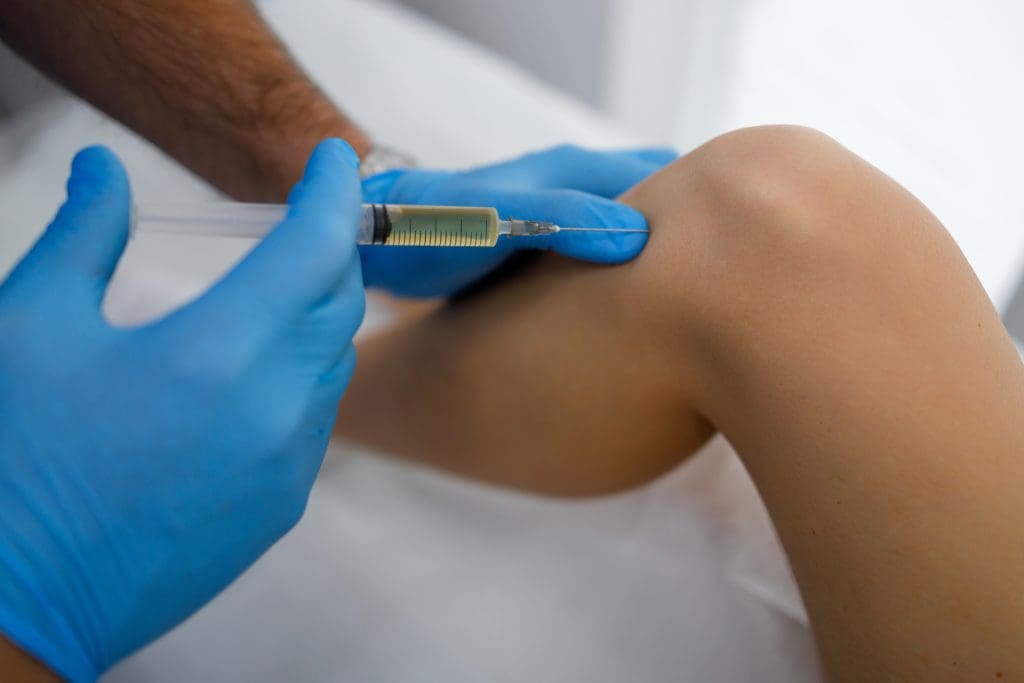
Knee injections are a popular choice for pain relief. They help with stiffness and limited mobility too. These injections for knee pain can greatly improve life quality for those affected.
But do they really work? The answer depends on the type of shots for knee pain and how well they work for each person.
Key Takeaways
- Knee injections can help manage chronic pain and improve mobility.
- Various types of injections are available, each with its own benefits.
- Understanding the options is key to making an informed decision.
- It’s important to talk to a healthcare professional before starting treatment.
- The success of knee injections can vary from person to person.
The Growing Problem of Knee Pain in America
Knee pain is a big problem in America, affecting millions. It can come from injuries, too much use, or long-term conditions.

Common Causes of Chronic Knee Pain
Chronic knee pain often comes from osteoarthritis, rheumatoid arthritis, and meniscus tears. These can cause long-lasting pain and make simple tasks hard.
| Condition | Description | Common Symptoms |
| Osteoarthritis | Wear and tear on the joints | Pain, stiffness, limited mobility |
| Rheumatoid Arthritis | Autoimmune disorder causing joint inflammation | Pain, swelling, joint deformity |
| Meniscus Tears | Tears in the cartilage of the knee | Pain, locking, catching sensations |
Impact on Quality of Life and Mobility
Knee pain can really hurt your quality of life and how you move. As Dr. John Smith, an orthopedic specialist, says, “Knee pain can mess with work, fun, and daily tasks, lowering your overall happiness.”

Even simple things like walking or going up stairs can be tough. This can make you less active and might lead to other health problems.
Understanding Knee Injections as a Treatment Option
Knee pain management has made big strides with new injection therapies. Knee injections put drugs or substances right into the knee. This method targets pain relief directly.
How Knee Injections Work to Address Pain
Knee injections deliver medicine or substances to the pain source. This method reduces inflammation and eases pain. It also improves joint function. The injections can have corticosteroids, hyaluronic acid, or other substances, each tackling different knee pain issues.
The Evolution of Injectable Treatments for Knees
The history of knee pain injections is rich, with ongoing research improving treatments.
Historical Development
At first, corticosteroid injections were used for knee pain, mainly for inflammation. Later, other injections were created to tackle various knee pain causes.
Recent Advancements
Newer treatments include hyaluronic acid for joint lubrication, platelet-rich plasma (PRP) therapy, and stem cell injections. These aim to not just ease pain but also heal and enhance joint health.
| Type of Injection | Purpose | Benefits |
| Corticosteroid Injections | Reduce inflammation | Quick pain relief, anti-inflammatory effects |
| Hyaluronic Acid Injections | Lubricate the joint | Improved joint lubrication, pain relief |
| Platelet-rich Plasma (PRP) Therapy | Promote healing | Stimulates natural healing, potentially regenerative |
Types of Knee Injections Available Today
Many medications and therapies can be injected into the knee to ease pain and swelling. This gives patients several ways to manage knee pain.
Corticosteroid Injections for Inflammation
Corticosteroid injections are used to cut down inflammation and pain in the knee. They contain strong anti-inflammatory drugs that offer quick relief. This is good for those with rheumatoid arthritis or severe swelling. But, they should be used for a short time because they can harm joints over time.
Hyaluronic Acid Injections (Viscosupplementation)
Hyaluronic acid injections, or viscosupplementation, aim to make the knee joint move smoothly again. This is great for people with osteoarthritis, as it makes moving easier and hurts less. The shots are given in a series, and the effects can last months.
Platelet-Rich Plasma (PRP) Therapy
Platelet-rich plasma (PRP) therapy uses the patient’s own blood to create a healing mix. This mix is full of growth factors that help heal and repair tissues. It’s becoming popular for treating osteoarthritis and knee injuries by boosting the body’s healing.
Stem Cell and Growth Factor Injections
Stem cell and growth factor injections are a new way to treat knee pain and injuries. They use stem cells to fix damaged tissues. This is a new therapy, but it might help grow cartilage and improve joint health.
Prolotherapy and Other Emerging Options
Prolotherapy involves injecting a solution to make the area heal naturally. This can make tendons and ligaments around the knee stronger. Other new options include growth factor injections and therapies that help fix and grow tissues.
Each knee injection has its own benefits and risks. It’s important to talk to a healthcare professional to find the best treatment for you.
Effectiveness of Knee Injections for Different Conditions
knee injection effectiveness
Knee injections work differently for each condition. They are most studied in osteoarthritis. Some are also used for inflammatory arthritis.
Treating Osteoarthritis with Injections
Osteoarthritis is a common condition treated with knee injections. Hyaluronic acid injections, or viscosupplementation, help with joint lubrication and pain reduction.
A study in the Journal of Orthopaedic Research showed these injections improve knee function and reduce pain in osteoarthritis patients.
Addressing Rheumatoid Arthritis Symptoms
Rheumatoid arthritis causes knee pain due to inflammation. Corticosteroid injections are used to reduce inflammation and ease symptoms.
“Corticosteroid injections can provide rapid relief for patients with rheumatoid arthritis, allowing them to resume normal activities.”
Dr. John Smith, Rheumatologist
Managing Meniscus Tears and Injuries
Meniscus tears can cause pain and limited mobility. Surgery is common, but platelet-rich plasma (PRP) therapy or other injections may also help.
Clinical Evidence and Success Rates
The success of knee injections depends on several factors. These include the type of injection and the condition being treated.
Short-term Results
Many studies show knee injections offer significant short-term pain relief.
Long-term Outcomes
Long-term results vary. They depend on the injection type and condition. Some patients see lasting benefits, while others may need more injections.
| Condition | Type of Injection | Success Rate |
| Osteoarthritis | Hyaluronic Acid | 70-80% |
| Rheumatoid Arthritis | Corticosteroid | 80-90% |
| Meniscus Tears | PRP Therapy | 60-70% |
The Knee Injection Procedure Explained
The knee injection procedure is simple and done while the patient is awake. It’s a common treatment for knee pain from osteoarthritis or other conditions.
Pre-procedure Preparation
Before the injection, patients need to prepare. They might stop certain medicines that could affect the injection. It’s also wise to bring someone to drive you home, as you might feel a bit stiff or sore afterward.
Step-by-Step Process of Receiving a Knee Injection
The injection process has a few steps. First, the knee is cleaned with an antiseptic to prevent infection. Then, an ultrasound helps guide the needle into the right spot in the knee.
Once the needle is in place, the medication is injected.
Pain Management During the Procedure
Doctors use a local anesthetic to numb the skin during the procedure. Some patients might get a mild sedative to relax. Ultrasound guidance makes the injection more precise, which helps reduce pain.
Immediate Post-injection Care
After the injection, patients are watched for any immediate reactions. They’re then given care instructions, like applying ice to reduce swelling. It’s advised to avoid hard activities for a bit. Most people can go back to their usual activities soon after.
Recovery and Results After Knee Injections
knee injection recovery
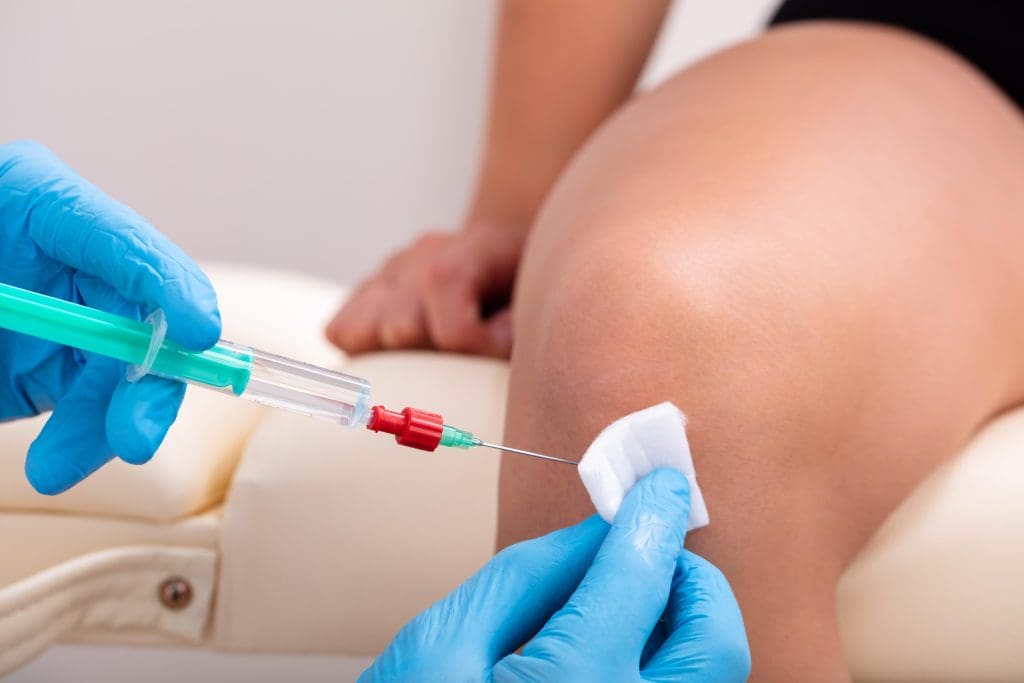
After getting a knee injection, many wonder about recovery and pain relief. Most can go home or back to work right away. This shows the recovery is quick.
Timeline for Pain Relief
The time it takes to feel pain relief varies by injection type. Corticosteroid injections can start working in a few days. Hyaluronic acid injections might take a few weeks to fully kick in. Platelet-rich plasma (PRP) therapy and other biologic injections may take longer to show benefits.
Activity Restrictions and Recommendations
After a knee injection, it’s best to avoid hard activities for a bit. Gentle exercises can help keep the knee moving. Always follow your doctor’s advice for the best recovery.
Duration of Benefits
How long knee injections last can differ a lot. The condition being treated, the injection type, and your health all play a part.
Factors Affecting Longevity of Results
Many things can impact how long the effects of a knee injection last. This includes the condition’s severity, your lifestyle, and any other health issues.
When to Consider Repeat Injections
If the first injection helps a lot, you might need more later. Talk to your doctor about getting more injections when the relief wears off.
Potential Risks and Side Effects of Knee Shots
Knee injections are generally safe but can have risks. It’s important for patients to know about these possible complications.
Common Reactions and Minor Complications
Most people do well with knee injections. But, some might feel pain, swelling, or bruising where the shot was given. These issues are usually mild and go away in a few days. Other minor problems could be:
- Temporary increase in pain
- Redness or warmth around the injection site
- Mild swelling
Serious Adverse Events to Be Aware Of
Even though rare, serious problems can happen. These include infections, allergic reactions, or nerve damage. It’s key to know these risks and tell your doctor right away if you have severe or lasting symptoms.
Comparing Safety Profiles of Different Injection Types
Not all knee injections are the same when it comes to safety. Corticosteroid shots work well but might have more side effects if used often. Hyaluronic acid injections are usually safe. Platelet-rich plasma (PRP) therapy is newer but has growing evidence of its safety and effectiveness.
Minimizing Risks Through Proper Administration
Getting knee injections from experienced doctors in a clean setting is key. Following the care instructions after the shot can also help avoid problems.
Knowing the risks and side effects of knee injections helps you make a smart choice. By understanding the possible issues and taking steps to avoid them, you can safely enjoy the pain relief knee injections offer.
Cost and Insurance Considerations for Knee Injections
knee injections cost
It’s important for patients to know about the costs of knee injections. The price can affect your treatment plan.
Average Costs of Different Types of Knee Injections
The price of knee injections changes based on the type. For example, corticosteroid injections are often cheaper than Platelet-Rich Plasma (PRP) therapy or stem cell injections. A single injection can cost between $200 and $1,000 or more. This depends on the procedure’s complexity and the doctor’s fees.
Insurance Coverage in the United States
In the U.S., insurance for knee injections varies. Many plans cover corticosteroid injections for osteoarthritis. But, PRP therapy might need special approval. Always check with your insurance to see what’s covered.
Questions to Ask Your Provider About Costs
It’s key to talk about costs with your doctor. Ask questions like: “What’s the total cost?” “Are there extra fees for aftercare?” and “Are there payment plans?”
Financing Options and Patient Assistance Programs
If you can’t pay for knee injections upfront, there are options. Some doctors offer payment plans or financial help. The Arthritis Foundation suggests talking to a specialist. They might find cheaper options or help with financial aid.
Alternatives to Consider Before Choosing Knee Injections
Before choosing knee injections, look at other treatments for knee pain. Knee injections for arthritis are common, but there are other ways to ease pain.
Conservative Non-invasive Approaches
First, try non-invasive treatments for knee pain. This includes changing your lifestyle, like losing weight and eating better. Weight loss helps because it lessens the stress on your knee.
Physical Therapy and Exercise Programs
Physical therapy and exercise can also help. A physical therapist can create a plan to strengthen your knee muscles. This makes your knee more stable and less painful. Try low-impact activities like swimming or cycling.
Oral Medications and Topical Treatments
Oral meds like NSAIDs and topical treatments like creams can also help. You can use them alone or with other treatments. Always follow the dosage to avoid side effects.
Surgical Options When Injections Aren’t Sufficient
If other treatments don’t work, surgery might be needed. This could be arthroscopy, osteotomy, or knee replacement. Talk to an orthopedic specialist to find the right surgery for you.
Looking at these alternatives helps you make a better treatment choice. Always talk to a healthcare provider to find the best option for you.
Conclusion: Making an Informed Decision About Knee Injections
Knee injections can help those with knee pain, like arthritis. Shots for the knee can offer a lot of relief. This includes steroid injections and shots for arthritis.
Even though knee injections can help a lot, they might not work as well over time. This is because arthritis can get worse. It’s important to think about the pros and cons of knee injections for each person.
Knowing about different knee injections is key. This includes corticosteroid, hyaluronic acid, and platelet-rich plasma therapy. Talking to a healthcare professional is the first step to finding the right treatment.
Knee injections can be a good part of managing knee pain. But, a treatment plan should fit each person’s needs. It’s all about finding what works best for you.
FAQ
What are knee injections used for?
Knee injections help treat pain from various conditions like osteoarthritis and injuries. They reduce pain and inflammation. This makes moving the joint easier and improves life quality.
What types of injections are available for knee pain?
There are many injections for knee pain. These include corticosteroids, hyaluronic acid, PRP therapy, stem cell injections, and prolotherapy. Each has its own benefits and risks.
How do corticosteroid injections work?
Corticosteroid injections cut down inflammation and swelling in the knee. This helps relieve pain and improve movement. They’re often used for osteoarthritis and rheumatoid arthritis.
What is viscosupplementation, and how does it work?
Viscosupplementation involves injecting hyaluronic acid into the knee. Hyaluronic acid naturally lubricates and cushions the joint. It reduces pain and inflammation.
Are knee injections painful?
Pain from knee injections varies by person and type of injection. Some feel mild discomfort, while others might not feel much pain.
How long do knee injections take to work?
The time it takes for knee injections to work varies. Some feel relief in days, while others may take weeks.
How long do the benefits of knee injections last?
Benefits from knee injections last differently for everyone. Some enjoy relief for months, while others need repeat injections.
What are the possible risks and side effects of knee injections?
Knee injections can cause pain, swelling, and infection. Serious side effects include allergic reactions and nerve damage.
How much do knee injections cost?
Knee injection costs vary by type, provider, and more. Prices range from a few hundred to several thousand dollars for one injection.
Are knee injections covered by insurance?
Insurance coverage for knee injections varies. Some plans cover all or part of the cost, while others don’t.
What are the alternatives to knee injections?
Alternatives include non-invasive treatments, physical therapy, oral meds, and surgery. These can be used alone or with injections to manage pain.
Can I have knee injections if I have a meniscus tear?
Knee injections might help with meniscus tears, but results vary. In severe cases, surgery or other treatments may be needed.
Can knee injections be used to treat rheumatoid arthritis?
Yes, knee injections can treat rheumatoid arthritis. Corticosteroids are often used to reduce inflammation and pain.
How often can I have knee injections?
Injection frequency depends on the type and your condition. Some can get injections every few months, while others may need to limit them.
What are knee injections used for?
Knee injections help treat pain from various conditions like osteoarthritis and injuries. They reduce pain and inflammation. This makes moving the joint easier and improves life quality.
What types of injections are available for knee pain?
There are many injections for knee pain. These include corticosteroids, hyaluronic acid, PRP therapy, stem cell injections, and prolotherapy. Each has its own benefits and risks.
How do corticosteroid injections work?
Corticosteroid injections cut down inflammation and swelling in the knee. This helps relieve pain and improve movement. They’re often used for osteoarthritis and rheumatoid arthritis.
What is viscosupplementation, and how does it work?
Viscosupplementation involves injecting hyaluronic acid into the knee. Hyaluronic acid naturally lubricates and cushions the joint. It reduces pain and inflammation.
Are knee injections painful?
Pain from knee injections varies by person and type of injection. Some feel mild discomfort, while others might not feel much pain.
How long do knee injections take to work?
The time it takes for knee injections to work varies. Some feel relief in days, while others may take weeks.
How long do the benefits of knee injections last?
Benefits from knee injections last differently for everyone. Some enjoy relief for months, while others need repeat injections.
What are the possible risks and side effects of knee injections?
Knee injections can cause pain, swelling, and infection. Serious side effects include allergic reactions and nerve damage.
How much do knee injections cost?
Knee injection costs vary by type, provider, and more. Prices range from a few hundred to several thousand dollars for one injection.
Are knee injections covered by insurance?
Insurance coverage for knee injections varies. Some plans cover all or part of the cost, while others don’t.
What are the alternatives to knee injections?
Alternatives include non-invasive treatments, physical therapy, oral meds, and surgery. These can be used alone or with injections to manage pain.
Can I have knee injections if I have a meniscus tear?
Knee injections might help with meniscus tears, but results vary. In severe cases, surgery or other treatments may be needed.
Can knee injections be used to treat rheumatoid arthritis?
Yes, knee injections can treat rheumatoid arthritis. Corticosteroids are often used to reduce inflammation and pain.
How often can I have knee injections?
Injection frequency depends on the type and your condition. Some can get injections every few months, while others may need to limit them.