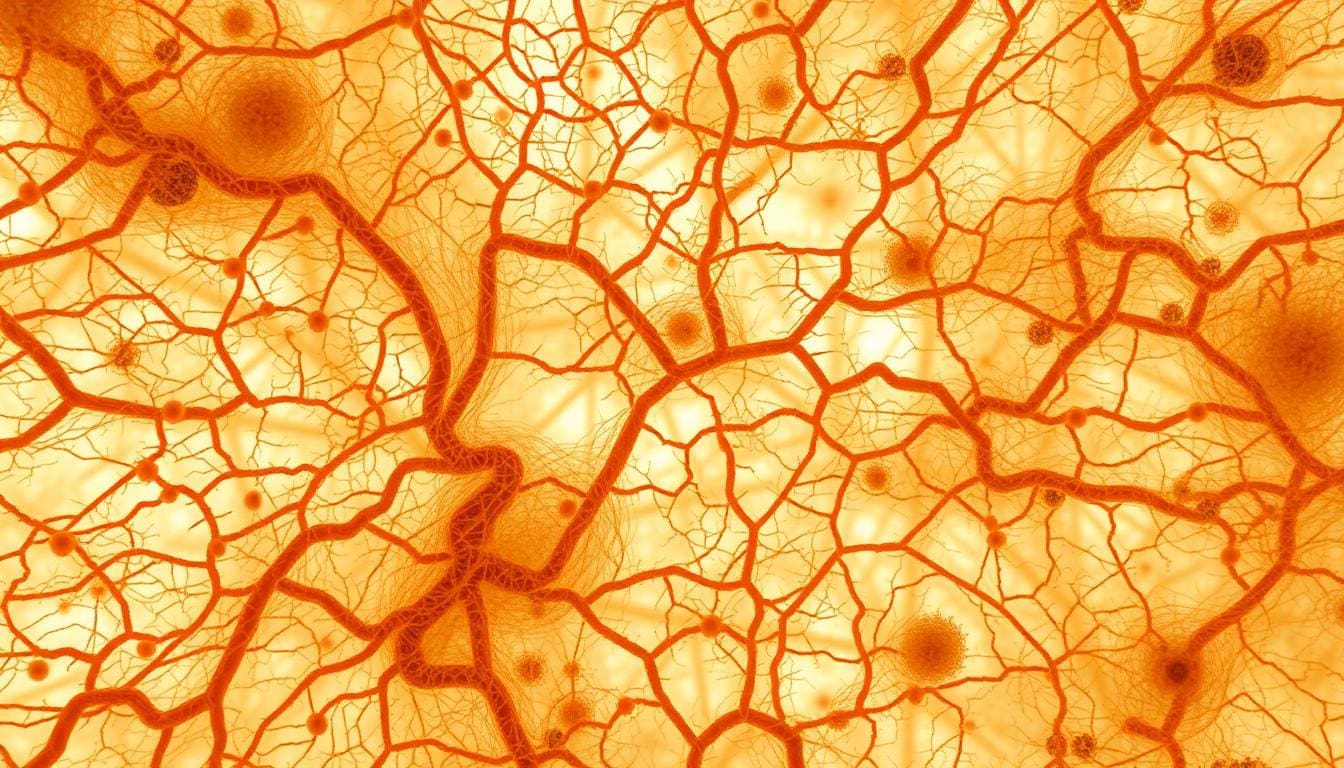
The stroma is a complex network of cells and matrix. It supports the structure and function of organs and tissues. It includes stromal cells that work with the immune system for normal tissue function and regeneration.
Recent studies show how important stromal-immune interactions are in health and disease. They suggest these interactions could be therapeutic targets. Knowing about the cellular stroma is key for better regenerative medicine and patient care.
Key Takeaways
- The stroma provides structural and metabolic support to organs and tissues.
- Stromal cells interact with the immune system to facilitate normal tissue function.
- Dysregulated stromal-immune communication is associated with various diseases.
- Targeting stromal-immune interactions holds promise as a therapeutic strategy.
- Understanding cellular stroma is essential for advancing regenerative medicine.
What You Need to Know About Tissue Support Systems
The tissue support systems are key to our health. They include cellular stroma and help keep our bodies working right. These systems are vital for our body’s structure and for many bodily functions.
These systems help our organs and tissues work well. They give cells a place to stick, grow, and change. This helps our body’s complex design work.
The Importance of Supportive Structures in the Body
Inside us, stromal cells are important for keeping tissues in shape. They help with the exchange of nutrients and waste. In places like lymph nodes, they’re key to our immune system.
These structures help our body fix and grow back tissues. They make sure cells work right and can handle injuries or sickness.
Overview of the 7 Key Facts
The next parts will share 7 important facts about cellular stroma. We’ll learn about what it is, where it is, and what it does. These facts will help us understand its role in health and sickness.
Knowing about cellular stroma is important. The 7 key facts will cover its basics and its role in diseases. This will give us a full picture of its significance.
Fact 1: Defining Cellular Stroma and Its Basic Components
Cellular stroma is a complex network of cells that supports tissues and organs. It includes fibroblastic reticular cells, lymphatic endothelial cells, and blood endothelial cells. Each cell type has a unique role in keeping tissues strong.
The stroma does more than just hold things together. It also helps control how tissues work by talking to other cells. Knowing about the stroma’s parts and how they work is key to understanding its role in health and sickness.
Comprehensive Definition and Terminology
Cellular stroma is the connective tissue that supports organs and tissues. The terms used to talk about it can be tricky. Important terms include:
- Stromal cells: The cells in the stroma, like fibroblasts and endothelial cells.
- Extracellular matrix: The non-cell part of the stroma that gives structural support.
- Tissue microenvironment: The area around cells in a tissue, shaped by the stroma.
The Structural Framework of Tissues and Organs
The stroma is key for tissues and organs, helping them work and stay strong. It does this in several ways:
- It gives mechanical support through the extracellular matrix.
- It helps with the exchange of nutrients and waste.
- It helps control immune responses by talking to immune cells.
In short, cellular stroma is essential for tissue structure. It’s made of different cell types that help tissues function and stay strong. Understanding the stroma’s definition, terms, and structure is important for seeing its role in health and disease.
Fact 2: Distribution and Location of Cellular Stroma in the Body
Cellular stroma is found in many parts of the body, from bone marrow to skin. It plays a key role in keeping tissues healthy and the body working well.
Bone Marrow Stromal Networks
The bone marrow is full of cellular stroma. It helps make blood cells through a process called hematopoiesis. Bone marrow stromal cells create a good environment for blood stem cells to grow.
These cells make growth factors and cytokines. These help blood cells develop. The network of bone marrow stromal cells is vital for blood cell production.
Skin and Dermal Stroma
In the skin, dermal stroma gives structure and helps with healing. The dermal layer has fibroblasts, which make the extracellular matrix and collagen.
The dermal stroma keeps the skin strong and helps it heal. It changes to help the skin repair itself after injury.
Organ-Specific Stromal Variations
Each organ has its own type of stroma. For example, the liver’s stroma helps its structure, while the lungs’ stroma is key for breathing.
| Organ | Stromal Function | Key Characteristics |
|---|---|---|
| Bone Marrow | Supports hematopoiesis | Produces growth factors and cytokines |
| Skin | Structural support and wound healing | Rich in fibroblasts, produces extracellular matrix |
| Liver | Supports hepatic architecture | Facilitates detoxification and metabolism |
| Lungs | Maintains structure for gas exchange | Delicate stroma supports respiratory function |
The variety in stromal types and functions shows how complex and vital cellular stroma is for health.
Fact 3: Mesenchymal Stromal Cells (MSCs) – The Versatile Foundation
Understanding Mesenchymal Stromal Cells (MSCs) is key to understanding cellular stroma. MSCs are a type of stem cell. They play a big role in developing and fixing different tissues.
Characteristics and Identification of MSCs
MSCs stick to plastic, have certain markers, and can become many cell types. They are identified by specific markers like CD73, CD90, and CD105. They don’t have markers for blood cells like CD34 and CD45.
The minimal criteria for MSCs include sticking to plastic, having certain markers, and becoming osteoblasts, adipocytes, and chondroblasts.
Pluripotency and Differentiation Capabilities
MSCs are very special because they can become many cell types. This includes osteocytes, chondrocytes, and adipocytes. This makes them very important for fixing and growing tissues.
MSCs can turn into specific cell types with the right conditions. This is why they are so valuable in regenerative medicine. Their ability to change depends on growth factors, cytokines, and their surroundings.
Sources and Harvesting Methods
MSCs come from places like bone marrow, adipose tissue, and umbilical cord blood. The choice of where to get them from depends on what you need them for.
How you get MSCs depends on where they come from. For example, bone marrow MSCs are taken out through aspiration. Adipose tissue MSCs come from lipoaspirate. To get them, you use enzymes and centrifuges to separate them from other cells.
Fact 4: Physiological Functions of Cellular Stroma
Cellular stroma is key to our health, with many important roles. It helps keep tissues in shape, controls the immune system, and helps move nutrients around.
Structural Support and Tissue Architecture
Cellular stroma gives structural support to our bodies. It does this by making a framework of collagen and glycoproteins. This framework helps cells stay organized.
It also helps shape tissues and organs. For example, in the skin, it keeps the outer layer strong and helps new skin grow.
Metabolic Support and Nutrient Exchange
Cellular stroma helps with metabolic support and nutrient exchange. It brings oxygen and nutrients to cells. Fibroblasts in the stroma make substances that help cells work right.
It also stores cells like immune cells. These cells can be called upon when the body needs them.
Immune Regulation and Homeostasis
Cellular stroma is vital for immune regulation and keeping the body balanced. It helps control immune cells and their actions. This affects how the body fights off infections.
It also helps keep the immune system in check. This is important for avoiding too much immune activity.
| Physiological Function | Description | Key Players |
|---|---|---|
| Structural Support | Maintains tissue architecture and integrity | Fibroblasts, extracellular matrix |
| Metabolic Support | Regulates cellular metabolism and nutrient exchange | Stromal cells, growth factors, cytokines |
| Immune Regulation | Modulates immune responses and maintains immune tolerance | Stromal cells, cytokines, chemokines |
Fact 5: Cellular Stroma in Tissue Repair and Regeneration
Cellular stroma is key for health, playing a big role in fixing and growing tissues. It’s made up of different cells and a matrix that helps heal and restore tissues.
Wound Healing Mechanisms
Wound healing goes through three stages: inflammation, proliferation, and remodeling. Cellular stroma is vital here, acting as a base for cells to move and grow. Fibroblasts in the stroma make growth factors and matrix needed for wounds to close.
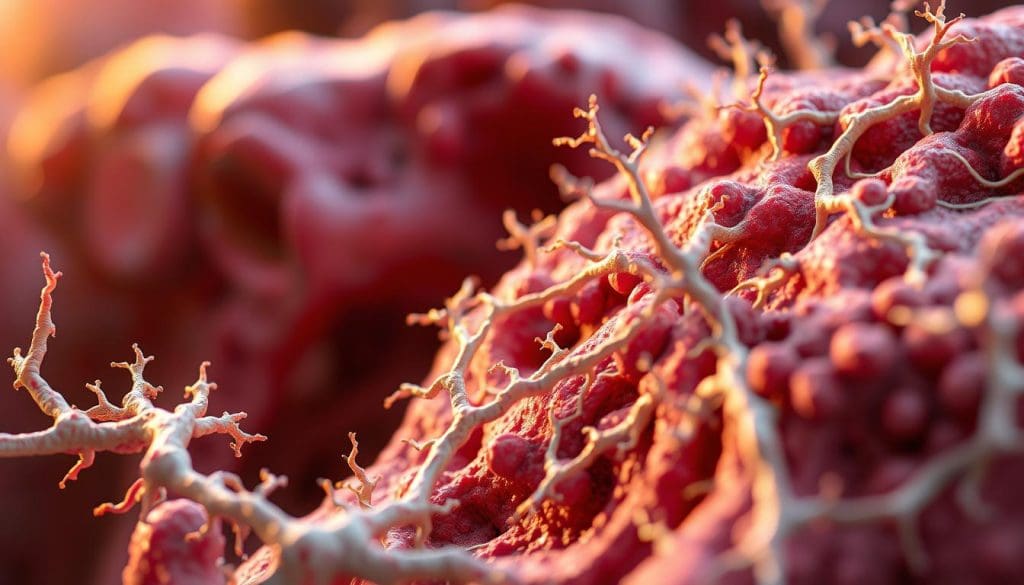
Stromal cells greatly affect wound healing. For example, mesenchymal stromal cells help by boosting tissue growth and reducing scars.
Hematopoiesis Support Functions
In the bone marrow, cellular stroma helps make blood cells. It does this by making cytokines and growth factors. These help blood stem cells grow and change into different blood cells.
| Stromal Cell Type | Function in Hematopoiesis |
|---|---|
| Osteoblasts | Regulate hematopoietic stem cell niche |
| Adventitial cells | Produce cytokines supporting hematopoiesis |
| Endothelial cells | Form blood vessels and support stem cell homing |
Inflammation Control and Resolution
Cellular stroma also helps control inflammation and fix it. It does this by making anti-inflammatory cytokines and working with immune cells.
- Stromal cells produce anti-inflammatory factors that help resolve inflammation.
- They interact with immune cells to modulate the immune response.
- Stromal cells contribute to tissue repair by promoting the regeneration of damaged tissues.
In summary, cellular stroma is vital for fixing and growing tissues. It supports wound healing, blood cell production, and controlling inflammation. Knowing how it works can help us find new ways to treat diseases and injuries.
Fact 6: The Dark Side – Cellular Stroma in Disease Processes
Cellular stroma plays a big role in diseases like cancer, chronic inflammation, and fibrosis. It’s not just a helper anymore. Now, we see it’s involved in many diseases in complex ways.
Cancer Progression and the Tumor Microenvironment
The tumor microenvironment is key in cancer growth. Stromal cells in this environment help cancer cells grow, spread, and form new blood vessels. They do this through special signals.
Stromal cells and cancer cells work together in a complex system. For example, cancer-associated fibroblasts (CAFs) help change the tissue around cancer cells. This makes it easier for cancer to spread.
Chronic Inflammatory Conditions
Cellular stroma also helps keep inflammation going in chronic conditions. It makes substances that keep inflammation alive, leading to tissue damage.
In diseases like rheumatoid arthritis, stromal cells in the joint tissue cause inflammation. This leads to joint damage.
Fibrotic Disorders
Fibrotic diseases, where too much tissue is made, involve cellular stroma. Myofibroblasts, from stromal cells, make too much collagen and other tissue. This causes scarring.
In diseases like idiopathic pulmonary fibrosis, myofibroblasts make the lungs scar. This hurts lung function.
| Disease Condition | Role of Cellular Stroma | Key Stromal Cells Involved |
|---|---|---|
| Cancer Progression | Promotes tumor growth, angiogenesis, and metastasis | Cancer-associated fibroblasts (CAFs) |
| Chronic Inflammatory Conditions | Perpetuates inflammation, contributes to tissue damage | Stromal cells producing pro-inflammatory cytokines |
| Fibrotic Disorders | Excessive deposition of extracellular matrix proteins | Myofibroblasts |
Fact 7: Cutting-Edge Research in Cellular Stroma
The study of cellular stroma is moving fast, with new findings revealing its many roles. Recent studies show how important cellular stroma is in many biological processes and diseases. This knowledge is leading to new ways to treat illnesses.
Recent Discoveries and Breakthroughs
New research has greatly improved our understanding of cellular stroma. It shows how stromal cells help keep tissues healthy and grow back. A study in Nature found that stromal cells play a big role in how cancer grows.
These findings have helped us see how stromal cells work with other cells in tissues. A leading researcher said, “Stromal cells are not just background; they help control how tissues work.”
“The stromal cells are not just passive scaffolding; they actively participate in the regulation of tissue physiology.”
Technological Advances in Stromal Research
New technologies have really helped cellular stroma research. Tools like single-cell RNA sequencing and advanced imaging let researchers study stromal cells in detail.
| Technological Advance | Impact on Stromal Research |
|---|---|
| Single-cell RNA sequencing | Detailed characterization of stromal cell subpopulations |
| Advanced imaging modalities | Visualization of stromal cell interactions in real-time |
| 3D cell culture systems | Recapitulation of in vivo stromal cell behavior |
Emerging Concepts and Future Directions
As we learn more about cellular stroma, new ideas are emerging. One idea is that we can use stromal cells to help treat diseases.
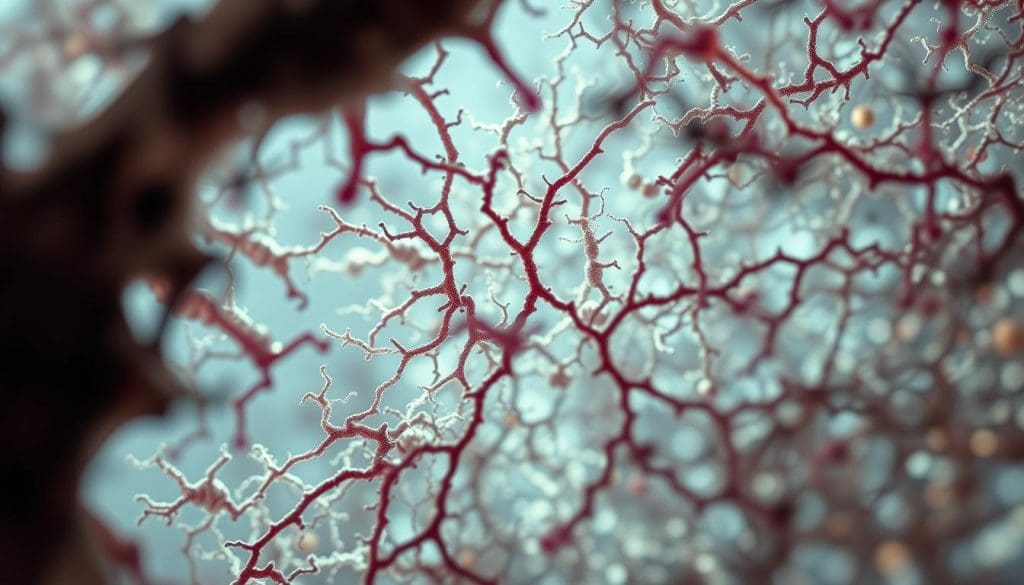
The future of stromal research looks bright. It could lead to new treatments in regenerative medicine and oncology. As we keep studying cellular stroma, we might find new ways to fight diseases and improve health.
Applications of Cellular Stroma in Modern Medicine
Cellular stroma is changing modern medicine in big ways. It’s key in regenerative therapies and fighting cancer. Stromal cells are versatile, making them great for many treatments.
Regenerative Medicine Approaches
Regenerative medicine is where cellular stroma shines. Mesenchymal stromal cells (MSCs) are special. They can turn into different cell types, helping repair tissues.
MSCs are used in many ways in regenerative medicine. They help with:
- Treating diseases like osteoarthritis
- Fixing heart damage after a heart attack
- Helping wounds heal in people with diabetes
Therapeutic Targets in Oncology
The tumor microenvironment, with its stroma, is key in cancer growth and spread. Targeting the stroma in tumors is a new hope in fighting cancer.
| Therapeutic Target | Mechanism of Action | Potential Benefit |
|---|---|---|
| Cancer-associated fibroblasts | Inhibition of tumor growth and metastasis | Improved cancer treatment outcomes |
| Tumor vasculature | Normalization of tumor blood vessels | Enhanced delivery of chemotherapy |
Liv Hospital’s Approach to Stroma-Based Treatments
Liv Hospital leads in using stroma-based treatments. They use the latest research to create new therapies.
They focus on the healing power of cellular stroma. Liv Hospital wants to offer top treatments for complex conditions.
Conclusion: Why Understanding Cellular Stroma Matters
Understanding cellular stroma is key for finding new treatments for many diseases. The complex network of stromal cells is vital for keeping tissues healthy. This makes it a big focus in today’s medicine.
Cellular stroma helps with many important tasks like fixing damaged tissues and controlling the immune system. It also helps with metabolism. But, when it goes wrong, it can lead to diseases like cancer and fibrosis.
New discoveries in stromal research are leading to exciting new treatments. Places like Liv Hospital are leading the way in using stroma for better health. This shows the big promise of cellular stroma in improving our lives.
In conclusion, studying cellular stroma and stromal cells is vital. It helps us understand how tissues work and find new ways to treat diseases.
What is cellular stroma, and what role does it play in the body?
Cellular stroma is the tissue that supports other cells and structures in organs and tissues. It helps keep tissue shape, controls immune responses, and helps with nutrient exchange.
Where is cellular stroma found in the body?
You can find cellular stroma in many places like bone marrow, skin, and other organs. Each place has its own special job.
What are Mesenchymal Stromal Cells (MSCs), and what are their functions?
MSCs are special cells in cellular stroma. They can grow into different types of cells. This helps in fixing and growing tissues.
How does cellular stroma contribute to tissue repair and regeneration?
It’s key in fixing and growing tissues. It helps with healing wounds, making blood cells, and controlling inflammation.
What is the role of cellular stroma in disease processes?
It can help diseases like cancer grow by creating a good environment. It also plays a part in chronic inflammation and fibrosis.
How is cellular stroma being used in modern medicine?
It’s being looked at for regrowing tissues and fighting cancer. Places like Liv Hospital are using it in new treatments.
What are the future directions in cellular stroma research?
New ideas and tech are leading to big discoveries. We’re learning more about its role in keeping tissues healthy and its use in treatments.