Human pluripotent stem cells can keep growing forever. They can turn into almost any cell in our bodies. This makes them very important for studying human development and finding new treatments.
Pluripotent stem cells can become any cell type from the three germ layers: ectoderm, endoderm, and mesoderm. There are two main types: human embryonic stem cells (hESCs) and human induced pluripotent stem cells (hiPSCs). They help us understand human biology and could lead to new treatments.
Key Takeaways
- Human pluripotent stem cells can self-renew and differentiate into various cell types.
- They are very important for studying human development and disease modeling.
- Human induced pluripotent stem cells (hiPSCs) are a type of pluripotent stem cell.
- Pluripotent stem cells have the power to help in making new treatments.
- They can turn into any of the three germ layers.
Understanding Stem Cell Basics
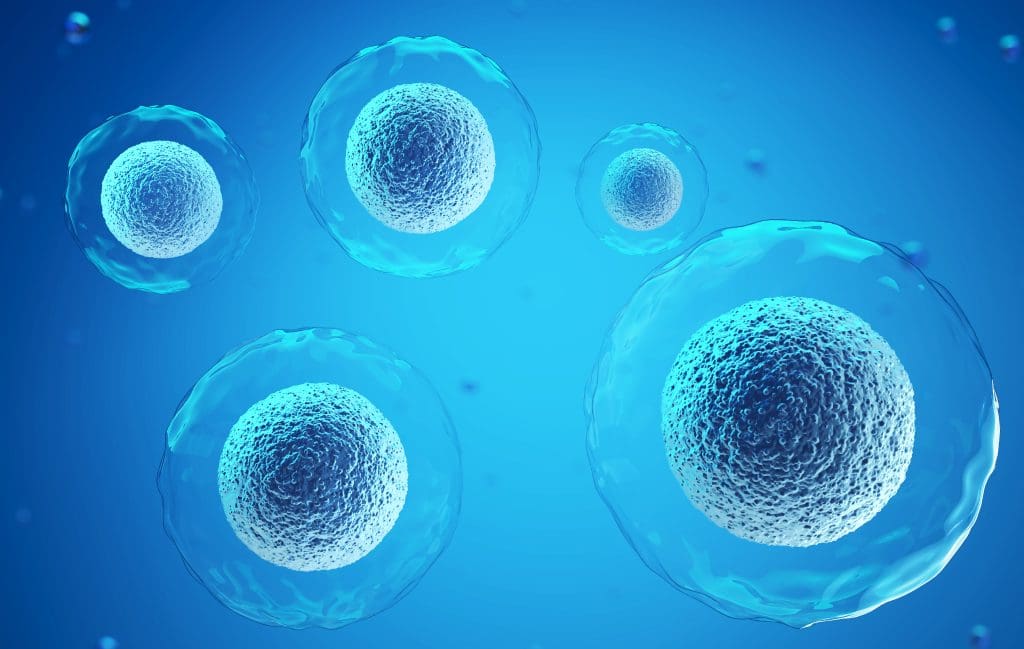
To understand pluripotent stem cells, we need to know the basics. Stem cells can turn into different types of cells and can make more of themselves.
Stem Cell Definition and Properties
Stem cells can become many types of cells and can make more of themselves. This makes them important for growth, keeping tissues healthy, and fixing damaged areas. Their ability to become different cells is key to their definition.
Stem cells have a few important traits:
- Self-renewal: They can grow without changing into different cells.
- Potency: They can turn into many types of cells.
- Differentiation ability: They can become specialized cells.
Different Types of Stem Cells
Stem cells are divided based on where they come from and how many types of cells they can become. The main types are:
- Embryonic Stem Cells: These come from embryos and can become any cell in the body.
- Adult Stem Cells: These are in adult bodies and can become a few types of cells. Some research suggests they might be able to become more types of cells under certain conditions.
- Induced Pluripotent Stem Cells (iPSCs): These are made from adult cells that are changed to be like embryonic stem cells.
Knowing the differences between these stem cells is important. It helps us see how they can be used in medicine and research. While pluripotential stem cells have great promise, how much are adult stem cells pluripotent is something scientists are studying.
What Are the Pluripotent Stem Cells
“Pluripotent” means a stem cell can turn into any body cell type. This makes pluripotent stem cells very important for medical studies. They can become different cell types by developing into the three germ layers: ectoderm, endoderm, and mesoderm.
Definition of Pluripotency
Pluripotency lets a cell renew itself and grow into many cell types. Pluripotent stem cells, like embryonic stem cells and induced pluripotent stem cells (iPSCs), have this power. They are key for fixing damaged tissues and studying diseases. For example, human iPSC cells are made from adult cells turned back into a pluripotent state, allowing them to become many cell types.
Characteristics of Pluripotent Cells
Pluripotent cells can grow into tumors with different tissue types. They also have special genes like OCT4, SOX2, and NANOG. These genes help keep them in a pluripotent state. Examples include embryonic stem cells from embryos and induced pluripotent stem cells made by reprogramming.
Pluripotent stem cells can turn into many cell types. This makes them very useful for research and possible treatments. Knowing how these cells work is key to improving regenerative medicine.
Do Humans Naturally Have Pluripotent Stem Cells?
Yes, humans do have pluripotent stem cells, but they are mostly found in early development. Pluripotent stem cells are key in the early stages of human growth.
The Short Answer: Yes, But Limited
Humans naturally have pluripotent stem cells, mainly during embryonic development. These cells are vital for the embryo’s growth and formation.
In adults, the role of pluripotent stem cells is less clear. Research shows adult cells can become induced pluripotent stem cells (iPSCs). But, naturally occurring pluripotent cells in adults are rare.
Embryonic Development and Pluripotency
Embryonic development is when pluripotent stem cells are most active. They can turn into any cell type. This is essential for the embryo to grow into a fully formed individual.
The question of where are pluripotent cells found is tied to embryonic stages. Pluripotent stem cells are mainly in the early embryo, in the inner cell mass of the blastocyst.
Learning about pluripotent stem cells in embryonic development helps us understand human biology. It also has big implications for regenerative medicine and developmental processes.
Where Are Pluripotent Stem Cells Found in Humans
Pluripotent stem cells in humans are linked to early embryonic development. Knowing where they are found helps us understand their role in growth and their use in medical studies.
Embryonic Sources
These cells come from embryonic sources. These sources are key because they show us how humans develop early on.
Blastocyst Inner Cell Mass
The inner cell mass of the blastocyst is full of embryonic stem cells. These cells can turn into almost any cell in the body.
Primordial Germ Cells
Primordial germ cells are the early stages of sperm and eggs. They also have the ability to become many different cell types.
| Source | Description | Significance |
| Blastocyst Inner Cell Mass | Cells from the inner cell mass of the blastocyst stage embryo | Rich source of embryonic stem cells, vital for growth and research |
| Primordial Germ Cells | Precursors to sperm and eggs | Exhibit pluripotency, key for reproductive biology and regenerative medicine |
The main place pluripotent stem cells are found in humans is during early embryonic stages. Learning about these sources is essential for improving research and treatments.
Human Induced Pluripotent Stem Cells
The discovery of human induced pluripotent stem cells (hiPSCs) has changed stem cell biology. These cells come from adult cells through a special process. This process uses certain genes to change the cells.
Discovery and Development of iPSCs
In 2006, Shinya Yamanaka and his team found induced pluripotent stem cells. They showed that adult mouse cells could become like stem cells. They used four genes: Oct4, Sox2, Klf4, and c-Myc.
This finding was soon applied to human cells. It opened new doors for research and possible treatments.
The Reprogramming Process
To make iPSCs, scientists add special genes to adult cells. These cells are usually from skin or blood. This makes them like embryonic stem cells.
How well this works can change. It depends on the method and the type of adult cell used.
Comparison with Embryonic Stem Cells
hiPSCs and embryonic stem cells can both become many cell types. But hiPSCs come from adult cells. This means they avoid the ethical issues of embryonic stem cells.
| Characteristics | Human Induced Pluripotent Stem Cells | Embryonic Stem Cells |
| Source | Adult cells (e.g., skin, blood) | Embryos |
| Pluripotency | Yes | Yes |
| Ethical Concerns | Fewer | More |
| Differentiation Potentia | Multiple cell types | Multiple cell types |
Both stem cell types could change medicine. But hiPSCs are special. They can be made from a person’s own cells.
Methods of Creating Human iPSC Cells
Human iPSCs are made by changing adult cells into a pluripotent state. This lets researchers study diseases and find new treatments. They use cells that are genetically the same as the patient’s.
Transcription Factor-Based Reprogramming
The most common way to make human iPSCs is by using transcription factors. The “Yamanaka factors” “ Oct4, Sox2, Klf4, and c-Myc “ are key. These factors are added to adult cells, like skin or blood cells, using viruses.
The steps for this method are:
- Choosing adult cells for reprogramming
- Adding Yamanaka factors to the cells
- Keeping the cells in a special environment for pluripotency
- Finding and picking iPSC colonies
This method is used a lot for research and therapy. But, it has challenges like the risk of genetic changes from viruses.
Alternative Reprogramming Methods
To fix some issues with the current method, scientists are looking at new ways. They’re using small molecules and non-integrating techniques to improve it.
Some new approaches include:
- Using small molecules instead of some Yamanaka factors
- Trying non-integrating vectors like Sendai virus or episomal vectors
- Using messenger RNA (mRNA) or microRNA (miRNA) for reprogramming
These new methods aim to make iPSCs safer and more efficient. This could help them be used in clinics soon.
It’s important to know what pluripotent stem cells are. They can turn into any cell type in the body. This makes them very useful for fixing damaged tissues and studying diseases.
Are Adult Stem Cells Pluripotent?
Understanding adult stem cells is key to stem cell research. These cells are in adult tissues and help repair and maintain tissues.
Adult Stem Cell Potency Limitations
Adult stem cells are mostly multipotent, not pluripotent. They can turn into cell types related to their tissue. For example, bone marrow stem cells can become bone, cartilage, or fat cells. But they can’t become as many types of cells as pluripotent stem cells can.
Key limitations of adult stem cell potency include:
- Limited differentiation compared to pluripotent stem cells
- Restricted to their tissue or germ layer
- May not work as well with age or in disease
Differences Between Adult and Pluripotent Stem Cells
The main difference is in their ability to become different cell types. Pluripotent stem cells, like embryonic or iPSCs, can become any cell type. Adult stem cells are more limited.
| Characteristics | Adult Stem Cells | Pluripotent Stem Cells |
| Differentiation Ability | Multipotent, limited to specific tissue types | Pluripotent, can form all somatic cell types |
| Tissue Origin | Found in adult tissues, specific to tissue type | Can be derived from embryos or generated via reprogramming |
| Proliferation Capacity | Limited proliferation capacity | Can proliferate indefinitely under appropriate conditions |
Even though adult stem cells aren’t as versatile as embryonic or iPSCs, research is exploring their uses in regenerative medicine.
Examples of Pluripotent Cells in Research
Pluripotent stem cells are key in biomedical research. They can turn into any cell type. This makes them very useful for studying human biology and diseases.
Established Pluripotent Cell Lines
There are many pluripotent cell lines, like human embryonic stem cells (hESCs) and human induced pluripotent stem cells (hiPSCs). These lines are important for research. They give a steady and trustworthy source of these cells.
Characteristics of Established Cell Lines:
| Cell Line | Source | Key Features |
| hESCs | Embryonic blastocysts | Pluripotent, self-renewing |
| hiPSCs | Reprogrammed somatic cells | Pluripotent, patient-specific |
Research Applications
Pluripotent stem cells are used in many research areas. These include disease modeling, drug discovery, and regenerative medicine.Some main uses are:
- Disease modeling: hiPSCs help model genetic diseases. This lets researchers study how diseases progress and find new treatments.
- Drug discovery: Pluripotent stem cells can become different cell types. This is useful for drug testing and checking for side effects.
- Regenerative medicine: These cells might help fix or replace damaged tissues.
Using pluripotent stem cells in research has greatly helped us understand human biology. It could also lead to big medical breakthroughs.
Pluripotential Stem Cells vs. Other Stem Cell Types
To understand the importance of pluripotent stem cells, we must know how they differ from other stem cells. Totipotent, multipotent, and unipotent stem cells each have their own special abilities.
Comparison with Totipotent Cells
Totipotent cells can grow into a complete organism. This is different from pluripotent cells, which can become many cell types but not a whole organism. Totipotency is seen in the very early stages of an embryo.
Comparison with Multipotent Cells
Multipotent stem cells can turn into several cell types, but only within certain groups. For example, blood stem cells can make different blood cells but not other types of cells. Pluripotent stem cells, on the other hand, can become almost any cell in the body.
Comparison with Unipotent Cells
Unipotent cells can only turn into one type of cell. They are stem cells because they can grow themselves, but they can’t change into many different cells like pluripotent and multipotent stem cells can.
| Stem Cell Type | Differentiation Ability | Examples |
| Totipotent | Can form an entire organism | Zygote, early embryonic cells |
| Pluripotent | Can form all somatic cell types | Embryonic stem cells, induced pluripotent stem cells |
| Multipotent | Limited to specific lineages | Hematopoietic stem cells, mesenchymal stem cells |
| Unipotent | Can give rise to only one cell type | Certain progenitor cells |
Understanding pluripotent stem cells means seeing their special place among other stem cells. Their wide range of differentiation makes them key for research and possible treatments.
Clinical Applications of Human Pluripotent Stem Cells
Human pluripotent stem cells can turn into any cell type. This makes them very promising for medical progress. They could change healthcare by treating diseases and studying them in labs.
Regenerative Medicine
Human induced pluripotent stem cells (hiPSCs) are key in regenerative medicine. They can create cells and tissues to replace damaged ones. This could help with many diseases, like heart issues, Parkinson’s, and diabetes.
For example, hiPSCs can become heart cells to fix damaged hearts. They can also become brain cells to help with neurodegenerative diseases.
Disease Modeling
Human pluripotent stem cells are great for studying diseases. By making cells from patients, researchers can learn about diseases in labs. This helps them understand and find better treatments.
hiPSCs from patients with genetic disorders can model diseases in a lab. This helps researchers see how diseases progress and find new treatments.
| Disease | Cell Type Derived from hiPSCs | Research Application |
| Parkinson’s Disease | Neural Cells | Studying disease mechanisms and testing possible treatments |
| Heart Disease | Cardiomyocytes | Repairing damaged heart tissue and studying heart disease |
| Diabetes | Pancreatic Beta Cells | Replacing damaged cells and studying disease progression |
Drug Discovery and Testing
Human pluripotent stem cells are also useful in finding and testing drugs. hiPSC cells can help screen drugs, making the process faster and more accurate.
hiPSC cells allow researchers to test drugs in a human-like model. This can help find safer and more effective treatments.
In conclusion, human pluripotent stem cells, like human induced pluripotent stem cells, are changing medicine. They have huge promise in regenerative medicine, disease modeling, and drug discovery.
Challenges in Pluripotent Stem Cell Research
Using pluripotent stem cells in research and medicine faces many challenges. These cells have great promise but also big hurdles. Researchers and doctors must work hard to unlock their full benefits.
Technical Challenges
One big challenge is making pluripotent stem cells efficiently. Scientists need to figure out how to turn these cells into specific types. They also have to keep these cells in a controlled environment to avoid problems.
Turning regular cells into induced pluripotent stem cells (iPSCs) is also tricky. The success rate is low, and the quality of the iPSCs can vary. Choosing the right factors for reprogramming is key to getting good iPSCs.
Safety Concerns
When working with pluripotent stem cells, safety is a top priority. One major risk is the formation of tumors. It’s important to make sure these cells are fully changed into the right type before using them in treatments.
Another safety issue is genetic stability. Long-term culture can cause genetic problems. These could lead to serious issues if used in humans. So, it’s vital to test and check these cells carefully before using them in treatments.
Regulatory Hurdles
Research on pluripotent stem cells is governed by strict rules. In the U.S., for example, there are guidelines for handling these cells. Following these rules is important to conduct research ethically and avoid legal trouble.
Getting stem cell therapies approved for use in clinics is also a big challenge. The FDA must be convinced of their safety and effectiveness. Researchers need to understand these rules and plan carefully to bring their work to the clinic.
Ethical Considerations in Pluripotent Stem Cell Research
The ethics of pluripotent stem cell research are complex. Scientists face many ethical issues as they explore these cells’ vast possibilities. These concerns have big implications for the field.
Embryonic Stem Cell Ethics
Getting embryonic stem cells raises big ethical questions. Many think embryos could become human beings and shouldn’t be used for research. This debate centers on the moral status of embryos and the benefits versus the costs of research.
“The use of embryonic stem cells raises fundamental questions about the moral and ethical boundaries of scientific research.”
iPSC Ethical Advantages and Concerns
Human induced pluripotent stem cells (iPSCs) offer a different path. iPSCs are made by turning adult cells into stem cells, avoiding embryo destruction. But, they also bring up ethical worries, like donor consent and genetic issues. It’s key to make sure donors know what they’re agreeing to and that the process doesn’t harm them.
Understanding pluripotent stem cells means seeing their ability to become any cell type. This makes them very useful for research and possible treatments. The ethics of using them, whether from embryos or induced, must be balanced against their benefits.
Future Directions in Human Pluripotent Stem Cell Research
The field of human pluripotent stem cell research is growing fast. This is thanks to new tools in gene editing and synthetic biology. These tools help us understand human development and disease better. They also open new ways to treat diseases.
Emerging Technologies
New technologies are set to make big strides in human pluripotent stem cell research. Gene editing technologies, like CRISPR/Cas9, let us make precise changes to the genome of these cells. This is key for making cell models of genetic diseases and for fixing genetic problems in stem cells for therapy.
- CRISPR/Cas9 and other gene editing tools are being used to modify human induced pluripotent stem cells (iPSCs) for research and therapeutic purposes.
- Synthetic biology approaches are being explored to enhance the functionality and safety of pluripotent stem cells.
These technologies promise big advances in disease modeling, regenerative medicine, and treating diseases that can’t be cured now. For example, gene-edited iPSCs can model complex diseases in a lab. This helps us understand diseases better and develop personalized treatments.
Potential Breakthroughs
The mix of new technologies with human pluripotent stem cell research could lead to many breakthroughs. Examples of pluripotent cells are being used in many research areas, including:
- Disease modeling: Using patient-specific iPSCs to model diseases and test drug responses.
- Regenerative medicine: Developing therapies based on pluripotent stem cells to replace or repair damaged tissues.
- Drug discovery and testing: Using pluripotent stem cells to screen for drug efficacy and toxicity.
These advances show the huge promise of human pluripotent stem cell research for changing how we deal with human health and disease. As the field keeps growing, it’s likely to bring new and creative ways to treat patients, improving their health a lot.
Conclusion
Human pluripotent stem cells have changed the game in biomedical research. They open up new ways to understand human biology and diseases. Knowing about these cells is key to moving medical research forward.
These stem cells can turn into any cell type. This makes them super useful for studying human development and diseases. As research gets better, we’ll see big steps forward in using these cells.
Studying pluripotent stem cells is a big deal for regenerative medicine and finding new treatments. More research will lead to new ways to treat diseases. This could change how we handle many medical issues.
FAQ
Do humans have pluripotent stem cells?
Yes, humans have pluripotent stem cells. These cells are key in early development. They include human embryonic stem cells (hESCs) and human induced pluripotent stem cells (hiPSCs).
What are pluripotent stem cells?
Pluripotent stem cells can turn into any cell type in the body. They are important for studying human development and diseases. They also help in finding new treatments.
Are adult stem cells pluripotent?
Adult stem cells are not fully pluripotent. They can only turn into a few cell types. But, they can become pluripotent through a process called induced pluripotent stem cells (iPSCs).
Where are pluripotent stem cells found in humans?
You can find pluripotent stem cells in embryos. They are in the inner cell mass of the blastocyst. Also, primordial germ cells, which become sperm and eggs, have this ability.
What are human induced pluripotent stem cells (hiPSCs)?
Human induced pluripotent stem cells (hiPSCs) are made from adult cells. This is done by adding special genes to them. This method is helping in studying diseases and finding new treatments.
How are human iPSCs created?
To make human iPSCs, adult cells are changed into pluripotent cells. This is done by adding certain genes, like the “Yamanaka factors”. Researchers are also looking into other ways to do this.
What is the difference between pluripotent and multipotent stem cells?
Pluripotent stem cells can become any cell type. Multipotent stem cells can only become a few cell types. They are usually found in specific tissues.
What are the clinical applications of human pluripotent stem cells?
Human pluripotent stem cells are useful for fixing damaged tissues. They help in studying diseases and testing new treatments. They are also used to understand how we develop.
What are the challenges in pluripotent stem cell research?
Making pluripotent stem cells is a big challenge. There are also worries about safety, like the risk of tumors. There are rules to follow when using these cells.
What are the ethical considerations in pluripotent stem cell research?
Making embryonic stem cells means destroying embryos, which is a big ethical issue. But, iPSCs are made without harming embryos. Yet, there are concerns about donor consent and genetic problems.
What is the future of human pluripotent stem cell research?
The future looks bright for pluripotent stem cell research. New technologies like CRISPR/Cas9 are making progress faster. These advances could lead to new treatments for diseases that are currently untreatable.