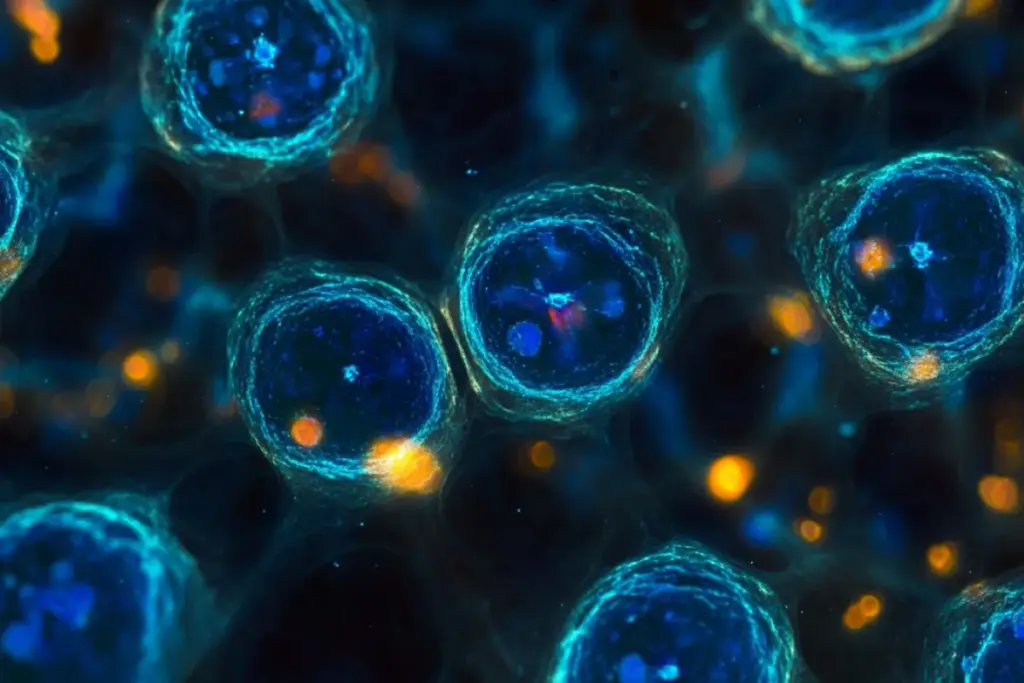
Many Christians are against stem cell research, mainly because of embryonic stem cells. They worry about the ethics of using embryos for research. They think that life starts at conception, making it wrong to destroy embryos for science.
We will look into why Christians oppose stem cell research. We’ll see the main arguments and worries from Christian leaders and groups. For more on the debate around stem cell research, check out .
Key Takeaways
- Christian opposition to stem cell research is rooted in ethical concerns about the sanctity of human life.
- The belief that life begins at conception is a key factor in this opposition.
- Various Christian denominations have raised concerns about the destruction of embryos for research purposes.
- Theological and biblical perspectives play a significant role in shaping Christian views on stem cell research.
- Christian communities continue to debate the moral implications of stem cell research.
The Ethical Foundation of Christian Opposition to Stem Cell Research
Christian opposition to stem cell research comes from a deep belief in the sanctity of human life. They see human life as sacred, created in God’s image. This belief is key to understanding the Christian view on the sanctity of human lifeand its impact on stem cell research.
The Sanctity of Human Life in Christian Theology
In Christian theology, the sanctity of human life is rooted in biblical teachings. The belief that human life is created in the image of God (Imago Dei) gives every human being inherent dignity and worth. This principle is a core part of Christian ethics and shapes their views on stem cell research.
“So God created mankind in his own image, in the image of God he created them; male and female he created them.” This Genesis reference highlights the sacred nature of human life, showing it is made in God’s image.
When Life Begins: The Conception Perspective
The question of when life begins is central to Christian opposition to stem cell research. Many Christians believe life starts at conception. This belief is backed by biblical references that stress the importance of human life from the earliest stages.
For example, the Bible verse “Before I formed you in the womb I knew you, before you were born I set you apart” (Jeremiah 1:5) supports the idea that human life is significant even before birth. This view is at the heart of Christian ethics on stem cell research and the use of embryos.
About 51% of highly religious Americans oppose stem cell research. This shows how religious beliefs shape public opinion on this issue.
Understanding Embryonic Stem Cell Research
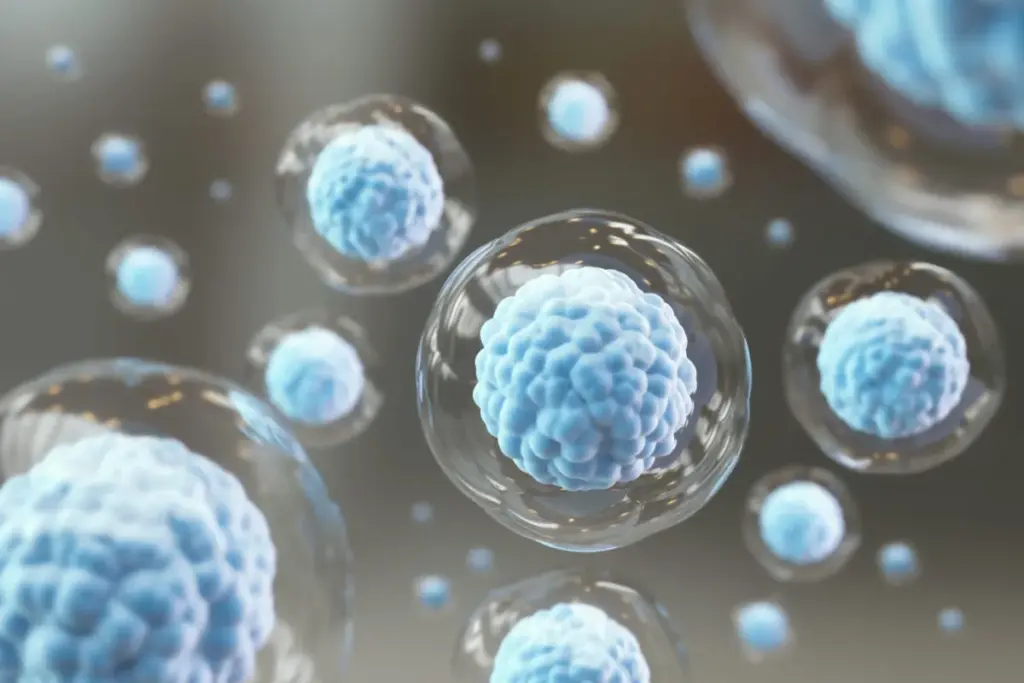
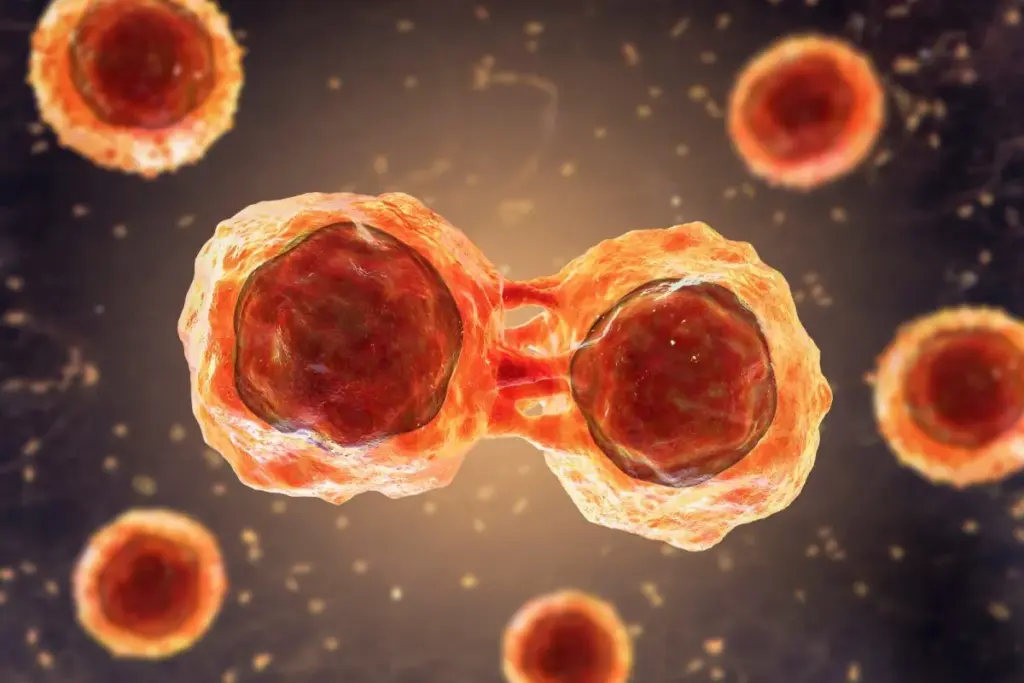
Embryonic stem cells come from human embryos. They can turn into many different cell types. This makes them very useful in science.
These cells are special because they can become almost any cell in the body. This is key for medical research and could lead to new treatments.
What Are Embryonic Stem Cells?
Embryonic stem cells come from embryos that are just a few days old. At this time, the embryo is a group of cells that hasn’t yet attached to the uterus. Scientists take these cells from the embryo and grow them in a lab.
This lets scientists study how these cells work. They can learn how these cells change and what they can do to help medicine.
The Scientific Process and Its Promise
The scientific process starts with getting stem cells from embryos. These cells are then grown in a lab. Scientists can make them turn into different types of cells.
This is important because it helps us understand how cells grow and how diseases work. It also shows promise for fixing damaged tissues in the body.
These cells could help us learn more about how we grow and develop. They might also help find new ways to treat diseases. This includes things like heart problems and brain disorders.
Researchers are also looking at how these cells can help with drug testing. They might help us understand some diseases better too.
Why Embryos Are Used in Research
Embryos are used because they have many stem cells. These stem cells are important for research. They help us learn about early human development and could lead to new treatments.
Using embryos in research is a big debate. It’s about the benefits of science versus the ethics. But, many believe it’s worth it for the chance to save lives.
We know that using embryonic stem cells is a tough issue. It’s about science and ethics. As we keep studying these cells, we must respect ethical limits while seeking knowledge.
Statistical Overview: Religious Beliefs and Stem Cell Opposition
Recent studies show a strong link between religious beliefs and opposition to stem cell research. This link is seen across many Christian denominations. How often someone goes to church is a key factor in their views on stem cell research.
The 51% Factor: Religious Americans Against Research
About 51% of very religious Americans don’t support stem cell research. This is compared to 12% of those who rarely go to church. This big difference shows how faith can shape opinions on stem cell research. It seems that religious people often follow their faith’s teachings on life and ethics.
Correlation Between Religious Commitment and Research Disapproval
The link between being religious and opposing stem cell research is clear. Here’s a table with data from recent surveys:
|
Religious Commitment Level |
Opposition to Stem Cell Research |
|---|---|
|
High |
51% |
|
Moderate |
30% |
|
Low |
12% |
This data shows a clear trend. The more religious someone is, the more they oppose stem cell research. Knowing these stats helps us understand the big picture of the stem cell debate.
The statistics also show the complexity of the issue. As we explore the ethics, science, and faith sides of stem cell research, it’s clear. Religious beliefs are key in shaping public views and personal opinions on this hot topic.
The Catholic Church’s Official Position on Embryonic Stem Cell Research
The Catholic Church strongly opposes embryonic stem cell research. This opposition stems from a deep belief in the sanctity of human life. The Church teaches that human life is sacred from the moment of conception until natural death.
Vatican Declarations on Human Life
The Vatican has made several key statements about human life and embryonic stem cell research. One important document is the Donum Vitae (Gift of Life), released in 1987. It says that destroying human embryos for research is morally wrong, just like abortion.
These declarations show the Church’s stance on human life. It believes human life starts at conception. This belief is why the Church opposes embryonic stem cell research, as it involves destroying embryos.
Parallels Between Abortion and Stem Cell Research in Catholic Teaching
The Catholic Church sees a strong connection between abortion and embryonic stem cell research. Both involve destroying human life, according to the Church. The Catechism of the Catholic Church says human life must be respected from conception.
Catholic Opposition to IVF and Related Technologies
The Church’s opposition goes beyond embryonic stem cell research to include IVF. It sees IVF and similar technologies as morally wrong. This is because they often lead to the creation and destruction of human embryos.
|
Issue |
Catholic Church’s Stance |
Rationale |
|---|---|---|
|
Embryonic Stem Cell Research |
Opposed |
Destruction of human embryos |
|
IVF |
Opposed |
Creation and destruction of human embryos |
|
Abortion |
Opposed |
Direct destruction of human life |
For more information on the Church’s view on stem cell research, visit Cell.
Understanding the Church’s theological and ethical reasons helps us see its strong commitment to protecting human life. This commitment is the foundation of its stance on embryonic stem cell research and related issues.
Protestant Denominations and Their Positions
Protestant churches have different views on stem cell research. This shows their varied understanding of Christian ethicsand human life. Each denomination has its own take, making it clear there’s no one Protestant view.
Evangelical Perspectives on Stem Cell Research
Evangelical churches often say no to stem cell research that harms human embryos. They believe in the sanctity of life. Franklin Graham once said, ‘The use of human embryos for research is a morally complex issue that challenges our understanding of human dignity.’ This view comes from their reading of the Bible on human life’s value.
Mainline Protestant Churches’ Varying Stances
Mainline Protestant churches have more nuanced views. Some support research to cure diseases but with strict ethics. The Episcopal Church backs stem cell research for health benefits. This shows a balance between medical progress and ethics.
Denominational Differences in Ethical Interpretation
Protestant denominations have different views on ethics in bioethics. Some see stem cell research as a way to save lives. Others worry about the moral cost of destroying embryos. A
‘The moral status of the embryo is a critical issue in the debate over stem cell research.’
This variety makes it hard for Protestants to agree on one stance.
The Biblical Basis for Christian Opposition
Christian opposition to stem cell research comes from the Bible. It highlights the dignity and value of human life. Christians point to passages that show human life is made in God’s image, making every person valuable.
Scriptural References to Human Life and Creation
The Bible talks a lot about the sanctity of human life. For example, Genesis 1:27 says, “So God created mankind in his own image, in the image of God he created them; male and female he created them.” This shows the sacredness of human life and our duty to protect it.
Psalm 139:13-14 also plays a big role. It says, “For you created my inmost being; you knit me together in my mother’s womb. I praise you because I am fearfully and wonderfully made; your works are wonderful, I know that full well.” This psalm is key in discussions about life’s sanctity from the start.
Theological Interpretations of Personhood
Understanding personhood is key to Christian views on stem cell research. Christians see personhood as tied to the Bible’s view of human life’s dignity and worth.
The debate on when life becomes a person is intense. Some believe it starts at conception, pointing to scriptures like Jeremiah 1:5 that talk about God’s knowledge from the womb.
|
Scriptural Reference |
Theological Interpretation |
|---|---|
|
Genesis 1:27 |
Human life created in God’s image |
|
Psalm 139:13-14 |
Human life is “fearfully and wonderfully made” |
|
Jeremiah 1:5 |
God knows individuals before birth |
The “Fearfully and Wonderfully Made” Argument
The phrase “fearfully and wonderfully made” from Psalm 139:14 is a strong argument against stem cell research. It shows the sacredness of human life and God’s detailed creation of each person.
Those against stem cell research use this argument to stress the need to protect life at all stages. They say destroying embryos for research goes against this principle.
The reasons for Christian opposition to stem cell research are complex. By looking at the Bible and theological views, we can understand their stance better.
Christian Bioethics: The Moral Status of the Embryo
The moral status of the embryo is a big deal in Christian bioethics. It makes us think about what it means to be a person and have dignity. Christians believe that life starts at conception and is sacred.
Defining Personhood in Christian Ethics
Understanding personhood is key to seeing the embryo’s moral status. Christian thinkers look at the Bible to learn about human life and creation. They believe life starts at conception and should be respected and protected.
Personhood is more than just biology. It also involves theology and philosophy. The idea that an embryo could grow into a human is a big part of this debate.
The Potentality Argument
The potentality argument says embryos have dignity and worth because they can become humans. This view comes from believing that life, even in its earliest stages, is precious and should be respected.
This argument is not just about biology. It’s also about the moral and ethical sides of ending human life, even at the embryonic stage.
Respect for Human Dignity from Conception
Respecting human dignity from the start is a core idea in Christian bioethics. Those against stem cell research say embryos should be respected and protected. They are the earliest form of human life.
This view comes from a deep respect for human life, seen as made in God’s image. The ethics of embryonic stem cell research are closely tied to theological views on dignity and worth.
The Right to Life Argument in Christian Thought
At the heart of Christian opposition to stem cell research is the right to life argument. This principle is key for many Christians who see human life as sacred. It is based on Christian theology and supported by the Bible and natural lawtheory.
Natural Law and Divine Rights
Natural law is at the core of the Christian right to life argument. It suggests that certain moral rules are part of human nature and can be found through reason. Christians believe these rules come from God and are shown in Scripture.
Key Principles of Natural Law:
- The inherent dignity of human life
- The importance of protecting the vulnerable
- The belief in the sanctity of human life from conception to natural death
The Vulnerable and Voiceless: Christian Advocacy
Christians are called to stand up for the rights of the vulnerable, like embryos and fetuses. This is because all human beings are seen as created in God’s image. They have inherent dignity and worth.
Christian advocacy for the right to life is not just about opposing stem cell research. It’s also about creating a culture that values human dignity.
|
Key Aspects |
Description |
|---|---|
|
Natural Law |
Moral principles inherent in human nature |
|
Divine Rights |
Rights based on biblical teachings |
|
Christian Advocacy |
Advocating for the vulnerable and voiceless |
Understanding the right to life argument in Christian thought helps us see the complexity of the stem cell research debate. This argument is not just about scientific ethics. It’s also about the deeper theological and philosophical principles that guide Christian ethics.
Adult Stem Cell Research: The Christian Alternative
Adult stem cell research is a valid and ethical choice for Christians who don’t support embryonic stem cell research. It’s gaining attention in the Christian community for its medical promise without the ethical issues of embryonic stem cells.
Scientific Possibilities Without Ethical Concerns
Adult stem cells come from adult tissues like bone marrow, fat, or blood. They can turn into different cell types, making them key for regenerative medicine. Unlike embryonic stem cells, they don’t harm embryos, easing ethical worries for Christians.
Studies show adult stem cells can fix heart damage, treat autoimmune diseases, and even grow new organs. The scientific world is excited about their possibilities, and early results are encouraging.
Christian Support for Alternative Research Methods
Many Christians back adult stem cell research because it fits their moral and ethical views. It allows for medical progress without violating their values. They believe human life is sacred and should not be used for research.
Many Christian groups actively advocate for adult stem cell research, viewing it as a means to advance medicine while upholding their ethical standards. They see it as a way to respect human dignity and advance medicine without losing ethical standards.
Success Stories in Adult Stem Cell Therapies
Adult stem cell therapies have shown great promise. For example, they’ve helped patients with leukemia and blood disorders through bone marrow transplants. Researchers are also exploring their use in fixing heart damage and improving heart function in patients with heart disease.
|
Therapy |
Description |
Outcome |
|---|---|---|
|
Bone Marrow Transplant |
Used to treat leukemia and other blood disorders |
Successful in restoring healthy blood cells |
|
Cardiac Repair |
Used to repair damaged heart tissue |
Improved cardiac function in patients |
|
Regenerative Medicine |
Used to regenerate damaged tissues and organs |
Promising results in early-stage trials |
These successes highlight the power of adult stem cell research in healthcare. As Christians support this research, we can look forward to more effective and ethical medical treatments.
The Legal Status of Embryonic Stem Cell Research
Embryonic stem cell research is governed by laws that change with each country. These laws have grown more complex over time. The debate over ethics, morals, and science has led to different rules worldwide.
Historical Development of Research Regulations
The rules for embryonic stem cell research have changed a lot. At first, many places had few rules. But as research grew, so did the laws to control it.
In the United States, the has been key. It stopped federal money for research that harms human embryos. This rule has shaped stem cell research in the U.S. for over 25 years.
Current Legal Framework in the United States
Today, the U.S. has a complex set of laws for embryonic stem cell research. The Dickey-Wicker Amendment limits federal money for research that harms embryos. But, some states have their own rules, which can be more open.
|
State |
Legal Status of Embryonic Stem Cell Research |
Funding Availability |
|---|---|---|
|
California |
Permissive |
State-funded |
|
New York |
Permissive |
State-funded |
|
Other States |
Varies |
Limited or No State Funding |
Christian Influence on Stem Cell Legislation
Christian groups have greatly influenced laws on embryonic stem cell research. Many Christians worry about the ethics of this research, like the harm to human embryos.
Christian voices are heard in politics and laws. They often argue against this research because of its ethics and morals.
The Slippery Slope Concern in Christian Ethics
Christian discussions about embryonic stem cell research often bring up the slippery slope concern. Those who oppose it fear it could lead to a decrease in valuing human life. They worry that destroying embryos might become more acceptable, affecting other vulnerable groups too.
Fear of Devaluing Human Life
Christians believe humans are made in God’s image, giving them great dignity and worth. Destroying embryos for research is seen as a violation of this belief. It could lead to a broader disregard for human life, affecting the elderly, disabled, and terminally ill.
Creating a culture where some lives are seen as disposable is a serious ethical issue. The Christian view is to protect human life from conception to death. Allowing embryonic stem cell research could be the start of a path where human life’s value is slowly reduced.
Concerns About Future Bioethical Boundaries
Allowing embryonic stem cell research could open the door to other controversial biotechnology practices. The fear is that once we cross a line, it becomes easier to justify more actions in the name of science or medicine.
|
Bioethical Issue |
Current Status |
Potential Future Implications |
|---|---|---|
|
Embryonic Stem Cell Research |
Allowed in some countries with restrictions |
Normalization of embryo destruction |
|
Genetic Editing |
Emerging technology with ethical debates |
Potential for ‘designer babies’ |
|
Cloning |
Mostly banned due to ethical concerns |
Reproductive cloning possibilities |
This table shows some debated bioethical issues and their possible future impacts. It shows the complexity of our decisions and the need for careful thought about their long-term effects.
In conclusion, the slippery slope concern in Christian ethics is complex. It involves fears about devaluing human life and worries about future bioethical boundaries. As we deal with these issues, we must be thoughtful and principled. We need to weigh the benefits of research against the need to protect human dignity.
Interfaith Perspectives on Embryonic Stem Cell Research
Exploring the ethics of embryonic stem cell research, we see many religious views. This issue isn’t just about Christianity. Many faiths offer their own thoughts, adding depth to the conversation.
Jewish Views on Stem Cell Research
In Judaism, the debate on stem cells is complex. Some rabbis support it because it could save lives. This aligns with the Jewish value of pikuach nefesh (saving a life).
Jewish bioethicists make a key distinction. They see embryos in vitro differently than those in vivo. This view can lead to support for stem cell research under specific conditions, showing the complexity of Jewish thought.
Islamic Perspectives on Bioethics
Islamic bioethics is based on the Quran and Hadith. Many Islamic scholars allow embryonic stem cell research for healing, as long as it’s ethical. They use the concept of maslaha (public interest) to justify it.
Yet, Islamic scholars also stress the importance of human life from the start. They aim to balance health benefits with respect for life’s dignity in stem cell research.
Finding Common Ground Across Faiths
Despite religious differences, common values can unite us. Compassion, respect for life, and the quest for healing are shared. These values can be a starting point for dialogue.
Through respectful talks, faiths can tackle stem cell research’s ethical hurdles together. This teamwork can deepen our understanding and enrich public discussions.
The exploration of various faiths’ views on stem cell research shows the debate’s complexity. By examining many perspectives, we can better grasp the ethics involved. This understanding can lead to solutions that respect different beliefs and advance medical science.
Political Dimensions: Christians in the Public Debate
Christian advocacy plays a big role in the stem cell debate. It shows how religion and politics mix. Christians have been key in shaping laws and policies on stem cell research. This has big effects on the future of stem cell research.
Legislative Battles Over Stem Cell Funding
The fight over stem cell research has been intense. It’s mainly about funding. Christian groups have been key in these debates, pushing for limits on funding for embryonic stem cell research.
For example, the Dickey-Wicker Amendment, passed in 1995, bans federal funding for research that harms human embryos. Christian groups support this, saying it’s about ethics. This law limits what research can get federal funding.
|
Year |
Legislative Action |
Impact on Stem Cell Research |
|---|---|---|
|
1995 |
Dickey-Wicker Amendment passed |
Federal funding for embryo research restricted |
|
2001 |
President Bush’s stem cell policy announced |
Limited federal funding to existing stem cell lines |
|
2009 |
Executive Order by President Obama |
Expanded federal funding for stem cell research |
Christian Advocacy Groups and Their Influence
Christian groups have shaped the stem cell debate. Organizations like the National Right to Life Committee and the Family Research Council oppose embryonic stem cell research. They push for laws that protect human embryos.
These groups also shape public opinion. They make the debate about ethics and morals. This helps sway people against certain stem cell research.
The Church-State Separation Question
Christian groups in the stem cell debate raise questions about church and state. Religious values can influence laws, which can blur the church-state line. This is clear in debates over stem cell research funding.
It’s important to think about the impact of religious beliefs on laws. Religious freedom is key, but laws should also respect all beliefs. This ensures fairness in a diverse society.
The stem cell debate shows we need to understand the link between religion and politics. We must talk openly and respect each other’s views. This way, we can find common ground in our differences.
Evolving Perspectives: Changes in Christian Thought
Christian views on stem cell research are changing. This change comes from new scientific discoveries and shifts in society. Christian groups are looking at bioethical issues in a new light, thanks to updated information and changing values.
Theological Reconsiderations in Modern Times
Theological views on stem cell research are changing. Many churches are updating their teachings to fit new science. Some see stem cell research as a way to help people and ease pain.
Religious leaders are now talking openly about stem cell research ethics. This is a big change.
A shows how faith and stem cell views are linked. It says that how committed someone is to their faith affects their views on stem cells.
Generational Differences Among Christian Believers
Age also affects Christian views on stem cell research. Younger Christians are more open to new science. They see stem cell research as a way to solve health problems.
Older Christians are more cautious. They worry about the ethics and morals of stem cell research, based on their faith.
|
Generational Group |
Attitude Toward Stem Cell Research |
Influencing Factors |
|---|---|---|
|
Younger Christians (18-30) |
More supportive |
Scientific education, cultural openness |
|
Middle-aged Christians (31-55) |
Moderately cautious |
Balancing faith and scientific awareness |
|
Older Christians (56+) |
More opposed |
Traditional religious views, ethical concerns |
The Impact of Scientific Education on Religious Views
Learning about science changes how Christians see stem cell research. As they learn more, their views often change. Education helps them understand science and faith together.
The mix of faith and science is sparking important discussions in Christian communities. As science keeps advancing, Christian views on stem cell research will likely keep changing. This reflects a deeper understanding of science and ethics.
Conclusion
We’ve looked into the complex Christian views on stem cell research. These views come from a deep respect for human life and ethical teachings from Christianity. The debate over stem cell research touches on ethics and the values of Christian communities.
The opposition to using embryos in stem cell research comes from a belief in human life’s sanctity. It also stems from the moral status of the embryo and worries about research outcomes. By exploring different Christian views, we see a strong commitment to protecting human dignity from the start.
Looking ahead, we must keep this issue alive in both religious and public discussions. The Christian community supports research that doesn’t harm human embryos, like adult stem cell research. We need to keep talking between scientists and Christians to tackle the ethical issues in stem cell research.
FAQ
Why do Christians oppose embryonic stem cell research?
Christians believe human life starts at conception. They see destroying embryos for research as taking a human life. This is morally wrong to them.
What is the Catholic Church’s stance on embryonic stem cell research?
The Catholic Church strongly opposes it. They see it as morally the same as abortion. They believe human life is sacred from the start.
What are embryonic stem cells, and why are they used in research?
Embryonic stem cells come from human embryos. They can turn into many cell types. This makes them useful for medical research and treatments.
Is there a correlation between religious beliefs and opposition to stem cell research?
Yes, more religious people oppose stem cell research. Their religious beliefs strongly influence their views on this topic.
What is the difference between embryonic and adult stem cell research?
Embryonic stem cells come from embryos, while adult stem cells come from adult tissues. Adult stem cells are seen as a better, more ethical choice.
What are the biblical arguments against stem cell research?
Christians use the Bible to argue against it. They point to passages that highlight the value of human life. For example, Psalm 139 talks about being “fearfully and wonderfully made.”
What is the slippery slope argument in Christian ethics?
It’s a worry that accepting embryonic stem cell research could lead to more harm. It might make us value human life less in the future.
Are there other faiths that oppose stem cell research?
Yes, some Jewish and Islamic groups also have concerns. But, there’s hope for finding common ground. They share values like compassion and respect for life.
How have Christians influenced the public debate on stem cell research?
Christian groups have been key in the public discussion. They’ve helped shape laws and policies, focusing on funding.
Is the Catholic Church opposed to IVF?
Yes, the Catholic Church does not support IVF. They see it as a violation of the right to life because it involves destroying embryos.
What is the current legal framework for stem cell research in the United States?
Laws and guidelines have changed a lot in the U.S. Christian groups have played a big role in shaping these rules.
Are there any Christian denominations that support stem cell research?
Some mainline Protestant churches might support it under certain conditions. But, most evangelical churches strongly oppose it.
What is the current legal framework for stem cell research in the United States?
Laws and guidelines have changed a lot in the U.S. Christian groups have played a big role in shaping these rules.
What is the difference between embryonic and adult stem cell research?
Embryonic stem cells come from embryos, while adult stem cells come from adult tissues. Adult stem cells are seen as a better, more ethical choice.
References:
- National Center for Biotechnology Information (NCBI). (2017). Stem cell therapies: Opportunities for translational research. National Academies Press. https://pmc.ncbi.nlm.nih.gov/articles/PMC5398703/
National Center for Biotechnology Information. Evidence-Based Medical Insight. Retrieved from https://www.ncbi.nlm.nih.gov/books/NBK447091/



 Departments
 Related Videos
 Our Doctors
 News
News