
At Liv Hospital, we know how important kidneys are for our health. They filter about one liter of blood every minute. This process removes waste and balances fluids and electrolytes, keeping us healthy.
The kidneys do this with tiny units called nephrons. Each kidney has about one million of these units. Knowing how kidneys work helps us see why kidney health is so important for our well-being.
Key Takeaways
- The kidneys filter approximately one liter of blood every minute.
- Each kidney contains about one million nephrons, the primary units responsible for blood filtration.
- Maintaining kidney health is essential for overall wellness and longevity.
- The kidneys play a critical role in removing waste and balancing bodily fluids.
- Understanding kidney function helps us appreciate the importance of kidney health.
The Kidney’s Vital Role in Blood Purification
Our kidneys filter waste from the blood, control blood pressure, and keep electrolyte levels balanced. This is key to staying healthy and avoiding toxin buildup.
Location and Structure of the Kidneys
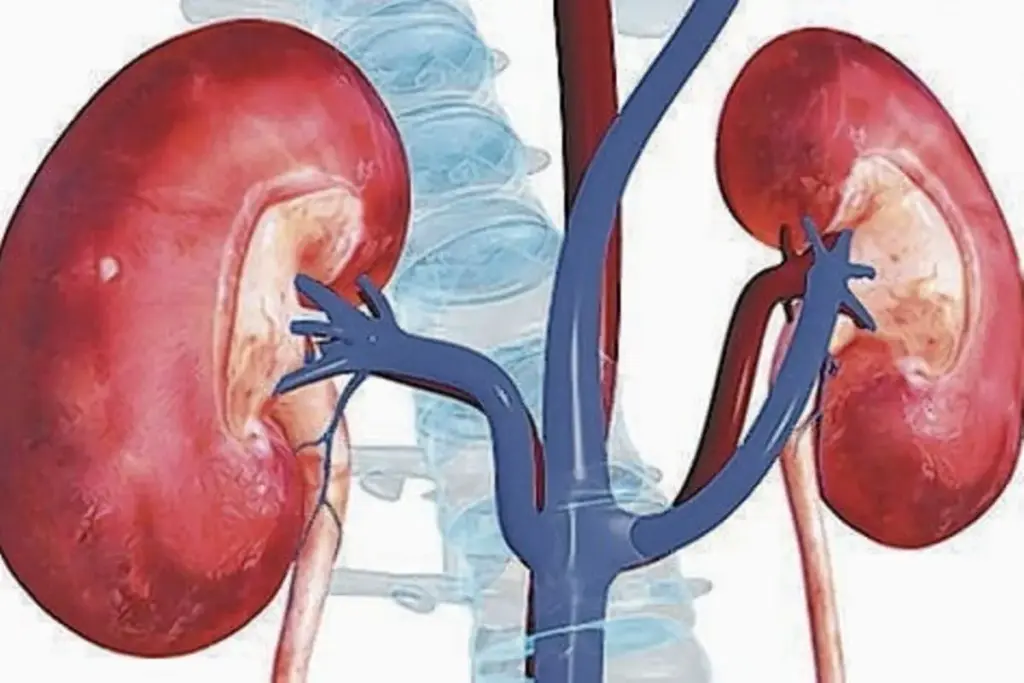
The kidneys sit on either side of the spine in the lower back, as the National Institute of Diabetes and Digestive and Kidney Diseases explains. They are bean-shaped, about the size of a fist, and protected by the rib cage. Inside, millions of tiny nephrons filter the blood.
Overview of Kidney Function in the Body
The kidneys do a lot for us, like filtering waste, controlling blood pressure, and keeping electrolytes balanced. They also make hormones that help with red blood cells and bone health. They work hard, filtering almost a liter of blood every minute.
Daily Filtration Capacity and Output
The kidneys filter almost 180 liters of blood every day, making about one to two liters of urine. This is vital for removing waste and excess fluids. They process blood at a rate of one liter per minute, showing their importance for our health.
| Kidney Function | Daily Capacity |
|---|---|
| Blood Filtration | 180 liters |
| Urine Production | 1-2 liters |
| Blood Flow Rate | 1 liter/minute |
The Circulation of Blood Through the Kidney

The blood flow through the kidney is key for removing waste and extra stuff. It’s vital for keeping the body healthy and balanced.
Blood Entry via the Renal Artery
Blood comes into the kidney through the renal artery, a branch of the aorta. This artery brings the blood needed for the kidneys to work right. Dr. Ashok Reddy says the kidneys filter about 52 gallons of body fluids daily. This removes toxins and extra water, showing how important blood flow is.
Flow Rates and Volume Processing
The kidneys handle a lot of blood, about 1.2-1.3 liters per minute for adults. This high rate helps filter blood well and remove waste efficiently. For more on kidney function, check out the National Center for Biotechnology Information.
Path of Blood Through Kidney Structures
After entering the kidney, blood goes through many structures for filtering. It first hits the renal cortex, where nephrons do their job. Nephrons are tiny units that filter out waste and extra stuff from the blood.
Blood Exit and Return to Circulation
After filtering, the blood leaves the kidney through the renal vein. It then goes back into the body’s circulation. This keeps the blood clean and healthy for the body’s tissues.
| Structure | Function |
|---|---|
| Renal Artery | Supplies blood to the kidney |
| Nephrons | Filters waste and excess substances |
| Renal Vein | Returns filtered blood to circulation |
Nephrons: The Microscopic Filtering Units
Nephrons are tiny filters in the kidneys that keep our blood clean. Each kidney has about one million nephrons. They work together to remove waste, extra fluids, and salts from the blood.
Structure and Function of Nephrons
Nephrons are made up of the renal corpuscle and the renal tubule. The renal corpuscle has the glomerulus, a tuft of capillaries. Dr. Andrew Bentall says the glomerulus is key for the first blood filtration.
The Glomerulus: Primary Filtration Site
The glomerulus is where blood is first filtered. It filters small molecules like water and glucose. But it keeps bigger molecules like proteins and blood cells in the blood.
The Three-Layer Filtration Barrier
The glomerulus has a three-layer barrier. It includes the endothelial cells of the capillaries, the glomerular basement membrane, and the podocytes with their foot processes.
This barrier is selective. It lets essential nutrients stay in the blood while removing waste.
Selective Filtration Based on Size and Charge
The filtration process depends on molecule size and charge. The glomerular basement membrane is negatively charged. This repels negatively charged molecules like proteins, keeping them in the blood.
This selective filtration is important for keeping the body’s fluids and salts balanced. For more on the kidneys, visit Wikipedia’s page on the kidney.
Conclusion: The Remarkable Blood Filtering System
The kidneys are key to our health, filtering blood and removing waste. It’s important to know what they do to understand their role in our bodies.
The kidneys filter blood, balance fluids, and control electrolytes. This complex task involves blood flowing through the kidneys. Here, tiny units called nephrons filter out waste.
We’ve looked at how the kidneys work, including their daily tasks. Knowing how they function helps us see why keeping them healthy is so important.
In short, the kidneys’ ability to filter blood is amazing and vital for our health. Taking care of our kidneys helps them do their job well. This keeps our body healthy and working right.
FAQ:
What system filters blood in the human body?
The kidneys filter blood in the human body. They use millions of tiny units called nephrons to clean the blood.
What is the flow of blood through the kidneys?
Blood flows into the kidneys through the renal artery. It then moves through different structures and is filtered by nephrons. After that, it exits and returns to the body’s circulation.
What is the main function of the kidneys in the excretory system?
The kidneys are key in the excretory system. They filter out waste, excess fluids, and electrolytes from the blood. This helps keep the body’s chemical balance right.
Where does filtration of the blood occur within the kidneys?
Blood filtration happens in the nephrons, mainly in the glomerulus. It’s the main site for this process.
What filters the blood in the kidneys?
Nephrons, with the glomerulus at their heart, filter the blood. They use a three-layer barrier to pick what to let through, based on size and charge.
How do the kidneys clean the blood?
The kidneys clean the blood by filtering out waste, excess fluids, and electrolytes. This is done through the nephrons. They help keep the body’s chemical balance in check.
What is the renal excretory function?
The renal excretory function is the kidneys’ role in removing waste and excess substances. This keeps the body healthy.
How is blood filtered by the kidneys?
Blood is filtered by the kidneys through the nephrons. They use a selective process to remove waste and excess substances based on size and charge.
What do the kidneys filter?
The kidneys filter waste products, excess fluids, and electrolytes from the blood. This helps regulate the body’s chemical balance and keeps it healthy.
What are the filtering units of the kidneys?
The filtering units of the kidneys are called nephrons. They contain the glomerulus, the main site for blood filtration.
Reference:
https://www.ncbi.nlm.nih.gov/books/NBK441944



 Departments
 Related Videos
 Our Doctors
 News
News