

Our bodies need the complex process of kidney filtration to stay healthy. The kidneys, shaped like beans, sit just below our rib cage. They filter about 50 gallons of fluid each day to get rid of waste and toxins.
As part of the urinary system, which also includes the ureters, bladder, and urethra, the kidneys are key. They help control blood pressure and make red blood cells. To learn more about how the kidneys work, visit the National Institute of Diabetes and Digestive and Kidney for detailed information.
It’s important to understand kidney function to see how vital these organs are. The kidneys filter waste and extra fluids from our blood. This process is key to keeping the right balance of water, salts, and minerals in our bodies.
Key Takeaways
- The kidneys filter about 50 gallons of fluid every day.
- They play a key role in controlling blood pressure and red blood cell production.
- Kidney filtration is essential for removing waste products and toxins.
- The kidneys are part of the urinary system.
- Understanding kidney function is vital for overall health.
The Kidney’s Role as the Body’s Primary Filtration System
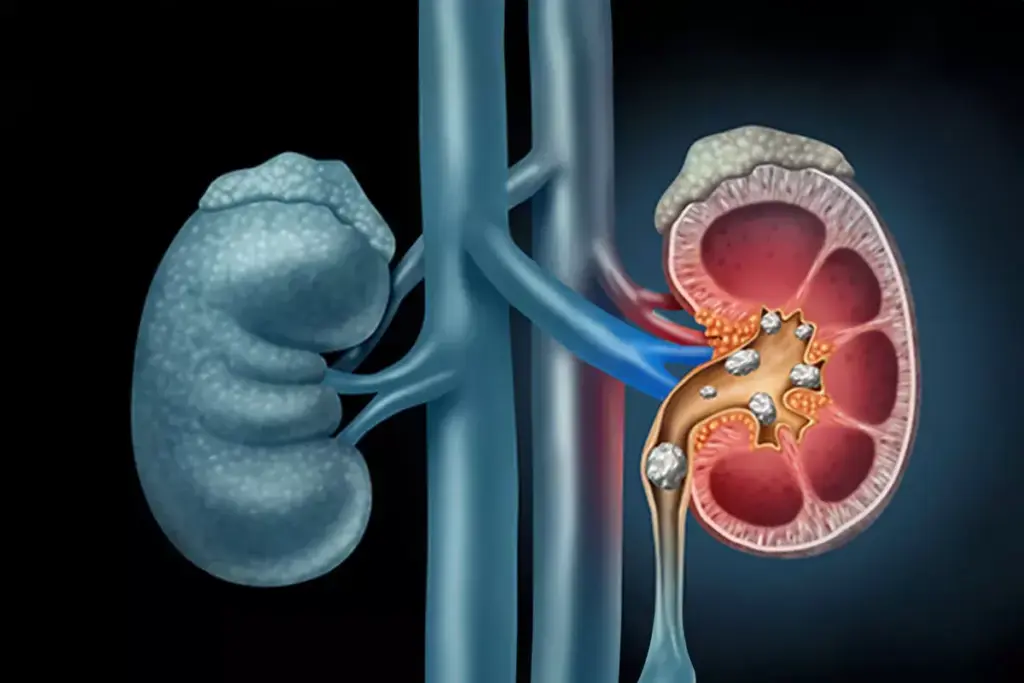
The kidneys are key for removing waste and extra stuff from our blood. They keep our body’s fluids and salts in balance. This is vital for our health.
Structure and Location of the Kidneys
The kidneys sit just below our rib cage, one on each side. They’re covered by the rib cage and a fat layer for protection. Each kidney is fist-sized and weighs about 125 grams.
Our kidneys get a lot of blood flow. The renal arteries, offshoots of the aorta, bring them oxygen-rich blood. This blood is then filtered by the nephrons, tiny units inside the kidneys.
Nephrons: The Million Tiny Filtering Units
Each kidney has about one million nephrons. These tiny units filter waste and extra fluids from our blood. They have two parts: the glomerulus and the tubule.
The glomerulus filters blood, letting small stuff like water and glucose pass through. It keeps bigger stuff like proteins and blood cells in the blood. The tubule then reabsorbs important nutrients and ions back into the blood. Waste products move through the tubule to be removed in urine.
| Component | Function |
| Glomerulus | Filters blood, allowing small molecules to pass through |
| Tubule | Reabsorbs essential nutrients and excess ions back into the bloodstream |
| Nephron | The functional unit of the kidney, responsible for filtering waste and excess fluids |
Blood flow through the kidneys is key for removing waste and extra stuff. The renal arteries bring blood to the nephrons for filtration. Then, the filtered blood goes back to the body through the renal veins.
The Three-Step Process of Kidney Filtration

The kidneys are key to our health, filtering waste from the blood. They do this in a three-step process. This keeps our blood clean and free from harmful substances.
This process includes glomerular filtration, tubular reabsorption, and tubular secretion. Each step is vital for cleaning the blood and keeping important substances in it.
Glomerular Filtration: Where Blood Cleaning Begins
Glomerular filtration is the first step. It happens in the glomerulus, a part of the nephrons. Here, the blood is filtered, letting small molecules pass through but keeping larger ones in the blood.
The glomerulus acts like a filter, letting some substances through and blocking others. This is key for removing waste from the blood, keeping it healthy.
Tubular Reabsorption: Reclaiming Essential Substances
The second step is tubular reabsorption. After filtration, the filtrate goes into the renal tubules. Here, important substances like glucose and amino acids are taken back into the blood. This ensures the body keeps what it needs.
This step is critical for maintaining balance in the body. For example, glucose is taken back into the blood to keep energy levels up, and excess ions are removed to keep electrolyte balance.
Tubular Secretion: Final Adjustments to Blood Composition
The final step is tubular secretion. In this step, more waste products are added to the tubules from the blood. This step removes substances not caught in the first step, refining the blood’s composition.
Tubular secretion is important for getting rid of drugs and toxins. It fine-tunes the blood, keeping it healthy and balanced.
In summary, the three steps of kidney filtration – glomerular filtration, tubular reabsorption, and tubular secretion – work together to clean the blood. Understanding this process shows how vital kidney function is for our health.
Conclusion: Maintaining Healthy Kidney Function
Knowing how kidneys filter is key to keeping them healthy. They help control blood pressure and keep bones strong. They also tell the bone marrow to make red blood cells.
Kidneys are part of the excretory system. They remove waste from the blood. This helps keep the body’s fluids and electrolytes balanced.
To keep kidneys healthy, we need to know their role. They filter about 200 liters of blood every day. This removes waste and extra stuff.
Living a healthy lifestyle helps keep kidneys working well. Eating right and exercising regularly is important. This helps keep our kidneys and overall health in check.
Understanding the importance of kidneys helps us protect them. Regular health checks and a healthy lifestyle are key. They help keep our kidneys healthy and prevent problems.
FAQ
What is the main function of the kidneys in the human body?
The kidneys are vital organs. They filter waste and excess fluids from the blood. They also control blood pressure, help maintain healthy bones, and produce red blood cells.
Where are the kidneys located in the body?
The kidneys are bean-shaped organs. They are located just below the rib cage. They play a key role in keeping us healthy.
What are nephrons, and what is their role in kidney function?
Nephrons are tiny filtering units in the kidneys. They filter waste and excess fluids from the blood. They are the functional units of the kidneys, enabling them to perform their critical functions.
How does blood flow through the kidneys, and what is its significance?
The renal artery brings blood to the nephrons. There, it is filtered, and waste products are removed. This process is vital for maintaining healthy blood composition and overall well-being.
What is the three-step process of kidney filtration?
The three-step process includes glomerular filtration, where blood cleaning begins. Then, tubular reabsorption, where essential substances are reclaimed back into the bloodstream. Lastly, tubular secretion, where final adjustments are made to the blood composition.
What is glomerular filtration, and how does it work?
Glomerular filtration is the first step in the kidney filtration process. The glomerulus acts as a selective barrier. It allows waste products and excess fluids to be removed from the blood.
How do the kidneys clean the blood, and why is it important?
The kidneys clean the blood by filtering waste products and excess fluids through the nephrons. This process is vital for maintaining healthy blood composition and overall well-being.
What is the significance of maintaining healthy kidney function?
Maintaining healthy kidney function is essential. It helps control blood pressure, maintain healthy bones, produce red blood cells, and overall well-being.
What filters the blood in the kidneys?
The nephrons, specially the glomerulus, filter the blood in the kidneys. They remove waste products and excess fluids.
What do the kidneys filter from the blood?
The kidneys filter waste products, excess fluids, and other substances from the blood. They help maintain healthy blood composition.
References
National Center for Biotechnology Information. Evidence-Based Medical Guidance. Retrieved from https://www.ncbi.nlm.nih.gov/books/NBK482248/[7



 Departments
 Related Videos
 Our Doctors
 News
News