
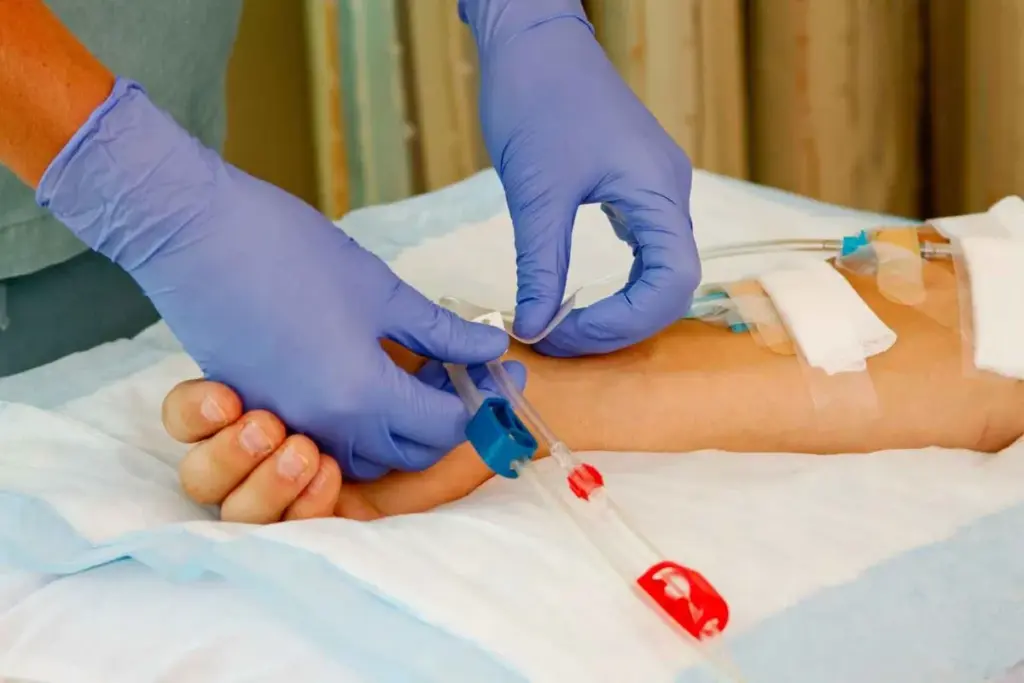
Choosing the right hemodialysis access is very important for those with kidney failure or severe kidney disease. A safe and reliable spot is needed for treatment to start and keep going. At Liv Hospital, we focus on what’s best for the patient, making sure they get the right vascular access for hemodialysis Dialysis.
Dr. Alan Benvenisty, a skilled general and vascular surgeon, stresses the need for good and lasting access points. There are three main types of hemodialysis access: arteriovenous fistulas (AVFs), arteriovenous grafts (AVGs), and central venous catheters (CVCs). Each has its own benefits and features.
Key Takeaways
- Knowing the differences between AVFs, AVGs, and CVCs is key for good hemodialysis treatment.
- A patient-centered approach leads to the best results for those with kidney failure.
- Liv Hospital follows international medical standards and offers top care for hemodialysis patients.
- The right access for dialysis makes treatment more effective and improves life quality.
- Getting expert advice is vital for picking the best hemodialysis access.
Understanding Hemodialysis Access and Its Importance
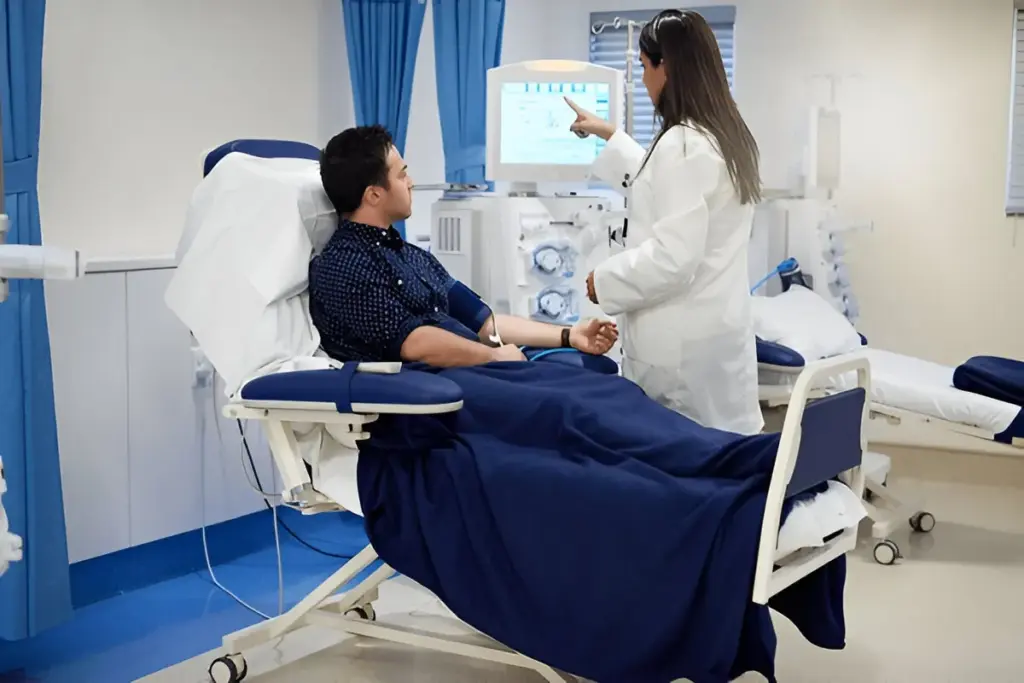
Hemodialysis access is key for effective treatment. It’s the main way for patients to get their blood cleaned. This access is vital for their health.
Kidney failure is becoming more common. This is due to more cases of diabetes and high blood pressure. As more people need dialysis, understanding hemodialysis access is more important than ever.
The Global Rise in Kidney Failure Patients
Kidney failure is increasing worldwide, including in the United States. Diabetes and high blood pressure are main causes. This means we need better hd access solutions fast.
Patients with kidney failure need dialysis to live. The quality of their hemodialysis access affects their treatment. It’s important to pick the right access type.
Why Proper Access Selection Affects Long-term Outcomes
Choosing between fistula versus graft for dialysis matters a lot. Arteriovenous fistulas (AVFs) are often the best choice. They have fewer complications and last longer.
Doctors like Dr. Benvenisty help patients choose the right access. They make sure it fits each patient’s needs. This leads to better health and a better life for patients.
Types of Kidney Dialysis Port Options for Hemodialysis
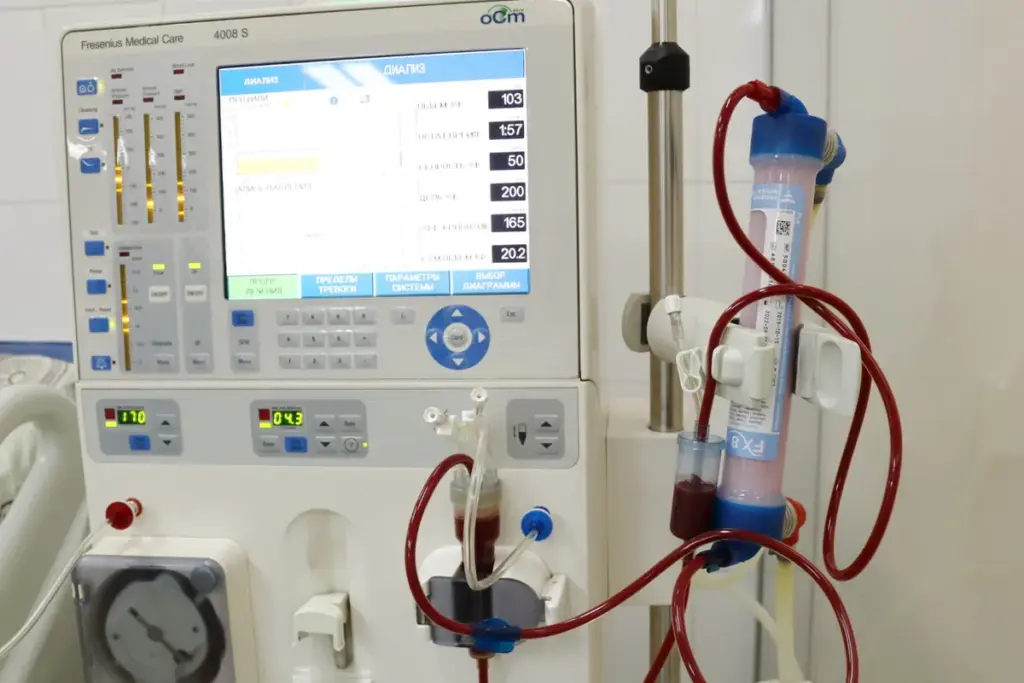
Choosing the right vascular access is key for effective hemodialysis treatment. Vascular access is vital for exchanging blood during dialysis. There are several options, each with unique characteristics.
Arteriovenous Fistulas (AVFs)
Arteriovenous fistulas are the top choice for hemodialysis access. They are made by connecting an artery to a vein in the arm through surgery. This makes the vein stronger and larger, ready for dialysis.
AVFs have fewer complications and last longer than other accesses. They also have lower infection rates. This makes them a better option for many patients.
Arteriovenous Grafts (AVGs)
Arteriovenous grafts use a synthetic tube to connect an artery to a vein. They are more durable than catheters but need regular checks to avoid clotting or infection. AVGs are used when veins are not good for AVFs.
Patients with AVGs need to be careful to avoid risks. Regular check-ups and proper care can help prevent complications.
Central Venous Catheters (CVCs)
Central venous catheters are used for emergency or temporary access. They are inserted into a large vein in the neck or chest. CVCs provide quick access but have higher risks of infection and complications.
While CVCs are sometimes necessary, patients should be aware of the risks. Working with their healthcare team to find a long-term solution is important.
| Type of Access | Infection Risk | Complication Rates | Functional Lifespan |
|---|---|---|---|
| Arteriovenous Fistulas (AVFs) | Low (0.2 episodes/1,000 procedures) | Lower | Longer |
| Arteriovenous Grafts (AVGs) | Moderate (2.5 episodes/1,000 procedures) | Moderate | Moderate |
| Central Venous Catheters (CVCs) | High | Higher | Shorter |
Knowing about different dialysis port options is important for patients. Working with their healthcare team helps make informed decisions. This ensures the best care for vascular access.
Comparing Dialysis Access Options: Making an Informed Decision
Choosing the right dialysis access can greatly improve a patient’s life and treatment success. It’s important to compare the different options carefully.
Infection Risk Assessment
Infection risk is a key factor when picking dialysis access. Arteriovenous Fistulas (AVFs) have a lower infection risk than Arteriovenous Grafts (AVGs) and Central Venous Catheters (CVCs). A study in the Journal of the American Society of Nephrology found AVFs have a much lower infection rate.
“The use of AVFs is associated with improved outcomes and reduced complications in hemodialysis patients.”
A vein mapping test is recommended before dialysis access placement. It checks the veins’ condition and picks the best access type. This reduces the risk of complications.
Complication Rates and Management
Different dialysis access options have different complication rates. AVFs are durable and have lower complication rates. AVGs and CVCs have higher risks of stenosis, thrombosis, and infection.
| Access Type | Complication Rate | Management Strategies |
|---|---|---|
| AVF | Lower | Regular monitoring, timely intervention |
| AVG | Moderate | Surveillance for stenosis, thrombosis prevention |
| CVC | Higher | Strict infection control, regular catheter maintenance |
Managing complications well needs a team effort. Regular checks and quick action are key. For example, AVFs need regular checks to prevent stenosis and ensure they work well.
Patient-Specific Factors in Access Selection
Each patient’s needs are unique when choosing dialysis access. Factors like vascular anatomy, health conditions, and lifestyle are important.
A fistula takes 1 to 4 weeks to mature and can last forever with care. Grafts usually last 1 to 3 years and have a higher risk of problems. Outpatient settings offer a convenient option for nonsurgical access placement.
The best choice between AVFs, AVGs, and CVCs depends on the patient’s needs and anatomy. A detailed assessment of risks and benefits is essential.
Conclusion: Partnering with Your Healthcare Team for Optimal Access
Choosing the right kidney dialysis access is very important. It needs careful thought and teamwork with your healthcare team. Knowing about the different hemodialysis access types helps patients make better choices.
Dr. Alan Benvenisty focuses on putting patients first. He uses his surgical skills and knows the challenges of kidney disease well. This way, patients get the best vascular access for hemodialysis for their needs.
Working with your healthcare team is key for the best access for dialysis. Together, patients and their team can find the best kidney dialysis access. This improves their care and treatment results.
FAQ
What is the preferred type of hemodialysis access?
The preferred type is an Arteriovenous Fistula (AVF). It has lower complication rates and lasts longer than other options.
What are the main types of hemodialysis access?
The main types are Arteriovenous Fistulas (AVFs), Arteriovenous Grafts (AVGs), and Central Venous Catheters (CVCs).
How is an Arteriovenous Fistula (AVF) created?
An AVF is made by surgically linking a vein and artery in the arm. This makes the vein stronger and better for blood flow.
What is an Arteriovenous Graft (AVG)?
An AVG uses a synthetic tube to connect an artery to a vein. It’s an alternative for hemodialysis patients.
What is a Central Venous Catheter (CVC)?
A CVC is a temporary or emergency access. It’s inserted into a large vein in the neck or chest.
How do I choose the right kidney dialysis port?
Choose based on your needs, anatomy, and medical history. Talk to a healthcare team, like Dr. Alan Benvenisty.
What factors are considered when selecting dialysis access?
Consider infection risk, complication rates, patient factors, and vein mapping test results.
Why is proper access selection important for hemodialysis patients?
Proper selection is key for better treatment outcomes. The right access type improves treatment and reduces complications.
What is the role of vein mapping tests in dialysis access selection?
Vein mapping tests help find the best veins for AVF or AVG creation. They ensure the best access outcome.
Can I use a graft or fistula for dialysis?
Yes, both grafts and fistulas work for dialysis. The choice depends on your vascular anatomy and medical history.
What are the benefits of a fistula versus a graft for dialysis?
AVFs are preferred because they have lower complication rates and last longer than AVGs.
How does hemodialysis access impact patient outcomes?
Access selection greatly affects patient outcomes. The right access improves treatment, reduces complications, and enhances care quality.
How to Choose a Kidney Dialysis Port for Hemodialysis Access
https://pubmed.ncbi.nlm.nih.gov/39675844/



 Departments
 Related Videos
 Our Doctors
 News
News