
How successful is it? Discover the life expectancy after stem cell transplant for leukemia patients and the factors for a long life.
Stem cell therapy, like allogeneic hematopoietic stem cell transplantation (allo-HSCT), has changed how we treat leukemia. It gives patients a new chance at long-term remission and survival. Studies show that stem cell transplantation success rates are high, with up to 79% of patients surviving three years after treatment.
Our institution is dedicated to top-notch healthcare for international patients. We know that bone marrow transplant for leukemia and leukemia bone marrow transplant are key treatments. They need careful thought and advanced medical care.
Key Takeaways
- Stem cell therapy offers new hope for leukemia patients, improving long-term remission and survival rates.
- Allogeneic hematopoietic stem cell transplantation (allo-HSCT) is a cornerstone in leukemia treatment.
- Survival rates for stem cell transplant patients can reach up to 79% three years post-treatment.
- Bone marrow transplants have shown a 92% survival rate at three-year follow-up in some studies.
- The success of stem cell therapy depends on various factors, including patient health and donor compatibility.
Understanding Leukemia and Its Treatment Landscape
It’s important to know about leukemia and its different types to find the best treatment. Leukemia is a term for various blood cancers. These include acute myeloid leukemia (AML), acute lymphoblastic leukemia (ALL), chronic myeloid leukemia (CML), and chronic lymphocytic leukemia (CLL).
Types of Leukemia and Their Characteristics
Each leukemia type has its own traits and affects people differently. For example, AML is more common in adults and involves fast-growing abnormal cells in the bone marrow. On the other hand, ALL is more common in kids and leads to too many immature lymphocytes.
- Acute Myeloid Leukemia (AML): Characterized by the rapid proliferation of abnormal myeloid cells.
- Acute Lymphoblastic Leukemia (ALL): Involves the overproduction of immature lymphocytes, more common in children.
- Chronic Myeloid Leukemia (CML): A slower-progressing leukemia that affects myeloid cells, often associated with the Philadelphia chromosome.
- Chronic Lymphocytic Leukemia (CLL): A slow-progressing cancer of the lymphocytes, more common in older adults.
Conventional Treatment Approaches
Treatment for leukemia varies based on the type and stage. Common methods include chemotherapy, targeted therapy, and radiation. Sometimes, a bone marrow transplant or stem cell transplant is needed, mainly for aggressive or relapsed cases.
- Chemotherapy: The use of drugs to kill leukemia cells.
- Targeted Therapy: Drugs that target specific characteristics of leukemia cells.
- Radiation Therapy: High-energy rays to kill leukemia cells.
The Need for Advanced Therapies
Even with current treatments, some patients may not stay in remission or may relapse. Advanced therapies like stem cell transplantation offer a chance for cure. They replace the diseased bone marrow with healthy stem cells.
At Liv Hospital, our team provides personalized care for leukemia patients. We use the latest treatments, including stem cell therapy.
Fundamentals of Stem Cell Therapy for Leukemia
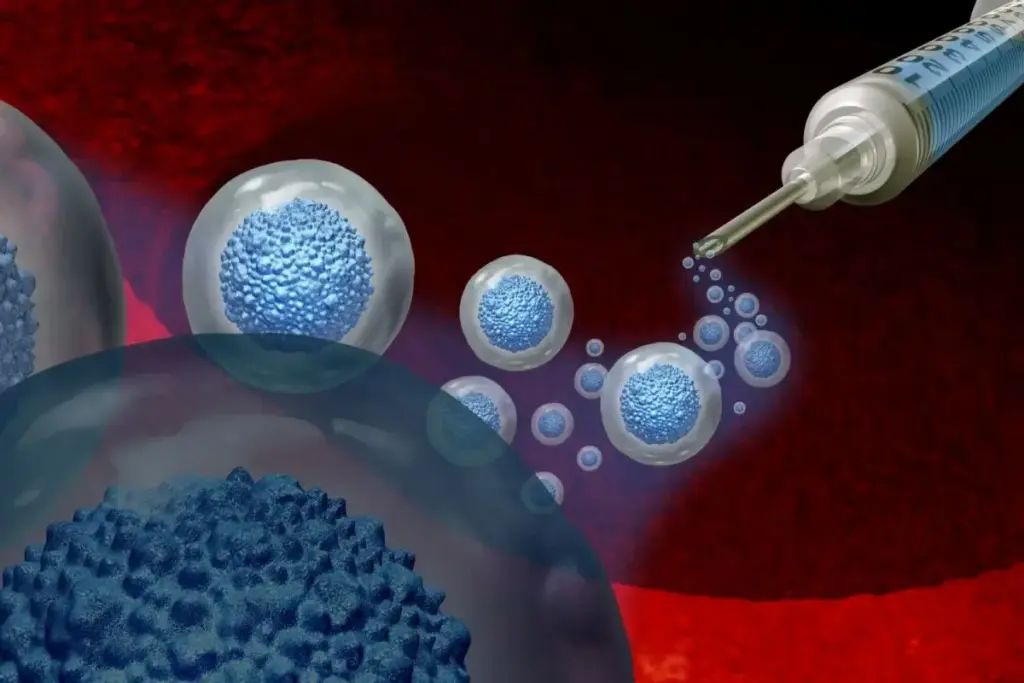
Stem cell therapy is key in treating leukemia. It targets the disease’s root cause. This has changed how we treat leukemia.
What Are Stem Cells?
Stem cells can turn into different cell types. They are important for growing and fixing tissues. In leukemia, they play a big role in the disease’s spread.
Stem cells can keep their numbers up and turn into specialized cells. But in leukemia, they can’t do this right.
Myeloid Stem Cells and Their Role in Blood Formation
Myeloid stem cells make blood cells like red blood cells and platelets. They are key in hematopoiesis, the making of blood cells.
In the bone marrow, these stem cells turn into different blood cells. Knowing how they work helps us understand how leukemia affects blood and how therapy can fix it.
Leukemia Stem Cells: Understanding the Root of Disease
Leukemia stem cells start and keep leukemia going. They are hard to treat, making them a big target for therapy.
Studies show leukemia stem cells can keep themselves going like normal stem cells. But they are different because they make leukemia worse. This makes them a main focus for treatment.
Learning about leukemia stem cells helps us see how stem cell therapy can attack the disease’s source. This could lead to better treatments.
Bone Marrow Transplant for Leukemia: The Primary Approach
The bone marrow transplant process is complex. It involves replacing diseased marrow with healthy stem cells. This is key in treating leukemia, a blood and bone marrow cancer.
The Relationship Between Bone Marrow and Leukemia
Leukemia starts in the bone marrow. Here, abnormal white blood cells are made. These cells take over, making it hard for the body to fight off infections.
To treat leukemia, bone marrow transplantation is used. It replaces the bad marrow with healthy stem cells. These can come from the patient (autologous transplant) or a donor (allogeneic transplant). The choice depends on the leukemia type, stage, and the patient’s health.
Types of Bone Marrow Transplants
There are different bone marrow transplants, each with its own benefits.
- Autologous Bone Marrow Transplant: This uses the patient’s own stem cells. They are collected, stored, and then given back after treatment.
- Allogeneic Bone Marrow Transplant: This uses stem cells from a donor. The donor can be a family member, an unrelated donor, or a cord blood unit.
- Haploidentical Transplant: This is an allogeneic transplant where the donor is a half-match, often a family member.
Leukocytes Formed in Bone Marrow as Stem Cells
Leukocytes, or white blood cells, are vital for the immune system. They are made in the bone marrow from stem cells. In leukemia, these cells turn cancerous. The goal of bone marrow transplantation is to get rid of these bad cells and make healthy leukocytes again.
At Liv Hospital, our team is committed to caring for patients getting bone marrow transplants. We know how complex this procedure is. Our goal is to help our patients get the best results.
The Science Behind Allogeneic Hematopoietic Stem Cell Transplantation
Understanding allogeneic hematopoietic stem cell transplantation (allo-HSCT) is key. It’s a treatment for leukemia that uses healthy stem cells from a donor. The goal is to match the donor and patient well to avoid problems.
How Allo-HSCT Works
Allo-HSCT replaces the patient’s bad stem cells with good ones from a donor. First, the patient gets chemotherapy and sometimes radiation. This clears out the old bone marrow and weakens the immune system.
This treatment, called conditioning, makes room for the new stem cells. It also stops the immune system from rejecting the transplant. After conditioning, the donor stem cells are given to the patient. They go to the bone marrow and start making new blood cells.
The Transplantation Process
The process starts with finding a donor and harvesting stem cells. Donors are chosen based on how well their HLA matches the patient’s. The stem cells are taken from the donor’s bone marrow or blood.
Then, the stem cells are prepared for the patient. The patient gets conditioned, and the stem cells are given. After the transplant, the patient needs close care to watch for problems like GVHD and infections.
Graft-Versus-Leukemia Effect
Allo-HSCT has a big plus: the graft-versus-leukemia (GVL) effect. The donor’s immune cells fight the leukemia cells. This is a big reason why allo-HSCT can cure some patients.
The GVL effect is linked to GVHD, but it’s focused on fighting leukemia. This makes it a good thing.
|
Aspect |
Description |
Clinical Significance |
|---|---|---|
|
Conditioning Regimen |
Chemotherapy and/or radiation to eradicate diseased bone marrow and suppress the immune system. |
Creates space for donor stem cells and prevents rejection. |
|
Donor Selection |
Based on HLA compatibility to minimize GVHD risk. |
Reduces risk of GVHD and improves transplant success. |
|
Graft-Versus-Leukemia Effect |
Donor immune cells attack leukemia cells. |
Crucial for achieving long-term remission. |
At Liv Hospital, we offer the latest leukemia treatments, including allo-HSCT. Our team works with patients from start to finish. We ensure they get the best care every step of the way.
Bone Marrow Transplant Success Rate in Modern Medicine
Bone marrow transplant success rates have greatly improved in modern medicine. This offers new hope for leukemia patients. At Liv Hospital, we’ve seen a big jump in transplant success thanks to better technology and treatment methods.
Overall Success Metrics
The success of bone marrow transplants is measured in several ways. These include how long patients live, if they stay disease-free, and if they face complications like graft-versus-host disease (GVHD). Studies show that for leukemia patients, the success rate is between 60% and 70%. This depends on the type of leukemia, the patient’s age, and how well the donor’s marrow matches.
Key Success Metrics:
- Disease-free survival rates
- Overall survival rates
- Incidence of GVHD and other complications
Recent Clinical Trial Results
Recent clinical trials have given us important insights into bone marrow transplants for leukemia. For example, a study in the Journal of Clinical Oncology found a 65% disease-free survival rate at two years for AML patients.
|
Leukemia Type |
Disease-Free Survival Rate |
Overall Survival Rate |
|---|---|---|
|
AML |
65% |
70% |
|
ALL |
60% |
65% |
|
CML |
70% |
75% |
Comparing Success Rates Across Different Types of Leukemia
The success rate of bone marrow transplants varies by leukemia type. For instance, CML patients tend to have better outcomes than ALL patients. Knowing these differences helps in making the right treatment choices.
At Liv Hospital, our team works with patients to find the best treatment. We aim to provide top-notch care and support every step of the way.
Life Expectancy After Stem Cell Transplant: What the Data Shows
Stem cell transplantation has changed how we treat leukemia. Knowing what to expect after a transplant is key. At Liv Hospital, we give patients all the facts about their chances of survival and what affects it.
Short-term Survival Statistics
Studies show that survival rates for stem cell transplant patients have gone up. Three-year survival rates range from 67% to 79%. This is good news for the treatment’s success.
Long-term Survival Rates
Long-term survival rates are also promising. Many patients stay disease-free for a long time. The success depends on the type of leukemia, the patient’s health, and the donor match.
Quality of Life Considerations
Quality of life after a transplant is just as important as survival rates. Patients often see big improvements in their life quality as they heal. But, some may face issues like graft-versus-host disease (GVHD) or other long-term problems. At Liv Hospital, we’re committed to helping manage these issues and improve patients’ overall well-being.
We know every patient’s journey is different. Our team works closely with patients to create care plans that fit their needs. By focusing on both survival rates and quality of life, we aim to give our patients the best outcomes after stem cell transplantation.
Factors Influencing Stem Cell Transplant Outcomes
Knowing what affects stem cell transplant success is key for patients and doctors. At Liv Hospital, we get how complex stem cell transplants are. We know many things can change how well a transplant goes.
Patient Age and Overall Health
The age and health of a patient getting a stem cell transplant matter a lot. Older patients or those with health problems might face more risks. We check each patient’s health carefully to make a treatment plan that fits them best.
Disease Stage and Previous Treatments
The disease’s stage and past treatments are very important. Patients with advanced disease or who have had many treatments might have different results. This is compared to those treated earlier in their disease.
Donor Match Quality
The quality of the donor match is a big deal for transplant success. A close HLA match between donor and recipient lowers the risk of GVHD and boosts survival chances. We use the latest HLA typing to find the best donor match.
Treatment Protocol Adherence
Following the treatment plan is essential for a successful transplant. This includes the steps before, during, and after the transplant, and follow-up visits. Our team helps patients understand and stick to their treatment plan.
The way these factors work together can be complex. Their effect on transplant success can differ for each patient. To get a better grasp of these dynamics, let’s look at a summary of key factors and their possible effects:
|
Factor |
Impact on Outcome |
|---|---|
|
Patient Age |
Older patients may have higher risks |
|
Disease Stage |
Advanced disease may reduce success rates |
|
Donor Match Quality |
Close HLA match improves survival |
|
Treatment Adherence |
Adherence improves overall outcome |
By understanding and tackling these factors, we can improve stem cell transplant results for our patients. At Liv Hospital, our team is committed to giving personalized care and support during the transplant journey.
Stem Cell Transplant for AML and Other Leukemia Types
Stem cell transplantation is a key treatment for many leukemias, including Acute Myeloid Leukemia (AML). Liv Hospital has seen big steps forward in stem cell therapy. This brings new hope to those with aggressive diseases.
Acute Myeloid Leukemia (AML) Treatment Approaches
AML grows fast if not treated quickly. Stem cell transplant is often the best choice for AML, for those at high risk or who have relapsed. We use allogeneic hematopoietic stem cell transplantation (allo-HSCT) mainly. This means we get stem cells from a donor who matches well.
|
Treatment Approach |
Description |
Benefits |
|---|---|---|
|
Allogeneic HSCT |
Stem cells are taken from a donor |
Can provide a graft-versus-leukemia effect, reducing relapse risk |
|
Autologous HSCT |
Stem cells are taken from the patient |
Reduces risk of graft-versus-host disease |
Acute Lymphoblastic Leukemia (ALL)
ALL is a fast-growing leukemia that needs quick and effective treatment. Stem cell transplantation is a key option for ALL, for those who didn’t respond to first treatments or have relapsed. We choose between allogeneic and autologous transplants based on the patient’s health and donor availability.
Chronic Myeloid Leukemia (CML)
CML grows slowly but needs careful management. Tyrosine kinase inhibitors (TKIs) are the main treatment for CML. But stem cell transplant might be considered for those not responding to TKIs or in advanced stages.
Chronic Lymphocytic Leukemia (CLL)
CLL makes too many immature white blood cells. First treatments often include chemotherapy and targeted therapy. But stem cell transplantation is an option for high-risk CLL or those who have relapsed.
Knowing the different treatments for various leukemias is key to the best care. At Liv Hospital, our team works hard to create personalized plans. We use the latest in stem cell therapy.
Marrow Transplant Leukemia: The Donor Selection Process
Finding the right donor is key to marrow transplant leukemia success. At Liv Hospital, we focus on matching donors with patients carefully.
HLA Matching Process
The Human Leukocyte Antigen (HLA) matching is a critical step. HLA genes help our immune system. A close match between donor and recipient is vital to avoid complications.
We use advanced HLA typing to find the best match. This involves testing the HLA genes of both the donor and the recipient.
Related vs. Unrelated Donors
Donors can be related or unrelated to the recipient. Related donors, like siblings or parents, are often first choices because of their closer HLA match.
Unrelated donors, found through registries, are not biologically related but match through testing. Our team works with international registries to find the best match for our patients.
|
Donor Type |
HLA Match Potencial |
Graft-Versus-Host Disease (GVHD) Risk |
|---|---|---|
|
Related Donor |
Higher |
Lower |
|
Unrelated Donor |
Variable |
Higher |
Haploidentical Transplants: A Game Changer
Haploidentical transplants use a donor who is a half-match. This can be a family member. New techniques have made these transplants successful, with outcomes similar to fully matched donors.
At Liv Hospital, our specialists are experts in haploidentical transplants. This offers hope to patients without a fully matched donor.
Long Term Effects of Stem Cell Transplant on Patients
Stem cell transplantation saves lives but has long-term effects. At Liv Hospital, we focus on caring for these effects. We ensure our patients get the support they need during recovery.
Physical Effects and Management
Stem cell transplant patients face physical long-term effects. These include chronic graft-versus-host disease (GVHD), fatigue, and more infections. Managing these conditions well is key to a better life after transplant.
Chronic GVHD needs ongoing treatment and checks. We use a team approach to manage GVHD. This includes medicines, lifestyle changes, and therapies tailored for each patient.
Psychological and Emotional Impact
The mental and emotional effects of stem cell transplant are big. Patients might feel anxious, depressed, or worried about relapse. Emotional support and counseling are big parts of our care.
Our team helps patients find ways to cope. We also connect them with mental health experts when needed. This way, we support their emotional and mental health during recovery.
Social and Economic Considerations
Stem cell transplant affects patients socially and economically too. They might need to change their work or daily life. Financial planning and support are key to handling these changes.
At Liv Hospital, we help patients deal with these issues. Our support includes help with healthcare, financial advice, and resources for daily life after transplant.
Complications Post Stem Cell Transplant: Recognition and Management
It’s important to know and manage complications after a stem cell transplant. This treatment can save lives but also has its challenges. At Liv Hospital, we focus on giving care that tackles these issues directly.
Common Complications
Stem cell transplant patients face many complications. These can happen right away or later. Some common ones include:
- Graft-versus-host disease (GVHD)
- Infections because of weakened immune systems
- Damage to organs
- Failure of the graft
Spotting these problems early is key. We use a team effort to watch patients closely and act fast when needed.
Graft-Versus-Host Disease
Graft-versus-host disease is when the donor’s immune cells attack the recipient’s body. It can be acute or chronic, each with its own set of challenges.
|
GVHD Type |
Characteristics |
Management Strategies |
|---|---|---|
|
Acute GVHD |
Happens in the first 100 days after transplant, often affects skin, liver, and gut. |
Medications to suppress the immune system, supportive care. |
|
Chronic GVHD |
Starts after 100 days, can affect many organs and tissues. |
Long-term use of immune suppressants, making lifestyle changes. |
Infection Risks and Prevention
Infections are a big worry for patients after a stem cell transplant. Their immune systems are weak. We have strict rules to prevent infections, including:
- Using antibiotics and antivirals to prevent infections
- Keeping away from things that could cause infections
- Watching for signs of infection
By knowing the risks and taking steps ahead of time, we can lower infection rates. This helps improve patient results.
Stem Cell Therapy Statistics for Acute Leukemia: Latest Research
The latest research on stem cell therapy for acute leukemia is very promising. It offers new hope for patients. At Liv Hospital, we are committed to staying at the forefront of these advancements. We provide the most effective treatments.
Recent Clinical Trials and Their Outcomes
Recent clinical trials have focused on improving stem cell therapy outcomes for acute leukemia. For example, a study in the Journal of Clinical Oncology found that patients with allogeneic hematopoietic stem cell transplantation had a higher survival rate. This was compared to those who received conventional chemotherapy.
Another important trial, reported by the European Society for Blood and Marrow Transplantation, showed that haploidentical donors for stem cell transplants had similar results to HLA-matched donors. This is significant because it increases the donor pool for patients in need.
Comparing Traditional vs. Novel Approaches
Stem cell therapy has shown better results than traditional chemotherapy for acute leukemia patients. Traditional chemotherapy often has severe side effects and may not lead to long-term remission.
On the other hand, stem cell therapy, like allogeneic transplantation, offers a potentially curative option. New approaches, such as CAR-T cell therapy, are also being explored. They have shown high response rates in clinical trials.
Predictive Factors for Treatment Success
Several factors predict the success of stem cell therapy in acute leukemia. These include the patient’s overall health, the disease stage at transplant time, and the donor match quality. Advances in conditioning regimens and post-transplant care have also improved outcomes.
At Liv Hospital, we use a multidisciplinary approach to assess these predictive factors. We tailor treatment plans to each patient’s unique needs. Our team of experts works closely with patients to optimize their chances of successful treatment.
Improving Life Expectancy After Stem Cell Transplant: Current Strategies
Improving life expectancy after stem cell transplant is a key focus in modern hematology. Medical technology has advanced, changing how we care for patients post-transplant. Our goal is to increase survival rates and improve the quality of life for those undergoing stem cell transplantation.
Advances in Supportive Care
Supportive care is vital for patients after stem cell transplant. New developments have led to better outcomes. We focus on preventing and managing complications.
Improvements in infection prevention, graft-versus-host disease management, and nutritional support have all contributed to better patient outcomes. Advanced antimicrobial therapies and improved diagnostic tools help us provide more effective care. Nutritional support and psychological counseling are now key parts of care, addressing patients’ holistic needs.
Novel Conditioning Regimens
Conditioning regimens prepare the patient’s body for the transplant. New regimens aim to reduce toxicity while keeping treatment effective. These regimens are tailored to each patient’s needs, considering age, health, and disease status.
Reduced-intensity conditioning (RIC) and non-myeloablative conditioning regimens have been developed. They reduce treatment-related mortality and improve survival rates. These approaches offer a more personalized treatment plan, increasing the chances of a successful transplant.
Post-Transplant Maintenance Therapies
Post-transplant maintenance therapies aim to prevent disease relapse and maintain remission. Targeted therapies and immunotherapies are increasingly used in this setting. These treatments are tailored to the patient’s disease, providing a personalized approach to care.
Therapies like tyrosine kinase inhibitors for chronic myeloid leukemia and targeted agents for various leukemias have shown promise. We continue to follow the latest research and clinical trials to improve our treatment strategies.
Personalized Medicine Approaches
Personalized medicine is transforming stem cell transplantation. Genetic and molecular profiling allow us to tailor treatment plans to each patient’s disease. This approach helps predict complications and develop targeted strategies to prevent them.
We are moving towards precision-based treatment, guided by advanced genomic analysis. This not only improves transplant efficacy but also enhances overall care. Patients receive the most appropriate treatment for their specific needs.
Conclusion: The Future of Stem Cell Therapy for Leukemia
Stem cell therapy has changed how we treat leukemia, bringing new hope to patients. At Liv Hospital, our team is dedicated to using the latest treatments for leukemia. We aim to improve our patients’ lives.
Thanks to stem cell therapy, life expectancy after transplant has gotten better. Our research and trials have shown great results. This means patients have a better chance at a healthy life.
We’re excited about the future of stem cell therapy for leukemia. With ongoing research and better treatment methods, we expect even better results for patients. We’re committed to providing top-notch healthcare and support to our international patients.
FAQ
What is the success rate of stem cell therapy for leukemia?
The success rate of stem cell therapy for leukemia depends on several factors. These include the type of leukemia, the patient’s age, and their overall health. Recent studies show promising results, with some patients seeing a significant increase in survival rates after allogeneic hematopoietic stem cell transplantation (allo-HSCT).
How does the type of leukemia affect the outcome of stem cell therapy?
Different types of leukemia react differently to stem cell therapy. For instance, acute myeloid leukemia (AML) and acute lymphoblastic leukemia (ALL) have unique treatment paths and outcomes. Knowing the specific type of leukemia is key to choosing the best treatment.
What is the role of myeloid stem cells in blood formation?
Myeloid stem cells are vital for making blood cells, including red blood cells, platelets, and certain white blood cells. In leukemia, these cells can turn cancerous, leading to the disease.
What are leukemia stem cells, and how do they impact treatment?
Leukemia stem cells are a subset of cancer cells that start and keep leukemia going. Targeting these cells is critical for effective treatment. Stem cell therapy has shown promise in this area.
What is the difference between related and unrelated donors for bone marrow transplantation?
Related donors are family members who match the patient. Unrelated donors are individuals who match based on human leukocyte antigen (HLA) typing but are not related. Both can be used for bone marrow transplantation, depending on the patient’s needs and the availability of a match.
What are the possible complications of stem cell transplant, and how can they be managed?
Complications of stem cell transplant include graft-versus-host disease (GVHD), infections, and organ damage. These can be managed with careful monitoring, supportive care, and medications to prevent or treat GVHD and other issues.
How does the quality of life change after stem cell transplant?
The quality of life after stem cell transplant varies. It depends on the patient’s health and any complications. Many patients see a big improvement in their quality of life, but some face ongoing challenges.
What are the latest advances in stem cell therapy for acute leukemia?
Recent trials show promising results for new stem cell therapy approaches. These include haploidentical transplants and personalized medicine. These advances are leading to better treatment outcomes and hope for patients with acute leukemia.
How can patients improve their life expectancy after stem cell transplant?
Patients can improve their life expectancy by following their treatment plan and making healthy lifestyle choices. Advances in supportive care, new conditioning regimens, and post-transplant therapies are also helping improve outcomes.
What is the future of stem cell therapy for leukemia?
The future of stem cell therapy for leukemia looks promising. Ongoing research and new treatment approaches are expected to lead to better outcomes and increased survival rates for leukemia patients.
References



 Departments
 Related Videos
 Our Doctors
 News
News