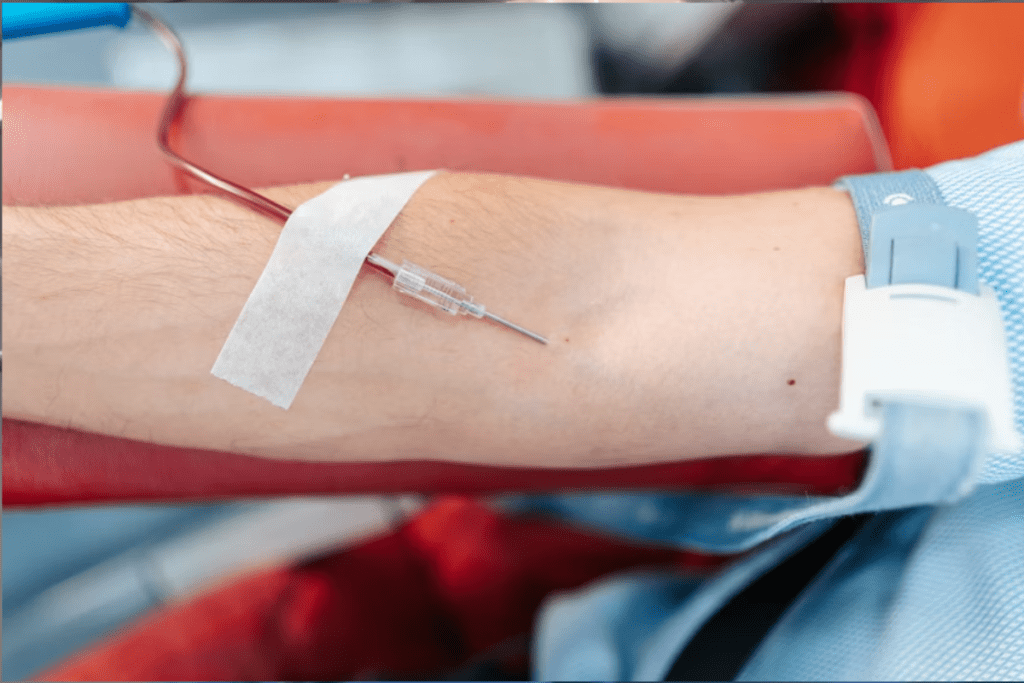
A marrow transplant duration is a complex medical procedure. It involves putting healthy stem cells into the body to replace damaged bone marrow. This treatment is for patients with certain cancers, blood disorders, or diseases affecting the bone marrow.
The bone marrow transplant process is long and includes several steps. These steps are preparation, the transplant itself, and recovery. The time it takes can change based on the type of transplant and the patient’s health.
Key Takeaways
- A bone marrow transplant is a procedure that replaces damaged bone marrow with healthy stem cells.
- The process involves preparation, the transplant, and recovery.
- The duration of the process varies depending on individual factors.
- A bone marrow transplant is often used to treat certain cancers and blood disorders.
Understanding Bone Marrow Transplants
Learning about bone marrow transplants is key for patients and their families. These transplants, also known as stem cell transplants, replace damaged bone marrow with healthy cells. This is a complex procedure.
Bone marrow is vital.
Medical conditions requiring marrow transplants
Many conditions need a bone marrow transplant. These include leukemia, lymphoma, and genetic disorders. Transplants can also treat autoimmune diseases and other marrow issues.
| Condition | Description |
| Leukemia | A cancer of the blood or bone marrow |
| Lymphoma | A cancer of the immune system |
| Multiple Myeloma | A cancer of plasma cells in the bone marrow |
| Aplastic Anemia | A condition where the bone marrow fails to produce blood cells |
Doctors carefully consider each patient for a bone marrow transplant. They look at the patient’s health and the transplant’s benefits. It’s a big decision with risks and outcomes to think about.
Types of Bone Marrow Transplants
It’s important for patients and their families to know about the different bone marrow transplant types. The choice of transplant depends on the patient’s health, age, and if a donor is available.
Autologous Transplants
Autologous transplants use the patient’s own stem cells. They are often used for patients with certain cancers, like multiple myeloma or lymphoma. First, the patient’s stem cells are harvested and stored. Then, they are reinfused after the patient gets high-dose chemotherapy.
Advantages: Lower risk of graft-versus-host disease (GVHD), faster engraftment.
Disadvantages: Risk of reinfusing cancerous cells, may not be suitable for all patients.
Allogeneic Transplants
Allogeneic transplants use stem cells from a donor. The donor can be a family member, an unrelated donor, or a cord blood donor. This type is often used for patients with leukemia or other blood disorders.
Advantages: Can provide a graft-versus-tumor effect, potentially curing the underlying disease.
Disadvantages: Higher risk of GVHD, requires a compatible donor.
Haploidentical and Cord Blood Transplants
Haploidentical transplants use stem cells from a half-matched donor, often a family member. Cord blood transplants use stem cells from the umbilical cord blood of a newborn.
Advantages: Haploidentical transplants offer a potentially faster donor search, while cord blood transplants have a lower risk of GVHD.
Disadvantages: Haploidentical transplants may have a higher risk of GVHD, while cord blood transplants can have slower engraftment.
| Type of Transplant | Donor Source | Advantages | Disadvantages |
| Autologous | Patient’s own cells | Lower GVHD risk, faster engraftment | Risk of reinfusing cancerous cells |
| Allogeneic | Family member or unrelated donor | Graft-versus-tumor effect, potentially cure | Higher GVHD risk, requires compatible donor |
| Haploidentical | Half-matched family member | Faster donor search | Higher GVHD risk |
| Cord Blood | Umbilical cord blood | Lower GVHD risk | Slower engraftment |
The Complete Marrow Transplant Timeline
The journey through a marrow transplant has many stages, from tests to recovery. It’s a complex process that can be broken down into parts. This helps patients and their families know what to expect.
Overview of the Entire Process
A stem cell or bone marrow transplant is a long and complicated process. It has five main stages: tests, harvesting, conditioning, transplanting, and recovery. Each stage is key for the transplant’s success.
The first stage is all about medical tests to see if the patient can have a transplant. This includes blood tests, imaging studies, and more. These tests check the patient’s health and disease status.
Key Milestones and Typical Timeframes
The whole process takes several months. Here are the key milestones and their typical timeframes:
- Pre-transplant evaluation: 1-2 months – This stage includes medical tests to check if the patient can have a transplant.
- Donor matching: 1-3 months – Finding a suitable donor can take different amounts of time, depending on the match availability.
- Conditioning regimen: 1-2 weeks – The patient undergoes treatment to prepare their body for the transplant during this period.
- Stem cell infusion: 1 day – This is the transplant day when the stem cells are infused into the patient’s body.
- Initial recovery: 2-4 weeks – The patient is closely monitored for complications right after the transplant.
- Engraftment: 2-4 weeks – It’s the time when the transplanted stem cells start producing new blood cells.
- Long-term recovery: Several months to a year or more – The patient continues to recover and regain strength during this period.
Knowing these milestones and their timeframes helps patients and their families prepare. It makes the journey less daunting and more manageable.
Pre-Transplant Evaluation Period
Before a stem cell transplant, many tests are done to check if the patient is ready. This time is key to see if the patient can have the transplant and get ready for it.
Medical Testing and Eligibility Determination
Patients go through many medical tests before the transplant. These include blood tests, imaging, and more. They help see if the patient is healthy enough for the transplant.
The medical team looks at these results to find any risks. This helps make a care plan just for the patient.
Finding a Donor Match – Timeframes and Process
For those needing a transplant from another person, finding a match is very important. This search can take weeks to months. It depends on the patient’s genes and the donor registry size.
| Donor Type | Typical Timeframe | Success Rate |
| Related Donor | 2-4 weeks | High |
| Unrelated Donor | 1-3 months | Moderate |
| Cord Blood Donor | 1-2 months | Moderate |
The time before a transplant is complex and needs careful planning. Knowing about the tests and finding a donor helps patients prepare for what’s next.
Preparation Phase for Patients and Caregivers
The journey to a bone marrow transplant is a big step. It requires a lot of preparation for both patients and caregivers. This phase makes sure patients are ready in every way for the transplant.
Physical Preparation and Pre-Transplant Treatments
To get ready for a stem cell transplant, patients get chemotherapy. This treatment kills the bad cells and prepares the bone marrow for new stem cells.
Getting physically ready also means fixing any health problems. Patients are told to eat well, exercise, and stay away from infections.
Logistical and Emotional Preparation
Getting ready also means planning for travel and staying arrangements. It’s important to think about care after the transplant too. The transplant process can be tough, both physically and emotionally.
It’s good to have family, friends, and support groups for help. Counseling and therapy can also help with the emotional side of the transplant.
Setting Up Caregiver Support Systems
A strong support system is key for patients going through a bone marrow transplant. Caregivers help with emotional support, managing medicine, and daily tasks during recovery.
| Support System Component | Description | Importance Level |
| Family Support | Emotional and practical assistance from family members | High |
| Professional Caregivers | Trained individuals providing medical and personal care | High |
| Support Groups | Groups connecting patients and caregivers with others undergoing similar experiences | Medium |
| Counseling Services | Professional counseling to manage emotional challenges | Medium |
Having a good support system lets patients focus on getting better. They know they have help when they need it.
Marrow Transplant Duration: The Procedure Itself

On transplant day, patients get a stem cell infusion. This is a key step that happens quickly. It’s the end of weeks or months of getting ready.
Donor Stem Cell Collection Process and Timing
The donor stem cell collection is a big step before the transplant. It depends on if the donor is the patient (autologous) or someone else (allogeneic). For autologous, stem cells are taken from the patient after treatment.
For allogeneic, stem cells come from a donor.The timing of stem cell collection is planned carefully. This ensures the cells are ready for the transplant day. The whole process, from collection to infusion, is set up to avoid delays and keep the cells alive.
Stem Cell Infusion Procedure – What Happens on Transplant Day
The infusion is not very painful, and most patients don’t feel much. It usually takes a couple of hours. After, patients are watched to make sure they’re okay.
The stem cell infusion starts the recovery process. The infused cells begin to work and make new blood cells. This is the heart of the transplant, and it’s key for the patient’s health.
Initial Recovery in Hospital
The first few weeks after a bone marrow transplant are very important. Doctors watch patients closely for any problems. They give the care needed to help them get better.
Engraftment Period and Timeline
The engraftment period is a key time in recovery. It’s when the new stem cells start making blood cells. This usually takes 2 to 4 weeks, when patients are more at risk for infections.
Managing Immediate Side Effects
Handling the side effects of a bone marrow transplant is a big part of recovery. Common ones are:
- Fatigue
- Nausea and vomiting
- Mucositis (inflammation of the mucous membranes)
- Infections
Being in the hospital lets doctors keep a close eye on patients. They can act fast if any problems come up. How long a patient stays in the hospital can vary, but it’s usually a few weeks to a month.
“The care received during the initial recovery phase is critical for the success of the bone marrow transplant. It’s a time that needs patience, careful watching, and a full care plan.” –
Expert in Bone Marrow Transplantation
Post-Transplant Recovery Timeline
The time after a transplant is very important for patients. It’s filled with big steps and tough times. Knowing what to expect can help patients and their families get ready.
First 100 Days After Transplant
The first 100 days after a transplant are key. Patients are watched closely for signs of healing and any problems. Many can go home between 1 to 3 months after the transplant. But, infections can make them stay longer in the hospital.
Important things in the first 100 days include:
- Engraftment: When the new blood cells start making more cells.
- Immune system recovery: Patients are more likely to get sick because their immune system is weak.
- Monitoring for graft-versus-host disease (GVHD): A possible problem with transplants from someone else.
Six Months to One Year Recovery Milestones
After the first 100 days, patients keep getting better and stronger. Big achievements during this time are:
| Timeframe | Milestone |
| 6 months | Many patients feel much better and have more energy. |
| 1 year | Most patients have made a lot of progress. Some can even do normal things again. |
For more info on bone marrow transplants and recovery times, check out www.tarikcavusoglu.com. It offers detailed advice for patients and their families.
Factors Affecting Marrow Transplant Duration
Knowing what affects how long a marrow transplant takes is key. It helps in setting realistic hopes and improving care. The time needed for a transplant can change a lot based on several important things.
Patient Age and Overall Health
A patient’s age and health are big factors in transplant time. Older patients or those with health issues might take longer to get better.
Key health factors that influence transplant duration include:
- Presence of comorbidities
- Organ function, like the heart, lungs, and liver
- Overall physical condition
Type of Transplant Performed
The kind of transplant matters a lot too. Transplants using the patient’s own stem cells (autologous) have different recovery times than those using donor stem cells (allogeneic). The main types of transplants and their characteristics are:
- Autologous transplants: Using the patient’s own stem cells
- Allogeneic transplants: Using donor stem cells
- Haploidentical transplants: Using stem cells from a half-matched donor
Complications and Setbacks
Problems like graft-versus-host disease (GVHD), infections, and organ damage can make the transplant longer. It’s important to handle these issues well to lessen their effect on the timeline.
Healthcare teams can manage patient hopes better by knowing these factors. They can also plan ways to avoid or deal with problems. This helps make the transplant process better.
Potential Complications and Their Impact on Timeline
It’s important to know about the possible problems with a bone marrow transplant. These issues can change how long the treatment takes and its success. Bone marrow transplants can cure serious diseases, but they come with risks.
Graft-Versus-Host Disease
Graft-versus-host disease (GVHD) happens in allogeneic transplants. It’s when the donor’s immune cells see the recipient’s body as foreign and attack it. GVHD can be acute or chronic, with acute happening early and chronic later. GVHD management is key to avoid long-term harm and help recovery.
Infections and Immune System Recovery
Infections are a big worry after a bone marrow transplant because the immune system is weak. The risk is highest early on, before the new marrow starts making healthy blood cells. Prophylactic antibiotics and antiviral medications help lower this risk.
Organ Damage and Other Complications
Organ damage, like to the liver, lungs, and kidneys, can happen because of the treatment or GVHD. Other issues might include cataracts, infertility, and secondary cancers. It’s vital to watch and manage these problems to protect the patient’s quality of life and recovery time.
| Complication | Description | Impact on Timeline |
| Graft-Versus-Host Disease | Immune reaction against the recipient’s body | Can prolong recovery, increase risk of infections |
| Infections | Risk due to compromised immune system | May delay engraftment, prolong hospital stay |
| Organ Damage | Damage to organs like liver, lungs, kidneys | Can complicate and prolong recovery, affect long-term health |
Long-Term Follow-Up Schedule
Patients who get a marrow transplant must follow a strict schedule for check-ups. This is to keep them healthy and catch any problems early. It’s key for managing late effects and helping them fully recover.
First Year Appointments and Monitoring
In the first year after a transplant, patients see their doctors often. These visits are important for tracking their recovery and managing side effects. They also help catch issues like graft-versus-host disease (GVHD) or infections.
Regular monitoring includes blood tests, imaging, and physical checks. The number of these visits might go down over time. But they’re always a big part of caring for someone after a transplant.
Ongoing Care for Years After Transplant
Even after the first year, patients need to keep up with their care. They should see their doctors regularly, even if it’s not as often. These visits help watch for late effects, manage ongoing health issues, and support their overall well-being.
Long-term follow-up care also means being alert for signs of relapse or other issues. Patients should tell their doctors right away if they notice anything new or different.
Patient Experiences and Recovery Stories
Patient experiences during a marrow transplant are complex. They involve medical, emotional, and logistical challenges. Each person’s journey is unique, shaped by the transplant type, health, and how they cope.
Timeline Variations in Real Patient Cases
Real patient stories show how different transplant timelines can be. A study on Harvard’s website points out that recovery rates vary. This is due to things like graft-versus-host disease and infections.
- Some patients have a smooth recovery, getting back to normal in a few months.
- Others face long challenges, needing more time in medical care and support.
- The donor match and stem cell collection also affect the timeline.
Coping Strategies During the Lengthy Process
Coping strategies are key in managing the transplant journey. Patients and caregivers use many ways to deal with the emotional and physical demands.
- Emotional Support: Support groups and counseling help with anxiety and stress.
- Physical Preparation: Pre-transplant conditioning programs can help recovery.
- Logistical Planning: Organizing post-transplant care reduces stress.
“The transplant journey is not just about the medical procedure; it’s about the resilience of the human spirit,” said a patient quoted on a leading medical information website.
Sharing these experiences and strategies helps patients and caregivers prepare for the challenges ahead.
Advancements Improving Marrow Transplant Timelines
Marrow transplant timelines are getting better thanks to new medical discoveries. In recent years, there’s been a lot of research to make bone marrow transplants more efficient and effective.
Medical Innovations Shortening Recovery Periods
Several medical breakthroughs are helping marrow transplant patients recover faster. Advances in stem cell therapy and immunotherapy are key. For example, using haploidentical donors has made it easier to find matches, shortening wait times.
Future Directions in Transplant Medicine
The future of transplant medicine looks bright. Researchers are working on new ways to improve marrow transplants. They’re using artificial intelligence to predict patient outcomes and catch problems early. They’re also exploring regenerative medicine for even better treatments.
This will be thanks to the latest medical tech and research.
Resources and Support During the Transplant Journey
Going through a marrow transplant is more than just medical treatment. It needs a full support system to help patients through tough times. This journey comes with big financial, emotional, and practical hurdles.
Financial and Insurance Considerations
The cost of a bone marrow transplant is high. So, planning your finances is key. Check your insurance to see what’s covered and what might cost extra.
| Financial Aspect | Description | Average Cost |
| Pre-transplant evaluation | Medical tests and eligibility determination | $5,000 – $10,000 |
| Transplant procedure | Hospital stay, stem cell infusion, and initial recovery | $100,000 – $300,000 |
| Post-transplant care | Follow-up appointments, medications, and possible complications | $20,000 – $50,000 |
Support Organizations and Patient Resources
Being part of a support group can give you emotional support and useful tips. It’s a big help in dealing with the transplant journey.
Conclusion
A bone marrow transplant is a complex medical procedure. It can cure some diseases and put others into remission. It’s important for patients and their families to understand this process well.
The recovery journey has several stages. These include pre-transplant evaluation and post-transplant care. Each stage has its own timeline and milestones. These can be affected by the transplant type and the patient’s health.
Resources from trusted organizations, like www.dvcstem.com and https://greenbergregen.com/, offer valuable information. They provide support during this challenging time. Being informed helps patients deal with the physical and emotional challenges of marrow transplantation.
In the end, a successful transplant can greatly improve a patient’s life quality. Understanding the process and timeline helps patients and their families face this journey with confidence and hope.
FAQ
What are the different types of bone marrow transplants and how do they affect the duration?
There are different types of bone marrow transplants. These include autologous, allogeneic, haploidentical, and cord blood transplants. The type of transplant can change how long it takes to recover. For example, autologous transplants usually have a shorter recovery time than allogeneic ones.
What are the possible complications that can occur during or after a bone marrow transplant?
Complications like graft-versus-host disease, infections, and organ damage can happen. These can affect how long the transplant takes and your recovery.
How often are follow-up appointments required after a bone marrow transplant?
You’ll need to see your doctor often in the first year after a transplant. How often depends on your needs and the transplant center’s rules.What resources are available to support patients during their bone marrow transplant journey?
What is the role of a caregiver during the bone marrow transplant process?
Caregivers are very important during a transplant. They help with daily tasks and emotional support. They also help with the healthcare system.
References
- Cooley, S., Weisdorf, D., Guinan, E., et al. (2020). Donor selection for allogeneic hematopoietic cell transplantation: Recommendations from the American Society for Transplantation and Cellular Therapy. Biology of Blood and Marrow Transplantation, 26(2), 253“264. https://www.bbmtjournal.org/article/S1083-8791(19)30526-0/fulltext
- Lee, S. J., Kim, H., & Majhail, N. S. (2020). The cost of allogeneic hematopoietic cell transplantation: A systematic review. Bone Marrow Transplantation, 55(4), 698“709 https://www.nature.com/articles/s41409-020-0820-2
- Pidala, J., Kim, J., & Anasetti, C. (2020). Current status of acute graft-versus-host disease prevention. Bone Marrow Transplantation, 55(1), 162“177. https://www.nature.com/articles/s41409-020-0857-x
- Syrjala, K. L., Martin, P., & Kurland, B. (2020). Psychological well-being and health-related quality of life after hematopoietic cell transplantation: A review. Bone Marrow Transplantation, 55(1), 22“35. https://www.nature.com/articles/s41409-020-0797-1
- Gratwohl, A., Baldomero, H., & Aljurf, M. (2015). Hematopoietic stem cell transplantation: A global perspective. Journal of the American Medical Association, 313(2), 161“172. https://jamanetwork.com/journals/jama/fullarticle/2082556