
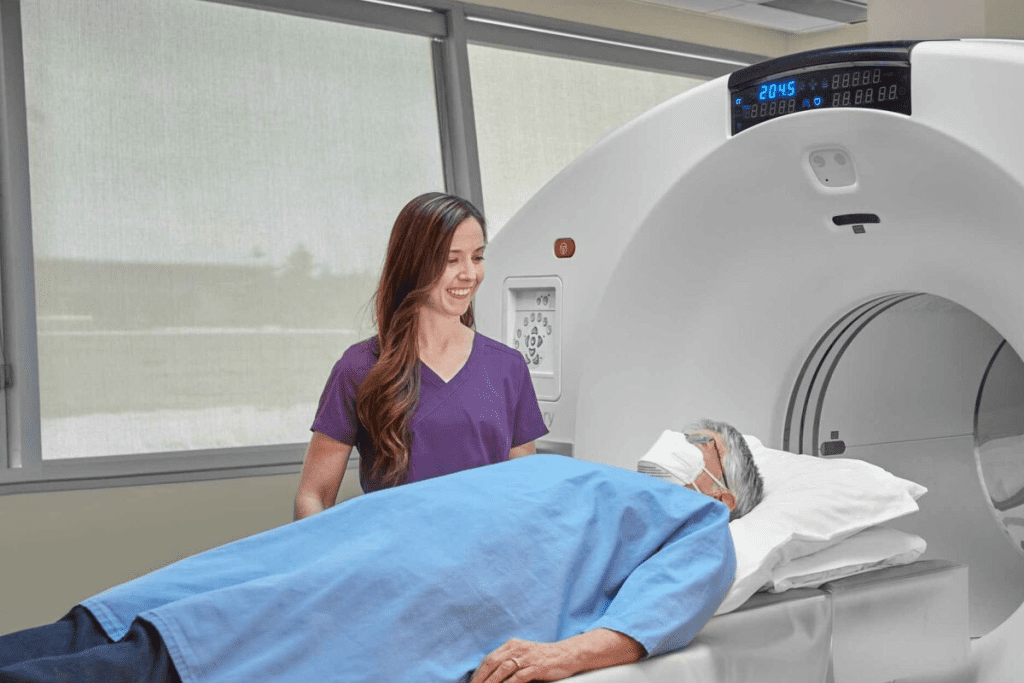
Every year, over 10 million cardiac stress tests are done in the U.S. They help find heart problems and check heart health. A nuclear cardiac stress test checks how well the heart works when stressed. It uses a tiny bit of radioactive material.
The procedure is generally safe and painless for most patients. It lets doctors see if there are heart issues, like blocked arteries. In this article, we’ll talk about what happens during a nuclear imaging test. We’ll also look at its benefits and how it helps find heart problems.
Key Takeaways
- Understanding the purpose and benefits of a nuclear cardiac stress test.
- What to expect during the test procedure.
- The role of nuclear imaging in diagnosing heart conditions.
- How the test contributes to assessing cardiovascular health.
- Preparation tips for undergoing a cardiology stress test.
What is a PET Scan and How Does it Work?
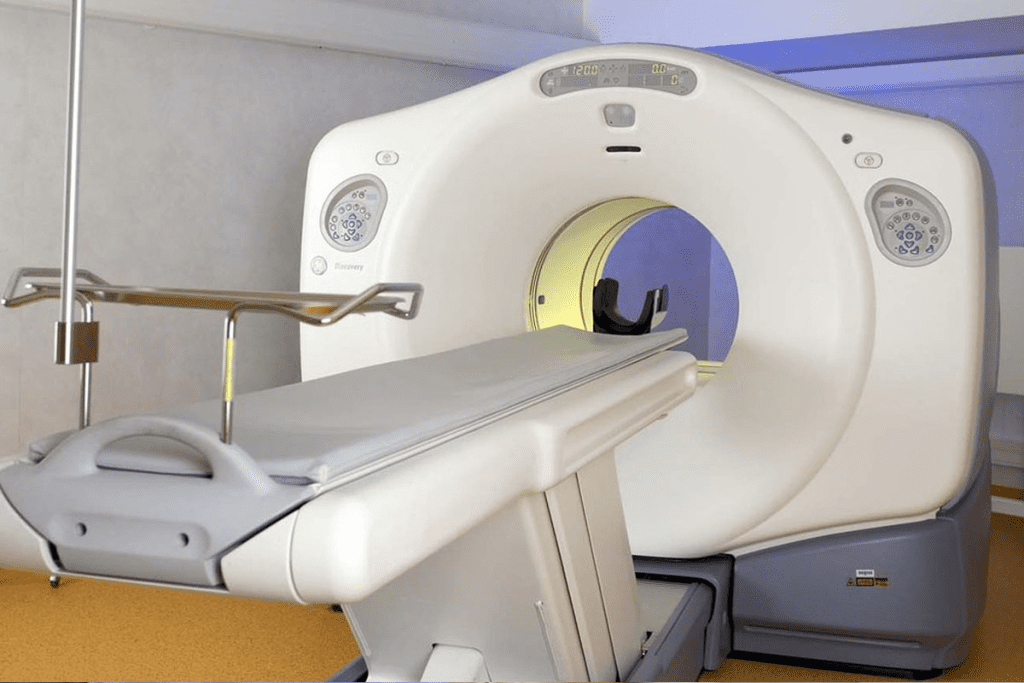
A PET scan, or Positron Emission Tomography, is a cardiac diagnostic test that uses small amounts of radioactive tracers. It helps see how the heart works and its structure. This test is non-invasive and gives insights into the heart’s metabolic activity. It helps diagnose and manage heart diseases.
The Science Behind PET Imaging
PET imaging works by using the fact that different body tissues metabolize glucose at different rates. A radioactive tracer, often attached to glucose, is injected into the bloodstream. This tracer goes to the heart muscle, emitting positrons that collide with electrons, creating gamma rays.
The PET scanner detects these gamma rays. It makes detailed images of the heart’s metabolic activity. This is key for diagnosing heart conditions like coronary artery disease.
Difference Between PET and Other Imaging Tests
PET scans are different from CT or MRI scans because they provide metabolic data, not just anatomy. Here are some main differences:
- Functional vs. Anatomical Information: PET scans show how the heart functions, while CT and MRI scans show its structure.
- Use of Radioactive Tracers: PET scans use small amounts of radioactive tracers, unlike MRI or CT scans.
- Diagnostic Capabilities: PET scans are great for detecting heart issues related to metabolic activity, like tissue viability.
For those in nuclear cardiology certification, knowing the differences between imaging modalities is key. It helps choose the best diagnostic tool for patient care.
Understanding Nuclear Cardiology and Its Importance
Nuclear cardiology is key in diagnosing and managing heart issues. It combines nuclear medicine with cardiology. This gives a full view of heart health.
The Field of Nuclear Cardiology
Nuclear cardiology uses tiny amounts of radioactive tracers. It helps see the heart’s structure and how it works. This is great for spotting heart disease and other heart problems.
The field keeps getting better, thanks to new tech and imaging methods. Nuclear cardiology procedures are top-notch for showing how the heart works under stress.
Role in Cardiovascular Disease Diagnosis
Nuclear cardiology is vital for spotting heart diseases. It’s a non-invasive way to check the heart’s function and blood flow. It finds out if the heart gets enough blood, helping decide treatment.
With myocardial perfusion imaging and other methods, doctors can find coronary artery disease. They can also see if treatments are working. This is key for managing heart diseases well.
To wrap it up, nuclear cardiology is a must-have in cardiology today. It gives vital info that boosts patient care and results.
The Purpose of Nuclear Cardiac Stress Tests
Cardiac stress tests using nuclear medicine are key for checking heart health. They show how the heart works, even when stressed. This helps doctors find and treat heart disease well.
Diagnosing Coronary Artery Disease
Nuclear cardiac stress tests are key in finding coronary artery disease (CAD). CAD damages the heart’s main blood vessels. A nuclear stress test procedure uses a radioactive tracer to see the heart’s blood flow at rest and under stress.
This helps doctors spot areas of the heart that don’t get enough blood. This is a sign of CAD. Finding CAD early is important to stop it from getting worse.
Monitoring Treatment Effectiveness
Nuclear cardiac stress tests also check if treatments for heart disease work. Doctors compare images before and after treatment. This shows if treatments like angioplasty or medicine are helping the heart’s blood flow.
This is key for changing treatment plans as needed. If a patient’s heart function improves, their treatment might stay the same or change. But if it gets worse, doctors might try something new.
| Purpose | Description | Benefits |
| Diagnosing CAD | Identifies areas of reduced blood flow to the heart | Early detection and management of coronary artery disease |
| Monitoring Treatment | Compares heart function before and after treatment | Adjusts treatment plans for optimal heart health |
In conclusion, nuclear cardiac stress tests are vital in cardiology nuclear medicine. They help diagnose and monitor heart disease. Their detailed images of the heart’s function under stress are key for managing heart health.
Types of Nuclear Cardiac Stress Tests
Different nuclear cardiac stress tests meet different patient needs. They are key in nuclear cardiology for checking heart health and finding heart diseases.
Myocardial Perfusion Imaging
Myocardial perfusion imaging is a common test in nuclear cardiology. It checks blood flow to the heart muscle. It finds areas where blood flow is low, which might show coronary artery disease.
This test uses a radioactive tracer injected into the blood. The tracer builds up in the heart muscle based on blood flow. Images are taken at rest and after stress, using a gamma camera.
PET Cardiac Stress Test
A PET cardiac stress test is a high-tech tool in nuclear medicine cardiology. It gives detailed images of the heart. This lets doctors precisely check heart function and blood flow.
PET scans are great for spotting coronary artery disease and checking heart tissue health. They have better image quality than some other tests.
SPECT Imaging in Nuclear Cardiology
SPECT imaging is a common method in nuclear cardiology. It uses a gamma camera to take images of the heart from many angles.
SPECT imaging is good for looking at blood flow to the heart and checking heart function. It’s often used with stress tests to find coronary artery disease and other heart issues.
In conclusion, picking the right nuclear cardiac stress test depends on many things. These include the patient’s condition, what the doctor needs to find, and the technology available. Knowing about the different tests is important for both doctors and patients.
The Environment and Equipment Used During a Nuclear Cardiac Stress Test
The environment and equipment used in a nuclear cardiac stress test are key to diagnosing heart diseases. This test uses advanced technology to show how the heart works under stress.
The PET Scanner: Design and Function
The PET scanner is a vital part of the test. It detects the energy from a tracer in the patient’s body. This creates detailed images of the heart’s structure and function.
The scanner’s design allows for high-resolution images. These images are essential for spotting coronary artery disease and other heart issues.
The Control Room Setup
The control room is where the test is run. The nuclear cardiology technologist uses the PET scanner and watches the test live. The room has advanced computer systems for processing images.
Cardiac-Specific Equipment
Other equipment is used during the test too. This includes ECG monitors, stress testing gear, and systems for the radioactive tracer. All this equipment helps give a full view of the heart’s function.
| Equipment | Function |
| PET Scanner | Captures detailed images of the heart’s structure and function |
| ECG Monitors | Monitors the heart’s electrical activity during the test |
| Stress Testing Equipment | Administers physical or pharmacological stress to the heart |
| Infusion Systems | Delivers the radioactive tracer for PET imaging |
Nuclear cardiology certification ensures the technologists are skilled. They provide top-notch images and accurate diagnoses. The Journal of Nuclear Cardiology keeps professionals updated with the latest in the field.
Knowing about the test’s environment and equipment can ease patient worries. Advanced technology and specialized gear help doctors give precise diagnoses and treatment plans for heart disease.
Is a PET Scan Performed in a Tunnel?
Many people wonder if a PET scan is done in a tunnel-like setting. The answer depends on the PET scanner’s design. Over time, PET scanners have changed, affecting how patients feel during the scan.
Understanding the PET Scanner Design
PET scanners find metabolic activity in the body, like in the heart, using tiny amounts of radioactive tracers. They have a circular or doughnut-shaped gantry with detectors. The patient lies on a table that slides into this gantry, feeling like a tunnel.
The gantry is big enough for the body, but it might be hard for those with claustrophobia. Yet, PET scanners have a shorter tunnel than some machines, making it less tight for some.
Comparing PET Scanner Tunnels to MRI Machines
Patients often compare PET scanners to MRI machines. MRI machines have a long, closed tunnel that scares many. PET scanners look similar but are more open and shorter, making them easier for those with claustrophobia.
“The design of PET scanners, with their shorter tunnel length compared to MRI machines, can make the scanning process less daunting for patients with claustrophobia.”
Open Design PET Scanners
Newer PET scanners have open designs, making them less scary for patients. These designs are better for big patients or those who get anxious in tight spaces.
- Open PET scanners offer a less confining environment.
- They are great for patients with claustrophobia or larger body types.
- The technology keeps getting better, making scans more comfortable and accurate.
In summary, while some PET scanners look like tunnels, they’re not as tight as MRI machines. The newer open PET scanners make scans even more comfortable, helping more people get checked.
Preparing for Your Nuclear Cardiac Stress Test
To get the most out of your nuclear cardiac stress test, it’s key to prepare well. Good preparation makes the test run smoothly and gives accurate results.
Medication Considerations
Tell your doctor about all medications you’re taking before the test. Some, like beta-blockers, might need to be changed or stopped. Also, talk about caffeine and nicotine, as they can change your heart rate.
Following your healthcare provider’s specific instructions about medication is also important. This might mean avoiding certain drugs or supplements before the test.
What to Wear and Bring
Wear comfy clothes and shoes for exercise on test day. Avoid jewelry or anything that could mess with the test equipment. You might need to remove metal objects or accessories too.
Bring your medications, medical records, and ID. If you have questions, ask the staff at the testing place.
Discussing Your Medical History
Talk about your full medical history with your doctor before the test. This includes heart conditions, allergies, or other health issues that could affect the test.
Be ready to share details about your symptoms, past cardiac tests, and family heart disease history. This info is key for understanding your test results.
By preparing well, you help make your nuclear cardiac stress test successful. It will give you important insights into your heart health.
Step-by-Step: What Happens During a Nuclear Cardiac Stress Test
Many people find the idea of a nuclear stress test scary. But knowing what to expect can help a lot. This test is a key tool for doctors to check your heart’s health.
The test has two parts: a stress test and imaging. The stress test shows how your heart works when you’re active. This can be through exercise or medicine.
The Stress Component
During the stress part, you might walk on a treadmill or take medicine to raise your heart rate. This mimics exercise and lets doctors see how your heart handles stress.
Key aspects of the stress component include:
- Monitoring your heart rate and blood pressure
- Assessing your heart’s function under stress
- Using a small amount of radioactive tracer to visualize heart function
Rest vs. Stress Images
The test takes pictures of your heart at rest and when it’s stressed. These pictures are then compared to spot any heart function or blood flow issues.
The steps are:
- Receiving an injection of a radioactive tracer
- Undergoing imaging at rest
- Undergoing the stress component
- Receiving a second injection of the tracer
- Undergoing imaging after stress
By comparing the rest and stress images, doctors can find heart problems like reduced blood flow or scar tissue.
| Test Component | Description | Purpose |
| Rest Images | Images taken while you’re at rest | Baseline heart function |
| Stress Component | Exercise or medication to stress the heart | Assess heart function under stress |
| Stress Images | Images taken after stress | Compare to rest images to identify issues |
A cardiology expert says, “The nuclear cardiac stress test is a valuable tool for diagnosing coronary artery disease and assessing the effectiveness of treatments.” This shows how important it is to understand the test.
“The nuclear cardiac stress test provides critical information about the heart’s function and blood flow, aiding in the diagnosis and management of cardiovascular disease.”
Cardiology Expert
Knowing the steps of a nuclear cardiac stress test can help patients feel more ready. It can reduce anxiety and make the experience smoother.
Managing Claustrophobia and Anxiety During Your PET Scan
For those getting a PET scan, it’s key to handle claustrophobia and anxiety well. A PET scan is a tool to check heart health. But, the scanner’s closed space can make these feelings worse.
Coping Techniques for Scanner Anxiety
There are ways to ease anxiety during a PET scan. Deep breathing exercises and progressive muscle relaxation can help calm you down. Listening to soothing music or nature sounds through headphones can also make you feel better.
- Practice relaxation techniques before the scan to reduce overall stress levels.
- Communicate your fears and concerns with the medical staff to receive appropriate support.
- Consider having a friend or family member accompany you during the scan for emotional support.
When to Request Sedation
If your anxiety is really bad, sedation might be an option. Talk to your healthcare provider or the team at New Bern Cardiology about it. They’ll decide if sedation is right for you based on your health and the scan.
Open PET Scanner Options
Some places have open PET scanners that feel less tight than usual scanners. These scanners might help if you’re really scared of being closed in.
Communication During the Procedure
Talking openly with the PET scan team can also help. Tell them about your worries and if you’re feeling uncomfortable. They can offer support and adjust the scan if needed.
Using these tips, you can handle claustrophobia and anxiety better during a PET scan. This makes the whole process easier and more successful.
Potential Risks and Side Effects of Nuclear Cardiac Stress Tests
Nuclear cardiac stress tests are usually safe. But, there are risks and side effects to know. These tests use small amounts of radioactive tracers to see how the heart works under stress.
Risks Related to Exercise or Pharmacological Stress
These tests use either exercise or medicine to stress the heart. The risks include:
- Exercise-induced risks: You might feel chest pain, shortness of breath, or rarely, a heart attack or arrhythmias.
- Pharmacological stress risks: You could get headaches, flushing, dizziness, or nausea. Rare but serious problems like severe allergic reactions can also happen.
Doctors decide whether to use exercise or medicine based on your health and fitness.
Long-term Safety Profile
Thinking about the long-term safety of these tests is important. Key points include:
| Aspect | Description |
| Radiation Exposure | The dose from these tests is low, similar to natural background radiation over a year. |
| Cancer Risk | There’s debate about cancer risk from low-dose radiation. But, most evidence shows the risk is very small. |
| Repeated Testing | While safe, try to avoid too many tests. Follow the ALARA principle (As Low As Reasonably Achievable). |
Experts say the benefits of these tests should be weighed against the risks. This ensures the test is needed for each patient.
Knowing the risks helps patients make better choices about their care. It also helps doctors use these tests wisely.
After Your Nuclear Cardiac Stress Test: What to Expect
Knowing what happens after a nuclear cardiac stress test can make recovery easier. Your healthcare team will help you understand what comes next. They ensure you get the results you need to know about your heart health.
Immediate Post-Test Period
Right after the test, you might be watched for a bit. This is to see if you have any bad reactions to the test or the tracer. Usually, you can go back to your usual activities unless your doctor says not to.
When to Expect Results
How long it takes to get your results can vary. Usually, your doctor will have them in a few days. They will look at the images from your test to see how your heart is doing and if there are any problems.
Returning to Normal Activities
Most people can go back to their normal life right after the test. But, it’s key to listen to what your doctor tells you to do. If you took medication, it might take longer to feel fully back to normal.
Radiation Safety Precautions
The radiation from the test is safe, but there are steps you can take to protect others. Drinking lots of water helps get rid of the tracer faster. Also, try to avoid being close to pregnant women and kids.
| Precaution | Benefit |
| Drinking plenty of fluids | Flushes out the radioactive tracer |
| Avoid close contact with pregnant women and children | Minimizes their radiation exposure |
| Follow specific instructions from your healthcare provider | Ensures your safety and the safety of others |
Knowing what to expect after a nuclear cardiac stress test can help you feel more at ease. For more info on heart health, talk to experts at Monadnock Cardiology.
Interpreting the Results of Your Nuclear Cardiac Stress Test
Getting the results of your nuclear cardiac stress test can give you important insights into your heart health. This test is a key tool in nuclear cardiology. It checks how your heart works under stress, often related to heart disease.
Understanding Perfusion Defects
When you look at your test results, understanding perfusion defects is key. These defects show parts of your heart muscle that don’t get enough blood flow, mainly when you’re stressed. The test shows if these issues are temporary or permanent.
Reversible perfusion defects mean your heart muscle doesn’t get enough blood when stressed but is okay at rest. This usually points to heart disease.
Fixed perfusion defects show scar tissue from heart attacks or permanent damage.
Next Steps Based on Results
Your test results will help your doctor decide what to do next. Depending on what they find, you might need:
- More tests to see how bad any heart disease is.
- Changes to your treatment, like new medicines or lifestyle tips.
- See a cardiologist for more specialized care.
- Start cardiac rehab if you’ve had a heart attack or certain procedures.
| Test Result | Possible Interpretation | Potential Next Steps |
| Normal | No significant coronary artery disease or ischemia. | Continue with preventive measures and routine check-ups. |
| Reversible Perfusion Defect | Ischemia during stress, suggesting coronary artery disease. | Further testing or treatment adjustments. |
| Fixed Perfusion Defect | Previous heart damage or scar tissue. | Monitoring and management of heart failure or further diagnostic testing. |
Understanding your nuclear cardiac stress test results is vital for managing your heart health. Your doctor will explain what your results mean and create a plan just for you.
Alternative Cardiac Diagnostic Tests
There are many tests to diagnose and manage heart disease. These tests are important for those who can’t have nuclear tests or need more info.
Stress Echocardiogram
A stress echocardiogram uses ultrasound to check how well your heart pumps blood. It’s done at rest and after stress, like exercise or medicine. This test finds heart areas that don’t get enough blood.
Stress echocardiography is great because it’s non-invasive, doesn’t use radiation, and shows the heart’s function in real-time.
Coronary CT Angiography
Coronary CT angiography is a test that uses X-rays to see the heart and blood vessels. It’s good for finding blockages in the coronary arteries.
Coronary CT angiography is very sensitive in finding heart disease. It gives a detailed look at the heart’s structure.
Exercise Stress Testing Without Imaging
Exercise stress testing without imaging checks the heart while you exercise. It’s done on a treadmill or bike. This test sees how the heart works under stress and can spot coronary artery disease.
The main plus of exercise stress testing is it’s simple and cheap. It’s a good first step for many patients.
In summary, tests like stress echocardiography, coronary CT angiography, and exercise stress testing help doctors diagnose and manage heart disease. Each test has its own benefits and is chosen based on the patient’s needs and history.
Conclusion: The Value of Nuclear Cardiac Stress Tests in Heart Health Assessment
Nuclear cardiac stress tests are key in checking heart health. They give important insights into heart disease diagnosis and management. The field of cardiology nuclear medicine has grown a lot. This helps doctors make better choices for patient care.
A nuclear cardiac stress test is a vital tool. It helps find coronary artery disease, check if treatments work, and see how well the heart is working. Knowing the test results helps patients and doctors create good treatment plans together.
The nuclear cardiology board certification shows that professionals know how to do and understand these tests well. As the field keeps getting better, it’s important to keep up with new heart health assessment methods.
Using the info from nuclear cardiac stress tests, people can take steps to keep their heart healthy. This test is a big part of taking care of the heart.
FAQ
What is a nuclear cardiac stress test?
A nuclear cardiac stress test uses a small amount of radioactive material. It helps see the heart and its blood vessels. This test is used to find coronary artery disease and check if treatments work.
How does a PET scan work in nuclear cardiology?
A PET scan in nuclear cardiology uses a radioactive tracer. It shows the heart’s blood flow and function. This helps diagnose cardiovascular diseases by looking at the heart’s metabolic activity.
What is the difference between a PET scan and other imaging tests like CT or MRI?
PET scans use a radioactive tracer to see the heart’s metabolic activity. CT and MRI scans show the heart’s structure and blood vessel anatomy. They are different in what they show.
What are the types of nuclear cardiac stress tests?
There are several types of nuclear cardiac stress tests. These include myocardial perfusion imaging, PET cardiac stress tests, and SPECT imaging. Each has its own uses and benefits.
How do I prepare for a nuclear cardiac stress test?
To prepare for a test, talk to your doctor about your medical history and medications. Wear comfortable clothes. Avoid eating or drinking certain things before the test.
What happens during a nuclear cardiac stress test?
During the test, you’ll do a stress component, like exercise or medicine. Then, you’ll get a radioactive tracer. After that, you’ll be scanned with a PET or SPECT scanner.
Can I manage claustrophobia during a PET scan?
During the test, you’ll do a stress component, like exercise or medicine. Then, you’ll get a radioactive tracer. After that, you’ll be scanned with a PET or SPECT scanner.
Can I manage claustrophobia during a PET scan?
Yes, you can manage claustrophobia during a PET scan. Use relaxation and breathing exercises. You can also ask for sedation or an open PET scanner design.
What are the possible risks and side effects of nuclear cardiac stress tests?
The risks and side effects include those from exercise or medicine. There are also concerns about the long-term safety of the radioactive tracer used.
What can I expect after a nuclear cardiac stress test?
After the test, you can usually return to normal activities. Your doctor will guide you. You’ll also get your test results, which will help decide what to do next.
How are the results of a nuclear cardiac stress test interpreted?
The results are analyzed for perfusion defects. These can show coronary artery disease or other heart conditions. Based on the findings, the next steps are determined.
Are there alternative cardiac diagnostic tests?
Yes, there are other tests like stress echocardiograms, coronary CT angiography, and exercise stress testing without imaging. Each has its own benefits and drawbacks.
Is a PET scan performed in a tunnel?
A PET scan can be done in a tunnel-like design. But, some scanners have an open design. The setup depends on the scanner and the facility.
Reference
- Anagnostopoulos, C., Al-Mohammad, A., Bomanji, J., Camici, P. G., Costa, D. C., Ell, P. J., ¦ Underwood, S. R. (2012). Nuclear cardiology: Techniques and applications in the diagnosis and prognosis of coronary artery disease. Frontiers in Nuclear Cardiology. Retrieved from https://www.ncbi.nlm.nih.gov/pmc/articles/PMC4952130/
- Bourque, J. M. (2024). Nuclear Cardiology: The Past, Present, and Future. Circulation: Cardiovascular Imaging. Retrieved from https://www.ahajournals.org/doi/10.1161/CIRCIMAGING.124.016875
- Werner, R. A., Mangold, S., & Higuchi, T. (2020). The Changing Face of Nuclear Cardiology: Guiding Molecular Imaging Into Clinical Cardiology. Journal of Nuclear Medicine. Retrieved from https://jnm.snmjournals.org/content/61/7/951
- Lee, W. W., & Berman, D. S. (2016). Recent Advances in Nuclear Cardiology. Journal of Nuclear Cardiology. Retrieved from https://pmc.ncbi.nlm.nih.gov/articles/PMC4977260/



 Departments
 Related Videos
 Our Doctors
 News
News