

Send us all your questions or requests, and our expert team will assist you.
Understanding the injury mechanisms and causes of ulnar nerve compression is vital for prevention and surgical planning. The ulnar nerve is uniquely vulnerable due to its superficial position at the elbow. It has very little padding to protect it from external forces.
The causes are often multifactorial, involving a combination of anatomical predispositions, dynamic mechanical forces, and systemic health factors. Chronic repetition of specific movements is a leading cause, but acute trauma can also precipitate the need for surgery.
Modern medical understanding highlights that the injury is not just about pressure; it is about traction. When the elbow bends, the nerve must stretch. If it cannot slide or stretch, the internal fibers are damaged.
Modern lifestyle habits have contributed significantly to the rise in cubital tunnel syndrome. Holding a cell phone to the ear or scrolling on a tablet requires prolonged elbow flexion. This position stretches the ulnar nerve and increases the pressure within the cubital tunnel.
When the elbow is bent beyond 90 degrees, the pressure on the nerve increases significantly. Maintaining this position for hours while sleeping or working creates a state of chronic ischemia for the nerve.


In a significant percentage of the population, the ulnar nerve is unstable. When the elbow bends, the nerve snaps out of the groove and moves over the medial epicondyle bone. This is called subluxation.
This snapping creates friction and micro trauma to the nerve with every bend of the elbow. Over time, this mechanical irritation leads to inflammation (neuritis) and scarring. Surgical transposition is often required to stabilize the nerve in these cases.

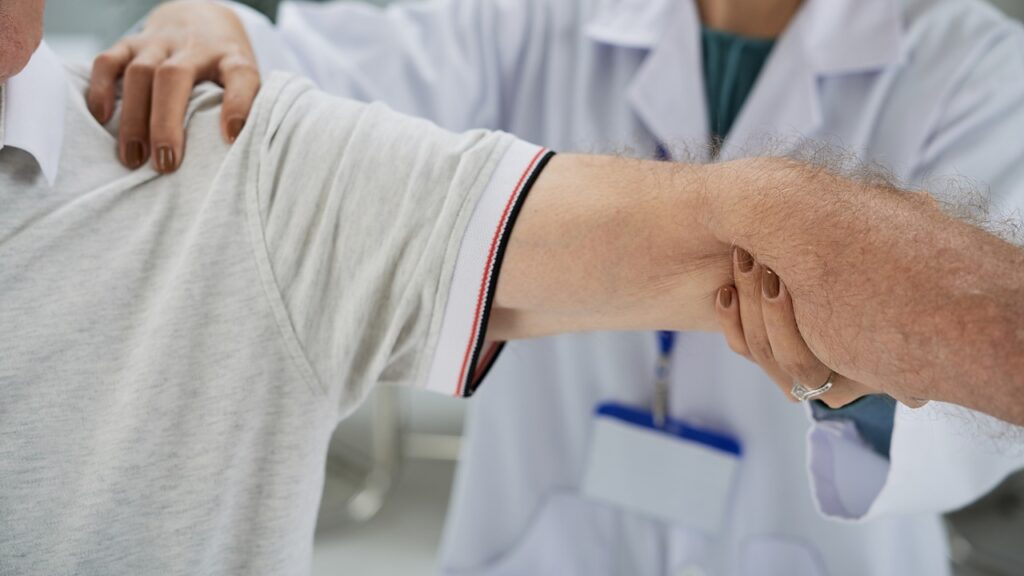
The ulnar nerve runs directly under the skin at the “funny bone” area. It is highly susceptible to direct pressure. Leaning on the elbows at a desk, on an armrest, or while driving compresses the nerve against the hard bone.
This external compression flattens the nerve and cuts off its blood supply. Patients often notice numbness immediately after leaning, but chronic compression can lead to permanent damage without acute pain signals.
While the cubital tunnel is the most common site, the nerve can be pinched at multiple points around the elbow. The Arcade of Struthers is a band of tissue located a few inches above the elbow that can thicken and compress the nerve.
The medial intermuscular septum is another potential site of entrapment. During surgery, the surgeon must check all these potential choke points to ensure the nerve is completely free. Failure to release these secondary sites is a common cause of failed surgery.

Fractures or dislocations of the elbow can alter the anatomy of the cubital tunnel. If the bones heal in a crooked position (malunion), it can stretch or compress the nerve. This is known as Tardy Ulnar Palsy because the symptoms often appear years after the original injury.
Bone spurs or osteophytes from arthritis can also encroach into the tunnel. These hard projections act like rocks in a shoe, constantly irritating the nerve. Surgery is needed to remove these bony impediments.
Systemic diseases affect the nerve’s ability to withstand pressure. Diabetes is the most significant risk factor. High blood sugar damages the nerves (neuropathy) and makes them more susceptible to compression damage at the elbow.
Thyroid dysfunction, alcoholism, and renal failure can also contribute to nerve vulnerability. In these patients, the nerve may be symptomatic even with minimal compression, necessitating earlier surgical intervention.
Certain professions have a high incidence of cubital tunnel syndrome. Jobs that require repetitive forceful gripping combined with elbow flexion are high risk. This includes assembly line workers, musicians, and truck drivers.
Vibrating tools can also damage the nerve. The combination of vibration, grip, and position creates a “triple crush” effect on the nerve fibers. Ergonomic modifications are often the first line of defense before surgery.
While men are more prone to the condition, hormonal factors in women can also play a role. Pregnancy and menopause cause fluid retention, which can increase the pressure within the tight anatomical tunnels.
Anatomical differences in the carrying angle of the elbow (cubitus valgus) are more pronounced in women. This increased angle can place the ulnar nerve under greater tension, predisposing it to traction injuries.
Bodybuilders and athletes may develop cubital tunnel syndrome due to muscle hypertrophy. The triceps muscle and the flexor carpi ulnaris muscle border the nerve. If these muscles become excessively large, they can compress the nerve.
This is a form of compartment syndrome where the nerve is squeezed by the surrounding muscle bulk. Surgery in these cases often involves releasing the fascia covering the muscles to make room for the nerve.
Sometimes the nerve is compressed at the elbow and another location, such as the neck (cervical spine) or the wrist (Guyon’s canal). This is called the double crush syndrome.
Compression at the neck makes the nerve more sensitive to compression at the elbow. Surgeons must evaluate the entire nerve path. Treating only the elbow may not resolve symptoms if the neck issue is severe.
Send us all your questions or requests, and our expert team will assist you.
Yes, heavy lifting, especially exercises involving curling motions or triceps extensions, can increase muscle bulk and internal pressure around the nerve. This can compress the ulnar nerve, leading to symptoms.
Most people sleep with their elbows bent. This position stretches the ulnar nerve and increases pressure in the cubital tunnel for hours at a time. This prolonged compression cuts off blood flow, causing you to wake up with numb fingers.
The shape of your elbow and the ligaments holding the nerve can be inherited. If your parents had a shallow groove or unstable nerves, you might be more likely to develop the condition, but the activity level usually triggers it.
A single hit usually causes temporary shock to the nerve. However, a severe contusion can cause internal bleeding or swelling that leads to scar tissue. If this scar tissue tethers the nerve, it can lead to chronic problems requiring surgery.
Losing weight can help if the compression is related to generalized adipose tissue or metabolic syndrome. Improving metabolic health helps nerves heal better, but weight loss alone rarely fixes a mechanical compression caused by bone or ligament.


Leave your phone number and our medical team will call you back to discuss your healthcare needs and answer all your questions.
Leave your phone number and our medical team will call you back to discuss your healthcare needs and answer all your questions.
Your Comparison List (you must select at least 2 packages)
