
Learn Robotic Surgery fundamentals, types, and core definitions explained by multidisciplinary Robotic Surgery teams.

Discover how Robotic Ophthalmology is transforming eye care. Learn about Robot-Assisted Eye Surgery, advanced lasers, and the future of precision vision correction.

We're Here to Help.
Get in Touch.

Send us all your questions or requests, and our expert team will assist you.

Doctors

Overview and Definition

What is Robotic Ophthalmology?

Robotic ophthalmology represents the cutting edge of modern eye care, transitioning delicate procedures from the human hand to computer-guided, highly advanced machinery. Robot-Assisted Eye Surgery utilizes microscopic instruments and laser systems to perform movements with a level of precision that exceeds human capability.

Because the eye is incredibly small and its tissues are fragiale, even the microscopic natural tremor of a surgeon’s hand can pose challenges. Robotic systems eliminate this tremor, offering unparalleled stability, enhanced 3D visualization, and automated precision.

The Scope of the Technology

This technology is not about a robot operating independently; rather, the ophthalmologist remains in complete control, guiding the robotic arms or programming the laser systems to execute specific, calculated tasks. The scope of this field currently covers advanced refractive surgeries, complex cataract removals, and delicate retinal or corneal procedures, drastically reducing surgical trauma and improving patient outcomes.

Purpose and Clinical Use

Icon LIV Hospital

Overcoming Human Limitations

Robotic Ophthalmology

The primary purpose of integrating robotics into ophthalmology is to overcome the physical limitations of the human hand and eye. Safely peeling microscopic membranes or making perfectly circular, self-sealing incisions requires sub-millimeter accuracy.

Robotic systems are designed to navigate these extreme micro-environments safely, operating on tissues that are often thinner than a human hair.

Icon 1 LIV Hospital

Advanced Surgical Applications

Robotic Ophthalmology

Clinically, these systems shine in procedures that demand exactitude. For example, Femto Cataract Laser Surgery utilizes a computer-guided femtosecond laser to replace handheld surgical blades. The laser makes perfect micro-incisions, creates a flawless circular opening in the lens capsule, and gently softens the clouded cataract for safe removal.

Additionally, Cornea Transplantation has been revolutionized. Instead of a surgeon manually cutting diseased tissue, lasers are programmed to cut both the patient’s and donor’s tissue with interlocking, custom-shaped edges. This allows the new cornea to fit like a perfect puzzle piece, resulting in a stronger wound and a vastly smoother surface.

Advanced Diagnostic Imaging

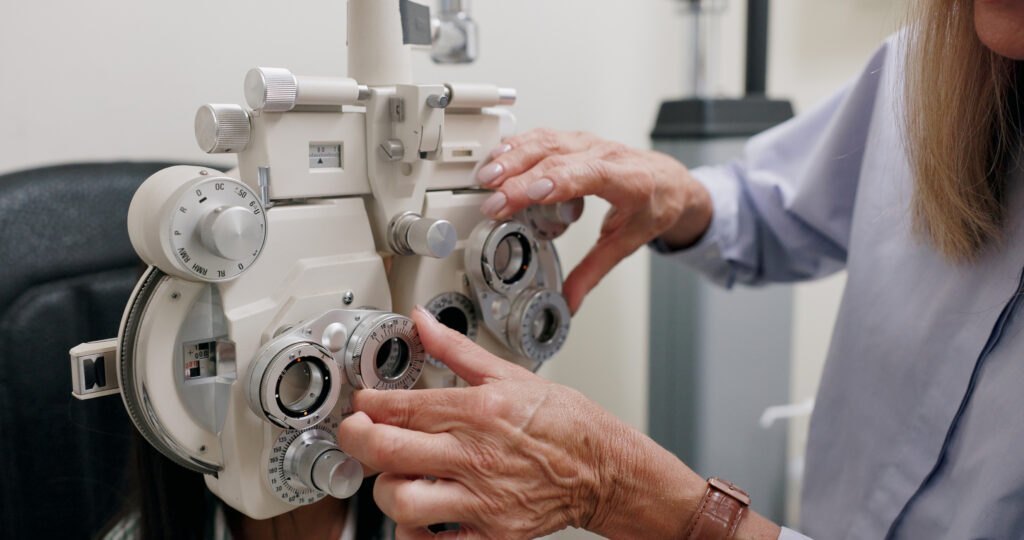
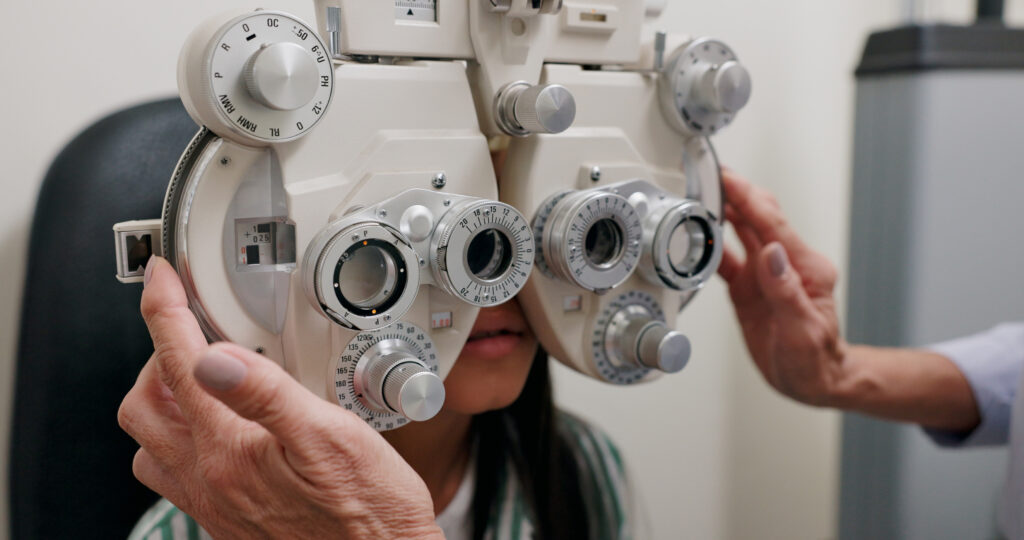
Robots and lasers cannot operate without a precise map. Therefore, the evaluation phase relies heavily on advanced digital imaging. Doctors use High-Definition Optical Coherence Tomography (OCT) to capture cross-sectional, microscopic images of the retina and cornea. Wavefront analyzers and topographers map the exact microscopic peaks, valleys, and optical imperfections of the patient’s eye, creating a customized 3D blueprint.

Programming the Surgical Path

This biometric data is then directly uploaded into the surgical system’s computer. For procedures like OptiLASIK—an advanced, customized form of LASIK—this mapping is crucial. It tells the machinery exactly where to position itself, how deep to cut, and how much tissue to remove, eliminating guesswork and ensuring the treatment is perfectly tailored to the patient’s unique visual anatomy.

Robotic Ophthalmology

Surgery and Recovery

Laser-Assisted Execution

During the procedure, the surgeon utilizes the programmed data to guide the machinery. In refractive surgeries, an Excimer Laser is often employed to vaporize microscopic layers of the cornea without generating heat that could damage surrounding healthy tissue. Because it is guided by the patient’s unique visual blueprint, it can correct higher-order aberrations like glare and halos with extreme precision that standard glasses cannot fix.

Immediate Post-Operative Phase

Because robotic and laser-assisted procedures cause significantly less collateral damage to surrounding tissues than manual surgery, the immediate recovery phase is often faster and less painful. Patients typically experience less inflammation and swelling. However, strict adherence to post-operative care is mandatory. Patients must wear protective eye shields while sleeping and follow a strict regimen of prescribed antibiotic and steroidal eye drops to prevent infection and manage healing.

Follow-up and Support

Long-Term Healing and Monitoring

The long-term healing process is closely monitored through a series of scheduled follow-up appointments. During these visits, the ophthalmologist will again use advanced imaging like OCT to ensure the tissues are bonding correctly at a microscopic level and that the eye pressure remains stable.

Maximizing Visual Outcomes

Because robotic procedures create such precise, structurally sound incisions, long-term visual stability is highly predictable. Clinical support staff will guide you through tapering your medicated drops and managing any temporary post-surgical dry eye symptoms with artificial tears. This ongoing support ensures a smooth, safe transition back to your daily life with clearer, sharper vision.

30 Years of
Excellence

Trusted Worldwide

With patients from across the globe, we bring over three decades of medical

Book a Free Certified Online
Doctor Consultation

Clinics/branches
Prof. MD. Ziya Akbulut Prof. MD. Ziya Akbulut Robotic Surgery
Group 346 LIV Hospital

Reviews from 9,651

4,9

Was this article helpful?

Was this article helpful?

We're Here to Help.
Get in Touch.

Send us all your questions or requests, and our expert team will assist you.

Doctors

FREQUENTLY ASKED QUESTIONS

Does the robot perform the surgery alone?

No, the robotic system is a tool controlled entirely by a highly trained ophthalmic surgeon who makes all critical decisions.

In many cases, the robotic system provides greater precision and stability, which can enhance the overall safety profile of the procedure.

While laser-based automation has existed for decades, fully integrated robotic surgical platforms are the latest advancement in the field.

Actually, the efficiency of robotic systems often results in shorter surgical times due to the streamlined nature of the automated steps.

Many common conditions like cataracts and refractive errors are routinely treated this way, and the scope for more complex retinal surgeries is expanding.

Spine Hospital of Louisiana

Let's Talk About Your Health

BUT WAIT, THERE'S MORE...

Leave your phone number and our medical team will call you back to discuss your healthcare needs and answer all your questions.

Let's Talk About Your Health

Let's Talk About Your Health

Leave your phone number and our medical team will call you back to discuss your healthcare needs and answer all your questions.

Let's Talk About Your Health

How helpful was it?

helpful
helpful
helpful
Your Comparison List (you must select at least 2 packages)