Last Updated on October 22, 2025 by mcelik
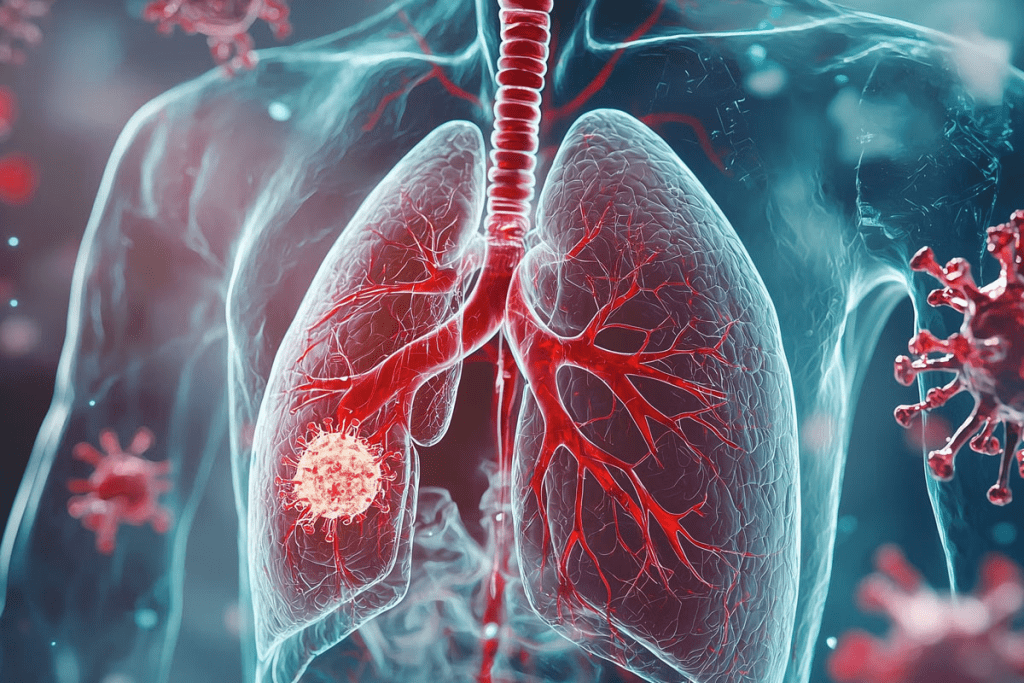
Lung cancer is a major cause of death worldwide. Many cases are linked to cancWhat causes a nodule on the lung?erous lung nodules. Knowing where these nodules are helps doctors diagnose and treat better, though some challenges remain due to SPECT scan disadvantages in detecting very small or overlapping nodules.
Studies show that lung cancer nodules usually appear in the upper parts of the lungs. This info is key for doctors to correctly diagnose and care for patients with pulmonary nodules.
Key Takeaways
- Cancerous lung nodules are a significant concern in lung cancer diagnosis.
- The location of lung cancer nodules can impact treatment planning.
- Upper lobes of the lungs are common sites for lung cancer nodules.
- Accurate diagnosis is critical for effective management of pulmonary nodules.
- Understanding nodule location can improve patient outcomes.
Understanding Lung Nodules and Cancer

Lung nodules are small spots in the lung that doctors can see with imaging tests. Knowing about them is key to finding cancer. With better imaging, we find more lung nodules. This means we need to understand them better.
Definition and Classification of Lung Nodules
Lung nodules are small, round spots in the lung that are up to 3 cm big. They can be classified by size, where they are, and how they look. Knowing how to classify them helps doctors decide what to do next.
- Solid nodules: These are spots that show up as solid on CT scans.
- Subsolid nodules: These spots are not solid and can be further divided into ground-glass and part-solid nodules.
- Calcified nodules: These spots have calcium in them.
- Fat-containing nodules: These spots have fat, which is usually not harmful.
Differentiating Benign vs. Malignant Nodules
Telling the difference between harmless and harmful lung nodules is a big challenge. Harmless nodules are small, don’t change much, and might have calcium or fat. Harmful nodules are often bigger, have irregular edges, and grow over time.
Studies have shown that some lung cancers, like non-small cell lung cancer, can be very aggressive. For example, research on TRIM32 has found it helps cancer cells stick together and spread. This shows how complex harmful nodules can be.
| Nodule Characteristics | Benign Features | Malignant Features |
| Size | Typically small (<1 cm) | Often larger, irregular |
| Margins | Smooth, well-defined | Irregular, spiculated |
| Calcification | Often present in benign patterns | May be absent or present in malignant patterns |
| Growth | Stable over time | Growth or change over time |
“The accurate characterization of lung nodules is key to figuring out the right treatment. This can range from watching them closely to surgery.”
Anatomical Structure of the Lungs
Knowing how the lungs are structured is key to finding where cancer might grow. The lungs are vital for exchanging gases. Their detailed anatomy helps pinpoint where lung nodules might appear.
Lobes and Segments of the Lungs
The lungs are split into lobes. The right lung has three lobes, and the left has two. Each lobe is broken down into segments, each with its own airway and blood vessels. This helps us understand where cancer might start.
The right lung is bigger, with ten segments. The left lung is smaller, with eight. Knowing this helps doctors find and treat lung nodules more effectively.
| Lung | Number of Lobes | Number of Segments |
| Right Lung | 3 | 10 |
| Left Lung | 2 | 8 |
Bronchial Tree and Pulmonary Circulation
The bronchial tree is a network of airways leading to the lungs. It starts with primary bronchi, then divides into smaller airways. These airways end in alveoli, where gas exchange happens.
The pulmonary circulation brings blood to the lungs. It includes arteries and veins that carry blood. This system is essential for the lungs’ function and is linked to the bronchial tree.
Understanding the bronchial tree and pulmonary circulation is vital for lung health. It helps in diagnosing and treating lung diseases, including cancer.
Where Most Cancerous Lung Nodules Located: General Distribution
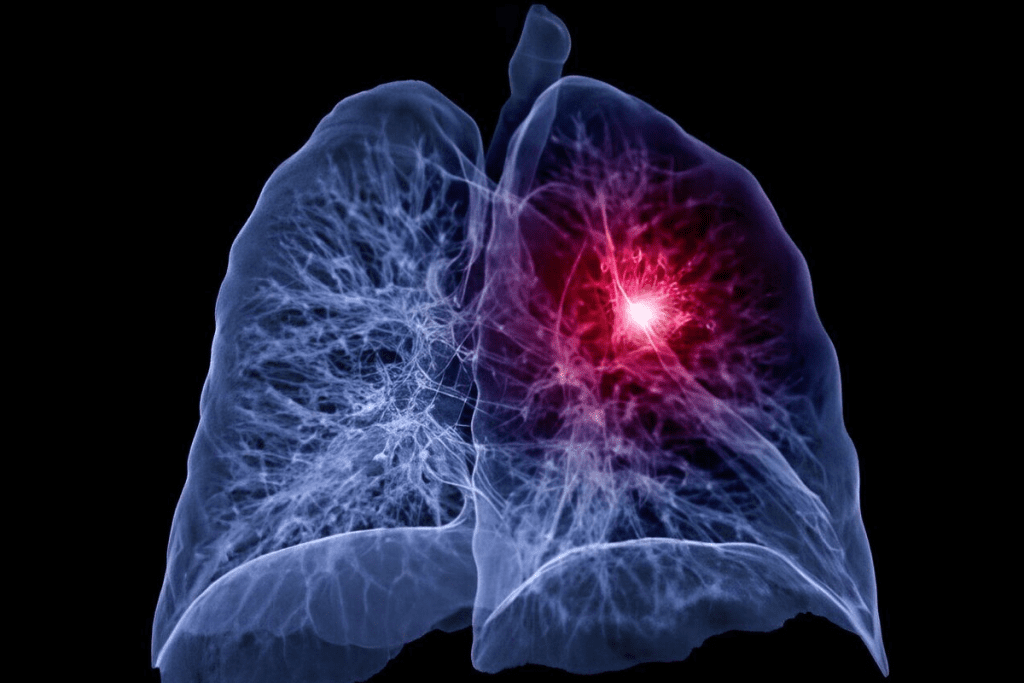
Cancerous lung nodules don’t spread out randomly. Some areas are more likely to have them. Knowing this helps doctors find and treat them better.
Statistical Overview of Cancerous Nodule Locations
Research shows that lung nodules often pop up in specific spots. The upper lobes are hit more often than the lower ones. Inside these lobes, the peripheral regions get more nodules than the center.
- The right upper lobe is the most common site for lung cancer.
- The majority of lung cancers arise in the peripheral lung, away from the central airways.
- Nodules in the upper lobes are more likely to be malignant than those in the lower lobes.
Factors Influencing Nodule Distribution
Several things affect where cancerous lung nodules show up. These include:
- Anatomical factors: The shape of the bronchial tree and blood vessel layout can affect where nodules form.
- Environmental exposures: Being exposed to harmful substances, like in cigarette smoke, can raise the risk in certain spots.
- Genetic predisposition: Some people might be more likely to get nodules because of their genes.
Knowing these factors and where nodules usually appear helps catch and treat lung cancer early. We’ll keep looking into these topics to give a full picture of lung cancer and its traits.
Upper Lobe Cancerous Nodules
Upper lobe lung nodules are a big worry because they are common and linked to lung cancer. The upper lobes are where cancer nodules often show up. Knowing about these nodules helps doctors diagnose and treat them better.
Prevalence and Characteristics
Research shows that cancer nodules are more common in the upper lobes. The upper lobes are more at risk because of their shape and the amount of lung tissue they have. These nodules can appear as solid or part-solid on scans.
Here are some important facts about upper lobe cancerous nodules:
- They are more common in smokers and people with lung disease history
- They are often small (
- They can grow fast or spread to nearby areas
Associated Cancer Types
The upper lobes are where you find several lung cancers, like adenocarcinoma and squamous cell carcinoma. Adenocarcinoma is the most common lung cancer in the upper lobes, and it’s often seen in non-smokers. Squamous cell carcinoma, linked to smoking, is found in the central airways.
Knowing the type of cancer in upper lobe nodules is key for treatment. The location and look of the nodule help doctors make the right treatment plan.
Lower Lobe Cancerous Nodules
It’s important to know about cancerous nodules in the lower lobes of the lungs. This knowledge helps in managing lung cancer better. We will look at what makes these nodules special and the common cancers found in this area.
Frequency and Distinctive Features
Cancerous nodules in the lower lobes have unique traits. Lower lobe lung nodules show specific signs and images on scans. This makes them different from nodules in other parts of the lungs.
- Lower lobe nodules are more likely to be linked to certain lung cancers.
- Where the nodule is located can affect symptoms and complications.
- Scans are key in spotting and figuring out what these nodules are.
Common Malignancies in Lower Lobes
There are different cancers found in the lower lobes, but some are more common. We will focus on the most common lung cancers linked to lower lobe lung cancer.
- Adenocarcinoma, a common lung cancer, is often found in the lower lobes.
- Squamous cell carcinoma can also appear here, with its own set of symptoms.
- Less often, cancers like small cell lung cancer can also be found in the lower lobes.
Understanding the types, features, and common cancers of lower lobe nodules helps us better diagnose and treat lung cancer.
Right Lung vs. Left Lung Distribution
Studies have found that lung nodules are more common in the right lung. This is due to several anatomical factors. This difference is important for understanding lung cancer, how to diagnose it, and how to treat it.
Comparative Analysis of Cancerous Nodule Prevalence
Research shows that nodules are more often found in the right lung. This is seen in many studies. For example, a study found the right lung is more affected by lung cancer. This might be because the right lung is larger and gets more air.
Several factors contribute to this difference:
- Anatomical differences: The right lung is bigger and has three lobes, while the left has two. This might affect where nodules form.
- Ventilation and airflow: The right lung gets more air, which could mean it’s exposed to more harmful substances.
- Lymphatic drainage: The way lymph moves in each lung might also influence where nodules appear.
Anatomical Reasons for Distribution Differences
The shape and size of the lungs affect where nodules form. The right lung is bigger and has three lobes. The left lung has two lobes. This difference in structure is important.
Understanding these differences helps us:
- Make better screening programs for the right lung.
- Improve how we find nodules in high-risk areas.
- Plan treatments based on where nodules are.
By knowing how nodules are distributed, we can improve lung cancer care. This leads to better health outcomes for patients.
Peripheral vs. Central Lung Nodules
It’s important to know the difference between peripheral and central lung nodules. This helps doctors diagnose lung cancer and plan treatments. Lung nodules are grouped by where they are in the lung. This location affects their traits and what they mean for health.
Characteristics of Peripheral Malignant Nodules
Peripheral lung nodules are found in the outer lung, near the pleura. They are more likely to be cancerous and often linked to adenocarcinoma, a common lung cancer type. Because they are in the outer lung, they can be hard to find without tests like CT scans.
Key traits of peripheral malignant nodules include:
- Higher chance of being cancerous
- Linked to adenocarcinoma
- Hard to find without symptoms
- Need imaging for diagnosis
Central Cancerous Nodules and Their Implications
Central lung nodules are near the lung’s hilum, close to major airways and blood vessels. Because of this, they can cause symptoms like coughing or bleeding. These nodules are often squamous cell carcinoma or small cell lung cancer, which are aggressive.
The implications of central cancerous nodules include:
| Characteristics | Implications |
| Close to major airways and vessels | More likely to cause symptoms like coughing and bleeding |
| Linked to squamous cell carcinoma and small cell lung cancer | More aggressive tumor behavior |
| Potential for earlier detection due to symptoms | Impact on treatment planning and prognosis |
The location of lung nodules greatly impacts their traits, symptoms, and treatment. Knowing these differences is key for doctors to create effective plans.
Subpleural Cancerous Nodules
Subpleural lung nodules are a big worry in lung cancer. They sit just under the pleura. This area is close to the pleura, which can change how cancer spreads and acts.
Detection and Significance
Finding subpleural cancerous nodules needs imaging like CT scans and sometimes PET scans. These nodules are important because they might be cancerous. Their spot near the pleura can also change how we treat them.
We use top-notch imaging to spot these nodules. They’re often seen during lung cancer checks. Their spot near the pleura can make them harder to find and treat.
Cancer Types Associated with Subpleural Location
Many lung cancers show up as subpleural nodules. Adenocarcinoma, a common lung cancer, often starts in the subpleural area. Other cancers, like squamous cell carcinoma, can also appear here, but less often.
The subpleural area is key for adenocarcinoma. Knowing the cancer type and where it is helps us choose the best treatment.
Hilar and Mediastinal Nodule Locations
It’s important to know about hilar and mediastinal lung nodules for cancer care. These areas help doctors figure out how far cancer has spread. This is key for treatment planning.
Hilar Cancerous Nodules
Hilar lung nodules are near where air, blood, and nerves enter the lungs. These nodules are often linked to central lung cancers. They can cause coughing and breathing trouble because they’re close to airways.
Having nodules in this area makes surgery harder. Doctors might need to use stronger treatments. It’s important to check how much of the hilar area is affected to choose the right treatment.
- Key characteristics of hilar cancerous nodules include:
- Proximity to major bronchi and blood vessels
- Potential for causing obstructive symptoms
- Association with more aggressive tumor types
Mediastinal Involvement and Staging Implications
Mediastinal involvement means cancer has spread to the chest’s middle part. This is a big deal for lung cancer staging. It usually means the cancer is more advanced.
To stage lung cancer with mediastinal involvement, doctors use CT scans, PET scans, and sometimes mediastinoscopy. Knowing the stage is key for predicting outcomes and treatment plans.
- Mediastinal staging looks at how far cancer has spread in the mediastinum.
- Advanced imaging is vital for checking mediastinal involvement.
- Mediastinal metastases often mean switching to treatments like chemotherapy and targeted therapy.
Managing hilar and mediastinal lung nodules needs a team effort. Doctors from different fields work together. Understanding these nodules helps us find better ways to help patients.
Bronchial Nodules and Endobronchial Lesions
Understanding bronchial nodules and endobronchial lesions is key to lung cancer diagnosis and care. These growths can signal serious issues, including lung cancer. Spotting them early is vital for patient health.
Characteristics and Detection Challenges
Bronchial nodules grow in the bronchi, the airways to the lungs. Endobronchial lesions occur in the bronchial tubes. They can be harmless or cancerous. Finding these lesions is hard because they’re deep in the airways.
Characteristics of Bronchial Nodules and Endobronchial Lesions:
- Location within the bronchial tubes
- Potential to be benign or malignant
- Variability in size and shape
Doctors use CT scans and bronchoscopy to find these lesions. Bronchoscopy lets them see inside the airways and take biopsies.
Impact on Symptoms and Prognosis
Bronchial nodules or endobronchial lesions can cause coughing, wheezing, and breathing trouble. These symptoms might delay diagnosis, as they’re common in less serious conditions.
The prognosis depends on if the lesions are benign or malignant, and the cancer’s stage.
| Lesion Type | Common Symptoms | Prognosis |
| Benign | Cough, wheezing | Generally good |
| Malignant | Cough, wheezing, weight loss | Varies by stage |
Early detection and accurate diagnosis are vital for better outcomes. We stress the need for detailed diagnostic tests for those with symptoms or risk factors.
“The accurate diagnosis of endobronchial lesions requires a combination of imaging and bronchoscopic techniques. It’s a challenging but critical task for effective patient management.”
A Pulmonologist
Location Patterns in Primary Lung Cancer
Different types of primary lung cancer have specific locations in the lungs. Knowing these patterns is key for accurate diagnosis and treatment planning.
Adenocarcinoma Location Preferences
Adenocarcinoma, the most common lung cancer, often occurs in the lung’s outer parts, like the upper lobes. It usually starts in scarred or damaged lung areas.
Research shows that adenocarcinoma’s outer location helps in early detection. This is because it’s often found by chance during scans for other reasons.
Squamous Cell Carcinoma Distribution
Squamous cell carcinoma, a major non-small cell lung cancer type, starts in the lung’s central airways. Its central location often leads to symptoms like cough and bleeding, helping in early diagnosis.
But, its central location makes surgery challenging. This is because it’s close to major airways and vessels.
Small Cell Lung Cancer Typical Locations
Small cell lung cancer, known for its aggressive nature, starts in the lung’s central airways, near the hilum. Its central location is linked to fast growth and early spread, often leading to widespread disease at diagnosis.
This central location also makes it hard to treat. It often involves critical structures early on, leading to a poor prognosis.
| Lung Cancer Type | Typical Location | Characteristics |
| Adenocarcinoma | Peripheral, often upper lobes | Tends to be detected incidentally; associated with scarred or damaged lung tissue |
| Squamous Cell Carcinoma | Central airways | Often symptomatic; challenging for surgical resection due to proximity to major airways and vessels |
| Small Cell Lung Cancer | Central, near hilum | Aggressive; rapid growth and early metastasis; poor prognosis |
Understanding the typical locations and characteristics of different primary lung cancers helps us improve diagnosis and treatment. This can lead to better patient outcomes.
Metastatic Nodule Distribution Patterns
It’s key to know how metastatic lung nodules spread to diagnose and treat them well. These nodules form when cancer moves from other parts of the body to the lungs. The lungs are a common spot for this because they have a lot of blood and tiny blood vessels.
Common Locations for Metastatic Spread to Lungs
Metastatic nodules can pop up anywhere in the lungs but some spots are more common. The lower lobes are more often hit because blood flows there first. Research shows that these nodules usually appear at the edges of the lungs, where there’s more blood.
- The lower lobes are more prone to metastatic nodules due to gravity.
- Peripheral locations are more common than central locations.
- Multiple nodules are often seen in cases of metastatic disease.
Differentiating Primary vs. Metastatic Based on Location
Telling primary lung cancer from metastatic nodules is important for the right treatment. Primary lung cancers can happen anywhere, but some signs can tell them apart from metastatic nodules. For example, primary cancers are often near the bronchial tree, while metastatic nodules are usually on the edges.
“The location and distribution of lung nodules can provide critical clues about their origin and nature, guiding further diagnostic and therapeutic strategies.”
” Expert Opinion
Knowing how metastatic lung nodules spread helps doctors diagnose and treat patients better. It’s important to tell primary lung cancers from metastatic ones to choose the best treatment.
Prognostic Implications of Nodule Location
Lung nodule location is very important. It affects cancer staging and survival rates. Knowing where a nodule is can tell us a lot about the cancer’s aggressiveness and the best treatment options.
Impact on Survival Rates
The location of lung nodules can greatly impact survival rates. Nodules in some lung areas may have a better or worse outlook. For example, upper lobe nodules often have a different prognosis than lower lobe nodules.
Patients with peripheral nodules tend to have different survival rates than those with central nodules. It’s important to understand these differences to create personalized treatment plans.
| Nodule Location | 5-Year Survival Rate |
| Upper Lobe | 60% |
| Lower Lobe | 50% |
| Peripheral | 65% |
| Central | 40% |
Role in Cancer Staging
Nodule location is also key in cancer staging. Staging is important for predicting prognosis and treatment planning. The location of the nodule can affect the cancer’s stage at diagnosis, with some locations harder to detect early.
Nodules in the hilar or mediastinal regions are often more challenging. They are closer to vital structures and harder to treat surgically.
Understanding the prognostic implications of nodule location helps us tailor treatments. This includes considering location when staging cancer and predicting survival rates.
Screening and Early Detection Based on Distribution Patterns
Understanding where cancerous lung nodules show up is key for early detection. Knowing where and how often these nodules appear helps us create better screening plans.
High-Risk Locations for Targeted Screening
Studies have found that some lung spots are more likely to turn cancerous. Upper lobe predominance is a big deal, mainly for certain lung cancers. We should really focus on these spots during screenings.
The upper lobes get hit by lung cancer more often. This means we can catch cancer sooner if we screen these areas first.
Advances in Location-Based Detection Technologies
New tech has made finding lung nodules much better. Computer-aided detection (CAD) systems and artificial intelligence (AI) are helping us spot lung cancer more accurately.
| Technology | Description | Benefits |
| CAD Systems | Software that helps doctors find nodules | More accurate detection, fewer false negatives |
| AI Algorithms | Models that analyze images to find patterns | More precise, learns from lots of data |
These tools, along with knowing where nodules appear, are changing lung cancer screening. By focusing on high-risk spots and using the latest tech, we can find cancer sooner. This could help lower lung cancer deaths.
Conclusion
Knowing where cancerous lung nodules are found is key for diagnosing and treating lung cancer. This article has covered the basics of lung nodules, their locations, and how they affect patients.
Cancerous lung nodules often appear in the upper lobes of the lungs. Their location can tell us a lot about the type of cancer and how it might progress. This information is critical for choosing the right treatment.
New imaging and diagnostic tools help us spot and understand lung nodules better. But, we need more research to find even better ways to fight lung cancer.
Using what we know about lung nodule locations can help us improve care for patients. This knowledge is vital for better diagnosis and treatment. It’s a step towards beating lung cancer.
FAQ
Where are most cancerous lung nodules typically located?
Most cancerous lung nodules are found in the upper lobes. The right upper lobe is more common. But, the exact spot can vary by cancer type.
What is the difference between peripheral and central lung nodules?
Peripheral nodules are near the lung’s edge. Central nodules are closer to the lung’s center and major bronchi.
Are cancerous lung nodules more common in the right or left lung?
Studies show more nodules in the right lung. This might be because the right main bronchus is larger and more direct.
What types of lung cancer are associated with subpleural nodules?
Subpleural nodules are linked to adenocarcinoma. This is a common non-small cell lung cancer type.
How does the location of lung nodules affect patient prognosis?
Nodule location greatly affects prognosis. Central nodules are harder to treat because they’re near vital structures.
Can the location of a lung nodule indicate whether it is primary or metastatic?
Location can hint at a nodule’s origin. Metastatic nodules are often peripheral and multiple. Primary cancers can be anywhere, depending on the type.
What role does nodule location play in lung cancer staging?
Location is key in staging lung cancer. It affects the tumor’s classification and overall stage. This impacts treatment and prognosis.
Are there advances in detection technologies that can identify lung nodules based on their location?
Yes, new imaging tech like low-dose CT has improved nodule detection. This includes those in hard-to-reach spots.
How do different types of primary lung cancer tend to be distributed within the lungs?
Different lung cancers have preferred locations. Adenocarcinoma often starts in the periphery. Squamous cell carcinoma is more central.
What are the implications of hilar and mediastinal nodule locations for cancer staging?
Nodules in the hilar or mediastinal areas suggest more advanced disease. This can affect the N classification and overall stage.
References
Farjah, F., et al. (2022). Patient and nodule characteristics associated with a lung cancer diagnosis in individuals with incidentally detected lung nodules. JAMA Network Open, 5(9), e2231234. https://pmc.ncbi.nlm.nih.gov/articles/PMC10154904/