Ovarian cancer that has spread is tough to treat. But, thanks to new medical care, many patients live longer and better lives.

The American Cancer Society says the five-year survival rate for stage ovarian cancer is about 32%. But, with better multidisciplinary care, surgery, and personalized therapies, patients with metastatic ovarian cancer have a brighter future.Is there hope after spread? Learn about stage 4 ovarian cancer and the aggressive treatments designed to cure the disease even after it moves.
This article will look at the latest in treatments and survival rates. It will give insights into managing ovarian cancer stage 4 and what patients can hope for.
Key Takeaways
- Understanding the challenges of ovarian cancer that has spread.
- Advances in treatment options for metastatic ovarian cancer.
- Improved survival rates with multidisciplinary care.
- The role of personalized therapies in improving patient outcomes.
- Insights into managing ovarian cancer stage 4.
Understanding Metastatic Ovarian Cancer
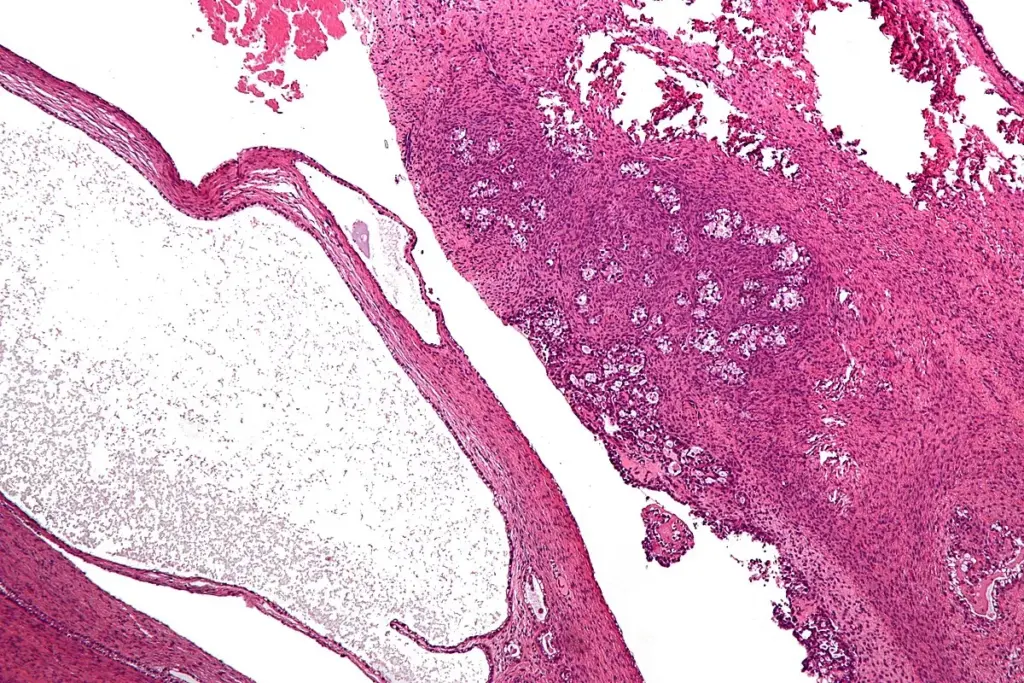
It’s important to know how ovarian cancer spreads to find the best treatment. Metastatic ovarian cancer happens when the disease moves from the ovaries to other parts of the body.
metastatic ovarian cancer
What defines advanced ovarian cancer
Advanced ovarian cancer means cancer cells have spread from the ovaries to other organs and tissues. This can happen inside or outside the abdominal cavity. It’s called Stage III or IV ovarian cancer, based on how far it has spread.
Stage III ovarian cancer means cancer has reached lymph nodes or tissues in the abdominal cavity. Stage IV is the most advanced, showing cancer has spread to distant organs like the liver, lungs, or outside the abdomen.
The process of metastasis in ovarian cancer
Metastasis starts when cancer cells break away from the main tumor. They then invade nearby tissues and travel through the bloodstream or lymphatic system. This allows them to form new tumors in distant places.
Ovarian cancer often first spreads within the pelvis or abdomen. Then, it can move to more distant parts of the body.
Survival Rates for Stage4 Ovarian Cancer

Knowing the survival rates for stage four ovarian cancer is key for patients and doctors. These rates show how well treatments work. They help in making better care plans for patients.
Current Five-Year Survival Statistics
The five-year survival rate for stage four ovarian cancer is about 32%, says the American Cancer Society. This shows the tough fight against cancer that has spread far. The American Cancer Society also notes. Early detection leads to much better survival rates, with over 90% for stage I ovarian cancer.
stage four ovarian cancer survival rates
Comparing Early-Stage vs. Advanced Disease Outcomes
Survival rates for ovarian cancer change a lot based on the stage at diagnosis. Early-stage cancer has a high survival rate. But, only about 20% of ovarian cancers are caught early. Advanced ovarian cancer, like stage four, is much harder to treat.
|
Stage at Diagnosis |
Five-Year Relative Survival Rate |
|---|---|
|
Stage I |
More than 90% |
|
Stage IV |
Approximately 32% |
Factors that Influence Individual Prognosis
Many things affect how well a patient with stage four ovarian cancer will do. These include how well treatment works, the patient’s overall health, and the tumor’s characteristics. Knowing these helps in making treatment plans that fit each patient.
Key factors influencing prognosis:
- Response to initial treatment
- Presence of BRCA1 or BRCA2 mutations
- Overall health and performance status
- Tumor characteristics and behavior
Healthcare providers can give more accurate predictions and tailor treatments by considering these factors. This helps meet each patient’s unique needs.
Common Sites Where Ovarian Cancer Spreads To
Knowing where ovarian cancer spreads is key for treatment. It often goes to different parts of the body. Finding these spots is important for managing the disease.
Peritoneal Cavity and Abdominal Organs
The peritoneal cavity, home to the abdominal organs, is a common place for cancer to spread. Cancer cells can spread to the intestines, bladder, and rectum. This is called peritoneal carcinomatosis.
Implications: When cancer reaches the peritoneal cavity, surgery can get complicated. It might need special treatments, like intraperitoneal chemotherapy.
Lymphatic System Involvement
Ovarian cancer can also spread through the lymphatic system. It affects lymph nodes in the pelvis, abdomen, and chest. Lymph node involvement is important for staging and predicting outcomes.
Lymph node dissection is done during surgery. It helps see how far the cancer has spread and removes affected nodes.
Distant Metastasis to Liver, Lungs, and Other Organs
In later stages, ovarian cancer can reach distant organs like the liver, lungs, and brain. These metastases can cause symptoms and problems, depending on where they are.
Management: Treating distant metastases usually involves a mix of treatments. This includes chemotherapy and targeted therapy.
|
Common Sites of Metastasis |
Characteristics |
Treatment Implications |
|---|---|---|
|
Peritoneal Cavity |
Widespread dissemination within the abdominal cavity |
Intraperitoneal chemotherapy, complex surgical debulking |
|
Lymph Nodes |
Involvement of pelvic, abdominal, and thoracic nodes |
Lymph node dissection, assessment for further treatment |
|
Liver, Lungs, and Other Organs |
Distant metastases causing organ-specific symptoms |
Systemic chemotherapy, targeted therapy, palliative care |
Knowing where ovarian cancer spreads is key for effective treatment. It helps improve patient outcomes.
How Fast Does Ovarian Cancer Grow and Spread?
Ovarian cancer grows and spreads at different rates in different people. It also varies by cancer type. Knowing this helps doctors choose the best treatment.
Typical Growth Patterns and Timelines
High-grade serous ovarian carcinoma, the most common type, takes about 6.5 years to spread from the fallopian tubes to the ovaries. But, growth rates can differ a lot. High-grade malignancies grow faster than low-grade ones, affecting treatment choices and outcomes.
A study in a medical journal showed ovarian cancer’s growth is influenced by genetics and environment.
“The growth rate of ovarian cancer is influenced by various factors, including the presence of specific genetic mutations and the tumor microenvironment.”
Factors Affecting Metastatic Ability
Several things can affect how likely ovarian cancer is to spread, including:
- The cancer’s stage at diagnosis
- Genetic mutations like BRCA1 and BRCA2
- The type of tumor
- The patient’s health and immune system
Differences Between Ovarian Cancer Subtypes
Ovarian cancer is not just one disease but many different types. Each type grows and spreads in its own way. The main types are:
|
Subtype |
Growth Pattern |
Metastatic Ability |
|---|---|---|
|
High-grade serous |
Rapid growth |
High |
|
Low-grade serous |
Slow growth |
Moderate |
|
Clear cell |
Variable growth |
Moderate to High |
Knowing these differences helps doctors create treatment plans that fit each patient’s cancer.
Recognizing Symptoms of Stage4 Ovarian Cancer
It’s important to know the symptoms of advanced ovarian cancer early. Stage 4 ovarian cancer is hard to spot because its symptoms are not clear-cut. These symptoms can be mistaken for other, less serious health issues.
Early Warning Signs Often Overlooked
The first signs of ovarian cancer can be hard to notice. They include:
- Abdominal bloating and swelling
- Pelvic pain or discomfort
- Difficulty eating or feeling full quickly
- Urinary urgency or frequency
- Changes in bowel habits
These symptoms are often vague. They can be mistaken for other things. It’s key to watch for any lasting changes in your body.
Symptoms Specific to Metastatic Disease
When ovarian cancer spreads, it can cause more symptoms. For example:
|
Site of Metastasis |
Possible Symptoms |
|---|---|
|
Liver |
Jaundice, right upper quadrant pain |
|
Lungs |
Shortness of breath, pleuritic chest pain |
|
Peritoneal Cavity |
Abdominal pain, ascites |
Knowing these symptoms can help figure out how far the cancer has spread.
When to Seek Medical Attention
If you notice any of these, see a doctor right away:
- Persistent abdominal bloating
- Severe or worsening pelvic pain
- Difficulty eating or unexplained weight loss
- New or unusual urinary or bowel symptoms
Comprehensive Diagnosis of Metastatic Ovarian Cancer
To understand how far ovarian cancer has spread, doctors use a detailed approach. This includes imaging, biopsy, and genetic tests. Knowing the extent of the cancer is key to finding the right treatment.
Advanced Imaging Techniques
Modern imaging is vital for spotting and understanding metastatic ovarian cancer. Here are some key methods:
- CT Scans: Give clear pictures of the abdomen and pelvis, showing how far the cancer has spread.
- MRI: Offers detailed images that help tell different tissues apart and check if important areas are affected.
- PET Scans: Help find cancer cells by showing where they are most active, helping find cancer in other parts of the body.
Biopsy and Staging Procedures
Biopsy and staging are key to confirming the cancer and knowing how far it has spread.
- Laparoscopic Biopsy: A small, non-invasive way to get tissue samples from inside the abdomen.
- Surgical Staging: Allows doctors to explore the abdomen and remove any cancer they find.
Genetic and Biomarker Testing
Genetic and biomarker tests give insights into the cancer’s nature. This helps doctors choose the best treatments.
|
Test Type |
Purpose |
Implications |
|---|---|---|
|
BRCA1 and BRCA2 Testing |
Looks for genetic changes linked to ovarian cancer |
Helps decide on treatments, like PARP inhibitors |
|
Biomarker Analysis |
Checks for specific proteins or markers in cancer cells |
Helps predict how well certain treatments will work |
By using advanced imaging, biopsies, and genetic tests, doctors can fully understand metastatic ovarian cancer. This allows for tailored treatment plans.
Multidisciplinary Approach to Treatment
Ovarian cancer treatment has changed a lot. Now, a team of experts works together to help patients. This team effort is key, mainly for advanced cases.
The Team of Specialists Involved in Care
A team for ovarian cancer includes many experts. You’ll find gynecologic oncologists, medical oncologists, and radiologists. Pathologists and surgeons are there too, like those who focus on urology or the gut.
Nurses and other support staff are also important. They help with education, emotional support, and organizing treatment plans.
Coordinating Complex Treatment Plans
Planning treatment for ovarian cancer is complex. It depends on the patient’s health, cancer stage, and tumor details. Treatment plans are made just for each patient.
They might include surgery, chemotherapy, and targeted therapy. The team decides the best order and mix of treatments.
|
Specialist |
Role in Ovarian Cancer Treatment |
|---|---|
|
Gynecologic Oncologist |
Surgical management and overall care coordination |
|
Medical Oncologist |
Chemotherapy and systemic treatment planning |
|
Radiologist |
Imaging and diagnostic support |
Benefits of Specialized Cancer Centers
Getting care at cancer centers has big advantages. You get access to new treatments and clinical trials. These places have teams skilled in complex cases, which can lead to better results.
They also offer many support services. This makes care better overall.
In short, a team effort is key for ovarian cancer treatment. With a team and careful planning, care can be better. This improves life quality for patients.
Surgical Options for Advanced Ovarian Cancer
Cytoreductive surgery is key for treating advanced ovarian cancer. It aims to remove as much tumor as possible. This improves patient outcomes.
Goals of Cytoreductive Surgery
The main goal is to leave no visible tumor or just a little bit. This makes other treatments, like chemotherapy, work better.
The benefits of cytoreductive surgery include:
- Improved survival rates
- Enhanced quality of life
- Better response to adjuvant therapies
Determining Surgical Candidacy
Doctors decide if surgery is right based on disease extent and health. They look at comorbidities, tumor spread, and how well the patient can function.
A team of experts evaluates each patient. They consider:
- Imaging studies to assess tumor burden
- Laboratory tests to evaluate overall health
- Clinical assessment of performance status
Innovative Surgical Techniques
New surgical methods have made cytoreductive surgery better. Minimally invasive and robotic-assisted surgeries are used in some cases.
These methods bring benefits like:
- Reduced recovery time
- Less postoperative pain
- Improved cosmetic outcomes
Cytoreductive surgery is a key treatment for advanced ovarian cancer. It offers hope for better outcomes and quality of life.
Chemotherapy Regimens for Stage4 Ovarian Cancer
Chemotherapy is key in treating stage 4 ovarian cancer. It offers different plans based on each patient’s needs. The choice of treatment depends on the patient’s health, how far the cancer has spread, and any past treatments.
<SEP-1299_image_6>
First-line Platinum-based Treatments
First treatments often include platinum-based treatments like carboplatin or cisplatin. These drugs are often paired with others, like paclitaxel, to work better. A mix of carboplatin and paclitaxel is common because it’s effective and has fewer side effects.
Platinum-based chemotherapy is backed by lots of research. It shows it can help patients with advanced ovarian cancer live longer.
Neoadjuvant Chemotherapy Approaches
Neoadjuvant chemotherapy is given before surgery. It’s used for stage 4 ovarian cancer to make tumors smaller. This makes them easier to remove surgically. It also helps see how well the tumor responds to treatment, guiding future steps.
- Reduces tumor size, facilitating surgical removal
- Helps in assessing tumor responsiveness to chemotherapy
- Can improve surgical outcomes by making tumors more operable
Intraperitoneal Chemotherapy Options
Intraperitoneal chemotherapy puts drugs directly into the abdominal cavity. This method gets chemotherapy closer to cancer cells in the peritoneum. It might help patients with ovarian cancer that has spread to the peritoneum.
But, intraperitoneal chemotherapy can be more toxic. It needs careful patient selection and management.
Targeted Therapies and Precision Medicine
Targeted therapies are a big step forward in fighting ovarian cancer. They use precision medicine to target cancer cells. This makes treatments more specific and effective.
PARP Inhibitors for BRCA-Mutated Cancers
PARP inhibitors are a key treatment for ovarian cancer. They help patients with BRCA1 and BRCA2 mutations a lot. These drugs block the PARP enzyme, which kills cancer cells because they can’t fix their DNA.
Angiogenesis Inhibitors
Angiogenesis inhibitors are another targeted therapy. They cut off the blood supply to tumors. This stops cancer cells from getting the nutrients and oxygen they need to grow. They can be very effective in some cases of ovarian cancer.
Emerging Targeted Approaches
New targeted therapies are always being developed. Emerging targeted therapies include many different types of inhibitors. These new treatments offer hope for better outcomes for ovarian cancer patients.
In summary, targeted therapies and precision medicine have greatly improved ovarian cancer treatment. By understanding cancer’s molecular details, doctors can give more tailored and effective treatments.
Managing Ovarian Carcinomatosis and Extensive Disease
Ovarian carcinomatosis is when cancer spreads all over the peritoneal cavity. It’s a tough part of treating advanced ovarian cancer. A detailed treatment plan is needed.
Treatment Challenges with Peritoneal Spread
When ovarian cancer spreads to the peritoneal cavity, treatment gets harder. Peritoneal spread makes it tough to remove all cancer or control symptoms well.
Managing ovarian carcinomatosis means dealing with the spread of cancer. It’s about knowing how far the disease has spread, the patient’s health, and the good and bad of different treatments.
Specialized Approaches for Extensive Metastasis
For those with a lot of metastasis, specialized treatment approaches are key. This includes targeted therapies and intraperitoneal chemotherapy. These methods target cancer cells more directly.
- Intraperitoneal chemotherapy
- Targeted therapy
- PARP inhibitors for BRCA-mutated cancers
These methods help slow disease growth, ease symptoms, and improve life quality.
Palliative Interventions for Symptom Control
Palliative care is essential for ovarian carcinomatosis. It focuses on symptom control and better quality of life. It includes pain management, nutrition support, and more.
Adding palliative care to treatment plans helps patients deal with advanced ovarian cancer. It ensures they get full support from start to end.
Recurrence and Long-term Management Strategies
Managing ovarian cancer long-term means watching for signs of return and keeping the disease in check. It’s a mix of regular checks, adjusting treatment plans, and using ongoing therapies.
Monitoring for Disease Recurrence
It’s key to keep an eye on ovarian cancer to catch it early. Studies show early detection can make a big difference. Doctors say regular checks can lead to better survival rates.
CA-125 testing is a blood test for ovarian cancer. It’s not perfect alone but helps when used with scans. Together, they give a clear picture of the disease’s state.
Treatment Options After Relapse
When ovarian cancer comes back, treatment plans are made with care. They consider where the cancer is, past treatments, and the patient’s health. Options might include more chemo, targeted therapies, or clinical trials.
Targeted therapies, like PARP inhibitors for BRCA patients, are promising. They offer hope for those with recurring cancer, says a top oncologist.
Maintenance Therapies to Extend Remission
Maintenance therapies are key to keeping cancer at bay. PARP inhibitors, for instance, help BRCA patients live longer without the disease coming back. Other options, like anti-angiogenic agents and immunotherapies, are being tested in trials.
“Maintenance therapy is a cornerstone of ovarian cancer management, helping to delay recurrence and improve quality of life,” according to a recent clinical guideline.
By using these approaches, doctors can tailor care to each patient. This improves outcomes and quality of life.
Promising Research and Clinical Trials
New hope is coming for ovarian cancer patients through ongoing clinical trials. These trials are exploring new therapies. The field of ovarian cancer research is growing fast, with big steps forward in understanding and treating the disease.
Novel Immunotherapy Approaches
Immunotherapy is a promising area of research. It uses the immune system to fight cancer. Checkpoint inhibitors have shown promise by helping the immune system attack cancer cells better.
CAR-T cell therapy is another exciting area. It involves engineering a patient’s T cells to target cancer cells. Early trials suggest it could lead to better outcomes.
Targeted Combination Therapies
Targeted therapies focus on specific cancer molecules. PARP inhibitors have been effective against ovarian cancer with BRCA mutations. Mixing these with other treatments, like angiogenesis inhibitors, is showing great promise.
Researchers are also looking into combination regimens. They aim to overcome resistance and improve treatment results.
How to Find and Qualify for Clinical Trials
Patients can find clinical trials through their doctors or online at ClinicalTrials.gov. It’s important to talk to a healthcare provider about the benefits and risks. This helps decide if a trial is right for you.
Eligibility criteria for trials vary. They often depend on cancer stage, previous treatments, and overall health. Patients should carefully review these criteria and ask questions to see if they qualify.
Joining clinical trials offers access to new treatments. It also helps advance ovarian cancer research. This could lead to better outcomes for future patients.
Conclusion: Living with Hope while having Stage4 Ovarian Cancer.
Living with stage 4 ovarian cancer means you need a strong care plan, hope, and resilience. Thanks to new treatments, many patients live better lives. It’s important to stay positive and get help from support services.
Women living with ovarian cancer can find new hope in the latest treatments. Groups like the Azza Foundation help patients get the care they need. They are key in the fight against ovarian cancer.
Having hope and using available resources can make a big difference. By staying in touch with doctors and support groups, patients can manage their disease better. This helps improve their overall health and well-being.
FAQ
What is stage4 ovarian cancer?
Stage4 ovarian cancer is the most advanced stage. It means the cancer has spread to distant organs or tissues. This includes the liver, lungs, or lymph nodes.
How does ovarian cancer spread?
Ovarian cancer spreads through the peritoneal cavity. Cancer cells can implant on abdominal organs. It also spreads through the lymphatic system to lymph nodes. In advanced cases, it reaches distant organs.
What are the common sites where ovarian cancer metastasizes?
Ovarian cancer often spreads to the peritoneal cavity and abdominal organs. This includes the bowel and omentum. It also goes to lymph nodes and distant organs like the liver and lungs.
What are the symptoms of stage4 ovarian cancer?
Symptoms include abdominal pain or swelling. You might have trouble eating or feel full quickly. Bowel or urinary symptoms are common. Fatigue is also a symptom. Distant metastasis can cause symptoms related to the affected organ.
How is stage4 ovarian cancer diagnosed?
Diagnosis uses imaging tests like CT scans or MRI. A biopsy confirms cancer cells. Staging procedures assess how far it has spread. Genetic and biomarker testing are also used.
What are the treatment options for stage4 ovarian cancer?
Treatment includes surgery to remove tumors. Chemotherapy is also used. Targeted therapies like PARP inhibitors or angiogenesis inhibitors are options. Sometimes, clinical trials are considered.
Can ovarian cancer that has spread be cured?
While curing stage4 ovarian cancer is hard, treatment can control it. It can also improve quality of life. Advances in treatment have helped many patients.
How fast does ovarian cancer grow?
Ovarian cancer growth rates vary. Some tumors grow slowly, while others grow faster. The subtype and individual patient characteristics influence growth.
What is ovarian carcinomatosis?
Ovarian carcinomatosis is when cancer cells spread widely in the peritoneal cavity. This leads to many tumor implants on abdominal and pelvic surfaces.
How is ovarian cancer recurrence managed?
Managing recurrence involves monitoring for signs of relapse. Treatment includes chemotherapy or targeted therapies. Sometimes, secondary surgery is needed. The goal is to control the disease and maintain quality of life.
What are the benefits of a multidisciplinary approach to ovarian cancer treatment?
A team of specialists coordinates care. This includes gynecologic oncologists, medical oncologists, and radiologists. They provide tailored treatment plans for each patient.
Are there clinical trials for stage4 ovarian cancer?
Yes, there are ongoing clinical trials. They explore new treatments, including immunotherapies and targeted therapies. Patients should discuss eligibility with their healthcare provider.
References
National Center for Biotechnology Information. Evidence-Based Medical Insight. Retrieved from https://pubmed.ncbi.nlm.nih.gov/31199054/