What is Urology?

Urology: Urinary & Reproductive Disease Diagnosis & Treatment

Urology treats urinary tract diseases in all genders and male reproductive issues, covering the kidneys, bladder, prostate, urethra, from infections to complex cancers.

We're Here to Help.
Get in Touch.

Send us all your questions or requests, and our expert team will assist you.
Doctors

Overview and definition

Laser Lithotripsy

The Era of Advanced Endourology

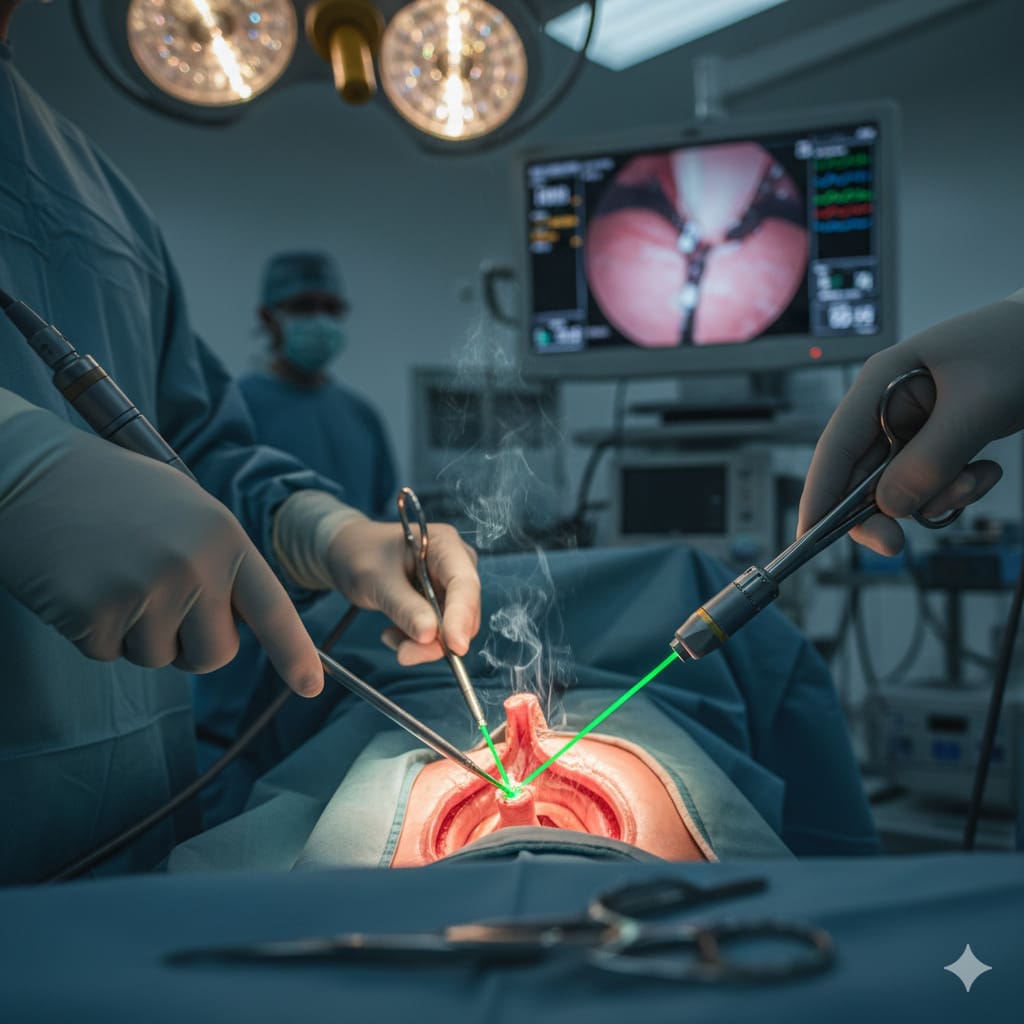
Endoscopic technologies have transformed urological treatments, moving from traditional open surgeries to less invasive, more precise methods. At Liv Hospital’s Urology Department, Laser Lithotripsy is the main treatment for urinary stones. This technique uses advanced optics and laser technology to treat stones anywhere in the urinary tract while keeping the body’s structure intact. Laser Lithotripsy is part of Endourology, which focuses on procedures done through natural body openings, like the urethra, so there are no external cuts.


The Physics of Laser Fragmentation

This procedure works well because of the advanced laser technology it uses. The word lithotripsy comes from Greek, with ‘lithos’ meaning stone and ‘tripsis’ meaning to break down. In laser therapy, stones are broken apart using heat and mechanical energy. Most top centers use the Holmium Yttrium Aluminum Garnet (Ho: YAG) laser for this purpose.

  • Energy Transmission and Absorption The laser energy is generated within a central console and transmitted through a flexible, low-water-content silica fiber. These fibers vary in diameter, often as thin as a few hundred micrometers, allowing them to pass through the microscopic working channels of modern endoscopes. The Holmium laser operates at a specific wavelength of 2100 nanometers. This wavelength is highly absorbed by water. When the laser pulse is emitted from the fiber tip, it is instantly absorbed by the fluid within the stone’s pores and by the saline irrigation fluid surrounding it.
  • The Ablation Mechanism. This rapid absorption creates a microscopic vapor bubble at the stone surface. The instantaneous expansion and subsequent collapse of this bubble generate a high-pressure shock wave that destabilizes the stone’s crystalline matrix. Simultaneously, the thermal energy ablates the stone material, effectively sublimating solids into vapor or fine micro-particles. This dual action allows the laser to pulverize stones of any chemical composition, from the relatively soft struvite and uric acid stones to the exceptionally hard calcium oxalate monohydrate and cystine stones.
  • Thulium Fiber Laser Technology Evolution in this field is continuous. Newer iterations, such as the Thulium Fiber Laser, utilize diode-pumped technology to deliver energy at higher frequencies. This allows for a finer ablation process, often referred to as dusting, in which the stone is eroded into silt-like particles rather than broken into chunks.

Modalities of Endoscopic Access

Laser Lithotripsy is the therapeutic modality, but it relies on specific delivery methods depending on the anatomical location of the calculus.
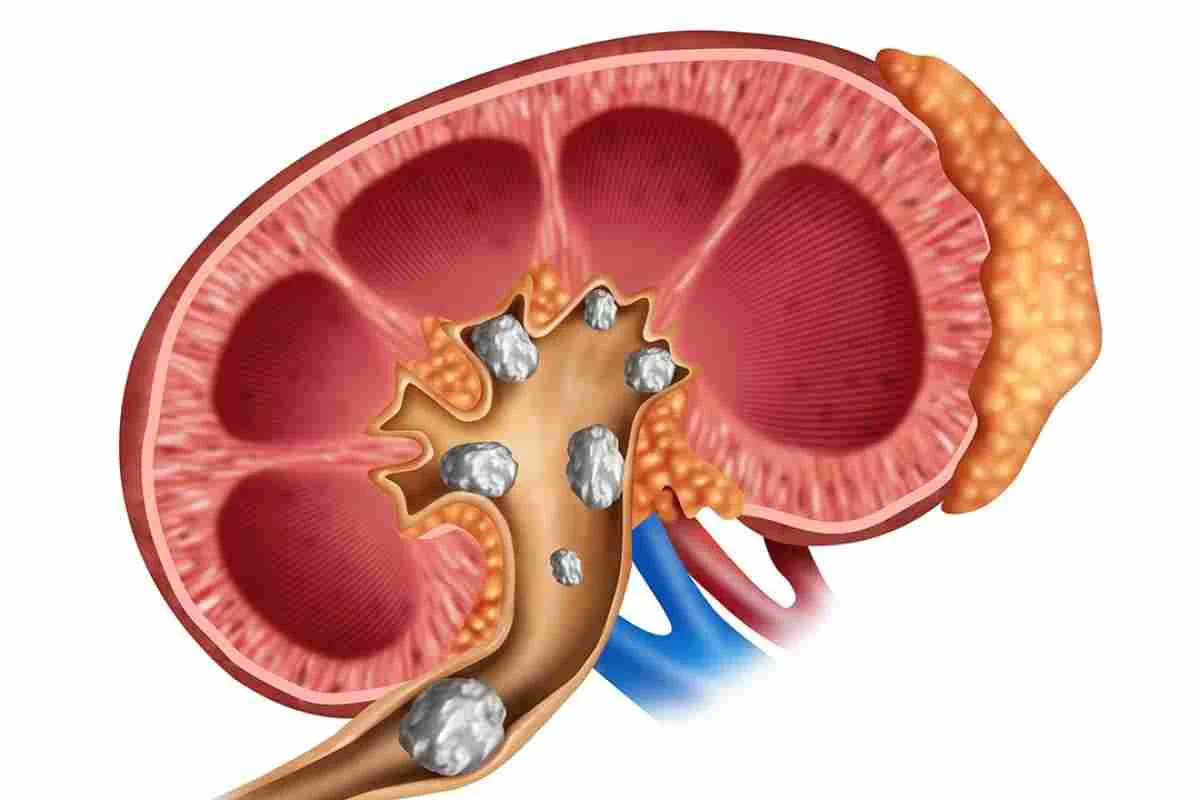

  • Ureteroscopy URS For calculi lodged in the ureter, the muscular tube that transports urine from the kidney to the bladder, a rigid or semi-rigid ureteroscope is typically employed. This instrument provides direct, straight-line access to the stone. It is equipped with fiber-optic or digital imaging sensors and a working channel. URS is the gold standard for managing ureteral obstruction and renal colic, providing immediate relief by clearing the blockage.
  • In Retrograde Intrarenal Surgery (RIRS) for stones located deep within the kidney’s collecting system, a flexible ureteroscope is required. This sophisticated instrument can articulate and deflect up to 270 degrees. This maneuverability allows the surgeon to navigate the natural anatomical tortuosity of the urinary tract, passing through the bladder, ascending the ureter, and steering into the distinct calyces of the kidney. RIRS defines the capability to perform completely incision-less surgery within the kidney, treating stones that would have historically required percutaneous or open surgical removal.

The Strategic Approaches: Dusting versus Basketting

Laser Lithotripsy

Surgeons use different techniques during the procedure, depending on each patient’s situation.

  • Fragmentation and Extraction. This technique utilizes high-energy, low-frequency laser settings to fracture the stone into several discrete fragments. These pieces are then actively retrieved by the urologist using a specialized nitinol basket device. This method is often preferred when the stone burden is relatively small, and the goal is to render the patient immediately stone-free by physically removing the debris.
  • Dusting Technique: This method uses high-frequency, low-energy laser settings to gradually wear down the stone, turning it into fine dust like sand or mud. These tiny particles mix with the irrigation fluid and are small enough to pass naturally when the patient urinates after the procedure. This technique reduces the need to remove fragments with instruments, which shortens the surgery and lowers the risk of injury to the ureter.

30 Years of
Excellence

Trusted Worldwide

With patients from across the globe, we bring over three decades of medical

Book a Free Certified Online
Doctor Consultation

Clinics/branches
Eymen Gazel
Eymen Gazel Urology
Group 346 LIV Hospital

Reviews from 9,651

4,9

Was this article helpful?

Was this article helpful?

We're Here to Help.
Get in Touch.

Send us all your questions or requests, and our expert team will assist you.

Doctors

FREQUENTLY ASKED QUESTIONS

What is the fundamental difference between laser lithotripsy and shock wave lithotripsy?

Laser lithotripsy is an endoscopic surgical procedure where a camera is inserted into the body to visualize the stone directly and destroy it with a laser fiber. It is exact and practical for rocks of all hardness. Shock wave lithotripsy ESWL is a non-invasive procedure that uses sound waves generated outside the body to break the stone. ESWL is less invasive but may require multiple sessions and is often less effective for very hard or large rocks.

The Holmium laser used in lithotripsy has a very shallow depth of penetration, typically less than 0.5 mm. Because the procedure is performed in a fluid environment, thermal energy dissipates rapidly. While the laser is powerful enough to vaporize stone, the risk of thermal injury to delicate ureteral or renal tissue is minimal when performed by experienced hands.

Retrograde refers to the direction of approach, in which urine flows against its natural flow. Since urine flows from the kidney down to the bladder, the surgeon inserts the instruments starting at the urethra, moving up into the bladder, and then ascending the ureter to reach the kidney. This approach utilizes the natural urinary pathways, eliminating the need to cut through skin or muscle.

Yes, one of the defining advantages of the Holmium laser is its versatility. It is effective against all types of urinary stones, regardless of their chemical makeup. This includes calcium oxalate, calcium phosphate, uric acid, struvite, and even the notoriously hard cystine stones associated with genetic disorders. The laser energy destabilizes the crystal lattice of any stone type.

Laser lithotripsy is classified as a minimally invasive endoscopic procedure rather than major open surgery. There are no external incisions, and patients typically recover much faster. However, it is performed under general anesthesia to ensure the patient remains perfectly still, as precision is required to operate safely within the narrow confines of the urinary tract.
Spine Hospital of Louisiana

Let's Talk About Your Health

BUT WAIT, THERE'S MORE...

Leave your phone number and our medical team will call you back to discuss your healthcare needs and answer all your questions.

Let's Talk About Your Health

How helpful was it?

helpful
helpful
helpful
Your Comparison List (you must select at least 2 packages)