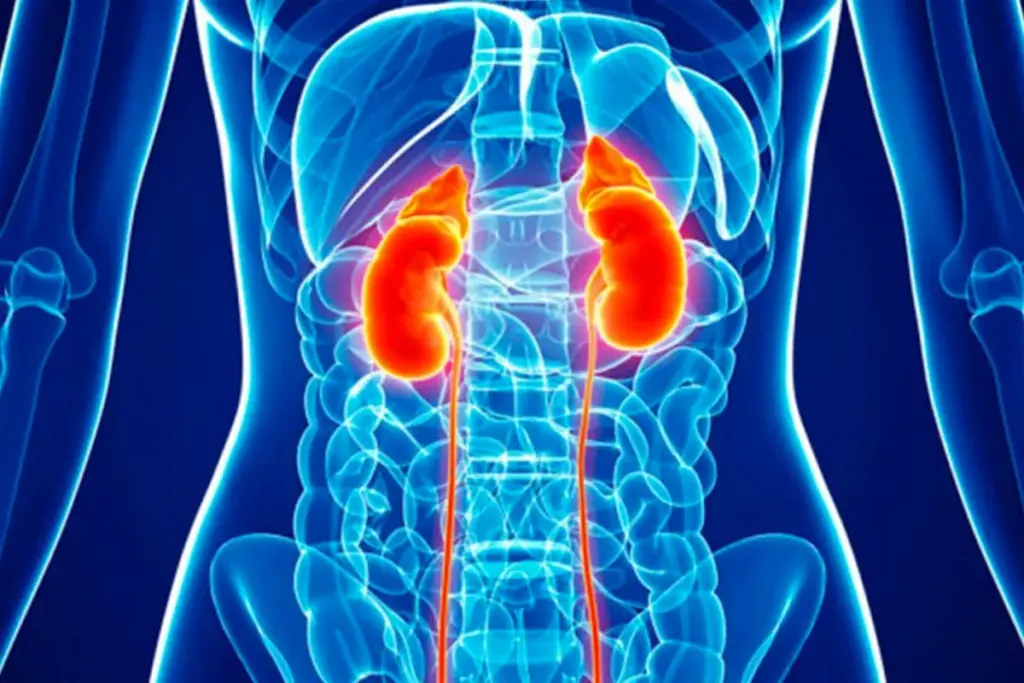
The kidneys are two bean-shaped organs that play a key role in our health. They filter out waste and excess water from our blood. They also help keep the right balance of electrolytes and produce hormones for red blood cells and bone health.
Discover what do kidneys do and how they filter blood to maintain health. Learn what do kidneys do in this comprehensive guide.
StatPearls tells us that the kidneys do a lot. They get rid of nitrogenous wastes and keep electrolytes and acid-base balance in check. They also help control blood pressure and make hormones like erythropoietin and calcitriol. Knowing how kidney function works is important for keeping us healthy in the long run.
Key Takeaways
- The kidneys filter approximately 180 liters of blood daily.
- They regulate electrolyte balance and acid-base balance.
- Kidney function is vital for controlling blood pressure.
- The kidneys produce hormones that help produce red blood cells.
- Maintaining kidney health is essential for overall well-being.
Kidney Anatomy and Location
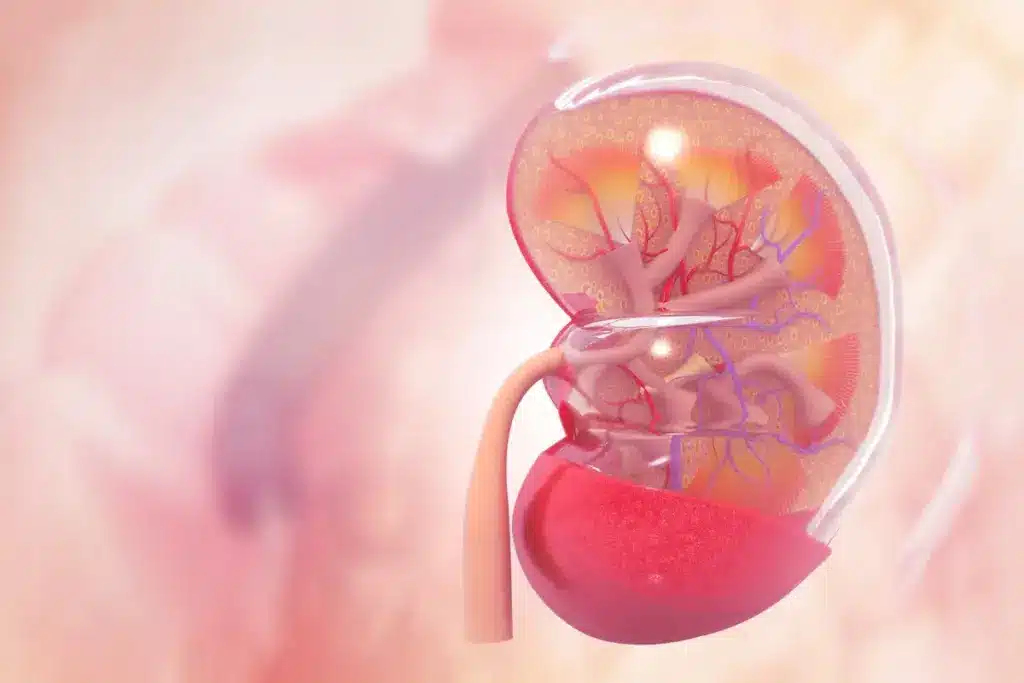
To understand how kidneys work, we need to know their structure and where they are. The kidneys are two organs in the lower back, between the T12 and L3 vertebrae.
Each kidney has the renal parenchyma and the collecting system. The renal parenchyma is split into the cortex and medulla. These parts have nephrons, which filter blood.
Basic Structure of the Kidneys
The kidneys have the renal capsule, renal parenchyma, and the collecting system. The renal parenchyma is the working part, with the cortex and medulla. The cortex has nephrons, and the medulla has renal pyramids that lead to the calyces.
The collecting system, with the calyces and renal pelvis, carries urine to the ureter. Knowing this helps us understand how kidneys work.
| Component | Description | Function |
|---|---|---|
| Renal Capsule | Outermost layer of the kidney | Protects the kidney |
| Renal Cortex | Outer part of the renal parenchyma | Contains nephrons |
| Renal Medulla | Inner part of the renal parenchyma | Comprises renal pyramids |
| Collecting System | Includes calyces and renal pelvis | Conveys urine to the ureter |
Nephrons: The Filtering Units
Each kidney has about one million nephrons. These units filter blood and remove waste. Nephrons are tiny parts of the kidneys that filter waste and excess fluids from the blood.
The nephron’s parts include the glomerulus, proximal convoluted tubule, loop of Henle, and distal convoluted tubule. The glomerulus is where blood first gets filtered.
Knowing about nephrons helps us understand how kidneys keep electrolyte balance, regulate blood pressure, and perform other important functions.
What Do Kidneys Do: Essential Functions
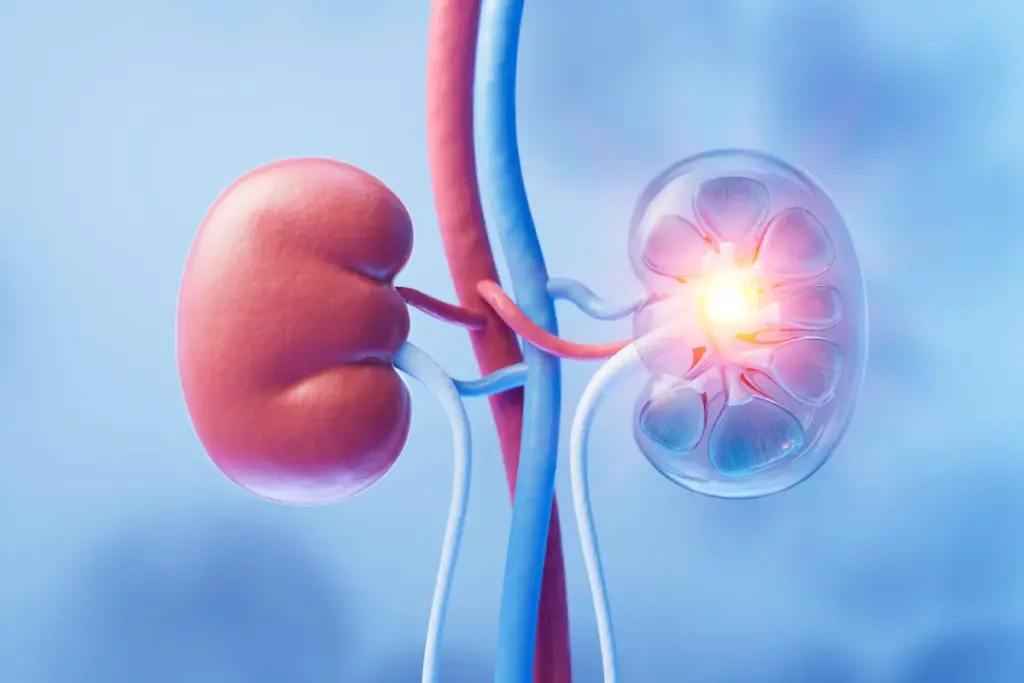
Kidneys are key to our health, doing many important jobs. They keep our body balanced and work well together. This is vital for our overall health.
Blood Filtration and Waste Removal
Kidneys filter out waste and extra water from our blood. They do this by cleaning about 180 liters of blood every day. This is important for getting rid of waste and extra stuff our body doesn’t need.
The National Institute of Diabetes and Digestive and Kidney Diseases says, “The kidneys filter waste products and excess fluids from the blood, which are then excreted in the urine.” The kidneys’ ability to filter blood is vital for maintaining overall health.
The kidneys filter blood in a complex way. They remove waste, extra ions, and water. This keeps our body’s balance of minerals and acids right.
Maintaining Electrolyte Balance
Kidneys also keep electrolyte levels balanced. Electrolytes like sodium and potassium are important for our nerves and muscles. The kidneys control how much of these electrolytes we lose in our urine.
Regulation of electrolytes is vital for our muscles and nerves to work right. It also helps keep the right amount of fluid in our cells.
Regulating Blood Pressure and Other Functions
Kidneys help control blood pressure too. They do this through the renin-angiotensin-aldosterone system. This system helps manage blood pressure by adjusting blood vessel fluid and heart strength.
The American Heart Association says, “The kidneys play a key role in controlling blood pressure.”
Kidneys also make hormones that help make red blood cells and keep bones strong. For example, erythropoietin helps make red blood cells, and calcitriol helps with calcium levels.
“The kidneys are vital organs that perform multiple critical functions, including blood filtration, waste removal, and maintaining electrolyte balance.”
The Blood Filtration Process
The kidneys filter blood in a detailed and specialized way. Blood enters each kidney through the renal artery. It then splits into smaller arteries, leading to the nephrons, the kidneys’ functional units.
The Journey of Blood Through the Kidneys
Blood moves through the renal arteries to the nephrons, where filtration happens. The nephrons are tiny units that filter waste and excess substances from the blood. The journey of blood through the kidneys is a critical process that ensures waste removal and electrolyte balance.
Three-Step Filtration Process
The filtration process in the nephrons has three main steps: glomerular filtration, tubular reabsorption, and tubular secretion. Glomerular filtration is the first step. Here, water, ions, and small molecules are filtered from the blood into Bowman’s capsule.
Tubular reabsorption is the second step. Essential nutrients and ions are reabsorbed back into the bloodstream. This ensures vital substances are not lost in urine.
The final step is tubular secretion. Additional waste products are secreted into the filtrate, helping form urine. These three steps together produce urine, which is then excreted from the body.
The blood filtration process is complex and vital for our health. Understanding how the kidneys filter blood highlights their importance.
Conclusion
The kidneys are key to our health, filtering blood and removing waste. They use special parts called nephrons to do this. Knowing how they work helps us see why keeping them healthy is so important.
Dr. Andrew Bentall from the Mayo Clinic says about one in seven American adults have chronic kidney disease. Many don’t even know they have it. Catching it early and treating it can really help.
The kidneys help keep our body’s fluids and electrolytes in balance. This is vital for our health. By learning about the kidneys, we can take better care of them. This helps prevent diseases and keeps us feeling our best.
FAQ:
What system filters blood?
The kidneys filter blood. They remove waste and excess substances.
What is the flow of blood through the kidneys?
Blood comes into the kidneys through the renal arteries. It then goes through the glomeruli for filtration. After that, the filtrate moves through the renal tubules, making urine.
What is the main function of the kidneys?
The kidneys have many important jobs. They filter blood, remove waste, and balance electrolytes. They also help control blood pressure and make hormones for red blood cells and bone health.
Where does filtration of the blood occur within the kidneys?
Blood filtration happens in the glomeruli. These are tiny blood vessels in the nephrons.
What filters the blood in the kidneys?
The nephrons, with the glomeruli, filter the blood. They remove waste and excess substances.
What is the excretory system function of the kidneys?
The kidneys are key in the excretory system. They remove waste and excess from the blood, which is then in the urine.
What do the kidneys filter?
The kidneys filter the blood. They remove waste, excess water, and electrolytes. This helps keep fluid and electrolyte balance stable.
What are the filtering units of the kidneys?
The nephrons are the kidneys’ filtering units. They filter the blood and remove waste and excess substances.
How does the kidney clean blood?
The kidneys clean blood through a complex process. This includes filtration, reabsorption, and secretion. It removes waste and excess substances.
How is blood filtered by the kidneys?
Blood is filtered by the kidneys in a three-step process. This happens in the nephrons. It involves filtration, reabsorption, and secretion.
What does the kidney do?
The kidneys do many important things. They filter blood, remove waste, and balance electrolytes. They also regulate blood pressure and produce hormones for red blood cells and bone health.
What is the main job of the kidneys?
The kidneys’ main job is to filter blood. They remove waste and excess substances. They also regulate bodily functions like electrolyte balance and blood pressure
Reference:
Evidence-Based Medical Insight https://www.ncbi.nlm.nih.gov/books/NBK482248