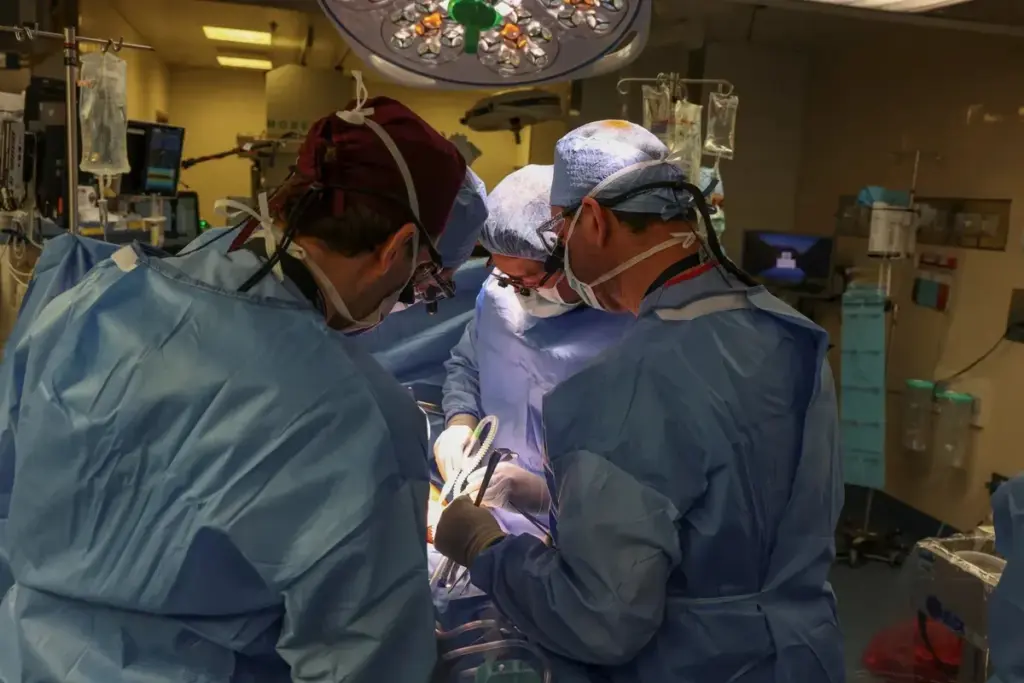
A kidney transplant is a major surgery for people with failing kidneys. This operation puts a healthy kidney from a donor into the recipient’s lower abdomen. The new kidney’s blood vessels are connected to the recipient’s, and the ureter is linked to the bladder.
During the surgery, the recipient’s own kidneys are usually left untouched. We will dive into the details of this process. It shows how important kidney transplants are for improving life for those with kidney failure.
Key Takeaways
- A kidney transplant is a surgical procedure that replaces a diseased kidney with a healthy one from a donor.
- The donor kidney is placed in the lower abdomen, with its blood vessels attached to the recipient’s vessels.
- The ureter of the new kidney is connected to the recipient’s bladder.
- The recipient’s original kidneys are typically left in place unless they cause complications.
- Kidney transplantation significantly improves the quality of life for individuals with end-stage kidney disease.
Understanding Kidney Transplantation

For those with kidney failure, a transplant can greatly improve life. It’s a surgery that swaps a sick kidney with a healthy one from a donor.
Definition and Purpose
A kidney graft or renal transplant means moving a kidney from a donor to someone in need. It aims to fix kidney problems, making dialysis unnecessary and boosting health.
Benefits Over Dialysis
Kidney transplants offer big advantages over dialysis. They lead to a better quality of life with fewer food limits and lower costs over time. Plus, they reduce the risk of death compared to dialysis.
| Treatment Aspect | Kidney Transplant | Dialysis |
| Quality of Life | Improved | Limited by treatment schedule |
| Dietary Restrictions | Fewer | More stringent |
| Treatment Cost | Lower long-term | Ongoing expenses |
| Survival Rate | Higher | Lower compared to transplant |
Candidates for Kidney Transplants
Not all with kidney disease can get a transplant. A detailed check is done to see if the person is ready for surgery and can handle post-transplant care. Those with end-stage renal disease who are on dialysis usually qualify.
From First Renal Transplant to Modern Procedures

The journey of kidney transplantation has come a long way. It started with the first successful transplant in the 1950s. This marked the beginning of a new era in organ transplantation.
Historical Milestones in Kidney Transplantation
The history of kidney transplantation is filled with important milestones. The first successful transplant was a major breakthrough. It opened the door for future advancements.
Some key historical milestones include:
- The development of immunosuppressive medications to prevent organ rejection.
- Advances in surgical techniques, improving the success rate of transplants.
- The establishment of organ donation programs, increasing the availability of kidneys for transplantation.
Advancements in Transplantation Techniques
Today, we use both living donor kidneys and kidneys from deceased donors. This has greatly increased the number of available kidneys.
Key advancements in transplantation techniques include:
| Technique | Description | Benefit |
| Laparoscopic Donor Nephrectomy | A minimally invasive surgical technique for removing a kidney from a living donor. | Reduced recovery time for donors. |
| Immunosuppressive Therapy | Medications used to prevent the rejection of the transplanted kidney. | Improved graft survival rates. |
| Organ Preservation Techniques | Methods used to preserve the kidney outside the body before transplantation. | Increased availability of kidneys for transplantation. |
These advancements have greatly helped kidney transplantation grow. They offer new hope to those with end-stage renal disease.
How Kidney Transplants Work Today
To understand kidney transplants today, we need to look at donors, the transplant process, and success rates. We’ll dive into these areas to give a full picture of kidney transplant work.
Types of Kidney Donors
Kidney transplants use kidneys from living or deceased donors.
Living donors give a kidney to someone they know, like a family member or friend. This type of donation has its perks. It lets the surgery be planned ahead and might lead to better kidney function.
Deceased donors, on the other hand, are people who have signed up to be organ donors or whose families agree to donation. Deceased donor kidneys, also known as adaveric renal or adaver kidney, are given out based on medical need and match.
The Transplantation Procedure
The transplant surgery connects the donor kidney to the recipient’s blood vessels and bladder. It’s done under general anesthesia and takes a few hours.
The old kidneys are left in place unless they’re causing problems. The new kidney goes in the lower abdomen. The blood vessels are connected, and the ureter is linked to the bladder.
Success Rates and Current Statistics
Kidney transplants have high success rates, with big improvements in survival. The numbers show how effective transplants are: deceased donor kidney transplants have a 95 percent one-year survival rate. Five-year survival rates are about 85 to 90 percent.
| Donor Type | 1-Year Survival Rate | 5-Year Survival Rate |
| Living Donor | 97% | 90% |
| Deceased Donor | 95% | 85-90% |
A leading transplant expert says, “Advances in immunosuppression and surgery have greatly improved transplant outcomes. This gives patients a better life and longer survival.”
Conclusion
We’ve looked into the details and progress in kidney transplant operations. This treatment is a lifesaver for those with severe kidney disease. It needs careful planning, teamwork, and ongoing care to succeed.
At our place, we’re all about top-notch healthcare for international patients getting kidney transplants. We give detailed info and resources, like on transplantation wikipedia. Our goal is to help patients make smart choices about their health.
Our team works hard to give each patient the best care, from the start to after the transplant. We mix medical know-how with caring support. This way, we aim to make the transplant journey easy and successful for everyone.
In short, kidney transplant is a game-changer for people with kidney disease. We’re honored to be a part of this life-changing journey. We’re here to support and care for patients every step of the way.
FAQ
What is a kidney transplant?
A kidney transplant is a surgical procedure in which a healthy kidney from a donor is placed into a person whose kidneys no longer function properly.
It is a treatment for end-stage kidney disease when the kidneys cannot adequately filter waste and excess fluids from the blood.
What is the purpose of a kidney transplant?
The purpose is to restore normal kidney function and improve the patient’s quality of life.
It helps the body remove waste, balance fluids and electrolytes, and regulate blood pressure.
What are the benefits of a kidney transplant over dialysis?
A transplant often provides better long-term survival, more energy, and fewer dietary and fluid restrictions compared to dialysis.
Patients typically experience improved quality of life and greater freedom in daily activities.
Who is eligible for a kidney transplant?
Patients with end-stage renal disease who are healthy enough to undergo surgery and lifelong medication may be eligible.
Eligibility depends on overall health, absence of severe infections or cancer, and the ability to adhere to treatment.
What are the types of kidney donors?
Donors can be living (related or unrelated) or deceased donors who have consented to organ donation.
Living donor transplants usually have better outcomes and shorter waiting times.
How is a kidney transplant performed?
During surgery, the donor kidney is placed in the lower abdomen and connected to blood vessels and the bladder.
The patient’s original kidneys are usually left in place unless they cause complications.
What are the success rates of kidney transplants?
Success rates are generally high, with about 90–95% of transplanted kidneys functioning well in the first year.
Long-term survival varies, but many transplanted kidneys last 10–20 years or longer.
What is the history of kidney transplantation?
The first successful human kidney transplant was performed in 1954 between identical twins.
Advances in immunosuppressive drugs over the decades have greatly improved survival rates.
Where is the transplanted kidney located?
The transplanted kidney is placed in the lower abdomen, usually in the right or left iliac fossa.
It is positioned outside the original kidney location for easier surgical access and monitoring.
What is a cadaveric renal transplant?
A cadaveric renal transplant refers to a kidney transplant from a deceased donor.
The donated kidney is retrieved after confirmed brain death and preserved until transplantation.
What is kidney transplantation?
Kidney transplantation is the medical process of replacing a failed kidney with a healthy donor kidney.
It is considered the preferred treatment for suitable patients with end-stage kidney disease.
References
Kidney transplantation is performed to prolong and improve the lives of those with end-stage renal disease.
https://www.ncbi.nlm.nih.gov/books/NBK567755