
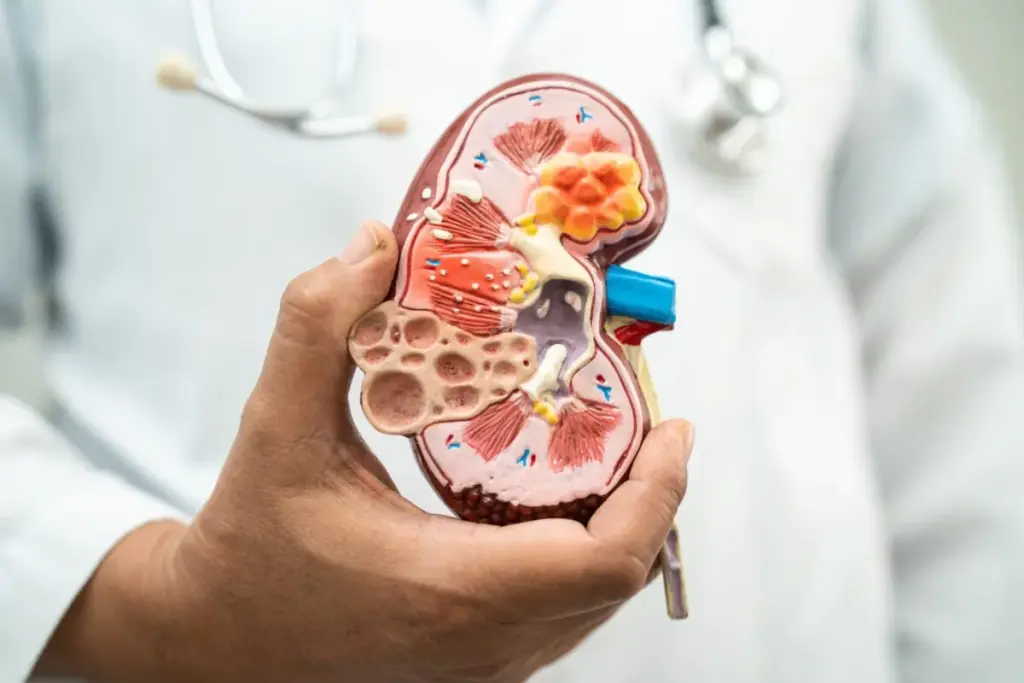
Acute kidney injury (AKI) is a serious medical condition that can happen suddenly in the hospital, often after surgery. It happens when the kidneys suddenly stop filtering waste from the blood. This can lead to serious and life-threatening problems.
We will look into what AKI is, why it happens, and how it affects patients after surgery. AKI is when the kidneys suddenly stop working well. It can be caused by several things, like not enough blood flow to the kidneys, direct damage to the kidneys, or blockages in the urinary tract.
It’s important to know what AKI is and how to spot its early signs. This helps prevent long-term damage to the kidneys. By understanding the causes and symptoms of AKI, we can act quickly to reduce its impact.
Key Takeaways
- AKI is a sudden loss of kidney function that can lead to serious complications.
- Reduced blood flow, direct kidney damage, and urinary tract obstruction are common causes of AKI.
- AKI can develop suddenly in hospitalized patients, particularl after surgery.
- Early recognition of AKI symptoms is key to preventing permanent kidney damage.
- Prompt action can lessen the effects of AKI and improve patient outcomes.
AKI Medical Abbreviation: What It Means and Why It Matters

Acute Kidney Injury, or AKI, is a serious condition found in many hospitalized patients. It’s important for doctors and patients to know about AKI. This knowledge helps in better care and outcomes.
The term AKI has changed from “Acute Renal Failure.” This change shows a deeper understanding of kidney injuries. It includes a range of problems, not just complete failure.
Evolution from Acute Renal Failure to Acute Kidney Injury
The switch from “Acute Renal Failure” to “Acute Kidney Injury” is more than just a name change. It shows we now see kidney damage as a spectrum. This shift helps us catch and treat early kidney problems before they get worse.
The KDIGO guidelines have helped standardize AKI’s definition and stages. These guidelines make it easier to spot and manage AKI early. This can lead to better patient results.
Prevalence and Impact of AKI in Hospital Settings
AKI is common in hospitals, affecting 7% to 15% of all patients. In ICUs, it affects up to 30% or more. The exact number depends on the patient group and how AKI is diagnosed.
AKI has a big impact on patients. It can lead to longer hospital stays, more sickness, and even death. It can also cause long-term kidney problems and increase healthcare costs.
It’s key for doctors to understand AKI to manage and prevent it. By knowing the risks and early signs, we can lessen AKI’s effects on patients and the healthcare system.
Causes and Risk Factors for Post-Surgical Kidney Injury

AKI after surgery is a complex issue. It has many causes and risk factors. Knowing what is aki medical term is key to helping patients.
Several factors lead to AKI after surgery. We’ll look at these, including common causes, the impact of surgery, and prerenal kidney injury.
Common Causes of Acute Kidney Injury
AKI can come from prerenal, intrinsic, and postrenal causes. Prerenal causes, like low blood flow to the kidneys, are common in surgery.
Causes of prerenal AKI include low blood volume, low blood pressure, and poor heart function. These can reduce kidney blood flow, raising AKI risk. Knowing the medical term aki and its causes helps spot at-risk patients.
Why Surgery Increases AKI Risk
Surgery raises AKI risk due to blood loss, fluid shifts, and possible low blood pressure. Long surgeries and big blood loss are very risky. Data shows surgeries over 2 hours and blood loss over 300 mL are big risks for AKI.
Patients with conditions like high blood pressure and diabetes face higher AKI risk after surgery. It’s important to manage these conditions before and after surgery to lower AKI risk.
Prerenal Kidney Injury: The Most Common Form
Prerenal kidney injury is the most common AKI type. It happens when blood flow to the kidneys drops. This can be due to dehydration, blood loss, or heart failure. It’s key to know the risk factors and causes of prerenal AKI to prevent and treat it early.
Understanding the ki acronym medical and its link to AKI is essential for healthcare workers. Severe cases, like severe aki or stage 3 aki, need quick and effective treatment to avoid lasting kidney damage.
Identifying and Addressing Acute Kidney Injury
Spotting acute kidney injury (AKI) after surgery is key to patient care. We must watch patients closely for signs of AKI to act fast.
Recognizing Symptoms of Kidney Failure After Surgery
It’s vital to spot kidney failure symptoms after surgery early. Look out for signs like less urine, swelling, weakness, shortness of breath, and confusion. Knowing these signs helps us give the right care.
Less urine is a big warning sign of AKI. We keep a close eye on this symptom. Swelling and shortness of breath also hint at fluid buildup, a problem with AKI.
Laboratory Markers: Creatinine and Blood Urea Nitrogen
Lab tests are vital for spotting AKI. We check serum creatinine and blood urea nitrogen (BUN) levels to see how well the kidneys are working. High levels mean the kidneys might not be working right.
Serum creatinine shows how well the kidneys are doing. If it goes up, it means kidney function is down, a sign of AKI. BUN levels also tell us about kidney function, but other factors can affect them too.
We use these lab tests to find AKI early. By watching creatinine and BUN, we can catch kidney problems and start the right treatment.
Conclusion
Knowing what aki medical abbreviation means is key for both patients and doctors. Acute Kidney Injury (AKI) is a serious issue that can harm kidneys long-term if not treated quickly. The term “ki med” refers to medical terms related to kidney problems, like AKI.
We’ve talked about why kidney problems happen after surgery. The most common reason is prerenal kidney injury. It’s important to know the signs of kidney failure after surgery. Using tests like creatinine and blood urea nitrogen helps doctors catch problems early.
Doctors can prevent long-term kidney damage by understanding AKI. Patients need to know the risks and signs of AKI. This way, they can get help fast if they have problems after surgery.
FAQ
What does AKI stand for in medical terms?
AKI stands for Acute Kidney Injury, a sudden decline in kidney function affecting waste and fluid balance.
What are the common causes of Acute Kidney Injury?
Common causes include low blood flow, dehydration, sepsis, medications, and urinary tract obstructions.
Why does surgery increase the risk of AKI?
Surgery can reduce blood flow to the kidneys, cause blood loss, or trigger inflammation, increasing AKI risk.
What are the symptoms of kidney failure after surgery?
Symptoms include reduced urine output, swelling, fatigue, confusion, and fluid retention.
How is AKI diagnosed?
AKI is diagnosed by blood tests showing elevated creatinine and urine output monitoring.
What is the significance of early detection and treatment of AKI?
Early detection helps prevent permanent kidney damage, reduce complications, and improve survival.
What is the KDIGO guideline for AKI?
The KDIGO guideline provides criteria for AKI staging, diagnosis, and management to standardize care.
What is prerenal kidney injury?
Prerenal injury occurs when kidneys receive inadequate blood flow, often due to dehydration or low blood pressure.
How prevalent is AKI in hospital settings?
AKI affects about 10–20% of hospitalized patients, with higher rates in ICU and post-surgical patients.
What is the impact of AKI on patient outcomes and healthcare costs?
AKI increases mortality, risk of chronic kidney disease, hospital stay, and healthcare expenses significantly.
References
National Center for Biotechnology Information. Evidence-Based Medical Insight. Retrieved from https://pmc.ncbi.nlm.nih.gov/articles/PMC4775458/