
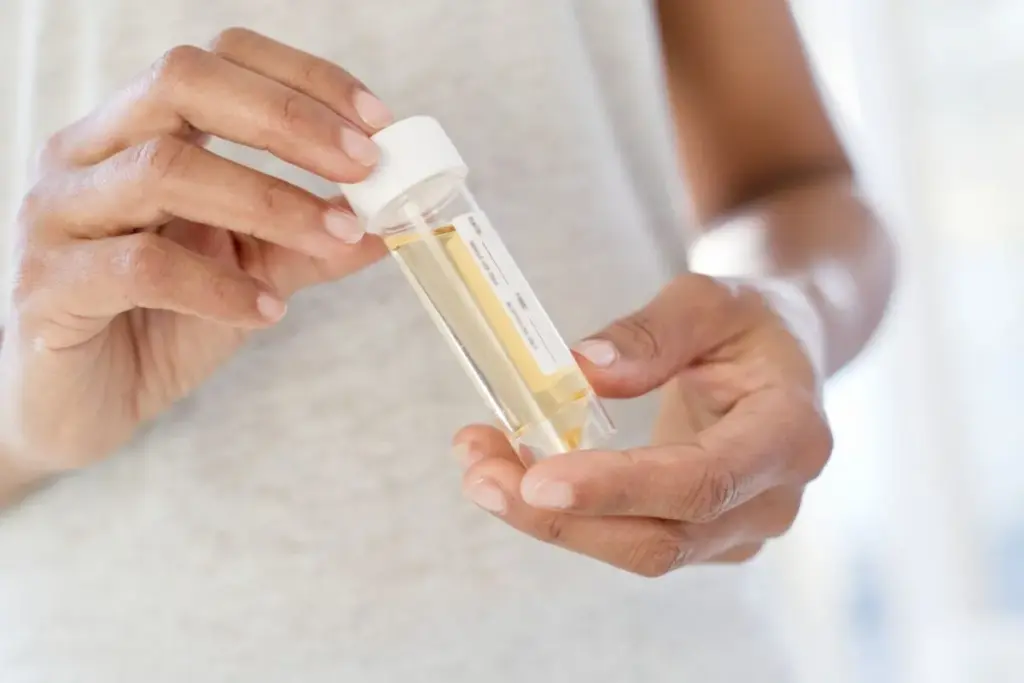
Understanding your kidney health starts with simple tests. These tests reveal vital information about your body’s waste filtering system. At Liv Hospital, we focus on accessible, patient-centered care. We use cutting-edge diagnostic methods.
Random urine creatinine testing is a quick, non-invasive test. It helps identify kidney function problems early. Creatinine is a waste product from muscle breakdown and protein digestion.
Healthy kidneys filter creatinine out of the blood. It then exits the body as a waste product in urine.
By checking the amount of creatinine in urine, healthcare providers can see how well kidneys are working. This test is easy because it doesn’t need a 24-hour urine collection. It fits well into your busy lifestyle.
Key Takeaways
- Random urine creatinine testing is a simple and non-invasive diagnostic tool.
- It measures the amount of creatinine in a urine sample to assess kidney function.
- This test is a convenient alternative to 24-hour urine collection.
- It helps in early detection of kidney function problems.
- Liv Hospital offers accessible and patient-centered care with cutting-edge diagnostic methods.
Understanding Creatinine and Its Role in the Body
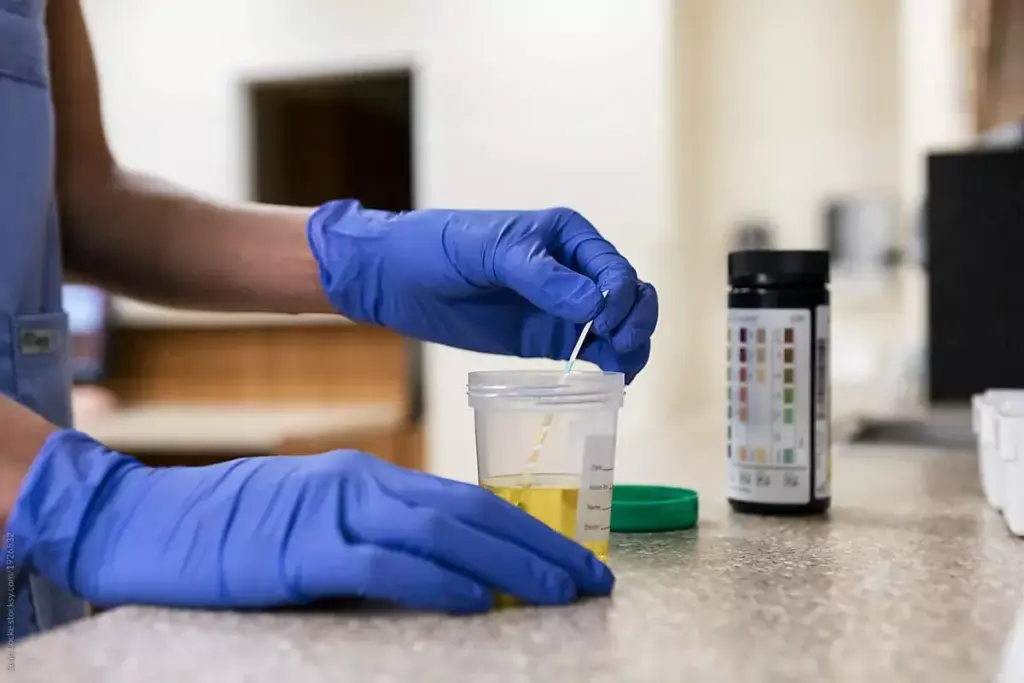
To understand creatinine levels, we need to know what creatinine is and its link to kidney function. Creatinine is a waste from muscle breakdown and protein digestion. It’s a byproduct of creatine, which helps muscles get energy.
What Is Creatinine?
Creatinine is key for checking kidney health. Its levels in blood or urine show how well kidneys filter waste. Normally, kidneys remove creatinine from blood into urine, which we then get rid of.
How Creatinine Is Produced and Eliminated
The body always makes creatinine, mainly from muscle work. How much creatinine is made depends on muscle size. The kidneys are important for getting rid of creatinine by filtering it into urine. Any problem with this can cause abnormal creatinine levels.
Medical Expert
The Relationship Between Creatinine and Kidney Function
The amount of creatinine in urine tells us about kidney health. If kidneys don’t work right, creatinine builds up in blood, showing high levels. This might mean kidney disease or other kidney issues.
| Kidney Function Status | Creatinine Level | Implications |
| Normal | Within normal range | No kidney issues detected |
| Impaired | Elevated | Potential kidney disease or damage |
Knowing about creatinine and its role is key for checking kidney health. By looking at creatinine levels, doctors can see how kidneys are doing and spot problems early.
Random Creatinine Ur Testing Methods
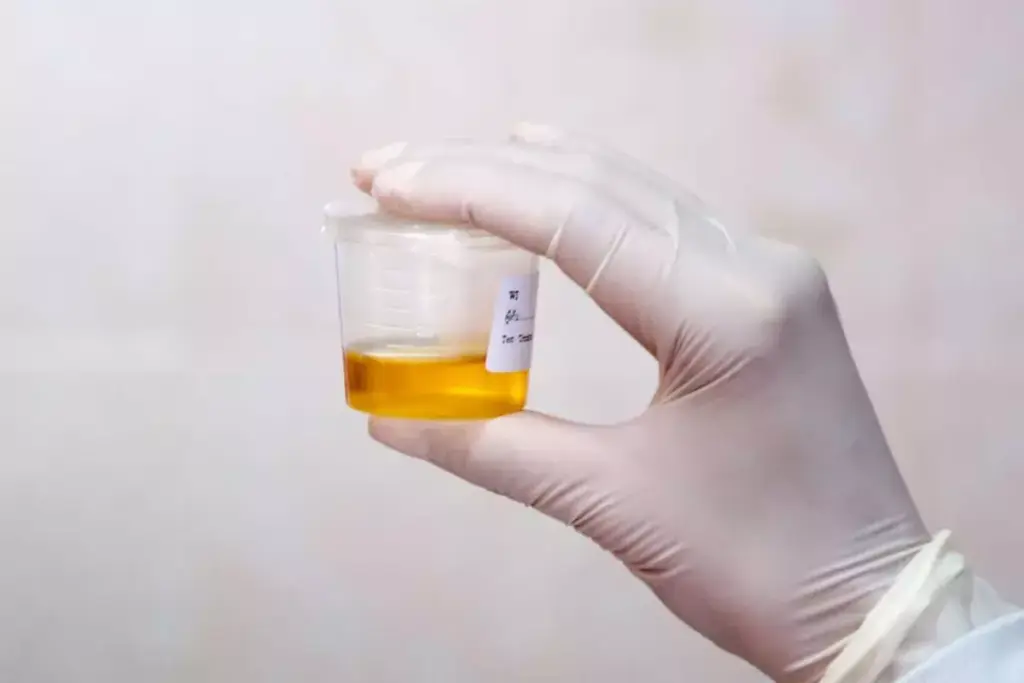
Random urine creatinine testing is now a popular choice over the 24-hour urine collection method. It’s easier and more practical for both doctors and patients.
Random vs. 24-Hour Urine Collection
There are two urine creatinine tests: the random (spot) test and the 24-hour test. The 24-hour test is more accurate, measuring all creatinine over a day. But, it’s harder for patients to do because they have to store urine for 24 hours.
The random urine creatinine test only needs one sample. It’s easier but doesn’t show creatinine over 24 hours. Yet, it can tell a lot about kidney health if used right.
| Characteristics | Random Urine Test | 24-Hour Urine Test |
| Sample Collection | Single urine sample | All urine collected over 24 hours |
| Convenience | High | Low |
| Accuracy for Creatinine Measurement | Sufficient for most diagnostic needs | Highly accurate |
Advantages of Random Urine Testing
The random urine creatinine test is easy and convenient. It’s less stressful for patients, making them more likely to follow through. It also gives quick results, helping doctors make fast decisions.
This test is flexible, allowing it to be done at any time. It’s easier to fit into a doctor’s schedule than the 24-hour test.
Sample Collection Process
Getting a urine sample for a random creatinine test is simple. Patients just pee into a clean container given by the doctor. It’s important to keep the sample clean to get accurate results.
No special prep is needed for this test. Doctors might give some tips on when and how to give the sample for best results.
Clinical Applications and Interpretation of Results
Random urine creatinine testing is key in clinical settings for checking kidney function. It gives important info on a patient’s kidney health. This helps doctors diagnose and manage different conditions.
Normal Reference Ranges
Normal urine creatinine levels are about 500 to 2000 mg per day for 24 hours. But, these can change based on age, sex, and muscle mass. Knowing these ranges is key for understanding test results.
Reference values can differ slightly between labs. So, it’s important to look at the specific range used by the lab when checking results.
Factors Affecting Creatinine Levels
Many things can change urine creatinine levels. Muscle mass, diet, and some medicines are examples. People with more muscle or eating a lot of meat might have higher levels.
- Muscle mass and composition
- Dietary factors, like eating meat
- Certain medicines that affect the kidneys
- How well hydrated you are
Creatinine Ratio Calculations
Creatinine ratio calculations, like the albumin-to-creatinine ratio (ACR), help spot early kidney damage. The ACR is great for checking kidney risk in people with diabetes or high blood pressure.
Using creatinine ratio calculations is very important in healthcare. It helps catch kidney disease early and treat it sooner.
When Random Urine Creatinine Tests Are Ordered
Doctors order random urine creatinine tests to check kidney function or track kidney disease. These tests are often part of a bigger set of tests to fully understand a patient’s kidney health.
Doctors might order these tests for many reasons. This includes routine check-ups, monitoring patients with kidney problems, or when looking into symptoms that might mean kidney issues.
Conclusion
Random urine creatinine testing is key in checking kidney health and spotting kidney disease early. We’ve learned how these tests help doctors understand kidney function. This knowledge helps them make better care plans for patients.
This testing is easy to do and very useful. It helps us see how well our kidneys are working. Knowing about creatinine levels helps us find and treat kidney problems better.
As medical technology gets better, so will the role of random urine creatinine testing. It’s vital for keeping an eye on kidney health and catching problems before they get worse. It’s a big part of taking care of patients fully.
FAQ
What is random urine creatinine?
Random urine creatinine is the concentration of creatinine measured in a single, untimed urine sample.
Why is random urine creatinine testing used?
It is used to assess kidney function, estimate protein excretion, and normalize other urine analytes.
How is creatinine produced and eliminated in the body?
Creatinine is produced from muscle metabolism and eliminated primarily by renal filtration in urine.
What are the advantages of random urine creatinine testing?
It is convenient, requires no 24-hour collection, and can be used to calculate ratios for protein or electrolyte excretion.
How is a urine sample collected for random creatinine testing?
A midstream urine sample is collected in a clean container without needing timing or fasting.
What are normal reference ranges for random urine creatinine?
Normal ranges vary by age, sex, and muscle mass, typically 50–200 mg/dL in adults.
What factors can affect creatinine levels in urine?
Muscle mass, diet, hydration status, medications, and renal function can all influence urine creatinine.
How are creatinine ratio calculations used?
Ratios like protein-to-creatinine or albumin-to-creatinine normalize urine analytes to account for urine concentration.
When are random urine creatinine tests typically ordered?
They are ordered to screen for proteinuria, kidney disease, or monitor chronic kidney conditions.
What is the significance of random urine creatinine in patient care?
It provides a quick assessment of kidney function and helps guide diagnosis and management without 24-hour urine collection.
?
References
JAMA Network. Evidence-Based Medical Insight. Retrieved from https://jamanetwork.com/journals/jamaoncology/fullarticle/2800546[4