
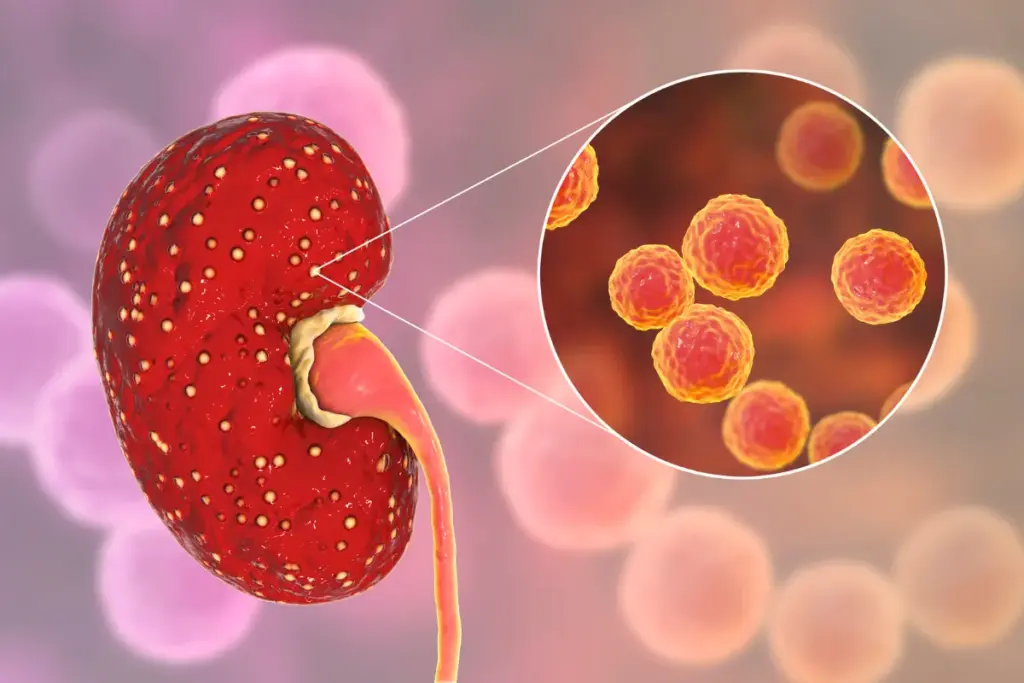
Urinary tract infections (UTIs) and pyelonephritis are two different bacterial infections. They affect the urinary system but in different ways. The main difference lies in where they occur and how severe they are.
UTIs can happen anywhere in the urinary system. Pyelonephritis, on the other hand, is a serious infection that targets the renal pelvis and kidney. It needs quick medical care to avoid serious problems.
It’s important to know the difference between UTIs and pyelonephritis for the right treatment. At Liv Hospital, we focus on making this distinction. This helps us give our patients the best care possible.
Key Takeaways
- UTIs and pyelonephritis are bacterial infections with different locations and severity levels.
- Pyelonephritis is a more serious infection that affects the renal pelvis and kidney.
- Prompt medical attention is necessary to prevent complications from pyelonephritis.
- Proper diagnosis is key for effective treatment of both conditions.
- Liv Hospital provides thorough care for patients with UTIs and pyelonephritis.
Understanding Urinary Tract Infections (UTIs)

Urinary tract infections (UTIs) are common and affect millions worldwide. They cause discomfort and can lead to serious problems if not treated. UTIs happen when bacteria get into the urinary tract and start to grow.
Definition and Locations of UTIs
UTIs can happen anywhere in the urinary system, like the bladder, urethra, and ureters. The urinary system is split into the upper and lower parts. Infections can be in either part.
Most UTIs are in the lower urinary tract, mainly in the bladder. This is called cystitis. But, if the infection goes up to the kidneys, it’s called pyelonephritis. We’ll look at this more in the next section.
| Location | Common Infection | Description |
| Lower Urinary Tract | Cystitis | Infection of the bladder |
| Upper Urinary Tract | Pyelonephritis | Infection of the kidneys |
Common Symptoms and Causative Organisms
Symptoms of UTIs vary based on the infection’s location and severity. Common signs include needing to urinate often, feeling a burning sensation while doing so, and having cloudy or dark urine. Women may also feel pelvic pain.
For upper UTIs, symptoms can include fever, chills, and pain in the flank area.
The main cause of UTIs is Escherichia coli (E. coli). It’s responsible for about 80% of UTIs. Other bacteria like Klebsiella, Proteus, and Enterococcus can also cause UTIs, often in more complicated cases or in people with certain health issues.
“Understanding the causative organisms and the typical symptoms of UTIs is key for proper diagnosis and treatment.” — Expert Opinion
For more details on UTIs and kidney infections, check out our guide on UTIs vs Kidney Infections: How to Tell the Difference.
Pyelonephritis vs UTI: Key Differences

It’s important for doctors to know the difference between pyelonephritis and UTIs. Both affect the urinary system but in different ways. This knowledge helps in treating patients better and avoiding serious problems.
What is Pyelonephritis?
Pyelonephritis is a serious kidney infection. It happens when bacteria move up from the lower urinary tract. If not treated quickly, it can cause serious health issues.
Key characteristics of pyelonephritis include:
- Infection of the renal pelvis and parenchyma
- Often results from untreated or complicated lower UTIs
- Can lead to severe complications if not treated promptly
Pathophysiology of Pyelonephritis
The infection starts when bacteria move up from the lower urinary tract to the kidneys. This can happen due to blockages, abnormal urine flow, or certain types of bacteria.
Bacterial virulence factors play a key role in pyelonephritis. For example, some Escherichia coli strains have special proteins that help them stick to and infect the kidney cells.
Clinical Presentation and Systemic Symptoms
Pyelonephritis shows different symptoms than lower UTIs. People with it often have high fever, pain in the side, chills, and nausea or vomiting. These signs show the body’s fight against the infection.
“The clinical presentation of acute pyelonephritis is characterized by the sudden onset of fever, flank pain, and other systemic symptoms, indicating a severe infection that requires immediate medical attention.”
High-Risk Populations
Some groups are more likely to get pyelonephritis. Pregnant women, for instance, are at higher risk because of changes in their body during pregnancy.
| High-Risk Group | Reason for Increased Risk |
| Pregnant Women | Physiological changes during pregnancy |
| Individuals with Urinary Tract Obstructions | Increased likelihood of bacterial ascent |
| Patients with Vesicoureteral Reflux | Abnormal flow of urine back to the kidneys |
Diagnosis, Treatment, and Prevention
It’s important to know how to diagnose, treat, and prevent UTIs and pyelonephritis. To find out if you have a UTI, doctors often do urinalysis and urine culture. For pyelonephritis, they might also do blood tests and imaging studies.
Treating pyelonephritis usually means going to the hospital and getting antibiotics through an IV. UTIs are often treated with oral antibiotics. Always finish the antibiotics as told to make sure the infection goes away.
To avoid getting UTIs and pyelonephritis, drink plenty of water, pee after sex, and keep clean. These steps can really help lower your chances of getting these infections.
FAQ:
What is the main difference between pyelonephritis and a UTI?
Pyelonephritis affects the kidney and renal pelvis. UTIs can happen anywhere in the urinary system.
What are the common symptoms of pyelonephritis?
Symptoms include flank pain, fever, nausea, vomiting, and needing to urinate often.
What is the most common causative organism of UTIs and pyelonephritis?
Escherichia coli (E. coli) is the main cause of both UTIs and pyelonephritis.
Who is at high risk for developing pyelonephritis?
Pregnant women, people with urinary tract issues, and those with UTI history are at high risk.
How is pyelonephritis diagnosed?
Diagnosis involves clinical evaluation, lab tests, and imaging studies.
What is the treatment for pyelonephritis?
Treatment includes antibiotics. Sometimes, hospitalization is needed for severe cases.
How can UTIs and pyelonephritis be prevented?
Stay hydrated, practice good hygiene, and urinate after sex to prevent them.
What is complicated pyelonephritis?
It’s pyelonephritis in people with urinary tract issues or other complications.
Can pyelonephritis lead to long-term complications?
Yes, if not treated, it can cause kidney damage or sepsis.
What is the difference between acute and chronic pyelonephritis?
Acute pyelonephritis is sudden. Chronic is recurring, leading to kidney damage over time.
References:
National Center for Biotechnology Information. Evidence-Based Medical Guidance. Retrieved from https://www.ncbi.nlm.nih.gov/books/NBK519537/



 Departments
 Related Videos
 Our Doctors
 News
News