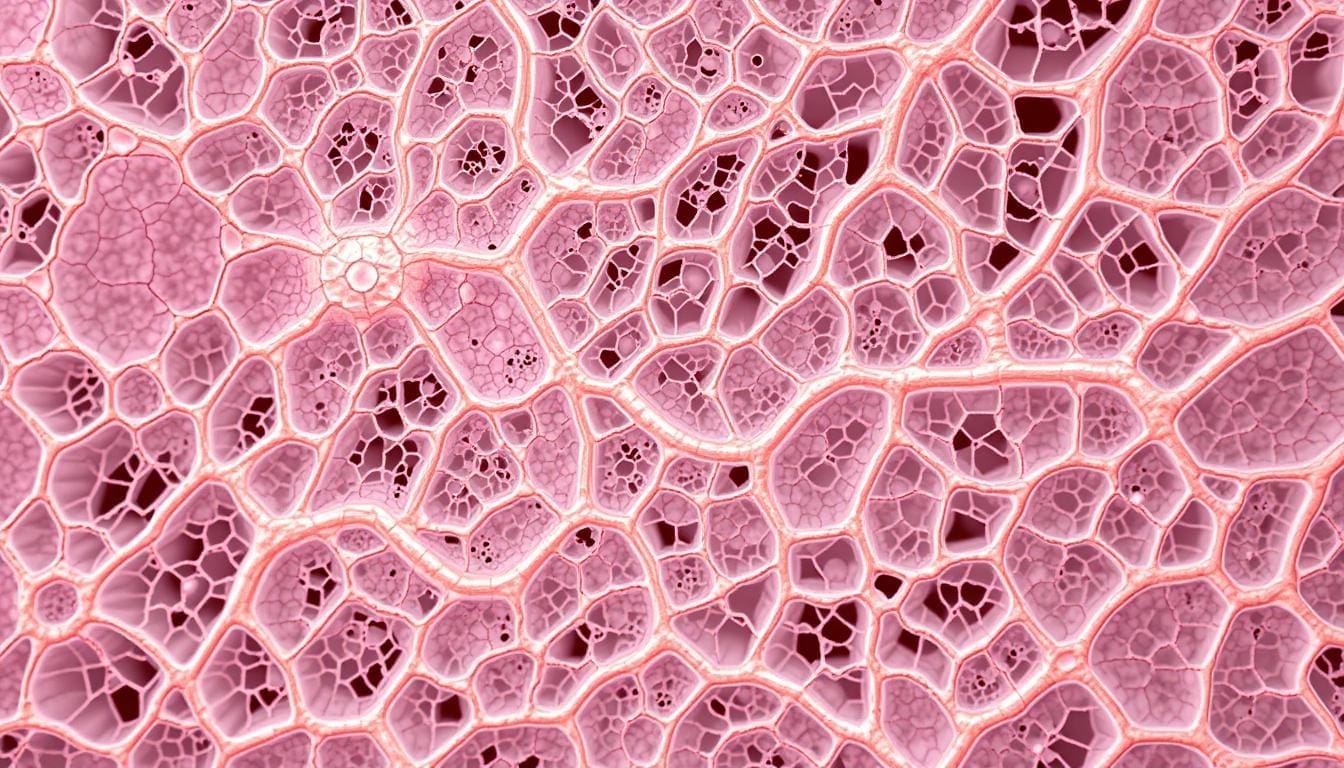
At Liv Hospital, we understand the importance of tissue stroma. It keeps organs and tissues in shape. The word “stroma” comes from Ancient Greek, meaning ‘layer, bed, or bed covering’. It’s the connective tissue that holds up the cells of an organ.
Connective tissue stroma is the main support of every organ. It holds the cells in place. This structure is key to understanding how our bodies work and how they can get sick.
Knowing about stroma helps us improve medical care. This includes simple treatments and complex cancer therapies. We aim to give top-notch healthcare and support to patients from around the world.
Key Takeaways
- The stroma is the structural framework of organs and tissues.
- Connective tissue stroma supports parenchymal cells.
- Understanding stroma is vital for understanding how our bodies work and get sick.
- Liv Hospital is dedicated to providing world-class healthcare.
- We prioritize supporting patients from all over the world.
The Biological Significance of Tissue Stroma
Tissue stroma is key to understanding human biology. It supports cells and helps with nutrient and waste exchange. Stroma, or connective tissue, keeps tissues structured and cells working right.
Defining Stroma in Biological Systems
In biology, stroma is the tissue that supports organ or tissue cells. “The stroma is the framework upon which the parenchymal cells operate,” say experts in stroma biology. It’s vital for structural support and nutrient and waste exchange.
Knowing what is the stroma and its role is key to understanding tissue health and function.
Historical Understanding and Research Evolution
Our understanding of stroma has grown a lot. It’s now seen as more than just a support structure. It’s a complex, dynamic part that works closely with cells. Early studies showed its importance in tissue growth, upkeep, and disease.
“The stroma is not just a passive scaffold; it actively influences the behavior of cells within its matrix,” a statement that encapsulates the current understanding of stroma’s role in biological systems.
Today, research in stroma biology keeps showing how stroma affects tissue health and disease. It’s a big deal in both health and sickness.
Tissue Stroma: Composition and Structural Elements
The tissue stroma is made up of many different parts. It is a key part of connective tissue and helps hold tissues together. It includes blood vessels and nerves. Knowing what makes up the stroma helps us understand its role in our bodies.
Cellular Components of Stromal Tissue
The cells in stromal tissue are varied. Fibroblasts are important for making the matrix outside cells. Other cells, like immune cells and fat cells, also play a part. Together, they keep the tissue healthy and support the cells inside.
Extracellular Matrix Components
The extracellular matrix (ECM) is a big part of stromal tissue. It gives structure and helps cells talk to each other. The ECM has fibers like collagen and elastin, and a gel-like substance. It’s key for keeping tissues strong and working right.
| Component | Description | Function |
|---|---|---|
| Fibroblasts | Cells that produce ECM components | Produce collagen, elastin, and ground substance |
| Collagen Fibers | Structural fibers providing strength | Give tensile strength to the tissue |
| Elastin Fibers | Fibers that allow tissue elasticity | Enable tissues to return to their original shape after deformation |
| Ground Substance | Gel-like material surrounding cells and fibers | Supports tissue structure and facilitates cell migration |
In summary, the stroma is made of many parts that work together. It provides structure and keeps tissues healthy. Knowing about these parts helps us see how important stroma is for our health.
The Stroma-Parenchyma Relationship: Form and Function
The stroma and parenchyma are key parts of tissues. The stroma gives the tissue its shape. The parenchyma has the cells that do the work.
Distinguishing Between Stroma and Parenchyma
Knowing the difference between stroma and parenchyma is important. Stroma is the connective tissue that holds the organ together. Parenchyma is the cells that do the organ’s main jobs.
For example, in the liver, the parenchyma has hepatocytes that help with metabolism. The stroma, on the other hand, has connective tissue that supports the liver’s structure and holds blood vessels and bile ducts.
Functional Interdependence and Communication
The stroma and parenchyma work together. The stroma helps the parenchyma cells by sending out growth factors and cytokines.
| Component | Function | Examples |
|---|---|---|
| Stroma | Structural support, immune response modulation | Connective tissue, fibroblasts, immune cells |
| Parenchyma | Organ-specific functions | Hepatocytes in liver, neurons in brain |
This teamwork is key for tissues to work right. When they don’t, it can lead to disease. Knowing how they work together helps us understand and treat diseases.
In cancer, the stroma can help the tumor grow by creating a supportive environment. In fibrosis, the stroma’s reaction to injury can cause too much matrix, hurting organ function.
Connective Tissue Stroma in the Integumentary System
The skin is the body’s largest organ. It relies on its dermal stroma for structure and function. This connective tissue stroma is key to the integumentary system’s health.
Dermal Stroma: Structure and Support Functions
The dermal stroma is made of cells and matrix that support the skin. It helps exchange nutrients and waste. It’s rich in collagen and elastin fibers for strength and flexibility.
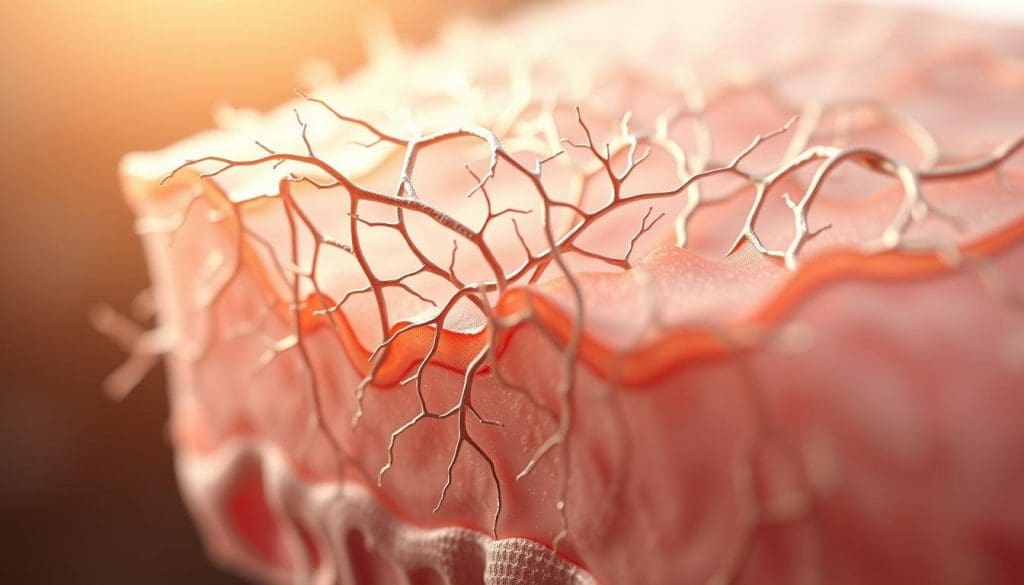
This framework is vital for the skin’s integrity and function. It protects, senses, and regulates. It also aids in healing and fighting diseases.
Specialized Stromal Tissues in Skin Appendages
Specialized stromal tissues are in skin appendages like hair follicles and glands. They support these appendages’ functions. For instance, they help with hair growth.
| Stromal Component | Function | Location |
|---|---|---|
| Collagen fibers | Provides tensile strength | Dermal stroma |
| Elastin fibers | Contributes to skin elasticity | Dermal stroma |
| Stromal cells | Supports skin appendages | Hair follicles, sebaceous glands |
In conclusion, the dermal stroma is essential for the skin’s health. It supports the skin’s structure and function. Understanding its role is key to skin biology and health.
Stroma Location in Sensory Organs
Sensory organs are key to how we interact with the world. They have stroma that is vital for their work. The stroma gives them structure and helps them function well.
Iris Stroma: Structure and Functional Significance
The iris stroma is a big part of the eye. It affects how the iris works and keeps the eye healthy. It’s made of cells and stuff that help it stand strong.
Key Components of Iris Stroma:
- Collagen fibers
- Melanocytes
- Blood vessels
- Immune cells
These parts work together. They help control how much light gets in and how the iris moves. This affects how big the pupil is and how it reacts to light.
Stromal Components in Other Sensory Tissues
Stroma is not just in the iris. It’s also in other sensory organs. It helps them stand strong and work right.
| Sensory Organ | Stromal Components | Function |
|---|---|---|
| Eye (Iris) | Collagen, Melanocytes | Structural support, Light absorption |
| Ear (Cochlea) | Connective tissue, Blood vessels | Support for auditory hair cells |
| Olfactory Epithelium | Basal cells, Bowman’s glands | Support for olfactory receptors |
Learning about stroma in these organs helps us understand them better. It helps us figure out how to fix problems with them.
Reproductive System Stromal Tissues
Stromal tissues are vital in the reproductive system. They support many important processes. We will look at their role in both female and male systems.
Ovarian Stroma: Composition and Hormonal Interactions
The ovarian stroma is a key part of the ovary. It affects hormonal interactions and reproductive processes. It’s made of stromal cells and extracellular matrix, which support and communicate between cells.
This stroma produces hormones and growth factors. These help control follicular development and ovulation. For example, it makes androgens that granulosa cells turn into estrogens. This shows the complex hormonal balance it maintains.
Male Reproductive Stromal Components
In the male system, stromal tissues are found in organs like the testes and prostate. The testicular stroma, for example, helps sperm cells develop by creating a supportive environment.
Stromal components in males are key for reproductive organ health. They produce hormones and growth factors. These support spermatogenesis and the reproductive process.
In conclusion, stromal tissues are vital for the reproductive system in both sexes. They support hormonal interactions, organ structure, and reproductive health. This highlights their importance.
Endocrine Gland Stroma: Supporting Hormone Production
In endocrine glands, the stroma is key for hormone production and secretion. It provides structural support and helps with nutrient and waste exchange. This is vital for the gland’s function. We’ll look at the stroma’s role in the thyroid and thymus glands.
Thyroid Stroma: Structural Framework
The thyroid gland relies heavily on stroma. Its stroma is made of connective tissue that supports the gland. This support is essential for the thyroid’s structure and function. The stroma also has blood and lymphatic vessels for nutrient and oxygen supply.
Studies show the thyroid stroma does more than just support. It helps regulate thyroid function. For example, it affects the growth and differentiation of thyroid cells. The endocrine system’s complex interplay is vital for health, and understanding stroma’s role is key.
Thymus and Other Endocrine Stromal Tissues
The thymus gland also depends on stroma. The thymic stroma supports T-lymphocyte development. It’s made of epithelial cells, dendritic cells, and more, all working together.
Other glands like the adrenal and pancreas also have stroma. While it varies, its role in supporting hormone production is consistent. This shows stroma’s importance across different glands.
| Endocrine Gland | Stromal Composition | Function of Stroma |
|---|---|---|
| Thyroid | Connective tissue, blood vessels, lymphatic vessels | Structural support, facilitation of hormone production |
| Thymus | Epithelial cells, dendritic cells | Support for T-cell development and maturation |
| Adrenal Glands | Connective tissue, blood vessels | Structural support, facilitation of hormone production |
Bone Marrow Stroma: The Hematopoietic Microenvironment
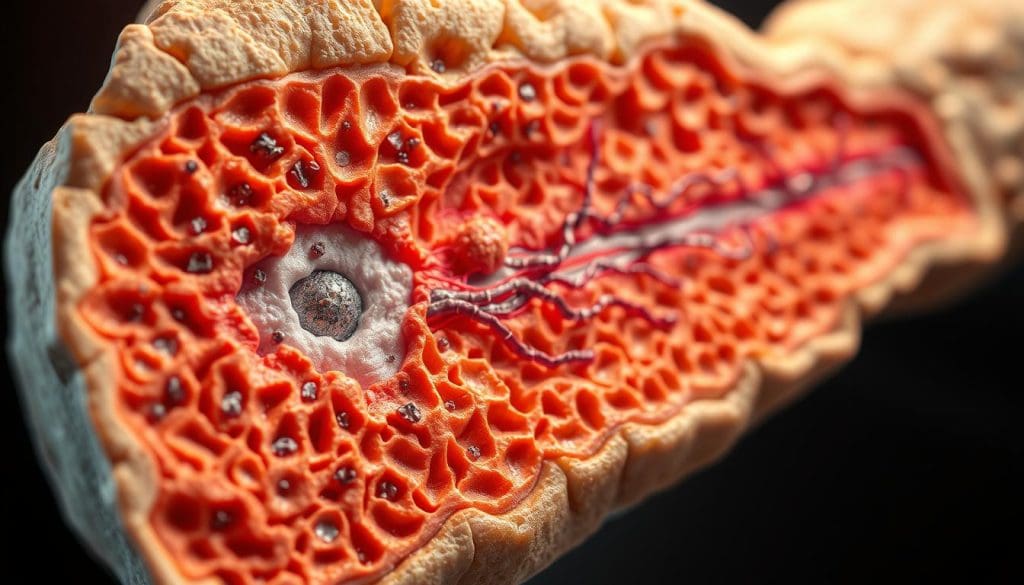
The bone marrow stroma is key in creating blood cells. It’s made up of cells and a matrix that help blood cell production. This environment is vital for making different types of blood cells.
Cellular Composition of Bone Marrow Stroma
The stroma has important cells like fibroblasts, adipocytes, and endothelial cells. These cells make an extracellular matrix that supports blood cell growth. Their work keeps blood cell production in balance.
Stromal Support for Blood Cell Development
The stroma supports blood cell growth by managing the stem cell niche. It releases growth factors and cytokines that help stem cells grow and change. This support is essential for blood cell production, even when the body is stressed.
The stroma also keeps the right balance of blood cell types. This balance is critical for the body’s health. The relationship between the stroma and blood cells shows how important this tissue is for our health.
Pathological Alterations in Stromal Tissue
Changes in stromal tissue are key in many diseases, like cancer and fibrosis. The stroma, a vital part of tissue, changes a lot in disease. These changes affect how diseases progress and their outcomes.
We will look at two important changes in stromal tissue. These are changes in cancer and fibrosis, and how the stroma reacts to inflammation.
Changes in Cancer Development
Cancer and stromal tissue changes are closely linked. The interaction between stroma and tissue is key in tumor growth and spread. Cancer-associated fibroblasts, a part of the tumor stroma, help tumors grow by making growth factors and proteins.
The stroma’s role in cancer is complex:
- It can change how the immune system reacts to tumors.
- It helps tumor cells grow and live longer.
- It changes the tumor environment through blood vessel growth.
Knowing about these changes is key for making better cancer treatments.
Fibrosis and Inflammatory Stromal Responses
Fibrosis is when too much of the tissue’s matrix is made. Stromal cells, like fibroblasts, turn into myofibroblasts and make more matrix.
| Condition | Stromal Changes | Consequences |
|---|---|---|
| Cancer | More cancer-associated fibroblasts, changed ECM | Tumor growth, spread |
| Fibrosis | Myofibroblasts activated, too much matrix made | Organ problems, scarring |
| Inflammation | Immune cells in, cytokines released | Tissue damage, long-term inflammation |
Inflammatory responses in the stroma are also important. The stroma can change how the immune system works. This affects how inflammatory diseases progress.
Understanding these changes in stromal tissue is vital. It helps us find new ways to treat diseases like cancer and fibrosis.
Conclusion: The Essential Role of Stroma in Health and Disease
The stroma is key to keeping tissues healthy and fighting off diseases. It’s a vital part of many organs and tissues. Knowing about stroma and its role helps us find new ways to heal and improve health.
Research shows that stroma is made up of different cells and a matrix. It’s not just a simple support; it helps tissues grow and stay healthy. For example, in cancer, stroma can either help or stop tumors from growing.
Stroma is very important in organs like the breast, pancreas, lung, and colon. It helps in cancer development and growth. To learn more, visit Molecular Cancer.
We understand how important stroma is for health and disease. By studying how stroma works with other tissues, we can find new treatments for diseases.
FAQ
What is tissue stroma?
Tissue stroma, also known as connective tissue stroma, is the structural framework of organs and tissues. It supports parenchymal cells, enabling them to perform specific functions.
Where is connective tissue stroma found in the body?
Connective tissue stroma is found in various organs and tissues throughout the body. It includes the skin, eye, reproductive system, endocrine glands, and bone marrow.
What is the role of stroma in maintaining tissue architecture?
The stroma plays a vital role in maintaining tissue architecture. It provides structural support to parenchymal cells and facilitates various physiological processes.
What are the cellular components of stromal tissue?
The stroma is composed of various cellular components. Fibroblasts work together with extracellular matrix components. They provide structural support and maintain tissue integrity.
What is the relationship between stroma and parenchyma?
The stroma and parenchyma have distinct roles and are functionally interdependent. The stroma provides support to the parenchymal cells that perform specific functions.
How does the stroma contribute to the structure and function of the iris?
The iris stroma is a vital component that contributes to the structure and function of the iris. It plays a critical role in maintaining eye health.
What is the significance of ovarian stroma in the reproductive system?
The ovarian stroma plays a vital role in maintaining reproductive health. It facilitates hormonal interactions and supports the ovarian tissue.
How does the stroma support hormone production in endocrine glands?
The stroma provides structural support and plays a critical role in maintaining endocrine function. It facilitates hormone production in glands such as the thyroid and thymus.
What is the role of bone marrow stroma in hematopoiesis?
The bone marrow stroma creates a hematopoietic microenvironment. It provides essential support for blood cell development, influencing various physiological processes.
How do pathological alterations in stromal tissue contribute to disease?
Pathological alterations in stromal tissue, such as those seen in cancer development and fibrosis, can have significant consequences. Understanding these changes is essential for developing effective therapeutic strategies.
What is estroma or stromЃ?
Estroma or stromЃ refers to the same concept as stroma. It is the connective tissue that provides structural support to organs and tissues.
What is the difference between stroma and parenchyma?
The stroma provides structural support, while the parenchyma consists of cells that perform specific functions. Together, they maintain tissue integrity and function.



 Departments
 Related Videos
 Our Doctors
 News
News