Stem cells are special cells that can grow and change into different types of cells. In adults, these cells are found in many tissues and organs. They help keep our tissues healthy.
Recent studies show that adults have stem cells in many parts of their body. This helps with ongoing tissue repair. Adult stem cells are cells that can grow and change into different types of cells.
Key Takeaways
- Adult stem cells are found in various tissues and organs.
- These cells play a critical role in keeping tissues healthy.
- Stem cells can grow and change into different types of cells.
- Tissue repair is possible because of stem cells.
- Liv Hospital’s expertise offers trusted, patient-centered care.
The Fundamental Nature of Adult Stem Cells
Adult stem cells can renew themselves and turn into different cell types. This is key for keeping tissues healthy and fixing damage in the body.
Self-Renewal and Differentiation Capabilities
Adult stem cells can keep their numbers steady through self-renewal. They can also turn into different cell types, but not as many as embryonic stem cells can. This balance is controlled by the cell itself and signals from its environment.
The ability of adult stem cells to renew themselves is vital for their presence in our bodies. Their ability to turn into different cells is also important for fixing damaged tissues.
Distinguishing Adult Stem Cells from Embryonic Stem Cells
Adult stem cells and embryonic stem cells are different in where they come from and what they can become. Embryonic stem cells come from early embryos and can become any cell type. Adult stem cells, found in adult tissues, can only become a few types of cells.
This difference is important for using them in medicine. Embryonic stem cells can make more types of cells, but adult stem cells are safer because they come from the person themselves. This reduces the chance of the body rejecting them.
Where Can You Find Stem Cells in the Adult Human Body
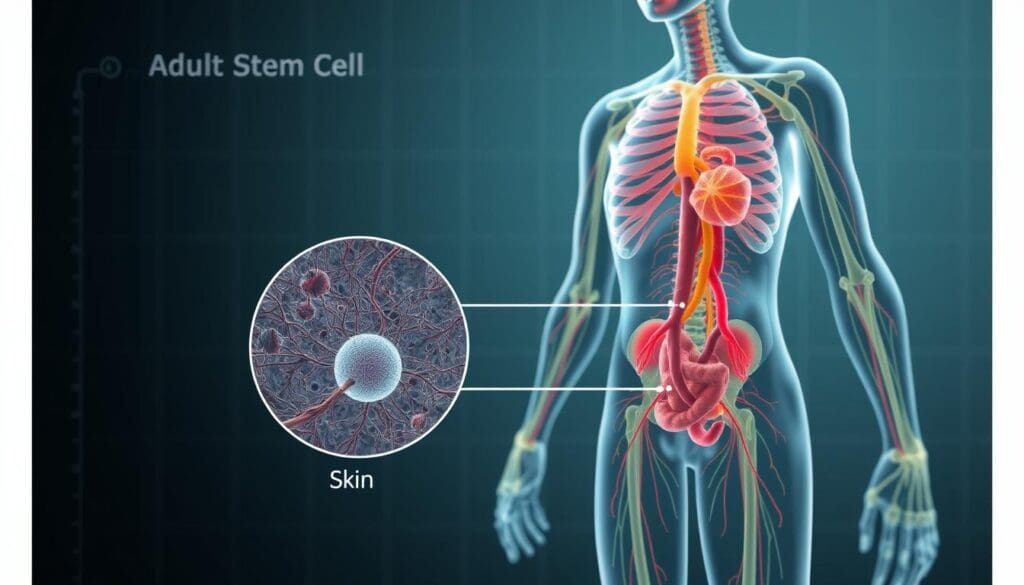
The human body has many places where adult stem cells live. These cells help keep tissues healthy and fix them when they get hurt. They are found in different parts of the body, helping with repair and growth.
Major Stem Cell Reservoirs
Some tissues are known to have lots of adult stem cells. Bone marrow is famous for its stem cells, which make blood and connective tissue cells. Adipose tissue, or fat, also has stem cells that can grow into many types of cells. The skin has stem cells too, keeping the outer layer strong and helping it heal.
Recently Discovered Stem Cell Locations
New studies have found stem cells in places we didn’t know about before. For example, neural stem cells exist in the adult brain, showing that our brains can grow new cells. The liver and intestine also have stem cells, helping them stay healthy. Even the heart and dental pulp have stem cells, which could lead to new ways to fix heart problems and teeth.
These findings show that stem cells are everywhere in our bodies. They are key to keeping us healthy. As we learn more about them, we might find new ways to treat diseases and injuries.
Bone Marrow: The Classic Stem Cell Source
Bone marrow is a key source of stem cells in adults. It fills bone cavities and helps make blood cells. It also keeps tissues healthy.
We’ll look at two main stem cell types in bone marrow: hematopoietic and mesenchymal. Both are vital for healing and growth.
Hematopoietic Stem Cells and Blood Formation
Hematopoietic stem cells make blood cells. They can turn into red, white, and platelet cells. This is called hematopoiesis.
This process is controlled by growth factors and cytokines. Hematopoietic stem cells live in specific spots in the bone marrow. There, they get signals to grow and change.
| Blood Cell Type | Function | Disease Association |
|---|---|---|
| Red Blood Cells | Oxygen Transport | Anemia |
| White Blood Cells | Immune Response | Leukemia |
| Platelets | Blood Clotting | Thrombocytopenia |
Mesenchymal Stem Cells and Their Versatility
Mesenchymal stem cells can become different cell types. They can turn into bone, cartilage, and fat cells. They help fix and grow tissues.
Mesenchymal stem cells can also change the immune system’s response. This makes them great for treatments. They help heal tissues and calm the immune system.
Mesenchymal stem cells are key in regenerative medicine. They can become many cell types. Their ability to change and calm the immune system shows their promise in healing.
Neural Stem Cells: Challenging Brain Repair Paradigms
The discovery of neural stem cells in the adult human brain has changed how we think about brain repair. These cells can turn into different types, like neurons and glial cells. These are key for keeping the nervous system healthy and working right.
Neurogenesis in the Adult Brain
For a long time, we thought new neurons could only be made during development. But now, we know some parts of the adult brain, like the hippocampus, keep making new neurons. Neural stem cells are vital in this process. They help with learning, memory, and fixing damaged brain areas.
Potential Applications for Neurodegenerative Diseases
Neural stem cells in the adult brain offer hope for treating diseases like Alzheimer’s and Parkinson’s. Scientists are studying how these cells can help. They’re looking into replacing damaged cells, supporting neurons, and changing the disease environment.
| Disease | Potential Application | Current Research Status |
|---|---|---|
| Alzheimer’s Disease | Replacement of damaged neurons, enhancement of cognitive function | Preclinical trials |
| Parkinson’s Disease | Restoration of dopaminergic neurons, improvement of motor function | Clinical trials |
Adipose Tissue: An Abundant and Accessible Stem Cell Source
Adipose-derived stem cells are getting a lot of attention. They are easy to get and can help with many medical treatments. Fat tissue is not just for storing energy; it’s also a source of stem cells.
These stem cells are plentiful and can be taken out during liposuction. This makes them great for fixing damaged tissues.
Characteristics of Adipose-Derived Stem Cells
Adipose-derived stem cells (ASCs) are special because they can turn into many types of cells. They can become fat cells, bone cells, cartilage cells, and muscle cells. This ability is key for fixing damaged tissues.
ASCs also help control the immune system. This is important for preventing the body from rejecting the stem cells. It helps create a good environment for healing.
Key Characteristics of ASCs:
- Multipotency: Ability to differentiate into various cell types
- Immunomodulation: Can modulate the immune response
- Pro-angiogenic: Support the formation of new blood vessels
- Anti-inflammatory: Can reduce inflammation in damaged tissues
Harvesting and Processing Methods
To get ASCs, we first take out fat tissue. This is usually done with liposuction, a surgery that removes fat.
After getting the fat, we process it to find the stem cells. We use enzymes to break down the tissue and then separate the cells. The cells are then grown in a lab to increase their number.
| Step | Description |
|---|---|
| 1. Harvesting | Adipose tissue is obtained through liposuction |
| 2. Processing | Tissue is digested enzymatically to release cells |
| 3. Isolation | Cells are separated through centrifugation |
| 4. Culturing | ASCs are expanded in culture to achieve desired numbers |
Dr. Jeffrey Gimble said, “The ease of access to adipose tissue and the abundance of stem cells within it make ASCs an attractive tool for regenerative medicine.” (
This quote highlights the significance of ASCs in medical research and therapy.
In conclusion, adipose-derived stem cells are very promising for many medical uses. They are easy to get, plentiful, and can turn into many types of cells. As we learn more about them, we will see new treatments in regenerative medicine.
Skin and Muscle Stem Cells: Continuous Regeneration
Stem cells are key to keeping our skin and muscles healthy. They help our bodies heal and stay in balance. This is vital for our health and helps us bounce back from injuries.
Epidermal Stem Cells and Wound Healing
Epidermal stem cells keep the skin’s outer layer, the epidermis, healthy. They are important for healing wounds. These cells grow and change to fix the skin’s barrier.
Wound healing has three main stages: inflammation, growth, and repair. In the growth stage, epidermal stem cells help fix the wound by covering it with new skin.
Satellite Cells in Skeletal Muscle Repair
Satellite cells are special stem cells for fixing skeletal muscles. They usually stay quiet but start working when muscles get hurt.
When they’re called to action, satellite cells grow and turn into muscle fibers. This is how muscles heal and grow back. It’s all thanks to the right signals and growth factors.
| Characteristics | Epidermal Stem Cells | Satellite Cells |
|---|---|---|
| Location | Basal layer of epidermis | Between basal lamina and sarcolemma of muscle fibers |
| Function | Maintenance and regeneration of epidermis | Repair and regeneration of skeletal muscle |
| Role in Tissue Repair | Wound healing through re-epithelialization | Muscle repair through myofiber regeneration |
In summary, skin and muscle stem cells are essential for their continuous repair. Learning how epidermal and satellite cells work can help us find new ways to heal and grow tissues.
Dental Pulp: An Emerging Stem Cell Reservoir
The dental pulp is now seen as a source of stem cells. Dental pulp stem cells (DPSCs) are being studied for their use in medicine.
Properties of Dental Pulp Stem Cells
DPSCs are special because they can become different types of cells. They can turn into odontoblasts, osteoblasts, and chondrocytes. This makes them useful for fixing damaged tissues.
Key characteristics of DPSCs include:
- High proliferative capacity
- Ability to differentiate into various cell types
- Immunomodulatory properties
- Ability to secrete trophic factors
| Property | Description | Potential Application |
|---|---|---|
| Multipotency | Ability to differentiate into multiple cell types | Tissue engineering, regenerative therapies |
| Immunomodulation | Ability to modulate the immune response | Treating autoimmune diseases, reducing inflammation |
| Trophic factor secretion | Secretion of factors promoting tissue repair | Enhancing wound healing, tissue regeneration |
Potential Applications in Regenerative Dentistry
DPSCs have a lot of promise in dentistry. They can help grow new dental tissues like dentin and pulp. They might even help grow whole teeth.
Regenerative dentistry wants to fix damaged teeth. DPSCs can turn into odontoblasts to help fix teeth. This could lead to new ways to fix teeth.
Researchers are working to use DPSCs in real treatments. They hope to create new ways to fix and grow dental tissues.
Liver and Intestinal Stem Cells: Masters of Regeneration
In the adult human body, stem cells in the liver and intestines are key for keeping tissues healthy and repairing them. These organs can regenerate amazingly well. This is vital for their function and health.
Hepatic Progenitor Cells and Liver Repair
The liver’s power to heal itself is well-known. Hepatic progenitor cells are very important in this process. They can turn into both liver cells and bile duct cells, helping fix damaged liver tissue.
When the liver is badly damaged, these cells are essential for fixing it. Studies have shown they can grow and change into new liver cells. This helps keep the liver working right.
Intestinal Stem Cells and Epithelial Renewal
The lining of the intestine is one of the fastest-growing parts of our body. Intestinal stem cells are behind this quick growth. They live in the crypts of Lieberkühn and create all the different cells in the intestinal lining.
These stem cells are vital for keeping the intestine’s lining strong. This is important for absorbing nutrients and keeping harmful things out. They help the intestine fix itself fast when it gets hurt or sick.
Learning how intestinal stem cells and hepatic progenitor cells work can help us find new ways to treat liver and intestinal problems. By using their regenerative powers, we might find new treatments for these diseases.
Cardiac Stem Cells: Controversy and Promise
Cardiac stem cells in the adult heart have caused both debate and hope. As we learn more about them, we understand their role in healing the heart. This knowledge opens up new ways to treat heart diseases.
Evolving Understanding of Heart Regeneration
New studies have greatly improved our understanding of cardiac stem cells. Cardiac stem cells can turn into heart muscle cells and blood vessel cells. They are found in different parts of the heart, showing a complex healing process.
These cells can help fix damaged heart areas. This is a big step forward in treating heart diseases. The idea of regrowing heart tissue is very exciting for regenerative medicine.
Therapeutic Implications for Cardiovascular Disease
Cardiac stem cells could fix or replace damaged heart parts. Scientists are working hard to figure out how to use them to treat heart failure and heart attacks.
We are looking into different ways to use these cells in medicine. The aim is to create treatments that can greatly help patients. This could improve their lives and health.
- Cardiac stem cells can turn into different types of cells, like heart muscle and blood vessel cells.
- Using these cells in therapy might offer new hope for heart disease patients.
- Research is ongoing to understand how to activate and control cardiac stem cells.
As we learn more about cardiac stem cells, we get closer to using them to treat heart diseases. With more research and trials, we might soon have new treatments. These could make a big difference in how we care for patients.
Mechanisms of Tissue Repair by Adult Stem Cells
Adult stem cells are key to fixing damaged tissues. They help keep tissues healthy. We’ll look at how they do this, focusing on what makes them work well.
The Stem Cell Niche: Environmental Control
The stem cell niche is a special area around stem cells. It helps control their growth and what they become. This area is vital for fixing tissues by guiding stem cells to respond to damage.
This niche has different cells and proteins. These work together to control stem cell actions. It’s a delicate balance that helps stem cells do their job.
Signaling Pathways in Stem Cell Activation
Signaling pathways are important for turning on adult stem cells after injury. They involve many steps that lead to stem cells starting to work. Key pathways include Wnt/β-catenin, Notch, and PI3K/Akt. These control stem cell growth, change, and survival.
These pathways can start with many signals, like growth factors and stress. Knowing how they work and interact with the niche is key for better treatments.
Direct Differentiation vs. Paracrine Effects
Adult stem cells fix tissues in two main ways. They can turn directly into needed cells or help by releasing factors. Now, we know paracrine effects are very important for their healing power.
Paracrine effects mean releasing molecules that help the area around them. These can help blood vessels grow, reduce swelling, and keep other cells alive. It’s important to understand both ways stem cells help to improve treatments.
Current and Future Therapeutic Applications
Stem cell therapies are changing how we treat diseases, giving hope to people everywhere. As we learn more about stem cells, we see big steps forward in regenerative medicine.
FDA-Approved Therapies
The U.S. Food and Drug Administration (FDA) has okayed some stem cell treatments. These have passed tough clinical trials, proving they work and are safe. For example, stem cell transplants help with some blood diseases.
Other approved treatments target cancers and immune issues. They use the patient’s stem cells or those from donors to fix the blood and immune system.
Promising Clinical Trials and Research
Many clinical trials are looking into stem cell treatments for different diseases. They’re studying uses for heart problems, brain diseases, and bone injuries.
Early studies show great promise. They suggest stem cells can fix heart damage, help Parkinson’s patients, and speed up healing in diabetics. As research grows, we’ll see even more uses for stem cell therapy.
Challenges in Translation to Clinical Practice
Even with promising results, there are big hurdles to overcome. We need to make sure these treatments are safe and work well. We also have to figure out how to get stem cells ready for use and deal with rules and ethics.
We also need to watch patients over time to see how well the treatments last. Fixing these issues is key to making stem cell therapy available to those who need it.
Conclusion: The Evolving Landscape of Adult Stem Cell Biology
Adult stem cell biology is growing fast, changing how we see fixing and growing tissues. New studies have shown us more about adult stem cells. They are found in many parts of the body and could help treat diseases.
We’ve looked at where adult stem cells live in our bodies. They are in bone marrow, fat, the brain, and even in teeth. We’re learning how they help fix tissues by changing into different cells or by helping other cells.
This knowledge is helping us create new treatments. As we learn more, we expect to see big improvements in treating many health issues. Research and trials are underway to fully use adult stem cells’ power to help people.
As we go forward, working together is key. Researchers, doctors, and rules makers need to team up. By understanding adult stem cells better, we can use them to make people healthier.
References
University of Notre Dame (Stem Cell Research): Adult Stem Cells
Wikipedia: Adult stem cell
UCLA Stem Cell Center: Understanding Stem Cell Research


 Departments
 Related Videos
 Our Doctors
 News
News