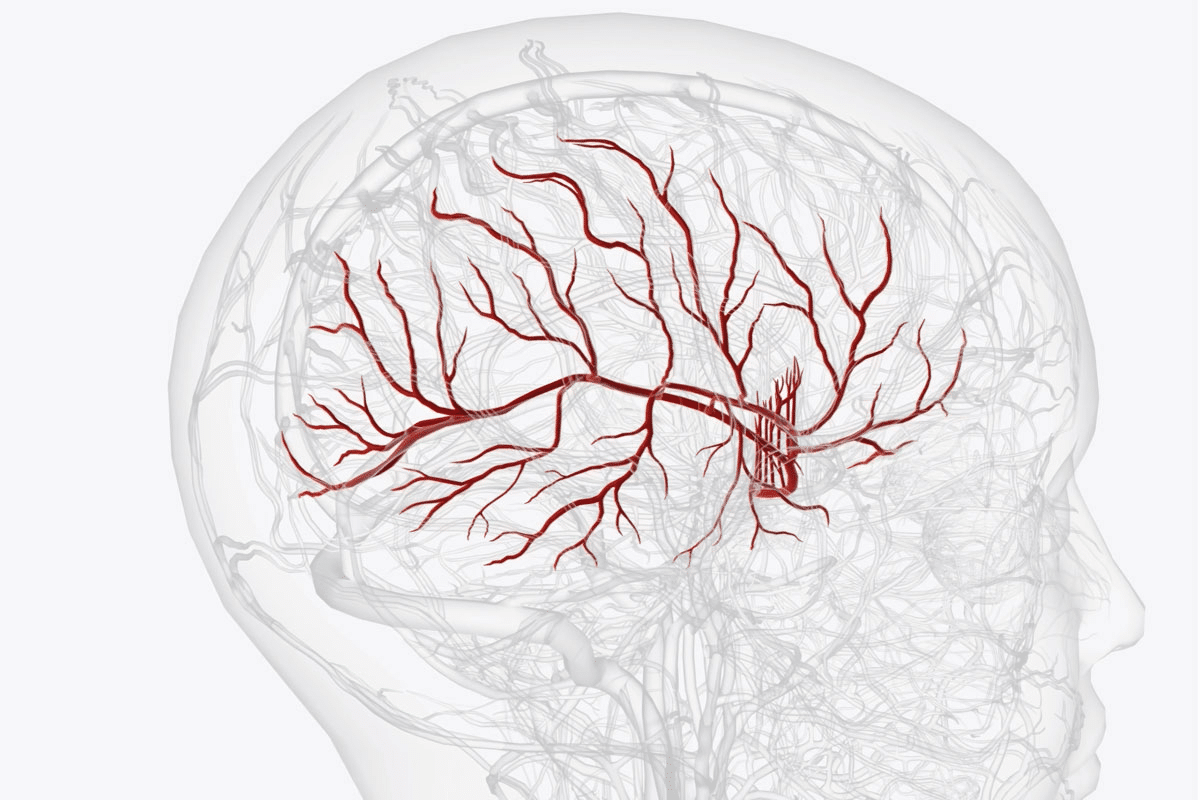
Cerebral amyloid angiopathy (CAA) is a major brain disorder that affects older people. It happens when amyloid-beta builds up in blood vessel walls. This can lead to lobar intracerebral hemorrhage and problems with thinking amyloid angiopathyWhat Causes Dark Spots on the Brain Seen in MRI Scans?.
Thanks to new MRI techniques, doctors can now spot CAA more easily. Knowing about CAA helps in managing age-related brain diseases better.
Key Takeaways
- CAA is a cerebrovascular disorder associated with aging.
- MRI plays a critical role in diagnosing CAA.
- Lobar intracerebral hemorrhage is a significant complication of CAA.
- Advanced MRI techniques improve diagnostic accuracy.
- Understanding CAA is essential for managing age-related small vessel diseases.
Understanding Cerebral Amyloid Angiopathy
Cerebral Amyloid Angiopathy (CAA) is a serious brain disorder. It happens when amyloid-beta peptides build up in the walls of small blood vessels. This affects the brain’s outer layer and the thin membranes covering the brain and spinal cord.
Definition and Pathophysiology
CAA is caused by amyloid-beta buildup in blood vessel walls. This makes them weak and more likely to bleed. Amyloid-beta comes from breaking down a protein called amyloid precursor protein (APP).
“The deposition of amyloid-beta in cerebral vessels is a critical aspect of CAA pathology, contributing to its clinical manifestations.”
The way amyloid-beta builds up is complex. It involves many molecular steps. CAA is more than just amyloid-beta buildup. It’s a complex process that harms blood vessels in the brain.
Epidemiology and Risk Factors
CAA gets more common with age, hitting older people hard. Research shows it’s common in those over 60.
|
Risk Factor |
Description |
|---|---|
|
Age |
Increasing age is a significant risk factor for CAA. |
|
APOE Gene Alleles |
The presence of certain apolipoprotein E (APOE) gene alleles, like ε4, raises CAA risk. |
|
Family History |
Having a family history of CAA or Alzheimer’s disease increases your risk. |
Knowing these risk factors helps spot and manage CAA early. The APOE gene’s role shows the disease has a genetic side.
Clinical Presentation of Amyloid Angiopathy

CAA’s symptoms can differ a lot from person to person. This makes it hard to diagnose just by looking at symptoms.
Common Symptoms and Signs
CAA can show up in many ways, from small bleeds seen on scans to big brain hemorrhages. Common symptoms include headaches, seizures, and brief episodes of brain problems.
These brief episodes, called TFNEs, are key signs of CAA. They can look like strokes or seizures but are different. They often happen in the same place and can warn of bigger problems.
Neurological Manifestations
CAA’s brain effects are wide-ranging. Patients may experience weakness or numbness in certain areas. This is because of small strokes or bleeds.
CAA can also cause more widespread brain issues. These include trouble walking and vision problems. A condition called superficial siderosis can add symptoms like balance issues and hearing loss.
Cognitive Impairment Patterns
Cognitive problems are a big part of CAA. They can look a lot like Alzheimer’s. Patterns of cognitive impairment vary but often include problems with thinking, memory, and speed.
Having cognitive issues with CAA means a higher chance of getting dementia. Knowing how CAA affects thinking can help doctors better care for patients.
Pathological Mechanisms of CAA
Amyloid-beta deposition in cerebral vessels is key to CAA pathology. This involves amyloid-beta peptides building up in blood vessel walls. It makes vessels weak and can cause problems.
Amyloid-Beta Deposition Process
The process of amyloid-beta deposition is complex. It involves how these peptides are made, cleared, and stick together. In CAA, there’s a problem with this balance, leading to buildup in vessel walls.
Amyloid-beta deposition happens in the walls of cerebral arteries, arterioles, and capillaries. Scientists use Congo red staining and immunohistochemistry to spot it.
Vascular Changes and Complications
Amyloid-beta buildup in vessels causes big changes. It makes vessels fragile and can lose smooth muscle cells. This raises the risk of bleeding in the brain.
CAA can also lead to cognitive decline and dementia. It’s linked to a higher risk of Alzheimer’s disease. This shows a complex relationship between CAA and Alzheimer’s.
Neuroimaging, like MRI, can spot CAA’s effects. It looks for signs like microbleeds, superficial siderosis, and white matter changes.
Importance of Neuroimaging in CAA Diagnosis
Neuroimaging is key in spotting cerebral amyloid angiopathy (CAA). This condition is marked by amyloid-beta buildup in brain blood vessels. Because CAA’s symptoms can be tricky to spot, doctors need more than just a patient’s story to make a diagnosis.
Limitations of Clinical Diagnosis
Spotting CAA through symptoms alone is hard. It often gets mixed up with other brain issues. Symptoms like memory loss or brief brain problems can point to many things, not just CAA.
Medical Expert. pointed out in their study, “Diagnosing CAA is tough because its signs are not clear-cut and need proof from tissue samples.”
“Diagnosing CAA while someone is alive is hard. It’s often confirmed by special imaging signs in the right clinical setting.”
Role of Various Imaging Modalities
Neuroimaging tools are vital for finding CAA. CT scans can spot big bleeds, but MRI is better for finding small ones and other signs of CAA.
|
Imaging Modality |
Sensitivity for CAA Diagnosis |
Characteristic Findings |
|---|---|---|
|
CT |
Low |
Large hemorrhages |
|
MRI |
High |
Microhemorrhages, siderosis |
|
GRE/SWI |
High |
Hemorrhagic lesions |
The table shows how different scans compare in spotting CAA. MRI, with special sequences, is best at finding CAA’s telltale signs.
In short, MRI is essential for diagnosing CAA. It gives a clearer picture than just looking at symptoms.
MRI Physics Relevant to CAA Detection
The detection of Cerebral Amyloid Angiopathy heavily relies on MRI physics. MRI, or Magnetic Resonance Imaging, gives detailed images of the brain. It’s great for spotting the hemorrhagic lesions linked to CAA.
Basic MRI Principles
MRI uses nuclear magnetic resonance. Hydrogen nuclei in the body line up with a strong magnetic field. Radiofrequency pulses disturb this, and signals are used to make images.
The contrast in MRI images comes from different tissue properties. This makes MRI perfect for finding specific features.
T1-weighted images show anatomical details well. T2-weighted images highlight pathological changes better. For CAA, sequences that spot hemosiderin deposits are key.
Specialized Sequences for Hemorrhage Detection
Certain MRI sequences are great for finding hemorrhages in CAA. Susceptibility-Weighted Imaging (SWI) is very good at this. It spots microbleeds and other signs of CAA.
- Gradient-Echo (GRE) sequences also find hemosiderin and lesions.
- T2*-weighted imaging helps identify hemorrhages too.
Using these sequences together helps find CAA-related hemorrhages better.
Understanding MRI physics helps doctors diagnose Cerebral Amyloid Angiopathy better. Special sequences like SWI have made spotting these lesions easier.
Essential MRI Sequences for CAA Diagnosis
To diagnose Cerebral Amyloid Angiopathy (CAA) well, knowing the right MRI sequences is key. MRI is vital for spotting CAA’s signs like microbleeds, superficial siderosis, and white matter changes.
Gradient-Echo (GRE) Sequences
GRE sequences are great for finding hemorrhagic spots because they’re very sensitive. They help spot microbleeds, a big sign of CAA.
GRE sequences have many benefits:
- They’re good at finding small hemorrhages.
- They’re great at spotting microbleeds.
- They help see how much CAA is present.
Susceptibility-Weighted Imaging (SWI)
SWI is a top-notch MRI method that’s even better than GRE at finding small spots of bleeding. It’s super effective for spotting microbleeds and other bleeding spots.
SWI stands out because it:
- Shows small vessels and microbleeds better.
- Gives clear info on hemosiderin buildup.
- Makes diagnosing CAA more confident.
T2*-Weighted Imaging
T2*-weighted imaging is also good at finding bleeding and calcifications. It’s often used with GRE and SWI for a full check-up.
The advantages of T2*-weighted imaging are:
|
Feature |
Benefit |
|---|---|
|
Sensitivity to hemorrhages |
Helps find microbleeds linked to CAA. |
|
Detection of calcifications |
Helps with other diagnoses. |
FLAIR Imaging Applications
FLAIR imaging is great for spotting white matter changes and superficial siderosis. These are important for CAA.
“FLAIR imaging is key for seeing brain lesions linked to CAA, like white matter changes.”
FLAIR imaging is useful for:
- Finding white matter changes.
- Spotting superficial siderosis.
- Seeing how much CAA has affected the brain.
Characteristic MRI Findings in Amyloid Angiopathy
MRI is key in diagnosing Cerebral Amyloid Angiopathy. It shows specific signs that help tell CAA apart from other brain diseases.
Lobar Microbleeds Distribution Pattern
Lobar microbleeds are a key sign of CAA. They appear in the cortical and subcortical regions of the brain. Susceptibility-Weighted Imaging (SWI) or Gradient-Echo (GRE) sequences are best for seeing them.
The way these microbleeds spread across the brain helps doctors confirm CAA.
Cortical Superficial Siderosis
Cortical superficial siderosis (cSS) is another sign of CAA. It shows hemosiderin deposition in the brain’s outer layers. cSS is linked to cognitive decline and shows how severe CAA is.
White Matter Hyperintensities
White matter hyperintensities (WMH) are seen on FLAIR sequences in CAA patients. These spots come from chronic small vessel ischemia. They often appear with other CAA signs.
|
Imaging Feature |
Description |
Clinical Significance |
|---|---|---|
|
Lobar Microbleeds |
Small hemorrhages in lobar regions |
Highly suggestive of CAA |
|
Cortical Superficial Siderosis |
Hemosiderin deposition in the cortex |
Marker of CAA severity |
|
White Matter Hyperintensities |
Ischemic changes in white matter |
Common in CAA, associated with cognitive decline |
Convexity Subarachnoid Hemorrhage
Convexity subarachnoid hemorrhage (cSAH) is a rare but important sign of CAA. It often causes acute neurological symptoms. cSAH happens when amyloid makes blood vessels weak and they burst.
Seeing cSAH along with other signs like lobar microbleeds and cSS helps confirm CAA. It shows why a detailed MRI is so important.
The Boston Criteria for CAA Diagnosis
Understanding the Boston criteria is key for diagnosing Cerebral Amyloid Angiopathy (CAA) accurately. The Boston criteria offer a clear framework. They use MRI findings and clinical signs to improve CAA diagnosis.
Original Boston Criteria
The original Boston criteria were set to standardize CAA diagnosis. They highlighted the role of lobar microbleeds and other MRI signs of bleeding. These criteria provided a solid way to diagnose CAA.
Modified Boston Criteria
The original criteria were later updated to boost diagnostic accuracy. The modified Boston criteria added new MRI signs like cortical superficial siderosis. These changes came from better MRI tech and a deeper understanding of CAA.
Sensitivity and Specificity Considerations
The Boston criteria’s sensitivity and specificity are vital for their use in clinics. The modified criteria are very specific for CAA, thanks to their focus on lobar microbleeds. Yet, their sensitivity can vary, showing the importance of careful MRI analysis.
In summary, the Boston criteria, in their original and updated forms, are a big step forward in CAA diagnosis. By using these criteria, doctors can make more accurate diagnoses. This leads to better care for CAA patients.
Differential Diagnosis on MRI
When diagnosing CAA on MRI, it’s important to tell it apart from other conditions. This is key for the right treatment and care.
Hypertensive Microangiopathy
Hypertensive microangiopathy can look like CAA on MRI. It shows deep or infratentorial microbleeds, unlike CAA’s lobar focus. Looking closely at where the microbleeds are helps tell them apart.
A study showed hypertensive microangiopathy often hits the basal ganglia, thalami, and brainstem. CAA, on the other hand, affects the lobar and subcortical areas.
|
Characteristics |
CAA |
Hypertensive Microangiopathy |
|---|---|---|
|
Microbleed Location |
Lobar, cortical, and subcortical |
Deep, basal ganglia, thalami, brainstem |
|
Typical Patient Profile |
Elderly, often with dementia |
Hypertensive patients |
Traumatic Microbleeds
Traumatic microbleeds can look like CAA, mainly in those with head trauma history. Their location often matches the trauma site.
“The presence of microbleeds in a patient with a history of trauma should prompt consideration of traumatic microbleeds as a differential diagnosis.”
It’s tough to tell them apart, but looking at the patient’s history and where the microbleeds are helps. Traumatic microbleeds are usually found in the outer parts and might show other trauma signs on MRI.
Cerebral Microbleeds in Other Conditions
Cerebral microbleeds can also appear in conditions like cerebral vasculitis, CADASIL, and after radiation. Each has its own signs and symptoms that help in diagnosis.
Cerebral vasculitis shows vessel wall enhancement and ischemic lesions. CADASIL has a unique history and genetic markers.
It’s vital to use a detailed approach when looking at microbleeds on MRI. This includes both the imaging and the patient’s background, for accurate diagnosis.
CAA and Alzheimer’s Disease: Overlapping Pathologies
It’s important to understand how CAA and Alzheimer’s disease are connected. Both are common in older adults and share a key feature: amyloid-beta deposits. These deposits can harm the brain and lead to memory loss.
Shared Amyloid Pathology
Both CAA and Alzheimer’s disease involve amyloid-beta deposits. In CAA, these deposits can damage blood vessels in the brain. This damage can cause bleeding and harm brain function. Alzheimer’s disease also has amyloid-beta plaques that damage brain cells and lead to memory loss.
Amyloid-beta deposition is influenced by genetics and environment. The APOE gene, with its ε4 allele, increases the risk for both CAA and Alzheimer’s. This suggests a genetic link between the two.
Distinguishing Features on MRI
MRI is key in telling CAA and Alzheimer’s apart. CAA shows signs like lobar microbleeds and cortical superficial siderosis. Alzheimer’s is marked by hippocampal atrophy and volume loss in the temporal lobe.
While MRI features can overlap, some signs are more specific. Lobar microbleeds point to CAA, while medial temporal lobe atrophy is more typical of Alzheimer’s.
Clinical Implications of Comorbidity
When CAA and Alzheimer’s disease occur together, it’s a complex situation. Patients may experience faster cognitive decline. It’s vital to understand how these conditions interact to develop better treatment plans.
Doctors should consider CAA in patients with Alzheimer’s, as it affects treatment choices. Anticoagulants might not be safe due to the risk of bleeding.
In summary, CAA and Alzheimer’s disease have a complex relationship. MRI is essential for diagnosing and managing these conditions. It helps doctors make accurate diagnoses and develop effective treatments.
Practical Approach to MRI Interpretation in Suspected CAA
Reading MRI scans for suspected CAA needs a careful and methodical way. It’s not just about knowing the signs of CAA. It also means following a set protocol to make sure the diagnosis is right.
Recommended Protocol for Suspected CAA
The MRI protocol for suspected CAA includes several key sequences. These are Gradient-Echo (GRE) sequences, Susceptibility-Weighted Imaging (SWI), and FLAIR imaging. These help spot microbleeds, superficial siderosis, and white matter hyperintensities. These are key signs of CAA.
Systematic Review of Images
Looking at MRI images carefully is key to spotting CAA signs. You need to check each sequence for signs like lobar microbleeds and cortical superficial siderosis. Make sure to review each sequence step by step.
Susceptibility-Weighted Imaging (SWI) is very helpful. It makes it easier to see microbleeds and other signs of CAA.
Reporting Key Findings
When you report MRI findings for suspected CAA, be detailed. Mention where, how many, and what type of hemorrhagic lesions you see. Also, include any white matter hyperintensities. Your report should be clear and help doctors make better decisions.
By following a systematic approach and a recommended protocol, doctors can better diagnose CAA. This helps improve patient care.
Conclusion
Diagnosing cerebral amyloid angiopathy (CAA) with MRI is key in neurological exams. MRI sequences like gradient-echo and susceptibility-weighted imaging help spot signs of CAA. These include lobar microbleeds and cortical superficial siderosis.
The Boston criteria, both old and new, help doctors diagnose CAA better. MRI can show CAA-related bleeding and white matter changes. This helps doctors tell CAA apart from other conditions, like hypertensive microangiopathy.
It’s important for doctors to know how CAA works and how it’s linked to Alzheimer’s disease. By carefully looking at MRI images and noting important details, doctors can make better diagnoses. This helps in choosing the right treatment plans.
In short, MRI is a vital tool for diagnosing CAA. It gives doctors important information about CAA and related problems. Knowing how to use MRI well in CAA diagnosis helps improve patient care.
FAQ
What is Cerebral Amyloid Angiopathy (CAA)?
CAA is a condition where amyloid-beta peptide builds up in blood vessel walls. This makes the vessels weak and can lead to bleeding.
How is CAA diagnosed using MRI?
MRI helps spot CAA by looking for specific signs like lobar microbleeds and cortical superficial siderosis. These are seen on SWI and T2*-weighted imaging.
What are the Boston criteria for CAA diagnosis?
The Boston criteria help doctors diagnose CAA by looking at MRI images. They look for lobar microbleeds and other signs to make a diagnosis.
What is the role of apolipoprotein E (APOE) gene alleles in CAA?
APOE gene alleles, like APOE ε4, increase the risk of getting CAA. They also affect how severe it is.
How does CAA relate to Alzheimer’s disease?
CAA and Alzheimer’s disease both involve amyloid buildup. This makes diagnosing and treating them together challenging.
What are the clinical implications of CAA?
CAA raises the risk of bleeding in the brain and can cause memory loss. Symptoms vary from person to person.
What MRI sequences are essential for diagnosing CAA?
Key MRI sequences for diagnosing CAA include GRE, SWI, T2*-weighted imaging, and FLAIR imaging.
How can CAA be distinguished from other conditions on MRI?
CAA can be told apart from other conditions like hypertensive microangiopathy by looking at MRI images. The pattern and location of lesions are key.
What is the significance of convexity subarachnoid hemorrhage in CAA?
Convexity subarachnoid hemorrhage is a sign of CAA. It often shows up with lobar microbleeds and other CAA signs on MRI.
What is the recommended protocol for MRI in suspected CAA?
For suspected CAA, MRI should use SWI, T2*-weighted imaging, and FLAIR. These help find and measure CAA lesions.
Reference
National Center for Biotechnology Information. Evidence-Based Medical Guidance. Retrieved from https://pmc.ncbi.nlm.nih.gov/articles/PMC6501479/