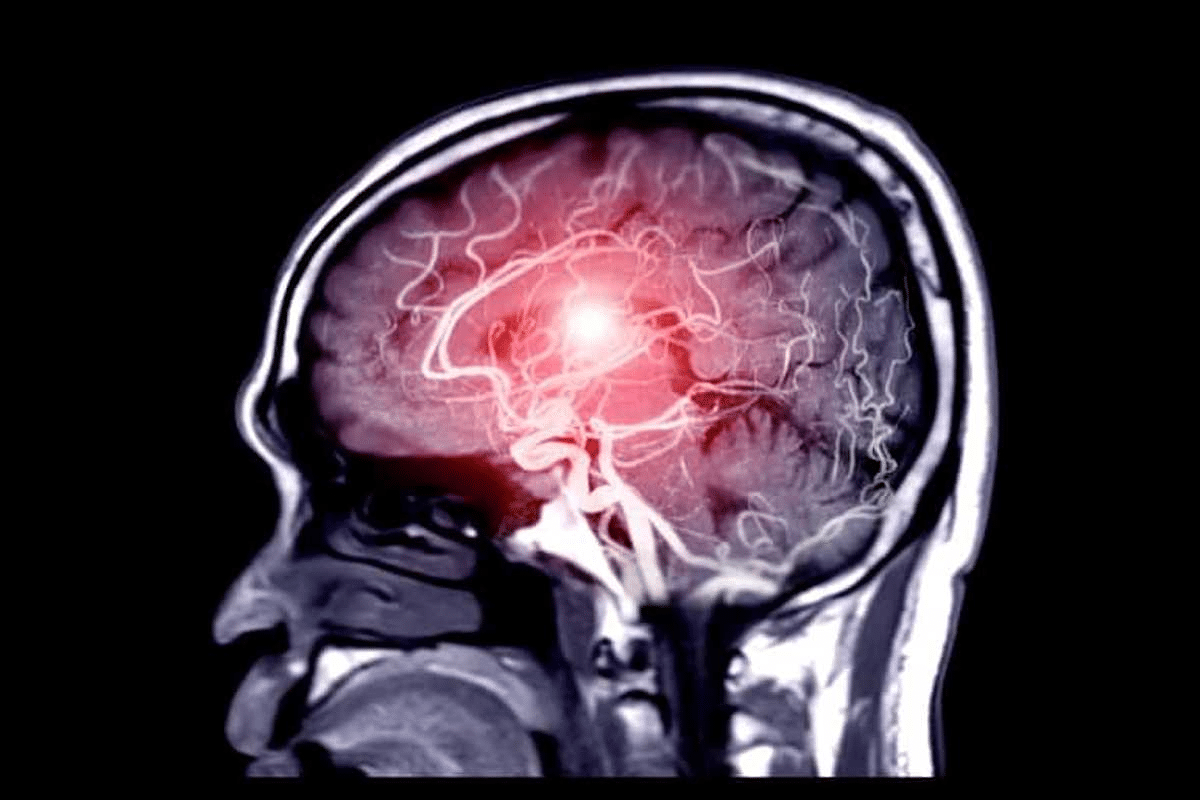
Alzheimer’s disease is a complex disorder that affects millions. It’s important to understand its causes to find better treatments.beta amyloid plaques and neurofibrillary tanglesTurmeric Brain Benefits: Boosting Stem Cells and Cognitive Health
The disease is marked by beta amyloid plaques and neurofibrillary tangles in the brain. These lead to brain cell loss and memory problems. Studying these features helps us understand Alzheimer’s better.
Looking into how these hallmarks work helps us see how Alzheimer’s progresses. It also shows us where to aim for new treatments.
Key Takeaways
- Alzheimer’s disease is characterized by beta amyloid plaques and neurofibrillary tangles.
- These pathological hallmarks lead to neuronal loss and cognitive decline.
- Understanding the mechanisms of plaques and tangles is key for better treatments.
- Current research looks into beta amyloid and tau proteins in Alzheimer’s.
- Learning more about Alzheimer’s can lead to better treatments.
The Pathological Hallmarks of Alzheimer’s Disease

Understanding Alzheimer’s disease is key to diagnosing and researching it. This condition causes cognitive decline and memory loss. It’s a complex neurodegenerative disorder.
Research has focused on beta-amyloid plaques and neurofibrillary tangles. These were first identified by Alois Alzheimer in the early 20th century. They are the hallmark features of Alzheimer’s disease.
The Discovery of Plaques and Tangles
In 1906, Alois Alzheimer presented a case of a 51-year-old woman with memory loss and language problems. He found peculiar deposits in her brain. These were later called beta-amyloid plaques and neurofibrillary tangles.
This discovery was a major breakthrough. It opened up new avenues for research into Alzheimer’s disease and its treatment.
Their Role in Diagnosis and Research
Beta-amyloid plaques and neurofibrillary tangles are key in diagnosing Alzheimer’s disease. They help confirm the diagnosis after death.
Studies show that the amount and location of these hallmarks relate to cognitive decline. This understanding helps in tracking the disease’s progression and finding treatments.
|
Pathological Feature |
Description |
Role in Alzheimer’s Disease |
|---|---|---|
|
Beta-amyloid Plaques |
Deposits of beta-amyloid protein fragments outside neurons |
Disrupt normal brain function and contribute to neuronal damage |
|
Neurofibrillary Tangles |
Intracellular accumulations of hyperphosphorylated tau protein |
Indicate neuronal dysfunction and are associated with cognitive decline |
Studying beta-amyloid plaques and neurofibrillary tangles is essential. It helps us understand Alzheimer’s disease better and find new treatments.
Beta Amyloid Plaques and Neurofibrillary Tangles: Defining the Key Players

To understand Alzheimer’s disease, we must look at its main features: beta amyloid plaques and neurofibrillary tangles. These elements are key to grasping how the disease progresses and affects the brain.
What Are Beta Amyloid Plaques?
Beta amyloid plaques are deposits of amyloid-beta peptides found between brain cells. Amyloid-beta peptides come from the amyloid precursor protein (APP). In Alzheimer’s, APP is processed abnormally, creating insoluble fibrils that form plaques.
“The buildup of beta amyloid plaques is a key sign of Alzheimer’s disease,” say researchers. “These plaques harm brain function and cause damage to neurons.”
What Are Neurofibrillary Tangles?
Neurofibrillary tangles are made of tau protein that has been hyperphosphorylated. Normally, tau helps stabilize microtubules in neurons. But in Alzheimer’s, tau becomes hyperphosphorylated, forming insoluble fibrils that create tangles.
Structural Differences and Similarities
Beta amyloid plaques and neurofibrillary tangles are made of misfolded proteins. But they differ in where they are found and what they’re made of. Plaques are outside cells and are mainly amyloid-beta peptides. Tangles are inside cells and are made of hyperphosphorylated tau protein.
Even though they’re different, both structures are insoluble fibrils that disrupt normal brain function. Knowing how they’re similar and different is vital for finding new treatments.
Studies show that beta amyloid plaques and neurofibrillary tangles work together in Alzheimer’s disease. More research is needed to understand how they form and interact.
The Formation of Beta Amyloid Plaques
The creation of beta amyloid plaques is a complex process. It involves many biochemical steps that lead to the buildup of amyloid-beta peptides. Knowing how this happens helps us understand Alzheimer’s disease better.
Amyloid Precursor Protein Processing
Amyloid precursor protein (APP) is a key player in making beta amyloid plaques. APP is cut by enzymes called secretases. There are two main ways APP can be processed.
The non-amyloidogenic pathway stops amyloid-beta peptides from forming. On the other hand, the amyloidogenic pathway leads to the creation of amyloid-beta peptides. This pathway is linked to Alzheimer’s disease.
The imbalance between making and clearing amyloid-beta peptides is a major factor in Alzheimer’s disease.
Aggregation and Deposition Mechanisms
The process of amyloid-beta peptides coming together is complex. It involves the formation of soluble oligomers and insoluble fibrils. These can form plaques in the brain.
Other proteins, like tau and apolipoprotein E, can help amyloid-beta peptides stick together. This makes the formation of harmful aggregates more likely.
Types of Amyloid Plaques
There are different types of amyloid plaques in Alzheimer’s disease. These include diffuse, dense-core, and neuritic plaques. Diffuse plaques spread out, while dense-core plaques are more compact. Neuritic plaques are associated with damaged nerve fibers.
Each type of plaque may play a different role in Alzheimer’s disease. Studying these plaques can give us important insights into the disease.
Neurofibrillary Tangles and Tau Pathology
Tau pathology is key in Alzheimer’s disease and other neurodegenerative disorders. It’s marked by neurofibrillary tangles made of tau protein. This protein is vital for the structure of neurons.
Normal Tau Function in Healthy Neurons
In healthy neurons, tau protein helps keep microtubules stable. Tau protein binds to microtubules, helping them form and stay stable. This is essential for neurons to work right.
Hyperphosphorylation Process
In Alzheimer’s, tau protein gets too many phosphate groups. This is called hyperphosphorylation. It makes tau leave microtubules and form neurofibrillary tangles.
The hyperphosphorylation process is complex. It involves many enzymes that change tau’s state. Abnormal tau hyperphosphorylation is a major step in making neurofibrillary tangles.
Formation of Paired Helical Filaments
Hyperphosphorylated tau forms paired helical filaments (PHFs). These are the main parts of neurofibrillary tangles. PHF formation is a key part of tau pathology.
The making of PHFs depends on how much tau is hyperphosphorylated and other factors. Knowing how PHFs form helps in finding treatments for tau-related diseases.
The Amyloid Cascade Hypothesis
Understanding the Amyloid Cascade Hypothesis is key to grasping Alzheimer’s disease. This theory has been a major part of Alzheimer’s research. It helps explain how the disease progresses.
Origins and Evolution
The Amyloid Cascade Hypothesis was first proposed to explain Alzheimer’s disease. It suggests that beta-amyloid plaques start a chain of harmful changes. The theory has grown over time, adding new insights into the disease.
At first, the focus was on beta-amyloid’s role in Alzheimer’s. Now, it includes the complex interactions between different disease features. These include neurofibrillary tangles and the loss of neurons.
Evidence Supporting the Cascade Model
Many studies back the Amyloid Cascade Hypothesis. They show that beta-amyloid buildup comes before tangles and neuron loss. Genetic studies also link APP gene mutations to early Alzheimer’s.
The evidence includes:
- Biochemical studies show beta-amyloid’s harm to neurons.
- Imaging studies link amyloid buildup to cognitive decline.
- Genetic studies connect APP mutations to Alzheimer’s.
Recent Challenges and Modifications
Despite its acceptance, the Amyloid Cascade Hypothesis has faced challenges. Some studies suggest tau pathology might be more important than thought. This has led to a revised version of the hypothesis, focusing on the interaction between beta-amyloid and tau.
Recent research also points to other factors like inflammation and vascular changes in Alzheimer’s. These findings have broadened our understanding of the disease. They show Alzheimer’s is caused by multiple factors.
The Relationship Between Plaques and Tangles
The connection between beta amyloid plaques and neurofibrillary tangles is key in Alzheimer’s disease. Knowing how they interact helps us understand the disease’s progression. It also points to possible treatments.
Temporal and Spatial Distribution
Studies reveal that plaques and tangles have different patterns in Alzheimer’s brains. Amyloid-beta plaques often come before tau tangles, hinting at a cause-and-effect link.
Plaques and tangles also show up in different brain areas. Plaques mainly appear in the neocortex. Tangles are more common in the hippocampus and entorhinal cortex.
Molecular Interactions
The interaction between amyloid-beta and tau is complex. Research shows amyloid-beta can make tau hyperphosphorylated, leading to tangles.
There are many molecular pathways that link amyloid-beta and tau. These include the activation of kinases and the disruption of tau’s normal function.
The 95% Correlation in Pathological Studies
Studies have found a strong link between plaques and tangles in Alzheimer’s brains. Most Alzheimer’s cases have both, with a correlation of up to 95%.
|
Pathological Feature |
Correlation with Alzheimer’s Disease |
Frequency in AD Brains |
|---|---|---|
|
Beta Amyloid Plaques |
High |
80-90% |
|
Neurofibrillary Tangles |
High |
85-95% |
|
Both Plaques and Tangles |
Very High |
95% |
This strong link highlights the need to study the relationship between plaques and tangles in Alzheimer’s disease.
Global Impact: Epidemiology of Alzheimer’s Disease
Alzheimer’s disease has a huge impact worldwide. It affects individuals, families, and healthcare systems deeply. Looking into its spread shows it’s a big health problem globally.
Current Prevalence Statistics
Over 50 million people worldwide live with Alzheimer’s. It’s a major brain disease. In the U.S., about 5.8 million people have it, showing a big health issue.
Projected Growth to 2050
By 2050, Alzheimer’s cases are expected to nearly triple. This will reach 152 million worldwide. It will put a big strain on healthcare and economies.
Economic and Social Burden
Alzheimer’s costs over $1 trillion each year globally. It also affects families and communities deeply. The emotional impact on those affected is huge.
|
Year |
Global Prevalence |
Estimated Annual Cost (Trillion USD) |
|---|---|---|
|
2020 |
50 million |
1 |
|
2050 |
152 million |
2.5 (projected) |
In conclusion, Alzheimer’s disease is a big worry worldwide. We need to understand it and act fast. Knowing its spread, costs, and effects helps us fight it better.
Detection and Diagnosis of Plaques and Tangles
New diagnostic methods are changing how we understand and treat Alzheimer’s disease. Finding beta amyloid plaques and neurofibrillary tangles is key to diagnosing Alzheimer’s. This helps us tell it apart from other dementias.
Traditional Diagnostic Methods
For a long time, doctors used clinical exams and neuropsychological tests to diagnose Alzheimer’s. These tests check memory, thinking, and other brain functions. But, these methods can miss the mark, leading to wrong or late diagnoses.
Doctors start by looking at a patient’s medical history and doing physical exams. They also do lab tests to rule out other dementia causes. Neuropsychological tests give a closer look at how well someone thinks and remembers. Yet, these tests don’t find the actual signs of Alzheimer’s, like plaques and tangles.
Advances in Neuroimaging
New neuroimaging methods are helping us diagnose Alzheimer’s before it’s too late. PET scans with special tracers show where beta amyloid plaques are in the brain. MRI scans show brain structure and can spot signs of Alzheimer’s.
Neuroimaging is not just for diagnosis. It also helps track how the disease progresses and if treatments work. As these tools get better, they’ll be even more vital in fighting Alzheimer’s.
Emerging Plasma Biomarkers
New plasma biomarkers are also being looked at for diagnosing Alzheimer’s. Markers like amyloid-beta 42, tau, and neurofilament light chain might help tell Alzheimer’s apart from other dementias. They could also track how the disease changes over time.
Research on plasma biomarkers is moving fast. As these markers get better, they could change how we diagnose Alzheimer’s. This could lead to earlier treatment and better outcomes for patients.
Therapeutic Approaches Targeting Plaques and Tangles
Scientists are working hard to find new treatments for Alzheimer’s disease. They focus on beta amyloid plaques and neurofibrillary tangles. Understanding these key features is essential for changing the disease.
Anti-Amyloid Strategies
Anti-amyloid therapies are leading the way in Alzheimer’s research. They aim to lessen the impact of beta amyloid plaques. This is important because these plaques are thought to contribute to the disease’s progression.
There are several methods being explored:
- Immunotherapies: Vaccines and antibodies that target and remove beta amyloid.
- Secretase inhibitors: Drugs that block enzymes involved in beta amyloid production.
- Amyloid-clearing therapies: Treatments that help remove beta amyloid from the brain.
Anti-Tau Approaches
Anti-tau therapies are also being developed. They aim to tackle neurofibrillary tangles, another major problem in Alzheimer’s. These methods include:
- Tau-targeting immunotherapies: Vaccines and antibodies that reduce tau pathology.
- Tau aggregation inhibitors: Compounds that stop neurofibrillary tangles from forming.
- Tau stabilizers: Therapies that keep tau functioning normally and prevent it from becoming hyperphosphorylated.
Combination Therapies
Researchers are also looking into combination therapies. These aim to tackle both beta amyloid and tau pathologies at the same time. This could be a more effective way to treat Alzheimer’s by addressing all parts of the disease.
As research keeps moving forward, we’re optimistic about finding effective treatments for Alzheimer’s. This could greatly improve the lives of those affected and their families.
Conclusion: The Future of Alzheimer’s Research and Treatment
As we learn more about Alzheimer’s disease, it’s clear that research is key to finding treatments. This is because Alzheimer’s is a complex condition.
The connection between beta amyloid plaques and neurofibrillary tangles is a major focus. Studies are uncovering how these elements interact and cause damage.
Understanding these mechanisms will lead to new treatments. This will help in targeting the root causes of Alzheimer’s disease.
Alzheimer’s disease is affecting more people worldwide. So, it’s vital to keep researching and investing in finding better treatments. This will help improve the lives of those suffering from the disease.
FAQ
What are the primary pathological features of Alzheimer’s disease?
Alzheimer’s disease is mainly caused by beta-amyloid plaques and neurofibrillary tangles.
What are beta-amyloid plaques composed of?
Beta-amyloid plaques are made from amyloid-beta peptides. These peptides come from the amyloid precursor protein.
What are neurofibrillary tangles made of?
Neurofibrillary tangles are made of hyperphosphorylated tau protein.
What is the amyloid cascade hypothesis?
The amyloid cascade hypothesis is a theory. It explains how Alzheimer’s disease starts. It says beta-amyloid plaques start the disease process.
How are beta-amyloid plaques and neurofibrillary tangles related?
Beta-amyloid plaques and neurofibrillary tangles are closely linked. Many Alzheimer’s cases have both.
What is the current state of diagnostic techniques for Alzheimer’s disease?
Today, we use many ways to diagnose Alzheimer’s. This includes clinical tests and neuropsychological tests. We also use new imaging and plasma biomarkers.
What are the current therapeutic approaches targeting Alzheimer’s disease?
We’re working on many treatments for Alzheimer’s. These include anti-amyloid and anti-tau therapies. We also have combination therapies to tackle the disease from different angles.
What is the global impact of Alzheimer’s disease?
Alzheimer’s disease is a big problem worldwide. It affects many people, families, and healthcare systems. This is because of aging populations and other factors.
What is the prevalence of Alzheimer’s disease?
Alzheimer’s disease is becoming more common. There are already many cases, and this number is expected to grow by 2050.
What is the economic and social burden of Alzheimer’s disease?
Alzheimer’s disease costs a lot. It affects not just individuals but also families and healthcare systems. The costs of care and management are very high.
References
National Center for Biotechnology Information. Alzheimer’s: Beta Amyloid Plaques and Neurofibrillary Tangles. Retrieved from https://pubmed.ncbi.nlm.nih.gov/1821689/