
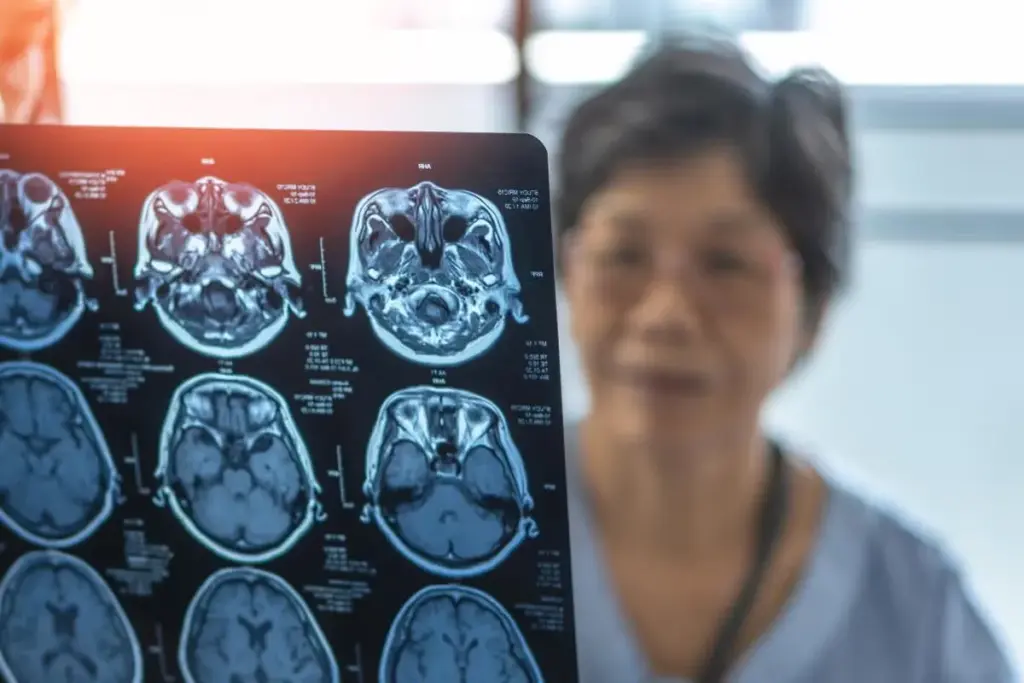
Millions of people face cognitive decline each year. Early detection is hard. We use advanced neuroimaging tools to get important insights into cognitive disorders.
At Liv Hospital, we use the latest imaging tech and expert care to spot cognitive disorders early. CT scans are key in checking cognitive decline. They use X-ray tech to make detailed images.
CT scans and MRI provide essential insights into dementia and Alzheimer’s, helping identify structural brain changes that support diagnostic evaluation.
The Medical organization says brain imaging is vital for diagnosing vascular cognitive impairment. We use this tech to find signs of strokes, tumors, or other issues that can mess with thinking and reasoning.
Key Takeaways
- CT scans are commonly used in dementia diagnosis.
- MRI imaging provides critical insights into cognitive disorders.
- Advanced neuroimaging tools support clinical diagnosis.
- Liv Hospital combines cutting-edge technology with expert care.
- Early detection is key in managing cognitive decline.
Understanding Brain Imaging Technologies for Cognitive Decline
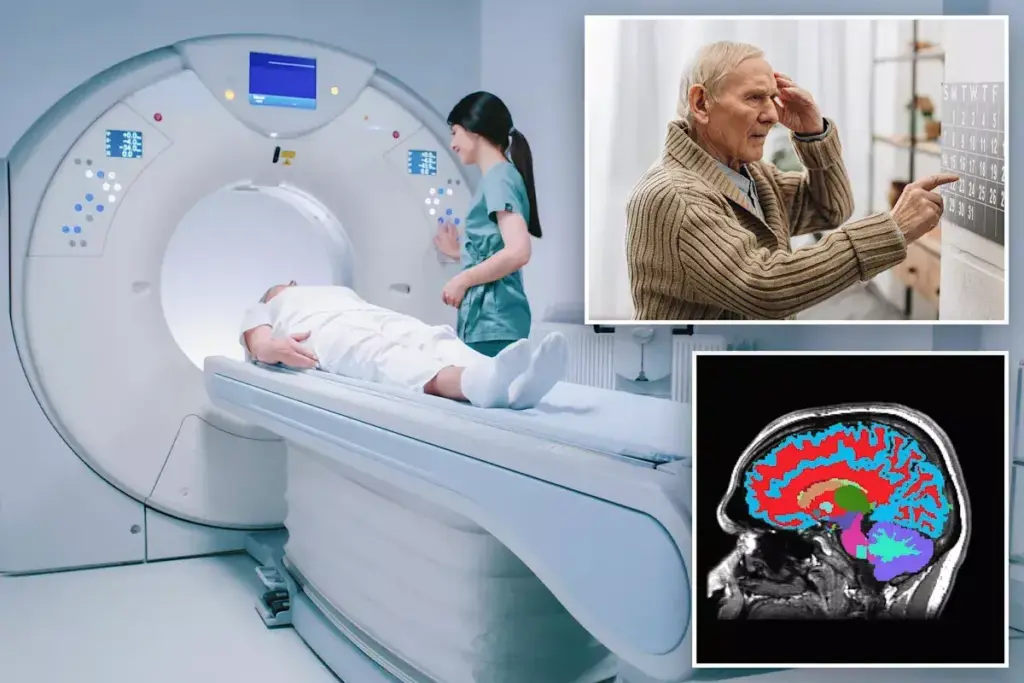
Advances in brain imaging have greatly improved diagnosing cognitive decline. As we dive into the world of dementia and Alzheimer’s, it’s key to grasp the tech behind seeing the brain’s inner workings.
How CT Scans Work in Dementia Evaluation
CT scans are a key tool in spotting dementia. They mix X-ray tech with computer smarts to show detailed brain slices. This helps spot structural shifts like shrinkage or damage linked to brain decline.
CT scans are fast and easy to get, perfect for urgent cases or when MRI isn’t an option. Yet, they can’t catch all the tiny changes in brain tissue.
Key Features of CT Scans in Dementia Evaluation:
- Quick and widely available
- Useful for detecting large structural changes
- Limited in detecting subtle brain tissue changes
How MRI Scans Provide Superior Brain Visualization
MRI scans beat CT scans in showing brain details. They use strong magnetic fields and radio waves to paint a detailed brain picture. They spot tiny changes, like hippocampus shrinkage, key signs of Alzheimer’s.
Studies show MRI is top for spotting vascular cognitive issues. It gives more insight than CT scans into strokes and blood vessel issues. This makes MRI essential for dementia checks.
| Feature | CT Scan | MRI Scan |
| Detail Level | Good for large structural changes | Excellent for subtle changes and soft tissue |
| Availability | Widely available and quick | More detailed but less readily available than CT |
| Use in Alzheimer’s Diagnosis | Limited | Preferred for detailed assessment |
What Does a Dementia Brain Scan Actually Show?
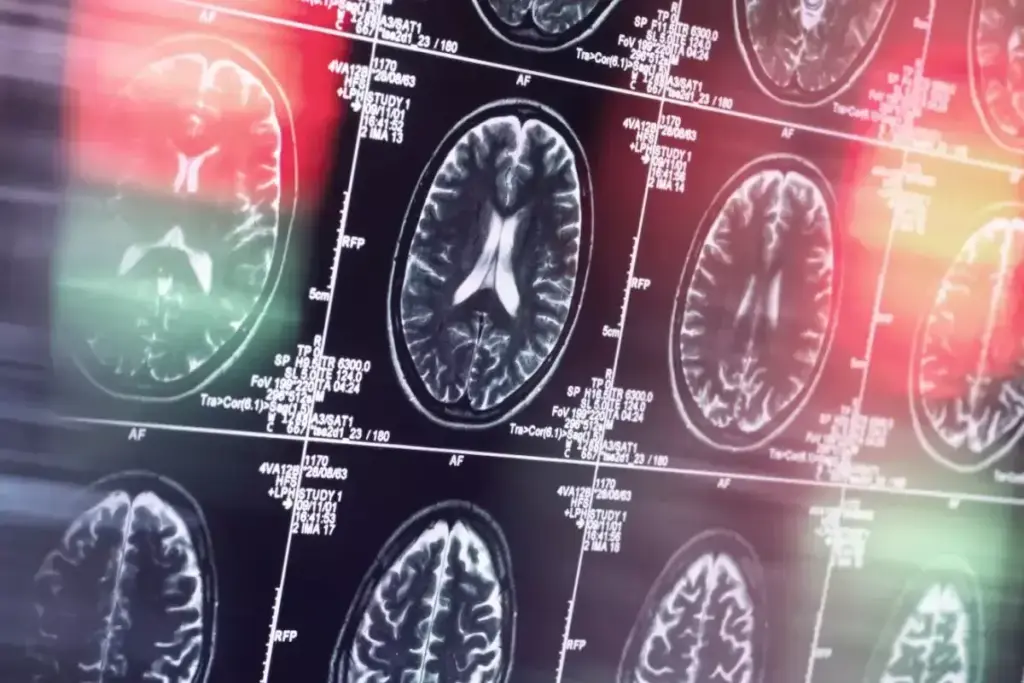
It’s key to know what a dementia brain scan reveals for accurate diagnosis and treatment. CT and MRI scans can’t alone say if someone has dementia or Alzheimer’s. Yet, they help by showing brain changes.
Structural Brain Changes in Alzheimer’s Disease
Alzheimer’s disease is linked to brain changes like cortical atrophy and enlarged ventricles. Cortical atrophy means the brain’s outer layer shrinks. Enlarged ventricles are another sign. These changes can be seen with brain imaging.
“Brain imaging has changed how we see Alzheimer’s,” says Medical Expert, a top neurologist. “It helps us make better diagnoses and treatment plans.”
Comparing CT Scan Alzheimer’s vs Normal Brain Images
Looking at CT scans of Alzheimer’s patients and normal brains shows differences. An Alzheimer’s scan might show brain shrinkage and big ventricles.
Healthcare pros look for these changes in dementia scans. A CT or MRI scan can’t say for sure if someone has Alzheimer’s. But, the scans help rule out other reasons for dementia symptoms.
Understanding dementia brain scans helps us see how imaging aids in diagnosis and care. As research grows, brain imaging will keep being a big part of fighting dementia.
The Role of CT and MRI in Diagnosing Dementia
Brain imaging, like CT and MRI scans, is key in checking for dementia. These scans give doctors important info to help them diagnose dementia right.
Supporting Clinical Diagnosis with Brain Imaging
CT and MRI scans help spot brain changes linked to dementia. They let doctors see how the brain is doing. For example, CT scans can find vascular lesions or strokes that might cause dementia symptoms.
Also, MRI scans show brain details better than CT scans. They help spot small changes that CT scans might miss. This is helpful in diagnosing Alzheimer’s disease, where brain areas can shrink a lot.
Ruling Out Other Conditions That Mimic Dementia Symptoms
The Alzheimer’s Association says brain imaging helps rule out other diseases that look like Alzheimer’s. This is important because some diseases can be treated if found early.
Some conditions that can be ruled out with CT and MRI scans include:
- Brain tumors
- Stroke or cerebral vasculature issues
- Vascular lesions
- Normal pressure hydrocephalus
By finding and ruling out these conditions, doctors can make more accurate diagnoses. This helps in creating better treatment plans for dementia patients.
Conclusion
As we deal with dementia and Alzheimer’s, CT and MRI scans are key. They help find out what’s happening in the brain. This can show why someone’s thinking might be getting worse.
Healthcare experts use these scans to get a clear picture of the brain. This helps them make better diagnoses. Studies show MRI scans can spot signs of dementia and even Alzheimer’s.
New research is looking into better ways to see these diseases. This could lead to better care for people with dementia and Alzheimer’s. It’s a step towards helping patients more effectively.
Using CT and MRI scans can make treatment more personal. As medicine keeps getting better, we’ll see big changes in how we help dementia patients. This will lead to better care and outcomes for them.
FAQ
Can a CT scan detect dementia or Alzheimer’s disease?
A CT scan cannot diagnose dementia or Alzheimer’s directly, but it can show brain atrophy or rule out other causes of cognitive decline.
How does a CT scan work in dementia evaluation?
CT uses X-rays to create detailed images of the brain, helping identify structural changes, tumors, or strokes that may affect cognition.
Can an MRI scan diagnose Alzheimer’s disease?
MRI cannot definitively diagnose Alzheimer’s, but it can detect brain shrinkage patterns and rule out other conditions, supporting the diagnosis.
What does a dementia brain scan show?
Brain scans may show atrophy in specific regions, reduced brain volume, or other structural changes associated with different types of dementia.
Can a brain MRI show dementia?
MRI can reveal brain changes linked to dementia, such as shrinkage in the hippocampus, but it cannot confirm the disease alone.
Does dementia show up on a CT scan?
CT scans may show generalized brain atrophy or other structural abnormalities, which can suggest dementia but are not conclusive.
Can a brain scan detect Alzheimer’s disease?
Brain scans can support Alzheimer’s diagnosis by showing patterns of brain atrophy or using specialized PET scans to detect amyloid plaques.
Does Alzheimer’s show up on MRI?
MRI may show shrinkage in areas like the hippocampus, which is common in Alzheimer’s, helping doctors assess disease severity.
What is the difference between a CT scan and an MRI scan in dementia diagnosis?
CT scans are faster, use X-rays, and are good for detecting structural issues. MRI provides more detailed images of soft tissue, better showing brain atrophy and subtle changes.
References
National Center for Biotechnology Information. Evidence-Based Medical Insight. Retrieved from https://pubmed.ncbi.nlm.nih.gov/10190820/