Many people with Chronic Obstructive Pulmonary Disease (COPD) are worried about getting lung cancer. It’s important to know how these two serious lung diseases are related. This knowledge helps manage the condition better and eases worries.
At Liv Hospital, our team is here to help. We tell you that COPD doesn’t turn into lung cancer directly. But, having COPD does make you more likely to get lung cancer. Both diseases share risks, like smoking.
It’s key to know the differences between COPD and lung cancer. This includes their definitions, symptoms, and how doctors diagnose them. Knowing these differences helps people understand their diagnosis and treatment better.
Key Takeaways
- COPD and lung cancer are distinct conditions with shared risk factors.
- Having COPD increases the risk of developing lung cancer.
- Cigarette smoking is a common risk factor for both conditions.
- Understanding the differences between COPD and lung cancer is important for proper management.
- Liv Hospital provides complete care and support for those with COPD and lung cancer.
Understanding COPD and Lung Cancer: The Basics

To understand the link between COPD and lung cancer, we need to know what each is. Both are serious lung diseases but differ in how they affect patients.
What is COPD?
COPD, or Chronic Obstructive Pulmonary Disease, makes breathing hard. It includes emphysema and chronic bronchitis. Emphysema damages the air sacs in the lungs, while chronic bronchitis irritates the bronchial tubes.
COPD often comes from long-term exposure to harmful substances like cigarette smoke. Symptoms include breathing problems, wheezing, and a persistent cough. Managing it means avoiding harmful exposures, using medication, and improving lung function through rehabilitation.
What is Lung Cancer?
Lung cancer starts in the lungs and is a major cancer worldwide. It has two main types: non-small cell lung cancer and small cell lung cancer. Non-small cell grows slower, while small cell is more aggressive and linked to smoking.
Symptoms include coughing, chest pain, and breathing trouble. Risk factors include smoking, exposure to harmful substances, and family history. For more on COPD and lung cancer, visit this resource.
Common Misconceptions
Many think COPD and lung cancer are the same. They are not, despite both affecting the lungs. Another myth is that only smokers get these diseases. While smoking is a big risk, non-smokers can also be affected by other irritants or genetics.
| Disease | Primary Characteristics | Common Symptoms |
| COPD | Chronic and progressive, includes emphysema and chronic bronchitis | Shortness of breath, wheezing, chronic cough |
| Lung Cancer | Cancer originating in the lungs, two main types: non-small cell and small cell | Coughing, chest pain, difficulty breathing |
COPD vs Lung Cancer: Key Differences and Similarities
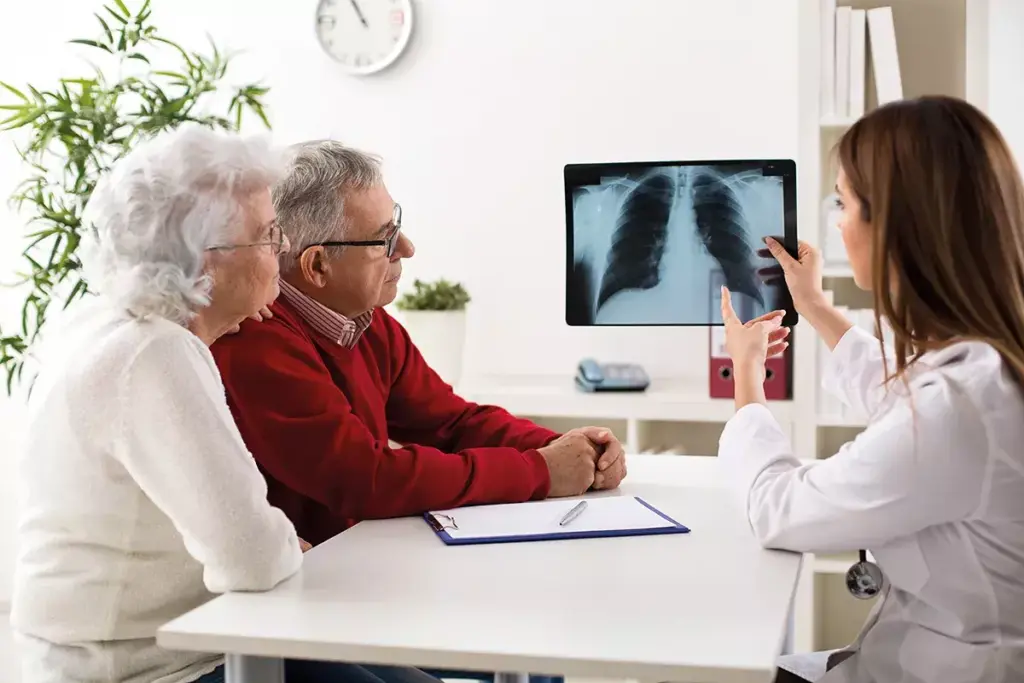
COPD and lung cancer share some risk factors. But they have different causes and symptoms. Let’s look at what makes them unique and what they have in common.
Pathophysiology Differences
COPD is caused by long-term inflammation and airway damage, often from smoking. Lung cancer, on the other hand, is due to uncontrolled cell growth from genetic changes. These two conditions have different ways of affecting the body.
Chronic inflammation is key in COPD, causing airway damage. Lung cancer, though, is driven by genetic mutations, sometimes with inflammation and oxidative stress in the background.
Symptom Comparison
Both COPD and lung cancer can cause breathing problems like coughing and shortness of breath. But how these symptoms start and get worse is different. COPD symptoms come on slowly, while lung cancer symptoms can get worse fast.
- COPD symptoms: chronic cough, sputum production, and shortness of breath.
- Lung cancer symptoms: cough, hemoptysis, weight loss, and chest pain.
Diagnostic Approaches
Diagnosing COPD and lung cancer requires different methods. COPD is diagnosed with spirometry, which checks air flow. Lung cancer is found with imaging like CT scans and biopsies to confirm cancer cells.
Finding lung cancer early is important for better survival chances. Low-dose CT scans are suggested for those at high risk, like people with COPD.
The Connection: How COPD Increases Lung Cancer Risk
Research shows a strong link between COPD and lung cancer. This connection is due to shared biological processes and environmental factors. These factors increase lung cancer risk in people with COPD.
Shared Biological Mechanisms
COPD and lung cancer both involve chronic inflammation and oxidative stress. Chronic inflammation in COPD leads to DNA damage and cancer growth. This is because of pro-inflammatory cytokines and mediators.
Also, the inflammation and oxidative stress in COPD can cause genetic and epigenetic changes. These changes make lung cells more likely to become cancerous. We will look at this in more detail below:
| Mechanism | Description | Impact on Lung Cancer Risk |
| Chronic Inflammation | Release of pro-inflammatory cytokines | Increased DNA damage and carcinogenesis |
| Oxidative Stress | Production of reactive oxygen species | Genetic mutations and epigenetic changes |
Environmental Risk Factors
COPD and lung cancer share environmental risk factors, like tobacco smoking. Smoking is the main cause of COPD and a big risk for lung cancer. Tobacco smoke’s carcinogens can change lung cells’ genes, leading to cancer.
Other environmental exposures, like occupational hazards (e.g., asbestos, radon), also raise the risk of both COPD and lung cancer. Knowing these risk factors is key to preventing these diseases.
Statistical Evidence
Studies show that people with COPD face a 4- to 6-fold higher risk of lung cancer. This risk is true even without smoking, age, or sex. This shows why COPD patients need close monitoring and early detection.
Here are some key statistics:
- Individuals with COPD have a 4-6 times higher risk of developing lung cancer.
- The prevalence of lung cancer is significantly higher in COPD patients compared to the general population.
- COPD is an independent risk factor for lung cancer, alongside smoking.
These findings stress the importance of watching COPD patients for lung cancer signs. They also highlight the need for preventive measures.
Conclusion: Monitoring and Prevention Strategies
People with chronic obstructive pulmonary disease (COPD) face a higher risk of lung cancer. It’s key to know how COPD and lung cancer are linked for early detection and prevention. We’ve talked about the main differences and similarities between these two conditions.
Regular screening for lung cancer is a must for those with COPD. Quitting smoking and avoiding harmful environments are important steps. These actions help manage COPD and lower lung cancer risk.
Managing both COPD and lung cancer in patients is complex. It’s vital to keep a close eye on these patients. Knowing the connection between COPD and lung cancer helps doctors find and treat these conditions early.
Handling lung cancer and COPD together needs a detailed plan. This includes making lifestyle changes and using medical treatments. By focusing on prevention and early detection, we can help those at risk of lung cancer.
FAQ
What is the difference between COPD and lung cancer?
COPD is a chronic inflammatory lung disease causing airflow obstruction, while lung cancer is uncontrolled growth of abnormal cells in the lungs.
Can COPD turn into lung cancer?
No, COPD does not transform into cancer, but it increases the risk of developing lung cancer.
What are the symptoms of COPD and lung cancer?
COPD: shortness of breath, chronic cough, sputum, wheezing.
Lung cancer: persistent cough, coughing blood, chest pain, weight loss, fatigue.
How is COPD related to lung cancer?
COPD causes chronic inflammation and lung tissue damage, which increases the likelihood of lung cancer, especially in smokers.
Can asthma cause lung cancer?
Asthma alone does not directly cause lung cancer, though chronic airway inflammation may slightly increase risk when combined with smoking.
What are the diagnostic approaches for COPD and lung cancer?
COPD: spirometry, chest X-ray, CT scan, symptom history.
Lung cancer: CT scans, PET scans, biopsy, and imaging for tumor detection.
How can individuals with COPD reduce their risk of developing lung cancer?
Quit smoking, avoid environmental toxins, maintain healthy lifestyle, and undergo regular screenings if at high risk.
Is COPD a risk factor for lung cancer?
Yes, COPD is an independent risk factor for lung cancer, even after accounting for smoking.
What is the connection between COPD and lung cancer?
Both share risk factors like smoking, and COPD’s chronic inflammation contributes to cellular changes that increase cancer risk.
References
National Center for Biotechnology Information. Evidence-Based Medical Insight. Retrieved from https://pmc.ncbi.nlm.nih.gov/articles/PMC3681182/