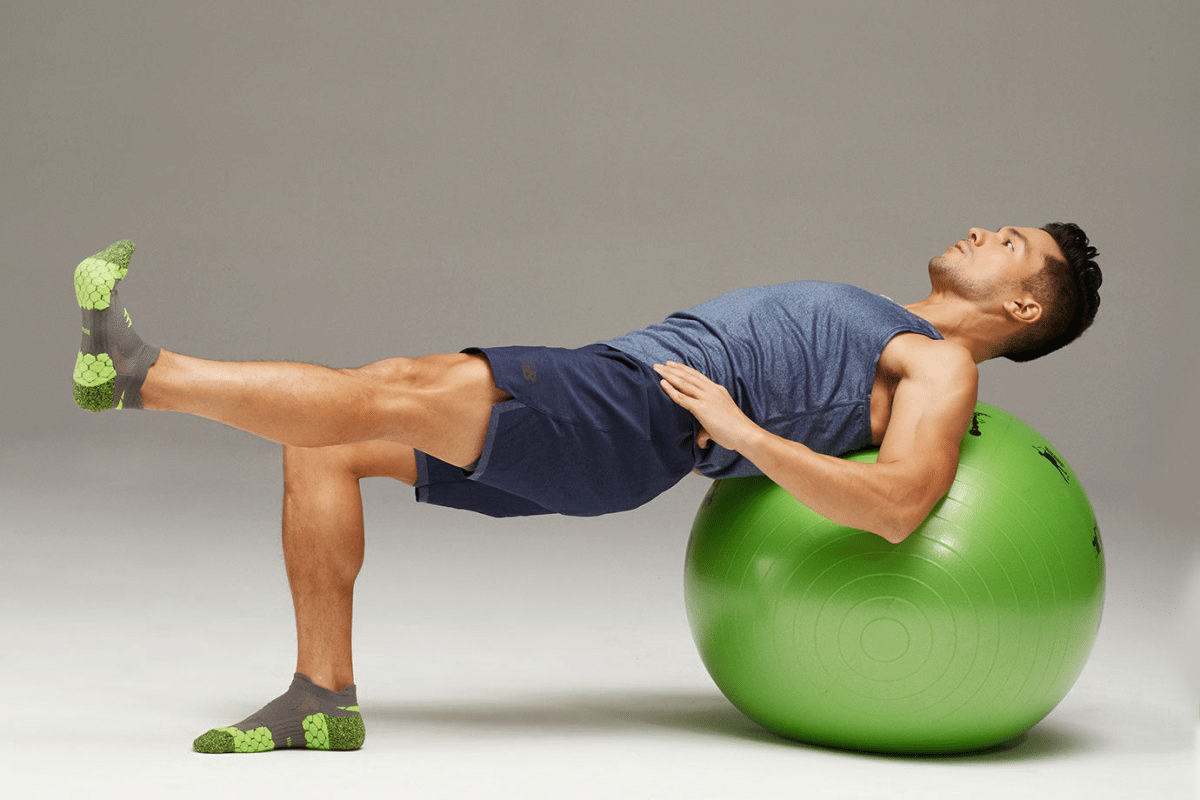
Core balance exercises improve stability. The best safe workout routine to prevent falls and build vital strength at any age.
At Liv Hospital, we know how key core stability exercises are. They boost both physical stability and athletic performance. The deep muscles help keep the spine and pelvis stable, which is vital for good posture and overall physical health.
Studies show that adding core balance exercises to your routine can make a big difference. It improves your balance and core workout skills. Strengthening these muscles also boosts your athletic performance and lowers injury risk.
Key Takeaways
- Core stability exercises are essential for maintaining proper posture and overall physical health.
- Incorporating core balance exercises can improve balance and core workout capabilities.
- Strengthening the deep muscles that support the spine and pelvis can enhance athletic performance.
- A well-designed core workout routine can reduce the risk of injury.
- Core stability exercises are a critical component of preventive care and enhanced mobility.
The Science Behind Core Stability and Balance
Understanding core stability and balance is key for good training programs. Core stability means the core muscles support the spine and keep us balanced. It’s vital for sports performance and preventing injuries.
How Core Muscles Affect Balance and Posture
Core muscles are essential for balance and posture. They include the abdominals, obliques, and lower back muscles. These muscles work together to keep the body stable.
When they are strong, we can balance better and do daily tasks more easily.
Research-Backed Benefits of Core Training
Many studies prove core training’s benefits. It improves balance, boosts athletic performance, and lowers injury risk. A study at Ohio State University Wexner Medical Center found our deep core muscles need more work.
Core Stability’s Role in Athletic Performance
Core stability is key for athletes. It helps them generate power, stay balanced, and move precisely. A strong core improves force transfer between the upper and lower body, boosting performance in sports.
Essential Core Balance Exercises for Beginners
Core balance exercises are key for better stability and strength. We’re here to show you the basics. Understanding the foundational elements is vital for your progress.
Setting Up Your Core Training Program
To start a core stability workout, you need a good plan. Experts say to start with isometric exercises like planks. They help build core strength.
Beginners should start with short sessions. Then, increase the time and intensity as you get better.
When planning your core training, think about your fitness level and goals. Mixing up exercises helps target different core muscles.
Equipment Needed for Core Stability Training
Many core exercises for stability don’t need equipment. But, some tools can make your workout better. You might need a yoga mat, resistance bands, and a stability ball.
A good yoga mat makes floor exercises more comfortable. Resistance bands add a challenge to your workouts.
Form and Breathing Techniques
Good form and breathing are key for safe stabilisation exercises. Keeping the right posture and alignment is important. It targets the right muscles and lowers injury risk.
Breathing smoothly is also vital. For most exercises, breathe out when you exert and in when you relax. This helps keep rhythm and control.
1. Plank Variations for Core Stability
Looking to boost your core stability? Try adding different plank exercises to your routine. These are known for strengthening your core, improving balance, and boosting overall stability.
How to Perform the Perfect Plank
To do a perfect plank, start in a push-up position. Your hands should be shoulder-width apart, and your body should be straight from head to heels. Pull your navel towards your spine to engage your core.
Hold this position, keeping your hips level. Breathe naturally and stay in the position as long as you can.
Benefits for Balance and Stability
Plank exercises are great for balance and stability. They strengthen your core, helping you keep good posture and balance. This is super helpful for athletes and anyone who needs to stay stable and quick.
Key benefits include:
- Improved core strength
- Enhanced balance and stability
- Better posture
- Increased overall physical stability
Progression and Modification Options
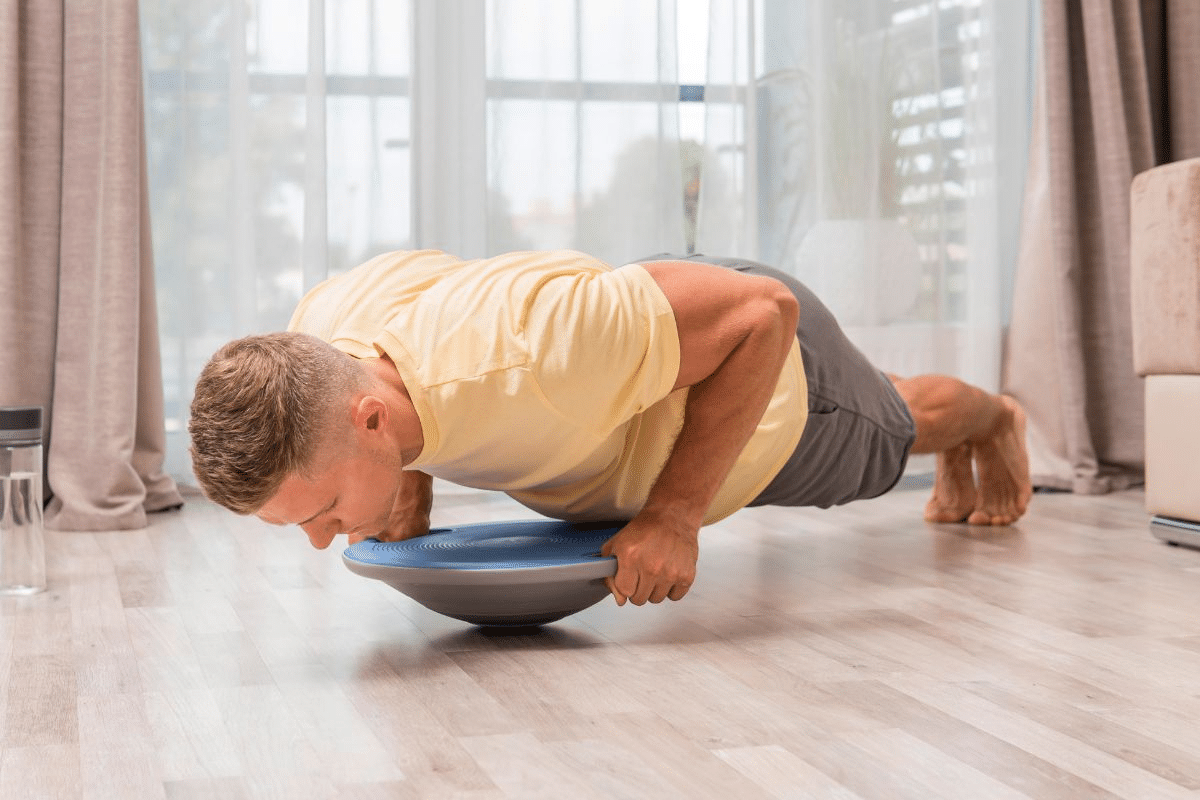
Want to make plank exercises harder or easier? Start with knee planks or use a stability ball for beginners. For a challenge, try lifting a leg or arm or use a BOSU ball.
Other options include side planks and dynamic planks that add movement. These variations can help you progress and keep your workouts interesting.
2. Bird Dog Exercise for Spinal Stabilization
The bird dog exercise is great for strengthening your spine and core. It works your back, shoulders, and core muscles. This helps improve your posture and lowers injury risk.
Proper Bird Dog Technique
To do the bird dog exercise right, start on your hands and knees. Make sure your hands are under your shoulders and knees under your hips. Use your core to keep your spine stable.
- Lift your right arm and left leg off the ground, keeping them straight.
- Hold for a few seconds, then lower back down.
- Repeat on the other side with your left arm and right leg.
Key points to focus on: Keep your core stable, back straight, and avoid twisting or jerking.
Balance Benefits and Muscle Activation
The bird dog exercise is great for balance and stability. It works many muscles at once. It strengthens:
- Erector spinae muscles in your lower back, which stabilize your spine.
- Core muscles, like your abs and obliques, which support your torso.
- Glutes and hamstrings, important for hip stability and lower body strength.
Strengthening these muscles improves your posture, athletic performance, and injury risk.
Common Mistakes and Corrections
Even though the bird dog exercise is simple, there are common mistakes:
- Allowing your back to arch: Use your core to keep your spine neutral.
- Lifting your leg too high: Focus on controlled movements, not height.
- Twisting your torso: Keep your movements smooth and aligned with your body’s centerline.
By avoiding these mistakes, you can get the most out of the bird dog exercise and enjoy its benefits.
3. Dead Bug Exercise for Core Control
The dead bug exercise is simple yet effective for core control. It teaches you to keep your abs tight while moving your limbs. This is key for stability in many activities.
Step-by-Step Dead Bug Instructions
To do the dead bug exercise right, follow these steps:
- Lie on your back with your arms up towards the ceiling.
- Bend your knees at a 90-degree angle, with your feet off the ground.
- Engage your core by pulling your navel towards your spine.
- Slowly lower your right arm and left leg towards the ground, keeping them straight.
- Return to the start and repeat with the opposite arm and leg.
Stability Benefits and Research Evidence
The dead bug exercise boosts stability benefits by improving neuromuscular control and coordination. Research shows it’s great for core stability because it challenges your core muscles in a dynamic way.
Studies indicate that core stability exercises lower injury risk and boost athletic performance. Adding the dead bug to your workout can enhance core control. This is vital for good posture and efficient movement.
Advanced Variations for Greater Challenge
To make the dead bug harder and challenge your core more, try these advanced versions:
- Slow down the movement to increase time under tension for your core muscles.
- Add weights to your arms or legs to increase resistance.
- Do the exercise on an unstable surface, like a Swiss ball, to challenge your balance.
By adding these variations to your workout, you can keep pushing your core and get more stability benefits.
4. Pallof Press for Rotational Stability
The Pallof Press is a great exercise for improving core stability. It’s known for boosting rotational stability, a key part of core strength.
Executing the Pallof Press Correctly
To do the Pallof Press right, start by securing a resistance band or cable at chest level. Hold the handle with both hands and push it away from your body. Keep your core stable throughout.
It’s important not to rotate towards the band or cable. Focus on resisting the rotational force instead.
Anti-Rotation Benefits for Core Strength
The Pallof Press strengthens your core muscles for stability in rotational movements. It’s great for athletes and anyone who does sports or activities that involve twisting.
Progression Options and Training Tips
To make the Pallof Press harder, increase the resistance or change your stance. You can also try single-arm Pallof Press or vary the tempo. These changes will boost your core strength and stability.
- Enhanced rotational stability
- Improved core strength through anti-rotation
- Versatility in progression and modification
5. Single-Leg Romanian Deadlift for Balance Training
Exercises like the single-leg Romanian deadlift help improve balance and proprioception. This exercise is great for balance training. It makes your body work hard to stay stable on one leg while moving your hips.
We’ll look at how to do the single-leg RDL right. We’ll see its benefits for balance and how to make it harder with different versions.
Mastering the Single-Leg RDL Form
To do the single-leg Romanian deadlift, stand on one leg. Keep the other leg straight or slightly bent behind you. Hold a weight or dumbbell in the hand opposite your standing leg.
Keep your back straight and core engaged as you bend at the hips. Lower the weight towards the ground. Then, push through your heel to go back to the start.
Balance and Proprioception Improvements
The single-leg RDL boosts balance and proprioception. It makes your body work hard to stay stable on one leg. This enhances neuromuscular control, helping prevent injuries and boost athletic performance.
Building Difficulty Through Variations
To make the single-leg RDL harder, try closing your eyes or standing on an unstable surface. You can also lift more weight. Another way is to change the direction of the movement or add a twist.
These variations help keep challenging your balance and proprioception. This leads to better fitness and stability overall.
6. Swiss Ball Exercises for Dynamic Stability
Swiss ball exercises offer an unstable surface that works your core muscles. This helps improve dynamic stability. It’s key for sports and daily life.
Swiss Ball Rollouts and Pikes
Swiss ball rollouts and pikes target your core. Start in a plank with your forearms on the ball for rollouts. Roll the ball forward, keeping your body straight.
For pikes, start in a plank and lift your hips up. This makes your body form an inverted V.
Benefits: These exercises boost core strength, balance, and flexibility. They work many muscles at once, making them great for fitness.
Benefits of Unstable Surface Training
Swiss ball training works your core better than floor exercises. It makes your body use more muscles to stay balanced.
Research Evidence: Studies show unstable training boosts balance and muscle control. These are key for staying stable.
Safety Considerations and Form Tips
Keep proper form to avoid injuries in Swiss ball exercises. Make sure your core is tight and your back straight. Start simple and get harder as you get stronger.
- Always warm up before starting your Swiss ball workout.
- Use a Swiss ball that is the appropriate size for your height.
- Keep your movements controlled and slow to maintain stability.
7. Side Plank and Variations for Lateral Stability
Core strength is not just about front and back. The side plank targets the lateral core stabilizers. It’s great for improving lateral stability, which is key for sports and balance in daily life.
Side Plank Technique and Alignment
To do a side plank right, lie on your side with feet together and hands under shoulders. Lift your hips, making a straight line from head to heels. Keep your shoulders down and away from your ears, and don’t let your hips sag or tilt forward.
Proper alignment is key to get the most from the side plank and avoid injury. Try practicing in front of a mirror or get feedback from a trainer.
Targeting Lateral Core Stabilizers
The side plank works the quadratus lumborum, external obliques, and other lateral muscles. Strengthening these muscles boosts your core stability, balance, and posture.
“The side plank is a valuable exercise for athletes and individuals looking to improve their lateral stability and overall core strength.” – Core Strength Expert
Progressive Challenges for Side Plank
To keep challenging your core and improve lateral stability, try these side plank variations:
- Lift your top leg to increase the challenge to your hip and core.
- Use a stability ball or BOSU ball under your feet for added instability.
- Hold a weight or medicine ball to increase the load on your core.
- Perform dynamic movements, such as lifting your hips or rotating your torso.
| Variation | Description | Benefits |
|---|---|---|
| Standard Side Plank | Lying on your side, lift your hips off the ground. | Targets lateral core stabilizers. |
| Side Plank with Leg Lift | Lift your top leg while in the side plank position. | Increases challenge to hip and core. |
| Side Plank on Stability Ball | Perform side plank with feet on a stability ball. | Adds instability, engaging more core fibers. |
Adding these variations to your workout routine will keep challenging your core and improving lateral stability over time.
8. Turkish Get-Up for Full-Body Stability
Learning the Turkish Get-Up boosts balance, stability, and athletic skills. It’s a complex exercise that needs coordination, balance, and strength. It’s great for any workout routine.
Breaking Down the Turkish Get-Up Movement
The Turkish Get-Up is a full-body exercise with a series of steps. It starts with lying on the ground, holding a weight, and ends in a standing position. Each step is controlled.
To do the Turkish Get-Up right, follow these steps:
- Start by lying on your back with the weight in one hand.
- Move into a standing position while keeping control of the weight.
- Finish by returning to the lying position in a controlled way.
Core Integration and Balance Benefits
The Turkish Get-Up is great for core integration and balance. It works many muscles to keep you stable during the move.
This exercise improves:
- Core strength and stability.
- Balance and coordination.
- Overall athletic performance.
Practice Progressions for Beginners
For beginners, start with progressions to get to the full move.
Beginners can:
- Practice each part of the exercise.
- Make the moves more complex and challenging.
- Use lighter weights to focus on form and technique.
By starting with these steps, you can master the Turkish Get-Up. It will help improve your full-body stability.
9. Farmer’s Carry for Functional Core Strength
Incorporating the farmer’s carry into your workout routine boosts core strength and stability. This exercise, a key part of strongman training, involves walking while holding weights in each hand. It’s known for strengthening your grip, improving core stability, and boosting functional fitness.
Proper Carrying Technique and Posture
To do the farmer’s carry right, keep your posture in check. Stand up straight, with your shoulders back and core tight. Hold the weights at your sides, arms straight. Look ahead and keep your body balanced.
Good posture helps focus on the right muscles, like your core. It also lowers injury risk. Start with weights you can handle and add more as you get stronger.
Real-World Stability and Performance Benefits
The farmer’s carry has many benefits for everyday life and sports. It strengthens your core, helping with balance and posture. It also boosts grip strength, which is key for many activities. Plus, it makes daily tasks and sports performance better.
Variations to Challenge Your Core
To keep pushing your core, try different farmer’s carry variations:
- Single-arm farmer’s carry: Holding one weight makes it harder on your core by adding anti-rotation.
- Offset farmer’s carry: Carrying different weights in each hand tests your balance and stability.
- Walking farmer’s carry with turns: Adding turns while walking with weights makes it more like real-life movements and boosts core stability.
Adding the farmer’s carry and its variations to your routine can greatly enhance your core strength, stability, and fitness.
10. Medicine Ball Exercises for Power and Stability
Medicine ball exercises are a great way to boost your core stability and athletic skills. They work many muscles at once, improving power, strength, and coordination.
Medicine Ball Slams and Rotations
Medicine ball slams and rotations are top choices for building explosive power and rotational strength. Slams involve forcefully throwing the medicine ball to the ground, working your core, legs, and upper body. Rotations, like Russian twists, target your obliques and enhance rotational stability.
“The use of medicine balls in training programs has been shown to enhance muscular power and improve core stability.”
Developing Power Through Core Stability
Core stability is key for powerful athletic movements. Medicine ball exercises strengthen your core, including your abs and lower back. This stability enables more efficient force transfer between your upper and lower body, boosting your power output.
| Exercise | Primary Muscle Groups | Benefits |
|---|---|---|
| Medicine Ball Slam | Core, Legs, Upper Body | Explosive Power, Core Strength |
| Russian Twist | Obliques, Core | Rotational Strength, Core Stability |
Programming Tips for Optimal Results
To get the most from medicine ball exercises, add them to a well-planned training program. Start with lighter weights and focus on proper technique. As you get more comfortable, increase the weight and intensity.
- Begin with 2-3 sets of 8-12 repetitions for each exercise.
- Increase the weight or number of repetitions as your strength and endurance improve.
- Combine medicine ball exercises with other core stability exercises for a complete workout.
11. Advanced Core Balance Exercises for Athletes
Advanced core balance exercises are key for athletes needing top stability and performance. They build the strength, flexibility, and coordination needed to shine in their sports.
Single-Arm Overhead Exercises
Single-arm overhead exercises test an athlete’s core stability and engage their upper body. Exercises like the single-arm overhead dumbbell press or single-arm cable rotations need strong core muscles to keep form and control.
These exercises boost core strength and athletic performance. For example, a tennis player can get better at their serve with single-arm cable rotations.
Unstable Surface Progressions
Unstable surface progressions use surfaces like BOSU balls, balance boards, or wobble boards. These tools boost an athlete’s balance and core stability.
Examples include single-leg squats on a BOSU ball or balance boards, and planks on a wobble board. Athletes must use their core to stay balanced, improving stability and performance.
Sport-Specific Core Training Applications
Customizing core exercises for an athlete’s sport can lead to better training results. For instance, a gymnast might work on balance for complex tumbling passes. A soccer player might focus on rotational stability and power.
By adding sport-specific core training, athletes can improve balance, stability, and performance. This targeted approach trains core muscles for direct performance benefits.
12. Creating Your Core Stability Workout Routine
Creating a core stability workout routine can make your core stronger and more stable. A good routine is key for balance and strength. It can be adjusted for any fitness level. We’ll show you how to make a core stability workout routine that fits your needs.
Sample Beginner Core Stability Program
Beginners should start with exercises that build core strength. A beginner program might include:
- Plank: 3 sets, 30-second hold
- Bird Dog: 3 sets, 12 reps per side
- Dead Bug: 3 sets, 12 reps per side
These exercises focus on different parts of core stability. They can be done 2-3 times a week.
Intermediate and Advanced Workout Plans
As you get better, add harder exercises to your routine. Intermediate and advanced plans might include:
- Single-Leg Romanian Deadlift: 3 sets, 12 reps per leg
- Side Plank with Leg Lift: 3 sets, 12 reps per side
- Pallof Press: 3 sets, 12 reps per side
These exercises will boost your core stability and functional strength.
Integrating Core Work into Your Existing Routine
To get the most from core stability training, add it to your current workout routine. You can:
- Put core exercises on the same days as strength training
- Alternate between upper and lower body days, with core work on each day
- Set specific days just for core stability training
Using these methods will help you get a balanced fitness level. It will also improve your athletic performance.
Conclusion: Building Long-Term Core Stability for Better Balance
Building a strong core takes time and effort. We’ve looked at many exercises to boost your core strength and balance. Adding these to your routine can greatly improve your athletic skills and lower injury risks.
Having a stable core is key to staying balanced and fit. By doing the exercises we talked about, you can build a strong core. This will help you balance better and feel more well-rounded.
To see lasting benefits, make core training a regular part of your fitness plan. Try to include these exercises in your workouts. This will help you stay fit in all areas.
Improving your core stability and balance can make your life better. It helps you do everyday tasks with more ease and confidence. Begin your journey to better balance and core strength today.
FAQ
What are the benefits of core stability exercises?
Core stability exercises boost balance and posture. They also improve athletic performance. This is because they strengthen the deep core muscles. These muscles are key for stability and injury prevention.
How do I start a core training program?
Start by setting clear goals for your core training. Choose exercises that target your core muscles. Make sure to follow a consistent routine with proper form and breathing.
What equipment do I need for core stability training?
Some core exercises need no equipment. Others use tools like Swiss balls, medicine balls, or resistance bands. These tools add challenge and boost workout effectiveness.
How often should I do core stability exercises?
The right frequency for core exercises varies based on your goals and fitness level. Most people do core training 2-3 times a week.
Can core stability exercises help with back pain?
Yes, core exercises can help with back pain. They improve posture and reduce muscle imbalances. This enhances spinal stability.
What is the best core stability exercise for beginners?
The plank is great for beginners. It works the core muscles well. It can be adjusted to fit different fitness levels.
How do I progress my core stability training?
Increase exercise difficulty by changing duration, intensity, or surface. Add more challenging exercises as you get stronger and more controlled.
Are core stability exercises suitable for athletes?
Yes, athletes benefit a lot from core exercises. They improve performance, reduce injury risk, and enhance athletic ability by building a strong, stable core.
Can I do core stability exercises at home?
Absolutely, many core exercises can be done at home. This makes it easy to add core training to your daily routine.
How long does it take to see results from core stability exercises?
Seeing results from core exercises depends on consistency, intensity, and fitness level. Noticeable improvements usually come in a few weeks of regular practice.
What are some advanced core balance exercises?
Advanced exercises include single-arm overhead exercises and unstable surface progressions. They also include sport-specific training that challenges the core in different ways.
How do I integrate core work into my existing workout routine?
To add core work to your routine, pick suitable days and times. Balance your workout schedule for recovery and progressive overload.
Reference
National Health Service (NHS). Evidence-Based Medical Guidance. Retrieved fromhttps://www.nhs.uk/live-well/exercise/core-stability-exercises/



 Departments
 Related Videos
 Our Doctors
 News
News