It’s important to know if bronchitis remains contagious after one week. This helps keep others safe and lets you decide when to go back to normal activities. Bronchitis is contagious, mainly in the first days of getting sick. How long it stays contagious depends on the cause, which can be a virus or bacteria.
Most bronchitis cases are caused by viruses. They are usually contagious for a few days to about a week. WebMD says these infections usually go away in 7-10 days. But, the cough can last for weeks. Knowing how contagious bronchitis is helps stop it from spreading.
Key Takeaways
- Acute bronchitis is contagious, mainly in the first few days of illness.
- The contagious period varies depending on whether the cause is viral or bacterial.
- Viral bronchitis typically remains contagious for a few days to approximately one week.
- The cough associated with bronchitis can last several weeks after the infection has cleared.
- Close contact, such as kissing, can spread the viruses that cause bronchitis.
Understanding Bronchitis and Its Transmission
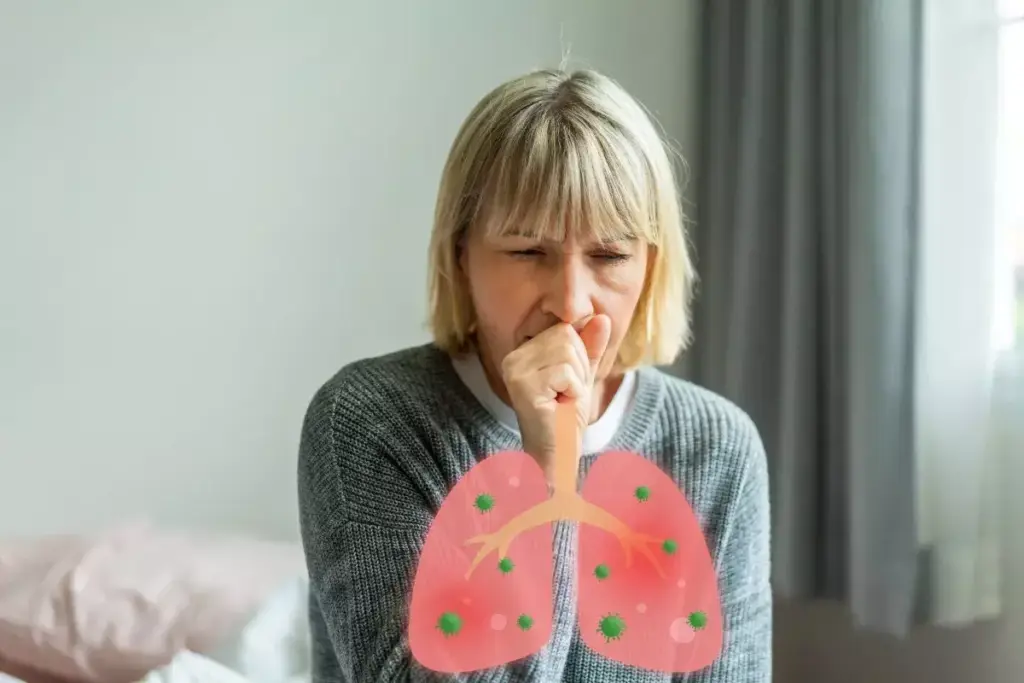
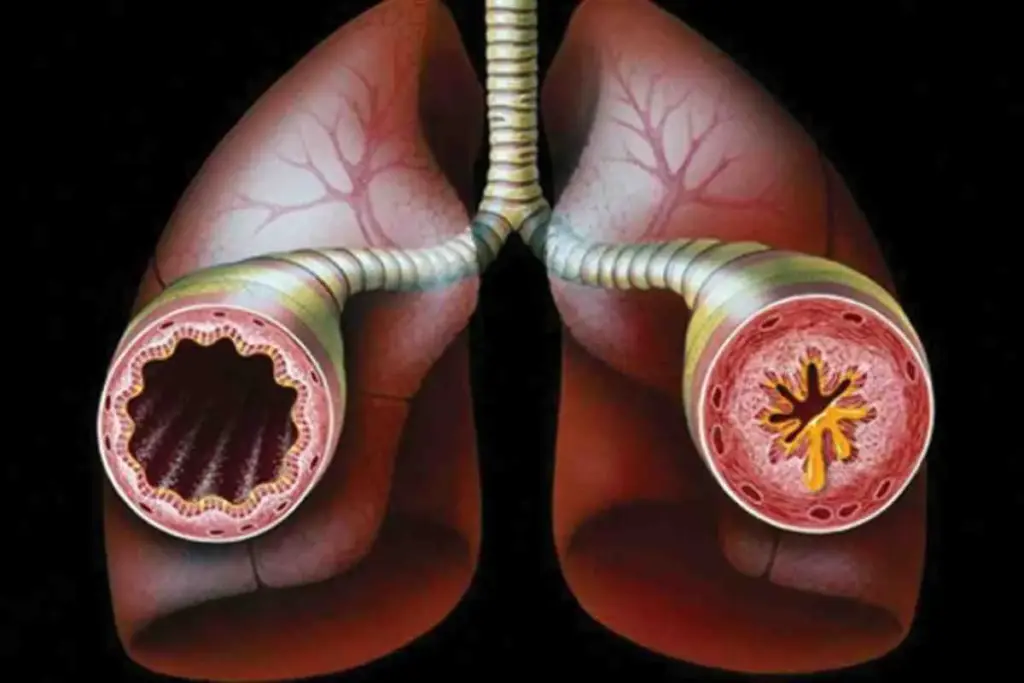
To understand bronchitis, we first need to know what it is and how it spreads. Bronchitis is when the bronchial tubes get inflamed. This can really affect someone’s life. Whether it’s caused by a virus or bacteria plays a big role in how it spreads.
What Is Bronchitis?
Bronchitis can be either acute or chronic. Acute bronchitis is usually caused by viruses. It makes the bronchial tubes inflamed, leading to coughing and mucus. Chronic bronchitis is a long-term condition often linked to smoking or pollution.
Viral vs. Bacterial Bronchitis
Knowing if bronchitis is viral or bacterial is key to understanding its spread. Viral bronchitis is the most common and is caused by viruses like the flu or RSV. Bacterial bronchitis is rarer and usually affects people with health issues or weak immune systems.
- Viral bronchitis is very contagious and spreads through coughing, sneezing, or talking.
- Bacterial bronchitis is less contagious but needs precautions to stop its spread.
How Bronchitis Spreads
Bronchitis mainly spreads through respiratory droplets when someone who’s sick coughs, sneezes, or talks. How long it’s contagious depends on the cause and the person’s health. Important factors include:
- Underlying health conditions.
- The strength of the immune system.
- Following treatment and prevention steps.
Knowing these factors helps in controlling bronchitis and keeping those at risk safe.
Is Bronchitis Contagious After 1 Week?

Understanding if bronchitis is contagious after a week depends on its type. Viral and bacterial bronchitis have different contagious periods. Knowing the difference is key.
Viral Bronchitis Contagious Timeline
Viral bronchitis is the most common type. It’s contagious for about 5 to 7 days after symptoms start. During this time, good hygiene is essential. This includes washing hands often and staying away from others.
After a week, most people with viral bronchitis are no longer contagious. This is true if their fever goes away and symptoms improve. But, the exact time can vary based on the person’s immune system and the virus.
Bacterial Bronchitis Contagious Period
Bacterial bronchitis has a different contagious timeline. Starting antibiotics makes it less contagious quickly. It usually takes 24 to 48 hours to stop being contagious. It’s important to finish all antibiotics to clear the infection and prevent resistance.
Antibiotics work fast to lower the bacterial count. This makes it less likely to spread to others.
Signs You’re No Longer Contagious
There are signs that show you’re no longer contagious, whether it’s viral or bacterial bronchitis. These include:
- Less coughing and sputum.
- No fever for at least 24 hours.
- Feeling better overall.
When you see these signs, it’s safe to go back to normal activities. This way, you won’t spread the infection to others.
Factors That Extend Contagiousness
Several factors can affect how long bronchitis is contagious. Knowing these can help stop the spread of the infection. It also tells us when it’s safe to be around others without spreading it.
Immune System Strength
People with weak immune systems may stay contagious longer. A strong immune system fights off the infection faster, shortening the contagious period.
Those with weakened immune systems, like those with chronic illnesses or on immunosuppressive therapy, should be extra careful. Living a healthy lifestyle, with a balanced diet and regular exercise, can boost your immune system.
Treatment Adherence
Following treatment, like antibiotics for bacterial bronchitis, can cut down the contagious time. It’s key to finish all antibiotics as directed to clear the infection and lower transmission risk.
Also, rest well and stay hydrated to help your body heal from bronchitis. Sticking to the treatment plan shortens the contagious period and prevents complications.
| Factor | Effect on Contagiousness |
| Weakened Immune System | Prolongs contagious period |
| Adherence to Treatment | Reduces contagious period |
| Close Contact (e.g., Kissing) | Increases risk of transmission |
Transmission Through Kissing and Close Contact
Kissing and close contact can spread the infection. When you have bronchitis, it’s important to avoid close contact with others to prevent spreading it.
We suggest avoiding kissing and close contact until you’re no longer contagious. This helps keep others from getting sick.
By knowing these factors and taking the right precautions, you can lower the chance of spreading bronchitis to others.
Conclusion
Knowing how long bronchitis is contagious is key to stopping its spread. Acute bronchitis, often caused by viruses, can spread as long as symptoms last, usually up to 1 to 3 weeks. The exact time can change based on the virus, how strong your immune system is, and if you follow treatment.
People with viral bronchitis tend to be contagious longer than those with bacterial bronchitis who get antibiotics. It’s vital to keep clean, wash hands often, and stay away from others to lower the chance of passing it on. The National Center for Biotechnology Information says knowing about bronchitis and how it spreads is important for managing it well.
By knowing how long bronchitis is contagious and taking steps to prevent it, we can stop it from spreading. This helps keep everyone safe, including those who are more at risk. It’s a way to take care of ourselves and protect others from getting bronchitis.
FAQ:
How long is bronchitis contagious after 1 week?
Bronchitis is usually less contagious after one week, especially if symptoms like fever have resolved.
Is bronchitis contagious through kissing?
Yes, viral bronchitis can be spread through close contact, including kissing.
How long does bronchitis remain contagious?
Viral bronchitis is typically contagious for 1–2 weeks from symptom onset.
Can chronic bronchitis be contagious?
No, chronic bronchitis is not contagious since it is caused by long-term inflammation, not infection.
How long are you contagious with bronchitis?
You are most contagious during the first few days to one week of viral bronchitis symptoms.
Is viral bronchitis contagious for a long time?
No, viral bronchitis is usually only contagious for about 7–10 days.
What are the signs that you’re no longer contagious with bronchitis?
Signs include resolution of fever, reduced mucus production, and improvement in cough.
How does the strength of the immune system affect the contagiousness of bronchitis?
A stronger immune system can shorten the contagious period by clearing the virus faster.
Does adherence to treatment affect how long bronchitis is contagious?
Yes, following treatment and rest can help reduce symptoms faster, indirectly shortening contagiousness.
References:
The Lancet. Evidence-Based Medical Insight. Retrieved from https://www.thelancet.com/journals/lanres/article/PIIS2213-2600(17)30053-5/fulltext