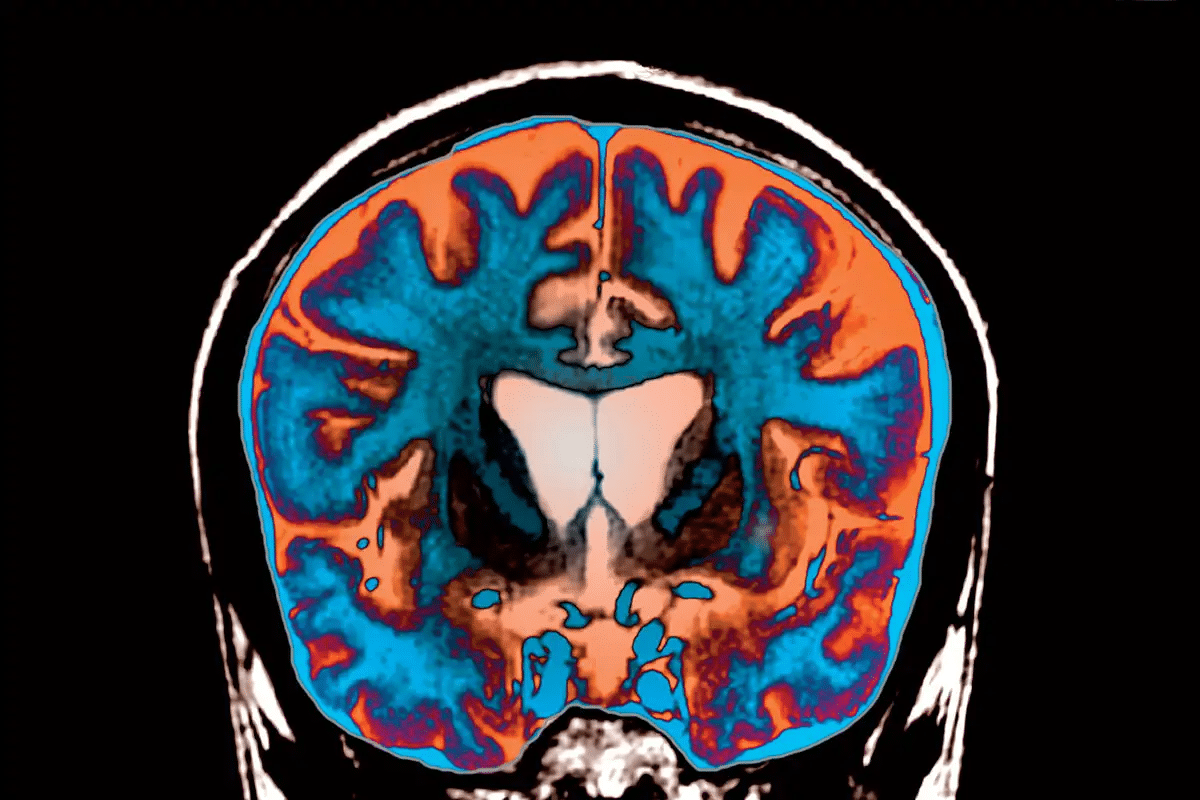
Frontotemporal dementia (FTD) is a rare brain disease that strikes younger people. It impacts the frontal and temporal lobes, causing changes in behavior, language, and movement involuntary mouth movements dementia.
Spotting the early signs of FTD is key for getting a diagnosis and help early. This disease affects about 50,000 to 60,000 people in the U.S. Most are diagnosed between 45 and 65 years old.
Knowing the early signs of FTD helps people and their families get medical help fast. This can greatly improve their life quality.
Key Takeaways
- Frontotemporal dementia is a progressive brain disease affecting the frontal and temporal lobes.
- FTD tends to occur at a younger age than other dementias.
- Recognizing early signs is critical for timely diagnosis and intervention.
- FTD affects an estimated 50,000 to 60,000 people in the United States.
- The majority of FTD cases are diagnosed between ages 45 and 65.
Understanding Frontotemporal Dementia (FTD)

Frontotemporal dementia (FTD) is a complex brain disorder. It mainly affects the frontal and temporal lobes. This leads to changes in personality, behavior, and language.
Definition and Prevalence
FTD causes the frontal and temporal lobes to degenerate. It’s a rare condition but a major cause of dementia in those under 60. Studies show FTD makes up 10% to 20% of dementia cases in younger people.
“FTD is not a single clinical entity but a spectrum of disorders,” says a leading researcher. This makes diagnosing and understanding FTD very hard.
How FTD Differs from Other Dementias
FTD mainly affects personality and behavior, often before memory loss. Unlike Alzheimer’s, where memory loss is the first sign, FTD shows changes in social behavior and language first.
- Behavioral changes, such as apathy or disinhibition
- Language difficulties, including primary progressive aphasia
- Motor symptoms, such as those seen in amyotrophic lateral sclerosis (ALS)
These differences show how FTD can manifest in many ways. Understanding this is key for diagnosis and care.
Age of Onset and Risk Factors
FTD usually happens at a younger age than other dementias. About 60% of those affected are between 45 and 64. Genetic mutations are a big part of the risk.
Key risk factors include:
- A family history of FTD or related disorders
- Genetic mutations, such as those affecting the GRN, C9ORF72, or MAPT genes
Knowing these risk factors helps with early detection. It also helps in developing targeted treatments.
The Brain Changes in Frontotemporal Dementia

Frontotemporal dementia changes the brain in key ways. It mainly affects the frontal and temporal areas. These changes cause neurons to shrink or die.
Affected Brain Regions: Frontal and Temporal Lobes
The frontal lobe is key for making decisions and solving problems. It also controls our behavior. The temporal lobe is important for language and memory.
Damage to these areas leads to FTD symptoms. These include changes in personality, trouble with language, and motor issues.
Neurological Damage Patterns
FTD has specific damage patterns. It causes neuronal loss and gliosis. This means glial cells grow in response to neuron damage.
This damage follows patterns that match the symptoms patients show. For example, frontal lobe damage affects behavior. Temporal lobe issues lead to language and memory problems.
Progressive Nature of the Disease
Frontotemporal dementia gets worse over time. As it progresses, brain damage in the frontal and temporal lobes gets worse. This leads to more severe symptoms.
The speed at which the disease gets worse varies. But, overall, cognitive and motor skills decline.
Types of Frontotemporal Dementia
It’s important to know the different types of frontotemporal dementia for the right diagnosis and care. Frontotemporal dementia (FTD) is a rare brain disorder. It affects the frontal and temporal lobes, causing changes in personality, behavior, and language.
Behavioral Variant FTD (bvFTD)
Behavioral variant FTD is the most common type. It brings big changes in how a person acts and feels. People with bvFTD might act in ways that are not socially acceptable, show less empathy, and struggle with making decisions.
Primary Progressive Aphasia (PPA)
Primary Progressive Aphasia mainly affects how someone talks and understands language. There are three main types of PPA: semantic variant PPA, nonfluent variant PPA, and logopenic variant PPA. Each type has its own way of making it hard to find the right words, speak, or understand what others say.
Movement Disorders Associated with FTD
FTD can also lead to movement problems. These include Progressive Supranuclear Palsy (PSP) and Corticobasal Degeneration (CBD). Symptoms like stiffness, slow movement, and trouble with balance are common. PSP makes it hard to look up or down, while CBD causes uneven movement and trouble with feeling sensations.
FTD has many different symptoms, making it hard to diagnose and manage. Doctors need to look at many things to make an accurate diagnosis. This includes the person’s symptoms, a neurological exam, and imaging tests.
Early Warning Signs of FTD: Behavioral Changes
Behavioral changes are a key sign of frontotemporal dementia. They often show up before any memory or thinking problems. These changes can greatly affect a person’s daily life and how they interact with others.
Impulsivity and Poor Decision Making
One early sign of FTD is impulsivity, leading to bad choices. People might act without thinking, leading to risky actions. For example, they could make hasty financial decisions or take on dangerous activities.
Impulsive behaviors can show up in many ways. This includes reckless driving, spending too much money, or acting inappropriately in social situations. Family members often notice these changes first, as they can be very concerning.
Socially Inappropriate Behavior
People with FTD may act in ways that are not fitting for social situations. This can be embarrassing for their families. They might say things they shouldn’t, ignore personal space, or show inappropriate emotional responses.
Studies show that those with behavioral variant FTD (bvFTD) can act strangely in public. This can lead to awkward social situations and affect how they feel and express emotions. It can also harm their relationships and social interactions.
Apathy and Loss of Interest in Previously Enjoyed Activities
Apathy is another early sign of FTD. People may lose interest in things they used to love, showing little motivation. This can be hard for family members to understand, as it might seem like depression or laziness.
Apathy in FTD can look like not caring about personal things, ignoring personal hygiene, or not wanting to be social. It’s important to remember that this is a symptom of the disease, not a personal choice.
|
Behavioral Change |
Description |
Impact on Daily Life |
|---|---|---|
|
Impulsivity |
Acting on impulse without considering consequences |
Reckless decisions, financial issues, social problems |
|
Socially Inappropriate Behavior |
Making inappropriate comments or actions |
Embarrassing social situations, strained relationships |
|
Apathy |
Loss of interest in previously enjoyed activities |
Neglect of personal affairs, hygiene, and social interactions |
Changes in Emotional Processing and Social Behavior
Frontotemporal dementia (FTD) changes how people feel and act around others. It affects the brain’s frontal and temporal lobes. These areas are key for emotions and social actions.
The frontal lobes help manage emotions and social actions. Damage from FTD can lead to emotional blunting or flat affect. This means people might not react to emotional situations as they should.
Emotional Blunting and Flat Affect
Emotional blunting means feeling less. Flat affect means not showing emotions. FTD patients might struggle to connect or react to emotional situations.
Lack of empathy is also common in FTD. Empathy lets us understand and share feelings. Without it, social relationships can be hard to keep.
Lack of Empathy and Social Awareness
FTD patients often find it hard to understand social cues and empathize. This can lead to behaviors or comments that are not fitting. It makes social interactions more complicated.
|
Symptom |
Description |
Impact on Social Interactions |
|---|---|---|
|
Emotional Blunting |
Diminished emotional response |
Reduced ability to connect with others |
|
Lack of Empathy |
Inability to understand and share feelings |
Difficulty maintaining social relationships |
|
Difficulty Reading Social Cues |
Trouble understanding social signals |
Inappropriate behaviors or comments |
Difficulty Reading Social Cues
Reading social cues is hard for FTD patients. They might miss or misread non-verbal signals. This can cause misunderstandings and lead to social isolation.
It’s important to understand these changes in FTD. This helps caregivers and family members support those with FTD better. Recognizing symptoms early can make a big difference.
Language and Communication Changes in Early FTD
Early frontotemporal dementia shows up in how we talk and communicate. At first, these changes might seem small. But as the disease gets worse, they become more obvious.
Speech Difficulties and Word Finding Problems
One early sign of FTD is trouble finding the right words. This is linked to primary progressive aphasia (PPA). It makes speech difficulties a big challenge for people.
Those with FTD might find it hard to start talking. They might struggle to find the right words. Or they might use words that don’t make sense.
- Difficulty initiating speech
- Struggling to find the appropriate words
- Using incorrect or made-up words
Not Making Sense When Talking
As FTD gets worse, people might not make sense when they talk. Their speech can become jumbled. They might find it hard to follow conversations or understand written or spoken words.
This happens because FTD damages areas of the brain that handle language.
Changes in Communication Patterns
FTD also changes how we communicate. People might talk too much or have trouble starting conversations.
|
Communication Change |
Description |
|---|---|
|
Reduced Spontaneity |
Less inclination to start conversations |
|
Increased Verbosity |
Tendency to talk more than usual, often without a clear purpose |
|
Disorganized Speech |
Speech that lacks coherence or logical flow |
As FTD gets worse, people might make involuntary mouth movements. They might also hum or whistle. These changes make talking even harder.
Involuntary Mouth Movements in Dementia
Involuntary mouth movements, like humming and whistling, can signal Frontotemporal Dementia early. These signs are linked to the brain’s degeneration seen in FTD.
Types of Abnormal Mouth Movements
Abnormal mouth movements in FTD can take many forms. They include:
- Repetitive lip smacking or pursing
- Involuntary tongue movements
- Humming or whistling sounds
- Other vocalizations that are not necessarily related to speech
These movements are not just about the mouth. They are part of a larger set of motor symptoms seen in FTD.
Humming and Whistling as Signs of Dementia
Humming and whistling are specific sounds that can point to FTD. These behaviors are often repetitive and don’t seem to have a purpose.
|
Vocalization |
Description |
Possible Significance |
|---|---|---|
|
Humming |
Low, continuous sound |
Possible sign of neurological degeneration |
|
Whistling |
High-pitched sound, often melodic |
May indicate abnormal brain activity |
Mouth Noises and Vocalizations in FTD
Mouth noises and other vocalizations are not random. They can be key signs of a neurological condition. In FTD, these sounds come from brain areas that control motor functions, including the mouth and vocal cords.
Is humming a sign of dementia? Yes, humming can be a sign of dementia, mainly in FTD. Also, is constant whistling a sign of dementia? Yes, constant whistling is a sign of dementia, as it’s a repetitive, involuntary sound.
Knowing these signs can help in diagnosing and managing FTD early.
Cognitive Changes in Early Frontotemporal Dementia
Early frontotemporal dementia brings big changes in how we think. The frontal lobes, key for planning and multitasking, get hit first. This affects how we organize and make decisions.
Executive Function Decline
Executive function decline is a big sign of early FTD. People find it hard to plan, solve problems, and make choices. They might struggle with tasks that need many steps or find it hard to adjust to new things.
The frontal lobes are key for these skills. Damage here can really change how we think and act. It can make it hard to do everyday tasks and stay independent.
Attention and Concentration Issues
Early FTD also brings problems with staying focused. People might find it hard to keep their attention on tasks. They can get easily sidetracked by what’s around them or their own thoughts.
- Difficulty in maintaining attention during conversations or tasks
- Easily distracted by surroundings or internal thoughts
- Struggling to switch between different tasks or mental sets
Memory Function in Early FTD vs. Alzheimer’s
Memory in early FTD is different from Alzheimer’s. Alzheimer’s is known for memory loss. But early FTD doesn’t show as much memory loss at first.
In FTD, changes are more about executive function and social skills than memory. This is important for figuring out the disease and how it will progress.
|
Cognitive Domain |
Early FTD |
Alzheimer’s Disease |
|---|---|---|
|
Executive Function |
Significantly impaired |
Relatively spared early on |
|
Memory |
Relatively spared |
Significantly impaired |
|
Social Cognition |
Often impaired |
Variable impairment |
Physical Symptoms and Motor Changes
People with FTD may show physical symptoms like changes in facial expressions and trouble with movement coordination. These changes can make it hard to do daily tasks as the disease gets worse.
Facial Expression Changes and Face Droop
FTD can cause changes in how people show their feelings on their face. They might look less expressive or have trouble controlling their facial muscles. This can lead to a droopy or uneven face.
Coordination and Movement Issues
FTD can lead to movement problems like corticobasal syndrome and progressive supranuclear palsy. These issues can make it hard to walk, balance, and control movements.
Common Movement Issues in FTD:
- Difficulty with coordination and balance
- Slow movement or stiffness
- Problems with walking or gait disturbances
- Involuntary movements or tremors
Swallowing Difficulties and Eating Behaviors
Swallowing problems, or dysphagia, are common in FTD. This can make eating hard and increase the risk of pneumonia. People with FTD might also eat more or prefer certain foods.
|
Symptom |
Description |
Impact on Daily Life |
|---|---|---|
|
Facial Expression Changes |
Reduced facial expressiveness or difficulty controlling facial muscles |
Affects social interactions and emotional expression |
|
Coordination and Movement Issues |
Difficulty with walking, balance, and motor control |
Impacts independence and increases fall risk |
|
Swallowing Difficulties |
Dysphagia leading to eating challenges and health risks |
Requires dietary adjustments and increases health risks |
Weird Signs of Dementia That Are Often Overlooked
Many know about common dementia symptoms. But, there are weird signs of frontotemporal dementia often missed. This condition affects memory, behavior, language, and motor skills. Spotting these signs early is key for diagnosis and help.
Constant Whistling and Repetitive Behaviors
One odd sign of FTD is constant whistling or humming. These actions might be a coping mechanism or a sign of brain changes. Repetitive actions can be simple or complex, showing the disorder’s presence.
People with FTD might also show stereotypic behaviors. These are repetitive, non-goal-directed movements like clapping or tapping. Spotting these as FTD symptoms is vital for correct diagnosis.
Changes in Food Preferences and Eating Habits
Changes in eating habits are another overlooked sign of dementia. Those with FTD might eat too much or odd things. They often prefer sweet or carb-heavy foods.
They might also take food from others or show other odd eating behaviors. These changes are hard for caregivers but knowing they’re linked to FTD helps in support.
Unusual Collecting or Hoarding Behaviors
FTD can cause hoarding or collecting behaviors. People might keep a lot of things, leading to clutter. This causes stress for the person and their family.
The reasons for these behaviors vary but are often due to FTD’s brain changes. Seeing these as symptoms helps in caring for them compassionately.
By knowing these weird signs, caregivers and doctors can spot FTD sooner. Early detection means better care and a better life for those with FTD.
When to Seek Medical Attention
Knowing the warning signs of Frontotemporal Dementia can help get an early diagnosis. It’s important to know when to see a doctor if someone shows symptoms.
Red Flags That Shouldn’t Be Ignored
Behavioral and cognitive changes can signal Frontotemporal Dementia. Significant red flags include:
- Drastic changes in personality or behavior
- Increased impulsivity or poor decision-making
- Socially inappropriate behavior or loss of empathy
- Language difficulties or changes in communication patterns
- Apathy or loss of interest in previously enjoyed activities
Seeing these signs doesn’t mean someone has FTD. But, they do need a doctor’s check-up to find out why.
Preparing for a Doctor’s Visit
Before seeing a doctor, it’s good to prepare relevant information. This includes:
- A detailed medical history
- List of current medications and supplements
- Notes on observed symptoms and their duration
- Information about family medical history
Having this info ready can help doctors make a better diagnosis.
Diagnostic Process for Frontotemporal Dementia
Diagnosing FTD is a detailed process. It usually involves:
- Medical history review
- Physical and neurological examinations
- Imaging tests such as MRI or CT scans
- Cognitive and behavioral assessments
The process can be complex because FTD symptoms can look like other conditions. A detailed check-up by a healthcare expert is key for a correct diagnosis.
Conclusion
It’s important to know the early signs of frontotemporal dementia. This knowledge helps in getting a diagnosis and managing the disease. Even though there’s no cure yet, spotting the signs early can greatly improve life quality.
Getting diagnosed early is key to managing FTD well. It lets people get the right care and support they need. More research is needed to understand FTD better and find new treatments.
Recognizing the early signs of FTD is the first step. This way, people and their families can get medical help quickly. This proactive step can greatly improve life for those with frontotemporal dementia.
FAQ
What is frontotemporal dementia (FTD)?
Frontotemporal dementia is a rare brain disorder. It causes the frontal and temporal lobes to degenerate. This leads to changes in personality, behavior, and language.
How does FTD differ from other dementias?
FTD is different from other dementias like Alzheimer’s. It starts earlier, affects different brain areas, and shows unique symptoms. FTD often hits people under 65, changing their behavior and language.
What are the early warning signs of FTD?
Early signs of FTD include changes in behavior and language. These can be impulsivity, socially inappropriate actions, and apathy. There are also changes in emotional processing and social behavior.
Is humming a sign of dementia?
Humming can be a sign of dementia, often seen in FTD. Repetitive sounds, like humming and whistling, might point to FTD.
What are the different types of FTD?
FTD has several types. The main ones are behavioral variant FTD (bvFTD), primary progressive aphasia (PPA), and movement disorders like progressive supranuclear palsy (PSP) and corticobasal degeneration (CBD).
How is FTD diagnosed?
Diagnosing FTD requires a detailed evaluation. This includes medical history, physical exams, lab tests, and imaging like MRI or CT scans. Cognitive and neuropsychological assessments are also key.
What are the cognitive changes in early FTD?
Early FTD causes cognitive decline. This includes problems with executive functions, attention, and memory. These changes differ from Alzheimer’s.
Can FTD cause physical symptoms?
Yes, FTD can lead to physical symptoms. These include changes in facial expressions, coordination issues, and swallowing problems. These can affect daily life.
Are there any unusual signs of dementia that are often overlooked?
Yes, some signs of dementia are often missed. These include constant whistling, changes in eating habits, and hoarding behaviors. These can be signs of FTD.
When should I seek medical attention for suspected FTD?
Seek medical help if you notice significant changes in behavior, personality, or language. Also, if you’re concerned about cognitive or physical symptoms.
Is constant whistling a sign of dementia?
Constant whistling can be a sign of dementia, often seen in FTD. It may be part of other repetitive behaviors or vocalizations.
What are the changes in emotional processing and social behavior in FTD?
FTD changes emotional processing and social behavior. This includes emotional blunting, lack of empathy, and trouble reading social cues. These changes can affect social interactions.
How does FTD affect language and communication?
FTD significantly changes language and communication. It can cause speech difficulties, word finding problems, and changes in communication patterns. This makes it hard for individuals to interact with others.
References
Involuntary Mouth Movements Dementia Info https://pmc.ncbi.nlm.nih.gov/articles/PMC6277355/