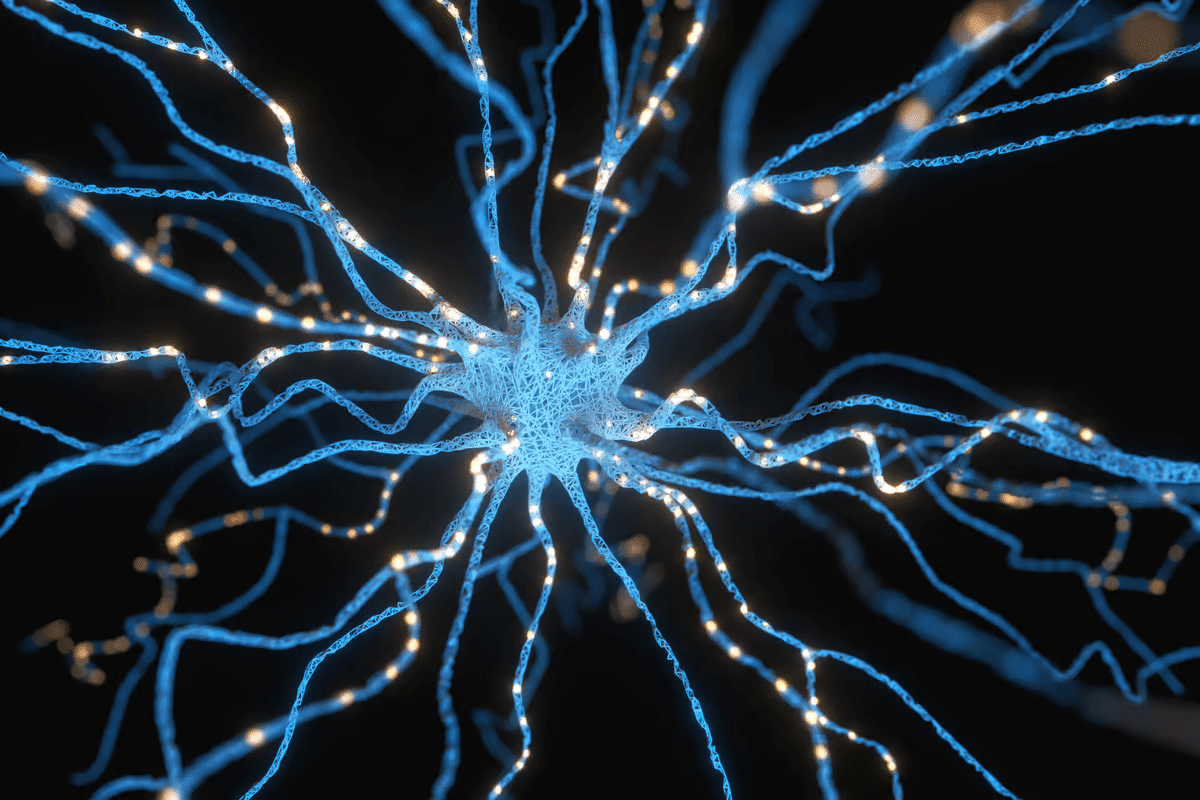
Learning about nerve cells, also called neurons, is key to understanding how the brain talks to the body. These special cells send out electrical and chemical signals. They help us think, move, and feel things.
The human brain has about 100 billion neurons. The cerebral cortex has at least 100 trillion synapses. This shows how each nerve cell gets input from other neurons. It highlights their role in combining information.
Key Takeaways
- The brain contains approximately 100 billion neurons.
- Neurons transmit electrical and chemical signals.
- The cerebral cortex has at least 100 trillion synapses.
- Nerve cells integrate information from other neurons.
- Understanding neurons is key to understanding brain function.
What Are Nerve Cells: Definition and Importance
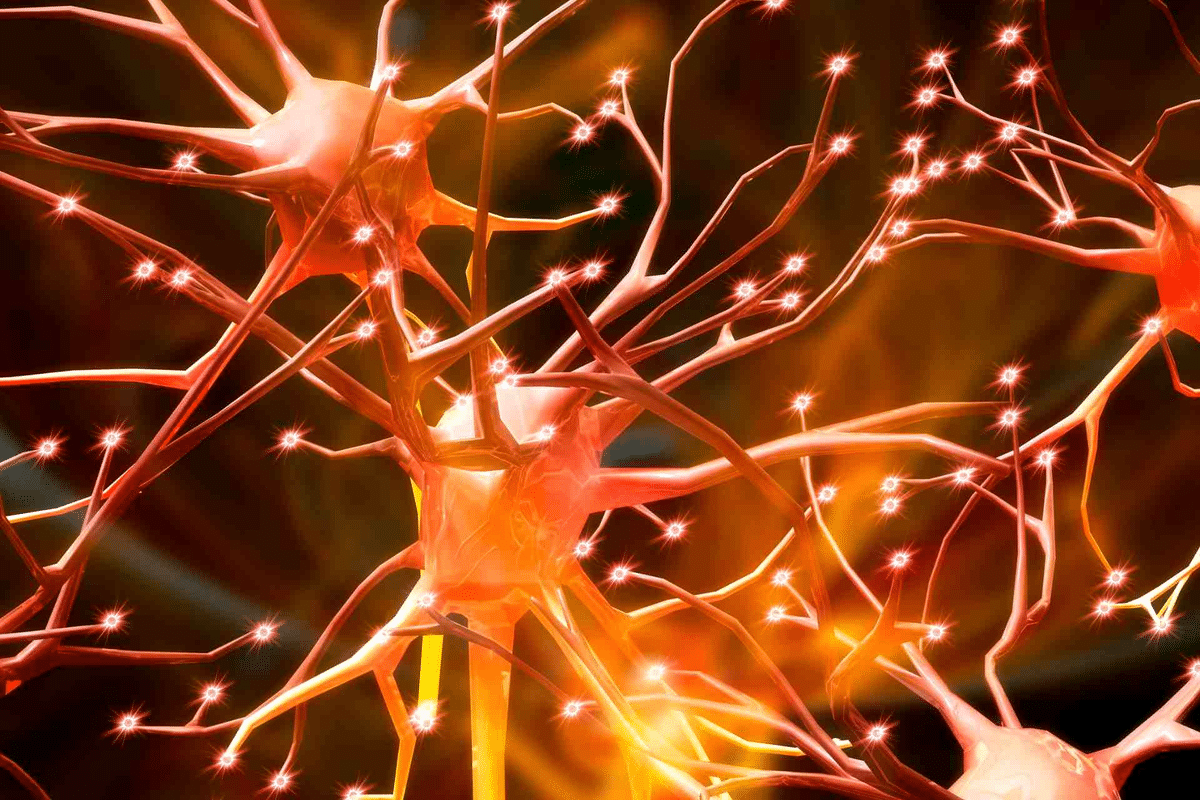
Nerve cells are special cells that send information all over our body. They are key to our nervous system. This lets us think, learn, and react to the world around us.
The human brain has about 100 billion neurons. These nerve cells help us get, mix, and send information. They talk to each other and other body cells using electrical and chemical signals.
Basic Definition and Terminology
Neurons, or nerve cells, are information messengers. They control many body functions like movement, feeling, perception, and thinking. Knowing the basics about neurons helps us understand their role in our nervous system.
The word “neuron” means the individual nerve cells in our brain and nervous system. These cells are also called brain neurons when talking about the brain.
The Prevalence of Neurons in the Human Body
Neurons are everywhere in our bodies. An adult human brain has about 100 billion neurons. Each neuron can connect with thousands of others. This network is how we think, feel, and move.
|
Cell Type |
Function |
Approximate Number |
|---|---|---|
|
Neurons |
Transmit information through electrical and chemical signals |
100 billion |
|
Glial Cells |
Support and protect neurons |
1 trillion |
The Anatomy of Nerve Cells
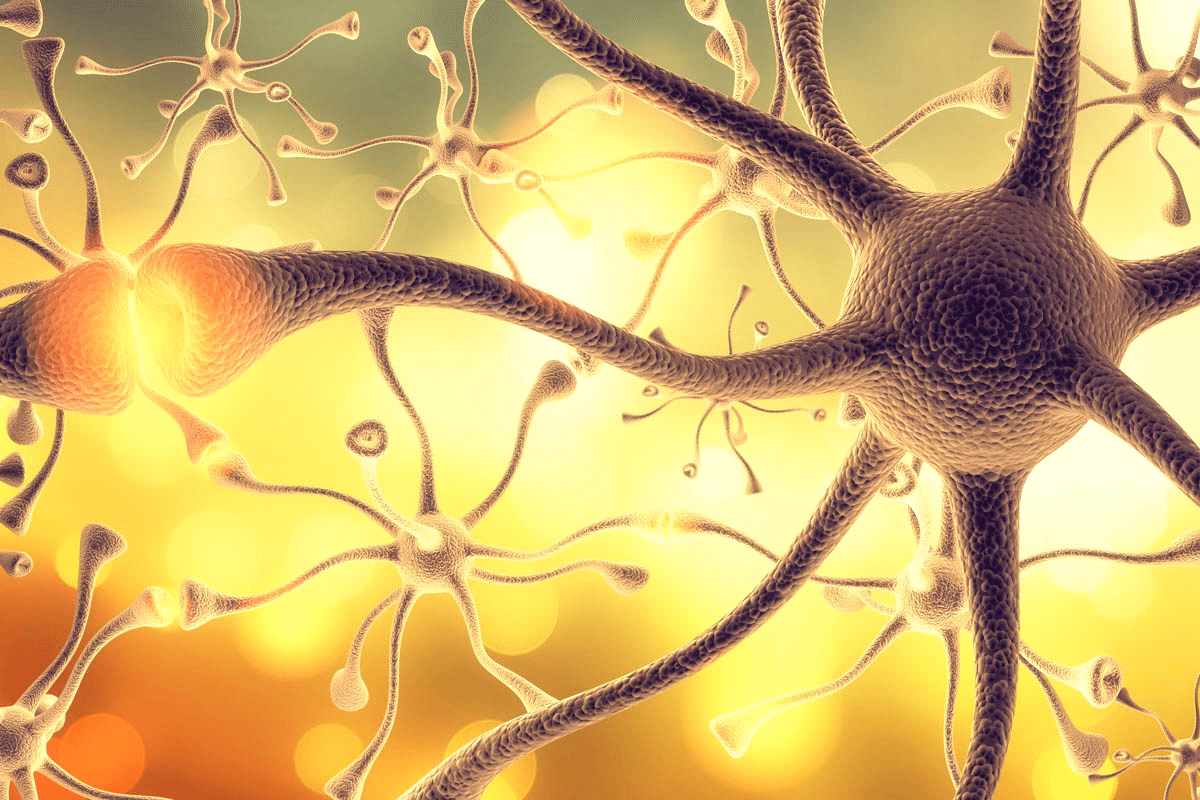
Nerve cells, or neurons, are key to how we process and send information. Each neuron has three main parts: a cell body, an axon, and dendrites. Knowing about these parts helps us understand how neurons work.
Cell Body (Soma): The Command Center
The cell body, or soma, is the heart of the neuron. It holds the cell’s genetic material and controls its functions. Inside the cell body, you’ll find a nucleus and organelles that help the cell work right.
Key functions of the cell body include:
- Protein synthesis: The cell body makes proteins needed for the neuron’s growth and function.
- Cellular metabolism: It manages the cell’s metabolic processes, ensuring it has the energy it needs.
- Integration of signals: The cell body combines signals from dendrites and sends them down the axon.
Dendrites: The Signal Receivers
Dendrites are the neuron’s extensions that catch signals from other neurons or sensory receptors. They are vital for collecting and processing information, helping the neuron respond correctly.
The structure of dendrites is adapted to their function:
- Dendritic branching: Dendrites branch out to increase their surface area for more signal reception.
- Dendritic spines: Many dendrites have spines, which boost the surface area and are where neurons connect.
It’s interesting to know that we are born with all the neurons we are ever going to have. This shows how important it is to understand how these cells are structured and function. Neurons are supported by cells like glial cells, which help them work well.
The Structure and Function of Axons
Understanding axons is key to knowing how neurons talk to each other. Axons, or nerve fibers, are long threads that carry signals. They send these signals from the cell body to other neurons, muscles, or glands.
Axon Hillock and Initial Segment
The axon starts at the axon hillock, a special part of the cell body. This area is important for deciding if a signal will start an action. The initial segment, right next to the axon hillock, is key for starting action potentials. It has lots of voltage-gated sodium channels.
Axon Length and Variability
Axons can be very different in length. Some are just a few millimeters long, while others are over a meter. For example, motor neurons to the toes have axons that go from the spinal cord to the foot. This makes them some of the longest cells in us.
The length and thickness of an axon affect how fast it can send signals. Myelinated axons, which have a fatty covering, send signals faster than unmyelinated ones.
- Variability in Length: Axons can be very short or quite long, depending on their function and location within the nervous system.
- Diameter and Conduction Velocity: The diameter of an axon affects its conduction velocity; larger diameter axons conduct signals faster.
Axon Terminals and Synaptic Boutons
Axons end in axon terminals, or synaptic boutons. These are important for sending signals to other neurons or to muscles and glands. The terminals have synaptic vesicles filled with neurotransmitters. These are released into the space between cells to send the signal.
- The axon terminal is the end point of the axon, where it forms synapses with other neurons or effector cells.
- Synaptic boutons contain the machinery necessary for neurotransmitter release and synaptic transmission.
In conclusion, axons are essential for understanding how neurons communicate. From the axon hillock to the axon terminals, each part has a specific role. They ensure signals are sent efficiently through the nervous system.
Types of Nerve Cells in the Human Body
It’s important to know about the different nerve cells in our bodies. Each type has its own job in how we function. The human body has many kinds of nerve cells, each with its own role.
Sensory Neurons: Detecting Environmental Stimuli
Sensory neurons help us feel things like light, sound, and touch. They send this info to our brain. This lets us understand and react to our world.
These neurons have special parts that turn outside signals into electrical messages. These messages then go to our brain.
Motor Neurons: Controlling Movement
Motor neurons control our movements, both big and small. They send signals from our brain to our muscles and glands. This tells them when to move or stay calm.
They are key for many things, like walking, running, and keeping our balance. They also help our organs work right.
Interneurons: The Brain’s Integrators
Interneurons, or association neurons, connect sensory and motor neurons. They help sort out the info from sensory neurons and send it to motor neurons or other interneurons.
Interneurons are the most common type of neuron. They are vital for complex things like thinking, feeling, and remembering.
How Nerve Cells Process and Transmit Signals
The nervous system’s network relies on nerve cells to send and receive signals. This is both fascinating and essential for our health. Nerve cells, or neurons, talk to each other through electrical and chemical signals.
Electrical Signaling Within Neurons
Electrical signals in neurons move quickly over long distances. This happens through action potentials, brief electrical changes in the neuron’s membrane.
Signals start at the dendrites and cell body. They can either excite or calm the neuron. If excited enough, an action starts at the axon hillock, where the axon begins.
“The action potentials are key to how neurons work. They let neurons send information far without losing much strength.” – Neuroscience Textbook
After starting, the action travels down the axon. This is due to ion channels and pumps controlling sodium and potassium ions.
Chemical Signaling Between Neurons
Chemical signals happen at synapses, special junctions between neurons. When an action reaches the axon terminals, it releases neurotransmitters into the gap between neurons.
|
Neurotransmitter |
Function |
Examples |
|---|---|---|
|
Excitatory |
Promotes action potentials in the target neuron |
Glutamate, Aspartate |
|
Inhibitory |
Reduces action potentials in the target neuron |
GABA, Glycine |
|
Modulatory |
Changes how well signals are sent |
Dopamine, Serotonin |
Neurotransmitters bind to receptors on the target neuron. This can excite or calm the target cell, based on the neurotransmitter and receptor.
This mix of electrical and chemical signals lets nerve cells send and receive information. This is the core of how the nervous system works.
The Microscopic World of Nerve Cells
The world of nerve cells is complex and fascinating. To grasp how neurons work, we must look at their tiny structure.
Cell Membrane Structure and Ion Channels
The cell membrane is key for neurons. It controls what goes in and out. Made of phospholipids and proteins, it has ion channels for electrical signals.
Ion channels let specific ions like sodium and potassium pass through. This is important for the electrical signals in neurons. For example, sodium channels help start the action potentials.
Cytoskeleton and Axonal Transport
The cytoskeleton supports neurons and helps with axonal transport. It has microtubules, microfilaments, and neurofilaments. Microtubules are key for moving things along the axon, like vesicles with neurotransmitters.
- Microtubules guide motor proteins like kinesin and dynein, moving cargo along the axon.
- Axonal transport keeps the neuron healthy by bringing needed stuff to the axon terminals.
- The cytoskeleton also keeps the neuron’s shape.
Specialized Organelles in Neurons
Neurons have specialized organelles for their job. The cell body, or soma, has the nucleus and is the neuron’s metabolic center. Organelles like mitochondria and endoplasmic reticulum help with energy and protein making.
It’s important to know that a neuron is a complex cell. Their tiny structures and functions show why they’re so vital in our nervous system.
Supporting Cast: Cells That Support Nerve Cells
Nerve cells don’t work alone; they have a team of cells that help them function well. While neurons are the main stars, other cells are key to keeping the nervous system healthy.
Glial Cells: The Unsung Heroes
Glial cells, or glia, are the main helpers of the nervous system. They are more common than neurons and do many important jobs. They give nutrients to neurons, control the chemical balance around them, and help keep the blood-brain barrier strong.
There are different types of glial cells, each with its own job:
- Astrocytes: These cells look like stars and help provide nutrients and control the chemical environment.
- Oligodendrocytes: They wrap axons with myelin, making signals travel faster in the central nervous system.
- Microglia: These cells act as the brain’s immune system, watching for pathogens or injury.
The Blood-Brain Barrier and Neuron Protection
The blood-brain barrier (BBB) is a special wall that keeps the brain safe. It’s made of endothelial cells, tight junctions, pericytes, and astrocytic end-feet. This barrier is very selective, letting only certain things pass through.
The BBB is vital for keeping the brain’s environment stable. It:
|
Function |
Description |
|---|---|
|
Restricting harmful substances |
The BBB keeps out many harmful substances from the bloodstream. |
|
Regulating nutrient supply |
It controls the nutrients that reach the brain, making sure neurons get what they need. |
|
Maintaining ion balance |
The BBB helps keep the right balance of ions for neural function. |
Neuron-Glia Interactions in Health and Disease
Neurons and glial cells work together for the nervous system to function well. In good health, glial cells support neurons, regulate the environment, and provide nutrients.
In diseases like Alzheimer’s and Parkinson’s, glial cells play a big role. They can help control inflammation and support damaged neurons.
Understanding how neurons and glial cells interact is key to finding new treatments for neurological diseases. By focusing on glial cell functions, researchers aim to create treatments that protect or repair the nervous system.
Neuroplasticity: How Nerve Cells Adapt and Learn
Neuroplasticity is the brain’s amazing ability to change and adapt with age. It shows that the brain is not fixed and can change after a certain age. This ability lets the brain adjust to new experiences and learning.
Synaptic Plasticity: Strengthening and Weakening Connections
Synaptic plasticity is about how connections between neurons can get stronger or weaker. Long-term potentiation (LTP) makes these connections stronger. On the other hand, long-term depression (LTD) makes them weaker. Both are key for learning and memory.
The changes in synaptic plasticity involve complex molecular processes. For example, during LTP, more AMPA receptors are added to the postsynaptic neuron. This boosts how well the neurons communicate.
Structural Plasticity: Physical Changes in Neurons
Structural plasticity is about physical changes in neurons and their connections. This includes changes in dendrite shape and size, growth of new dendritic spines, and even new neuron formation. Dendritic spines are important for learning and memory.
- Dendritic spine growth and stabilization are linked to learning and memory.
- New neurons, or neurogenesis, form in specific brain areas.
- Structural plasticity helps in recovery from brain injuries.
The Role of Neuroplasticity in Learning and Memory
Neuroplasticity is vital for learning and memory. It lets synapses change strength and neurons change shape. This is how the brain stores new information.
Studies show neuroplasticity is not just for kids. It’s active throughout life. This is good news for learning and treating brain disorders at any age.
Nerve Cell Development and Regeneration
Learning about nerve cell growth and repair is key to understanding brain health. These processes are complex, involving many steps to ensure the nervous system works right.
Neurogenesis: Birth of New Neurons
Neurogenesis is when new brain cells are made. It’s important for brain growth, happening mostly in the womb but also in some brain areas as we age. Adult neurogenesis is an exciting field, showing it helps with learning and memory.
A leading neuroscientist says, “Neurogenesis is not just for young brains; it’s a lifelong process. It shows how our brains can change and adapt.” This shows the brain’s amazing ability to evolve.
Axon Guidance and Target Finding
Axon guidance is when axons find their way to the right places in the brain. This is vital for brain function. Molecular guidance cues like netrins, slits, and semaphorins help guide these paths.
- Netrins can attract or push away growing axons, depending on the situation.
- Slits help guide axons, mainly in the brain’s development.
- Semaphorins also help with axon guidance and moving neurons.
Regenerative Capacity of Different Neuron Types
Neurons vary in how well they can grow back. Some can regenerate well, while others can’t. Knowing this helps us find ways to fix damaged nerves.
Studies show, “Some neurons can grow back better than others. This depends on the neuron itself and its environment.” This info is vital for making treatments that help nerves heal.
“The ability of neurons to regenerate is complex. It depends on the neuron type, where it is, and the support from glial cells.”
By studying how nerve cells grow and repair, scientists can find new ways to help the brain. This could lead to better treatments for brain health and repair.
Conclusion: The Remarkable Complexity of Nerve Cells
Nerve cells, or neurons, are key parts of our nervous system. They help control many body functions. Their complex structure and function are vital for our health.
Each neuron has a cell body, dendrites, and an axon. This setup lets them process and send signals. They do everything from sensing the world around us to guiding our movements.
Learning about nerve cells helps us understand our nervous system better. It shows how neurons work together. This knowledge is key for finding new treatments for brain diseases.
The amazing complexity of nerve cells shows how important they are. More research into them can help us understand how our bodies work. This knowledge can improve our health and well-being.
FAQ
What are nerve cells, and what is their role in the human body?
Nerve cells, or neurons, are special cells that send and receive information. They help control our movements, feelings, and thoughts. This is vital for our body’s functions.
What is the basic structure of a neuron?
A neuron has three main parts: the cell body, dendrites, and axon. The cell body keeps the cell working right. Dendrites get signals from other neurons. The axon sends signals to other neurons, muscles, or glands.
What are the different types of neurons, and what are their functions?
There are three main types of neurons. Sensory neurons send signals to the brain. Motor neurons control our movements. Interneurons help process and send signals within the brain.
How do neurons process and transmit signals?
Neurons send signals through electrical and chemical ways. Electrical signals happen inside the neuron. Chemical signals happen between neurons through neurotransmitters.
What is the role of axons in the nervous system?
Axons send signals from the cell body to other neurons, muscles, or glands. They are key for controlling our movements and feelings.
What is neuroplasticity, and how does it relate to learning and memory?
Neuroplasticity is the brain’s ability to change with experience and learning. It helps strengthen or weaken connections between neurons. This is important for learning and remembering things.
What are glial cells, and what is their role in supporting neurons?
Glial cells, or glia, support and protect neurons. They help keep neurons healthy and function well. They also help regulate the area around neurons.
Can neurons regenerate, and what is the significance of neurogenesis?
Some neurons can grow back, but not all. Neurogenesis is when new neurons are born in the brain. It’s key for learning and memory.
What is the location of a neuron, and how do they vary in shape and size?
Neurons are found in the brain and spinal cord. They come in different shapes and sizes. Some have long axons, while others have complex dendrites.
What is the role of the neuron cell process in transmitting signals?
The cell process, including axons and dendrites, is key for sending signals. They help in communication within and between neurons.
Are neurons cells, and what is their function in the nervous system?
Yes, neurons are cells that are vital for information processing in the nervous system.
What part of a neuron sends signals to other neurons or to muscles or glands?
The axon sends signals away from the cell body. It goes to other neurons, muscles, or glands.
Reference
National Center for Biotechnology Information. Nerve Cells: Structure, Function, and Brain-Body Communication. Retrieved from https://www.ncbi.nlm.nih.gov/books/NBK441977/