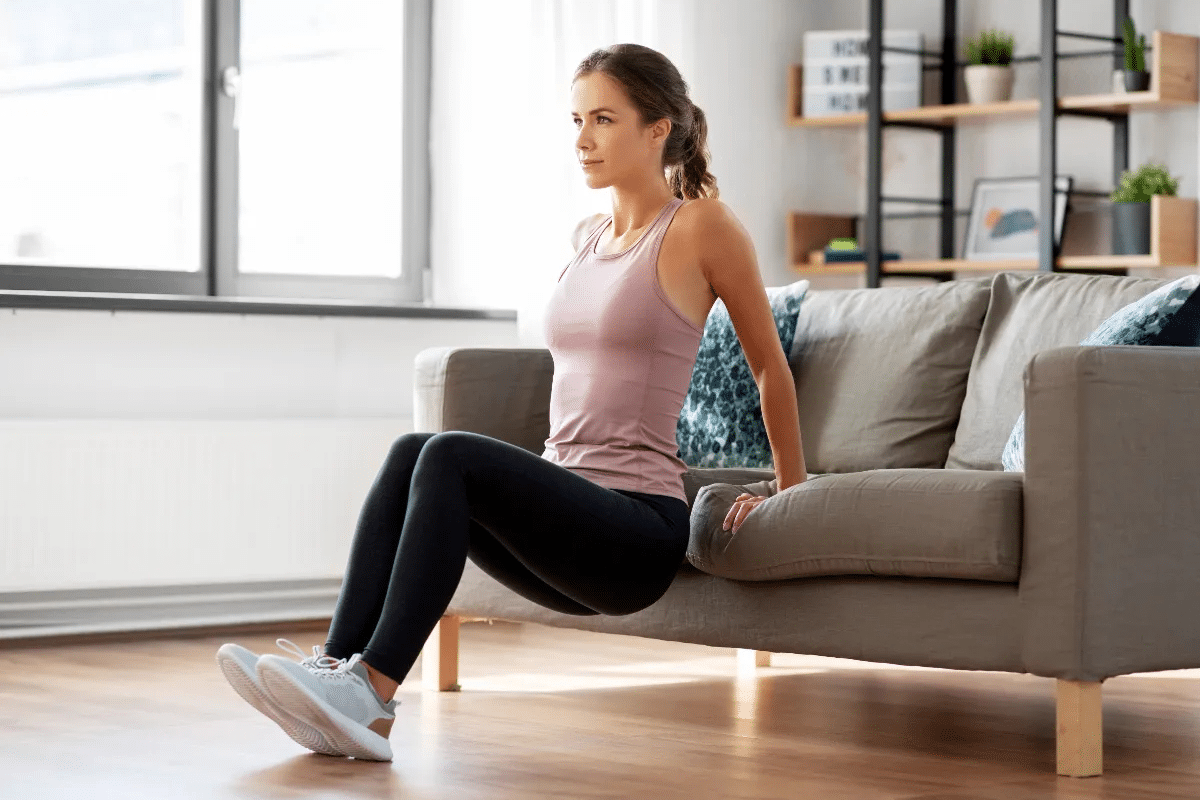
Sitting stretches for seniors are effective. Learn the best moves to stay limber and protect your vital range of motion at home.
As people get older, it’s key to keep moving and stay flexible. Chair stretches for seniors are a great way to do this. They’re easy and safe, and you can do them at home without much effort.
Studies have found that seniors who do 10 minutes of seated stretching exercises twice a week see big improvements. They get more mobile and less likely to fall. This easy fitness routine works for anyone, no matter their mobility level or if they use aids.
Key Takeaways
- Chair stretches can improve mobility and flexibility in seniors.
- A 10-minute seated stretch routine can be beneficial when done twice a week.
- This exercise method is safe and accessible for seniors with limited mobility.
- Regular chair stretches can enhance daily quality of life.
- It’s a practical way to maintain independence without excessive exertion.
The Science-Backed Benefits of Chair Stretching
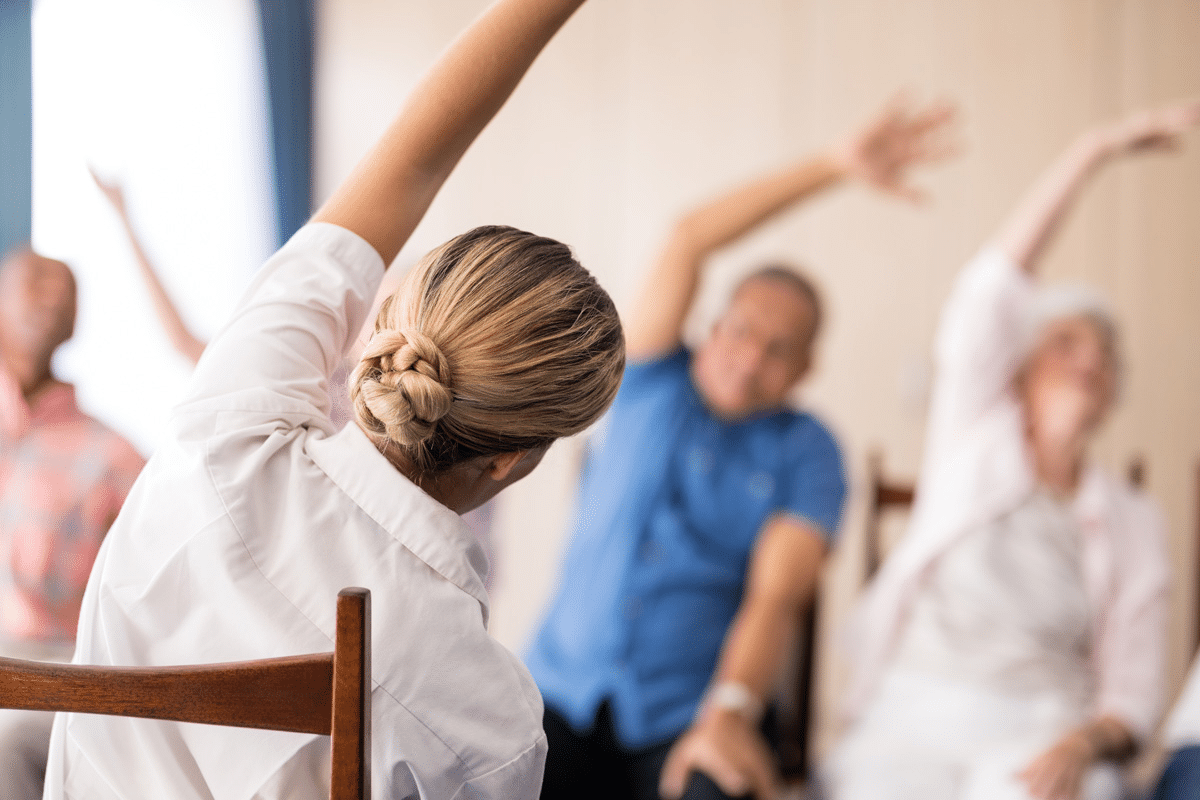
Chair stretching is good for seniors, backed by science. It improves physical function. Studies have shown its benefits for older adults’ health.
Improving Flexibility and Balance
Chair stretching helps with flexibility and balance. As we age, our range of motion and balance can decrease. Chair stretching exercises gently stretch muscles and tendons, improving flexibility and balance.
A study found chair exercises improve balance in older adults. Better balance means fewer falls and more independence.
Reducing Fall Risk and Maintaining Independence
Chair stretching is key in reducing fall risk. It boosts balance, strength, and flexibility. Seniors who stretch regularly are less likely to fall.
Falls are a big concern for seniors. Chair stretching helps them stay independent by improving physical function.
Joint Lubrication and Pain Reduction
Chair stretching also helps with joint lubrication and pain reduction. Stretching movements stimulate synovial fluid production. This fluid lubricates joints, reducing stiffness and pain.
Studies show stretching lowers pain in older adults, including those with arthritis. Chair stretching improves joint mobility and quality of life.
Why Sitting Stretches for Seniors Are Effective
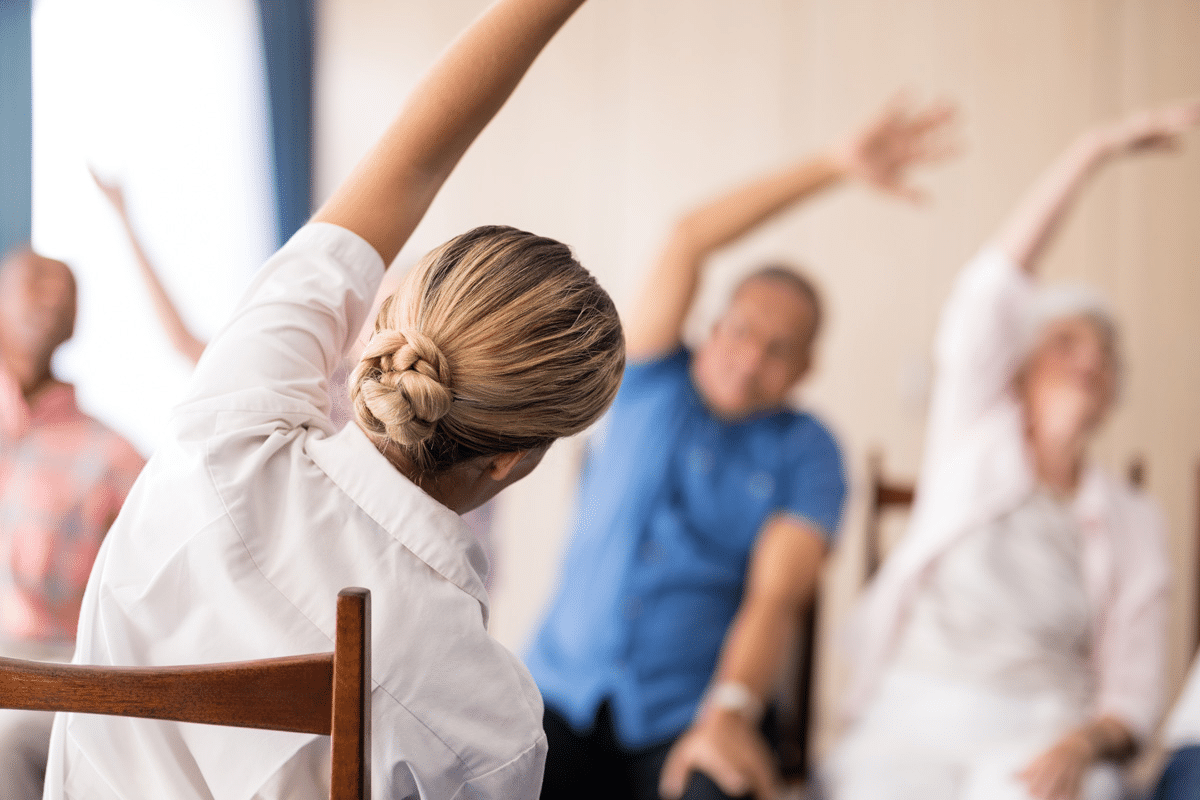
Sitting stretches for seniors are great because they offer stability and safety advantages. These exercises are easy to do and don’t make you feel scared. They keep you stable while you stretch.
Stability and Safety Advantages
Sitting stretches are safe for seniors to do. They help improve flexibility without the fear of falling. The chair supports you, so you can stretch without losing your balance.
A study in the Journal of Aging Research found that chair exercises help seniors avoid falls. They improve balance and strength.
Accessibility for All Mobility Levels
Sitting stretches are great because they’re accessible for all mobility levels. They work for seniors with any level of mobility. You can adjust them to fit your needs.
- Easy to modify based on individual mobility
- Can be performed in a seated position, reducing strain on joints
- No special equipment required beyond a sturdy chair
Evidence-Based Results from Recent Studies
Recent studies prove that evidence-based results support sitting stretches for seniors. A study in the Journal of Gerontology found that seniors who did chair yoga got better at flexibility and balance.
“Chair-based exercises are a valuable tool for improving the health and well-being of older adults.” – Journal of Gerontology
|
Benefits |
Description |
|---|---|
|
Improved Flexibility |
Sitting stretches help increase range of motion |
|
Enhanced Balance |
Strengthening core and improving posture |
|
Reduced Risk of Falls |
By improving balance and strength |
Setting Up for Success: Equipment and Environment
A good setup is key for getting the most out of chair stretches. Make sure you have the right stuff and a safe place to stretch.
Selecting the Right Chair for Stability
The chair you pick should be sturdy and stable. It should have a wide base to avoid tipping. A chair with back support is best because it keeps you stable and helps you stretch right.
- Go for a chair with a solid, non-wheeled base for the best stability.
- Make sure the chair fits your height so your feet can touch the floor.
Creating a Safe Stretching Space
Clear the area around your chair of any clutter or obstacles. This makes your stretching space safe. It helps you avoid accidents and focus on stretching.
- Take out any rugs or mats that could slip or make you lose balance.
- Make sure the room is well-lit so you can see any dangers.
Optional Props to Enhance Your Practice
While a sturdy chair is essential, some props can make your stretching better. Think about using resistance bands or ankle weights to mix up your stretches.
By picking the right chair and setting up a safe space, you can stretch safely and effectively. Adding props can make your routine even better, giving you more challenges and benefits.
2-Minute Warm-Up: Preparing Your Body
Starting with a brief warm-up is key to getting the most from chair stretches. It boosts blood flow, eases stiffness, and gets your body ready for stretching.
Gentle Seated Warm-Up Movements
These movements are made to loosen tight muscles and prepare you for stretching. Try neck stretches, shoulder rolls, and seated arm circles. They help your body move more freely.
Proper Breathing Techniques
Deep, controlled breathing is vital during warm-ups. It relaxes muscles and boosts oxygen flow. Breathe in deeply through your nose, pause, then breathe out slowly through your mouth.
Mindful Body Awareness
Being mindful of your body’s signals is important during warm-ups. Pay attention to how you feel and adjust as needed. This helps avoid injury and overstretching.
|
Warm-Up Movement |
Description |
Benefits |
|---|---|---|
|
Neck Stretch |
Slowly tilt your head to the side, bringing your ear towards your shoulder. |
Relieves tension, improves flexibility |
|
Shoulder Rolls |
Roll your shoulders forward and backward in a circular motion. |
Reduces stress, improves posture |
|
Seated Arm Circles |
Hold your arms straight out to the sides and make small circles. |
Loosens shoulder muscles, improves circulation |
Adding these warm-up exercises, breathing techniques, and body awareness to your routine will get you ready for chair stretches.
3-Minute Upper Body Chair Stretches
In just three minutes, you can boost your upper body mobility with simple chair stretches. These exercises help improve flexibility, reduce tension, and enhance overall well-being.
Neck Tilts and Rotations
Neck tilts and rotations are key for keeping your neck flexible and improving its range of motion. To do a neck tilt, slowly tilt your head to the right, bringing your ear towards your right shoulder. Hold for a few seconds, then go back to the start. Do the same on the left side.
For neck rotations, gently turn your head to the right, holding for a few seconds before going back to the center. Do the same on the left side.
- Neck Tilt: Tilt your head to the right, bringing your ear towards your right shoulder.
- Neck Rotation: Turn your head to the right, holding for a few seconds before returning to the center.
Shoulder Rolls and Chest Openers
Shoulder rolls reduce tension in the shoulders, while chest openers improve posture and flexibility. To roll your shoulders, move them forward and upward in a circle. Do this several times. For chest openers, place your hands behind you on the chair and gently arch your back, opening your chest.
- Roll your shoulders forward and upward.
- Place your hands behind you on the chair and arch your back.
Arm Reaches and Wrist Flexors
Arm reaches improve flexibility in the shoulders and arms, while wrist flexors stretch the wrists and forearms. To do an arm reach, stretch your right arm out to the side and up towards the ceiling. Hold for a few seconds, then lower. Do the same with your left arm.
For wrist flexors, hold your arm straight out in front of you and gently pull your hand back with your other hand.
- Arm Reach: Stretch your arm out to the side and up towards the ceiling.
- Wrist Flexor: Hold your arm straight out and gently pull your hand back.
By adding these 3-minute upper body chair stretches to your daily routine, you can greatly improve your flexibility and reduce muscle tension.
2-Minute Core-Strengthening Seated Exercises
In just 2 minutes, you can boost your core strength with simple seated twists and exercises. These are easy, effective, and safe for seniors.
Gentle Seated Twists for Spinal Health
Gentle seated twists are great for your spine. They make it more flexible and less stiff. Sit with your feet flat, then twist your torso to one side. Hold for a few seconds before twisting to the other side.
Benefits of Gentle Seated Twists: They keep your spine flexible and lower back pain risk.
Seated Abdominal Engagement
Seated abdominal exercises strengthen your core. This improves your spine’s stability and support. Sit comfortably, breathe in deeply, and as you breathe out, pull your belly button towards your spine.
Tip: Doing this regularly can improve your posture and lessen back pain.
Posture Improvement Techniques
Good posture while seated is key for spinal health. Keep your shoulders back, chin level, and engage your core. Doing this often can make your posture better and reduce discomfort.
Adding these 2-minute exercises to your daily routine can improve your spinal health, posture, and overall well-being.
3-Minute Lower Body Chair Stretches
Adding lower body chair stretches to your day can boost hip, knee, and ankle movement. These stretches are easy, safe, and work well for seniors. They help keep flexibility and independence.
Hip and Glute Stretches
Hip and glute stretches are key for keeping the lower body flexible and less stiff. To do a hip stretch, sit with feet flat and cross one ankle over the other knee. Push the crossed knee down towards the floor for 30 seconds, then switch sides. This stretch eases the hip and glute muscles.
Tip: Keep your back straight and core tight during the stretch. This helps you get the most out of it.
Knee and Ankle Mobility Exercises
Exercises for the knees and ankles can cut down stiffness and boost movement. Lift one leg off the floor, keeping it straight, and move your ankle in circles. Do this 5-10 times on each leg.
Remember to breathe naturally and smoothly throughout the exercise to help relax the muscles.
Seated Leg Extensions and Flexions
Seated leg extensions and flexions strengthen knee muscles and boost flexibility. Lift one leg straight up, then lower it back down without touching the floor. Do this 10-15 times on each leg.
|
Stretch |
Benefits |
Repetitions |
|---|---|---|
|
Hip and Glute Stretch |
Improves hip flexibility, reduces glute stiffness |
30 seconds per side |
|
Ankle Rotations |
Enhances ankle mobility, reduces stiffness |
5-10 rotations per side |
|
Seated Leg Extensions |
Strengthens knee muscles, improves flexibility |
10-15 repetitions per leg |
By adding these stretches to your daily routine, you can greatly improve your flexibility and mobility. This can greatly enhance your quality of life.
Customizing Your 10-Minute Chair Stretching Routine
Creating a 10-minute chair stretching routine that fits you can really help. It boosts your flexibility and balance. Tailoring the exercises to your needs makes a big difference.
Sample Routine Structure with Timing
Having a set routine keeps you consistent. It makes sure you stretch all major muscles. Here’s a 10-minute example:
- 2 minutes for a gentle warm-up, like neck tilts and shoulder rolls.
- 3 minutes for upper body stretches, like arm reaches and chest openers.
- 2 minutes for core-strengthening exercises, such as seated twists and abdominal engagement.
- 3 minutes for lower body stretches, focusing on hip, knee, and ankle mobility.
Adjusting for Different Ability Levels
Adjust the stretches based on your skill level. Beginners should start simple and gradually get harder. More experienced people can try deeper stretches or faster movements.
For example, beginners might start with gentle neck tilts. As they get better, they can do more. Advanced people can try different speeds or depths.
Creating Variety Throughout the Week
Adding variety keeps your routine fun. You can:
- Change the order of exercises.
- Try different types of stretches, like dynamic or static.
- Focus on different muscle groups each day.
This variety keeps your practice interesting. It also helps improve your flexibility and strength evenly.
Safety Guidelines and Precautions
To ensure a safe and effective chair stretching experience, several precautions must be considered. Chair stretching, like any exercise, carries risks, mainly for seniors or those with health conditions.
When to Consult a Healthcare Provider
Before starting any new exercise, including chair stretching, it’s wise to talk to a healthcare provider. This is key for those with heart disease, diabetes, or musculoskeletal issues. A healthcare provider can give personalized advice and modifications to make sure the exercise is safe and beneficial.
Key considerations when consulting a healthcare provider include:
- Discussing any current health conditions or concerns
- Reviewing any medications that might impact your ability to exercise safely
- Understanding any physical limitations or chronic conditions that may require special considerations
Adapting Stretches for Specific Health Conditions
Certain health conditions need chair stretches adapted to fit physical limitations or to avoid worsening existing conditions. For example, those with severe osteoporosis might need to avoid bending or twisting exercises. People with recent injuries or surgeries should modify stretches to avoid putting too much stress on the affected areas.
Examples of adaptations include:
- Reducing the depth or range of motion for individuals with limited mobility
- Avoiding certain movements that could exacerbate conditions like sciatica or lower back pain
- Incorporating gentle, low-impact stretches for those recovering from surgery or injury
Signs to Stop Exercising Immediately
It’s important to listen to your body during exercise. If you experience any of the following symptoms, stop exercising immediately and consult your healthcare provider:
- Chest pain or discomfort
- Dizziness or lightheadedness
- Severe pain or discomfort in the muscles or joints
- Shortness of breath
Listening to your body and responding to its needs is key to safe exercising. By following these safety guidelines and precautions, you can enjoy the benefits of chair stretching while minimizing risks.
Tracking Progress and Celebrating Improvements
To keep up with chair stretching, tracking your progress is key. It keeps you motivated and shows if the routine works.
Realistic Expectations for Flexibility Gains
Starting a new exercise, like chair stretches, needs realistic expectations. How fast you get flexible depends on your age, starting point, and how often you stretch.
- See flexibility improvements in 4-6 weeks with regular stretching.
- Be patient, as big changes take time.
- Sticking to it is essential for lasting flexibility.
Simple Ways to Measure Mobility Progress
Tracking your mobility progress can be easy and rewarding. Here are simple methods to see your improvements:
- Keep a stretching journal to record your daily routine and note any changes.
- Use a mobility assessment chart to measure range of motion.
- Take progress photos or videos at regular intervals.
Maintaining Motivation Through Small Wins
Maintaining motivation is key for long-term success in chair stretching. Celebrating small wins boosts your motivation.
- Celebrate each milestone, no matter how small.
- Share your progress with friends or family for added encouragement.
- Reward yourself for reaching certain milestones.
Focus on progress, set realistic goals, and celebrate small wins. This keeps you motivated and helps improve your flexibility and well-being.
Conclusion: Incorporating Chair Stretches Into Daily Life
Adding chair stretches to your daily routine can boost senior fitness and well-being. These stretches improve flexibility, balance, and function. This makes everyday tasks easier and safer.
Just 10 minutes a day of chair stretches can make a big difference. Seniors see better flexibility and mobility. This routine works for everyone, no matter their ability.
Chair stretching is key to a healthier, more active life. It’s important to stick with it and be patient. Over time, seniors will notice better mobility, less stiffness, and a lower fall risk.
Begin adding chair stretches to your daily routine today. See how it improves your health and well-being.
FAQ
What are the benefits of chair stretches for seniors?
Chair stretches help seniors stay flexible, balanced, and mobile. They lower the chance of falls and keep independence. Regular stretching also helps joints and reduces pain.
How do I choose the right chair for chair stretches?
Choose a sturdy, stable chair with a wide base and no wheels. It should be the right height for your feet to rest flat or on a footrest. Your knees should be at or below hip level.
What is the importance of a warm-up before chair stretches?
A 2-minute warm-up gets your body ready for stretching. It increases blood flow, reduces muscle stiffness, and boosts flexibility. Gentle movements, proper breathing, and being mindful of your body are key.
Can chair stretches be customized for different ability levels?
Yes, chair stretches can be tailored for various abilities. You can adjust them to fit physical limitations, health conditions, or mobility issues. This makes chair stretching accessible to all.
How often should I do chair stretches?
Aim to do chair stretches 2-3 times a week. This helps improve flexibility and mobility. Consistency is important for progress.
Are there any safety guidelines I should follow when doing chair stretches?
Yes, talk to a healthcare provider before starting, if you have health issues. Know your limits and stop if you feel pain or discomfort. Make sure the stretches are safe for you.
How can I track my progress with chair stretches?
Set achievable goals and track your mobility progress. Celebrate small victories to stay motivated. This makes chair stretching a lasting habit.
Can chair stretches help with core strengthening?
Yes, certain exercises, like gentle twists and abdominal engagement, strengthen the core. This improves posture, spinal health, and stability.
Are there any specific chair stretches for lower body mobility?
Yes, chair stretches can target the lower body. They include hip and glute stretches, knee and ankle exercises, and leg extensions and flexions. These improve flexibility and mobility.
How long does a typical chair stretching routine take?
A basic routine takes about 10 minutes. It’s a quick and easy way to boost flexibility and mobility, even with limited time or mobility.
Reference
National Center for Biotechnology Information. Chair Stretches: Flexibility Guide for Seniors. Retrieved from https://www.ncbi.nlm.nih.gov/pmc/articles/PMC4039312/



 Departments
 Related Videos
 Our Doctors
 News
News