Learn the 5 types of allergy testing methods. Read our essential guide on skin pricks, patches, and blood work explained clearly.
Understanding your body’s allergic responses is key to improving your life. Allergy testing helps you understand these responses. Over 50 million Americans have allergies each year. Accurate testing is vital for their health.
AtLiv Hospital, we use top-notch allergy testing methods. We combine advanced technology with care focused on you. This ensures you get the best support during testing.
Key Takeaways
- Allergy testing is vital for managing allergic reactions.
- There are many testing methods, like skin prick tests and blood tests.
- Liv Hospital offers advanced allergy testing with a focus on you.
- Getting the right diagnosis is key to managing allergies well.
- Using the latest technology helps improve patient results.
The Science Behind Allergic Reactions
Understanding allergic reactions means looking into how our immune system reacts to threats. Our immune system sees harmless things as dangers and fights back.
How the Immune System Responds to Allergens
The immune system protects us from harm. But with allergies, it overreacts to some things. It releases antibodies called immunoglobulin E (IgE). These antibodies lead to the release of histamine, causing symptoms.
Common Allergens and Their Prevalence
Common allergens include:
- Pollen from trees, grasses, and weeds
- Dust mites and their waste products
- Mold spores
- Pet dander
- Certain foods like peanuts, tree nuts, fish, shellfish, milk, eggs, wheat, and soy
- Insect stings
- Latex
These allergens are everywhere and can cause different reactions. For example, pollen causes seasonal allergies, while some foods can lead to severe reactions.
Symptoms That Indicate Allergy Testing Is Needed
Symptoms that may mean you need allergic tests or tests for allergies include:
- Persistent sneezing and nasal congestion
- Itchy, watery eyes
- Skin rashes or hives
- Swollen lips, tongue, or face
- Stomach cramps, diarrhea, or vomiting after eating certain foods
- Coughing, wheezing, or shortness of breath
If you often have these symptoms, it’s time to think about allergy testing. Knowing what you’re allergic to is the first step to managing your allergies.
Types of Allergy Testing: A Complete Overview

Allergy testing has grown a lot, with many ways to find out what you’re allergic to. Knowing about these different tests is key for doctors and patients alike.
Evolution of Diagnostic Methods in Allergy Medicine
Allergy diagnosis has changed a lot over time. We’ve moved from simple skin tests to detailed blood tests. These new methods help find allergens more accurately.
Our understanding of allergies has also grown. This knowledge has led to better testing, making diagnosis more precise and helping patients more.
Clinical vs. At-Home Testing Options
There are two main ways to test for allergies: clinical tests in a doctor’s office and at-home kits. Clinical tests, like skin prick tests, are done with a doctor’s help. They include skin tests and blood tests for IgE antibodies.
At-home kits are easy and private. But, they might not be as accurate as doctor’s tests. It’s best to talk to a doctor about which test is right for you.
Comparing Accuracy Rates Across Testing Methods
Each allergy test has its own accuracy level. Here’s a table showing how accurate each main test is:
|
Testing Method |
Accuracy Rate |
Primary Use |
|---|---|---|
|
Skin Prick Testing |
High |
Common allergens like pollen, dust mites |
|
Intradermal Testing |
High to Very High |
Specific allergens, when skin prick is unclear |
|
Patch Testing |
High |
Contact dermatitis causes |
|
Blood Tests (IgE Antibodies) |
High |
For those with skin issues or on certain meds |
Knowing the good and bad of each test is key for correct diagnosis and treatment. The right test helps doctors give the best care to patients.
Skin Prick Testing: The Gold Standard Method
The skin prick test is a key tool in finding out what causes allergies. It’s easy, quick, and very accurate. This makes it a favorite among doctors and patients alike.
Step-by-Step Procedure and Equipment Used
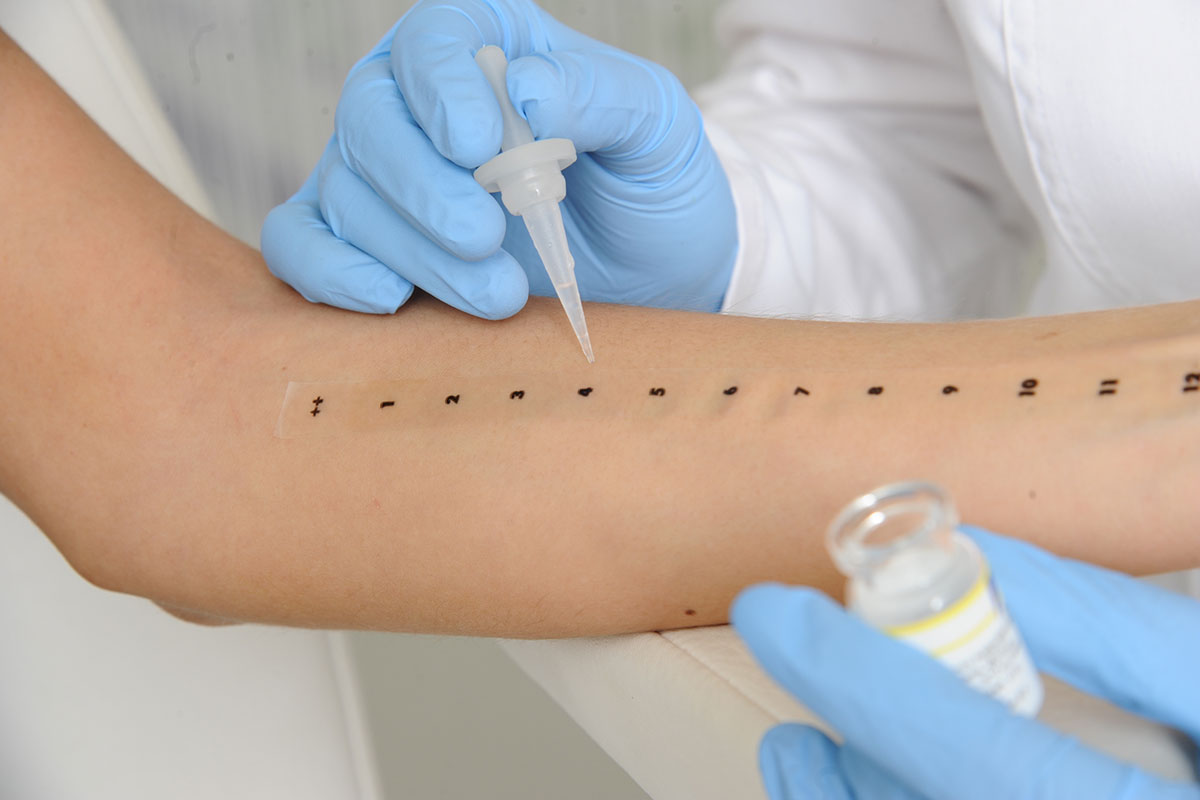
First, we clean the skin on your arm or back. Then, a tiny bit of the allergen is applied. Next, a lancet pricks the skin, letting the allergen in.
We watch and measure how the skin reacts. The tools we use are:
- Allergen extracts
- Lancets
- A control solution (for comparison)
“The skin prick test is a valuable tool in diagnosing allergies,” say doctors. “Its simplicity and accuracy make it a preferred method for many clinicians.”
Multiple Allergen Evaluation in a Single Session
One big plus of skin prick testing is it can check many allergens at once. This is great for people with many allergies. We can quickly find out which allergens are causing problems.
We put different allergens on the skin, making sure they don’t mix. Then, we prick the skin at each spot. This gives us a full picture of what the patient is allergic to.
Interpreting Results Within 15-20 Minutes
We can see the results of a skin prick test in 15-20 minutes. A positive test shows up as a wheal, or itchy bump. We measure this bump to see how severe the allergy is.
Interpreting the results requires expertise. The size of the wheal and any other symptoms are key. Our doctors are trained to understand these signs well. They can tell you exactly what you’re allergic to.
In short, skin prick testing is a top choice for finding allergies. It’s fast, can check many things at once, and gives quick results. This makes it a key tool in diagnosing allergies.
Intradermal Testing: Detecting Subtle Allergic Responses
Intradermal testing injects small amounts of allergens into the skin. It helps see how the body reacts. This method is great when other tests don’t give clear results.
Injection Technique and Allergen Concentration
The test uses a fine needle to inject allergen extract just under the skin. The amount of allergen is carefully chosen. Getting the dose right is key to avoid wrong results.
When Skin Prick Tests Yield Inconclusive Results
Intradermal testing is used when skin prick tests don’t work. It’s good for finding allergies to substances that don’t show up in skin prick tests. This makes it a vital tool for doctors.
Enhanced Sensitivity for Specific Allergens
Intradermal testing is better at finding specific allergens. It injects the allergen into the skin, catching even small reactions. This is great for finding allergies to medicines, venom, or certain things in the environment.
|
Allergen Type |
Skin Prick Test Sensitivity |
Intradermal Test Sensitivity |
|---|---|---|
|
Environmental Allergens |
High |
Very High |
|
Medication Allergens |
Low |
High |
|
Venom Allergens |
Moderate |
Very High |
Healthcare providers can pick the best test for each patient by comparing skin prick and intradermal tests.
Patch Testing: Identifying Contact Dermatitis Triggers
For those with contact dermatitis, patch testing is a key step. It helps find out what’s causing the allergic reactions. This way, we can create a treatment plan that targets the problem.
48-96 Hour Application and Assessment Process
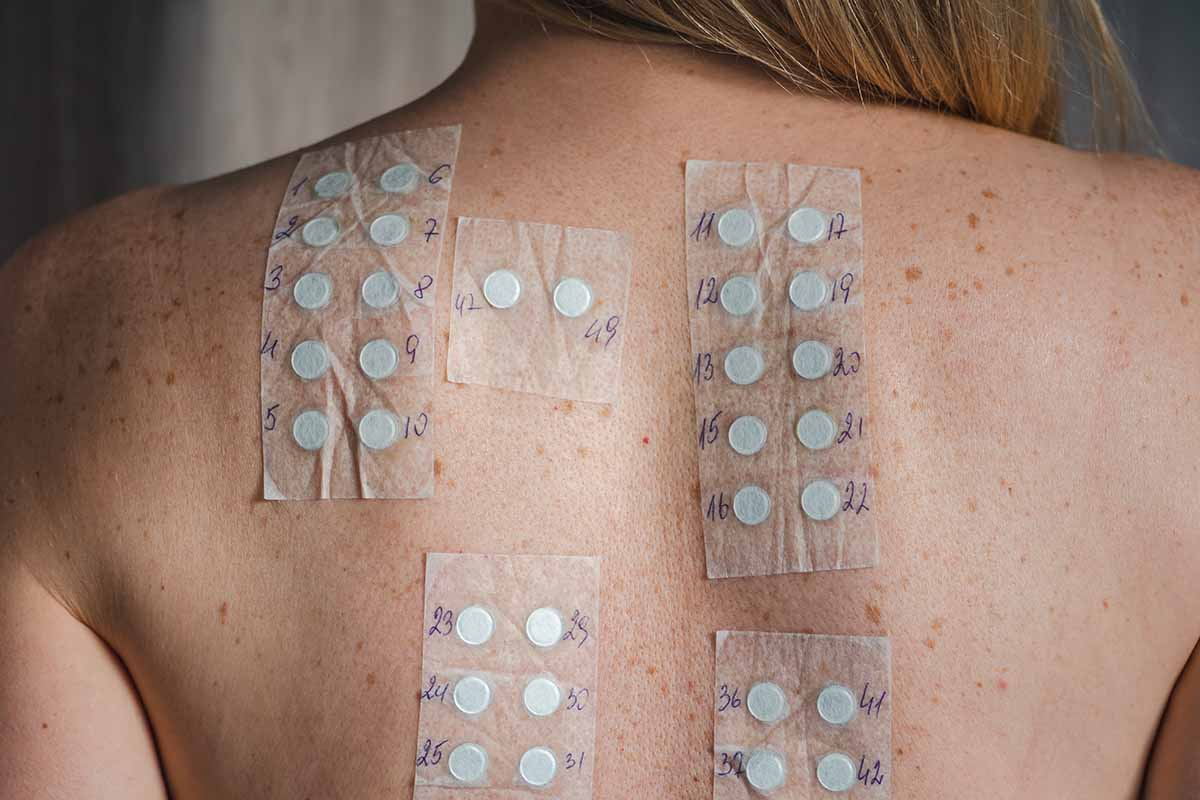
Patch testing involves applying small amounts of possible allergens to the skin. These are placed on the skin using patches. The patches stay on for 48 to 96 hours to see if there’s a reaction.
During this time, it’s important for patients to avoid activities that might mess with the patches. After the time is up, the patches are removed. Then, the skin is checked for any signs of reaction.
This check is key to figuring out if a patient has contact dermatitis. It helps find out if it’s caused by one or more allergens.
Common Contact Allergens in Patch Test Panels
Patch test panels usually include common allergens that cause contact dermatitis. These can be metals like nickel and cobalt, chemicals in personal care products, and parts of latex.
|
Allergen Category |
Common Examples |
|---|---|
|
Metals |
Nickel, Cobalt, Chromium |
|
Personal Care Products |
Fragrances, Preservatives, Dyes |
|
Latex and Rubber |
Latex, Thiuram Mix |
Documenting Delayed Skin Reactions
One important part of patch testing is tracking delayed skin reactions. Sometimes, reactions to allergens don’t show up right away. They might happen after the first 48-96 hour check.
So, follow-up checks are often needed to catch these delayed reactions.
By documenting these reactions, doctors can get a full picture of a patient’s sensitivities. This helps them create an effective treatment plan.
Blood Tests: Measuring IgE Antibody Levels
Blood tests are key in diagnosing allergies by checking IgE antibody levels. They help find specific allergens and see how the body reacts to them.
RAST, ELISA, and ImmunoCAP Testing Methods
Several blood tests measure IgE antibody levels, like RAST, ELISA, and ImmunoCAP. Each method has its own way to find and count IgE antibodies for certain allergens.
RAST was an early method for finding IgE antibodies. Though newer methods have taken over, it’s not forgotten.
ELISA uses an enzymatic reaction to find IgE antibodies. It’s known for being very accurate in spotting specific allergen IgE.
ImmunoCAP is seen as very accurate and reliable. It uses a fluorescent enzyme immunoassay to measure allergen-specific IgE antibodies.
Benefits for Patients with Skin Conditions
Blood tests are great for people with skin issues like eczema or dermatitis. These conditions can make skin prick tests hard or not reliable.
- Blood tests can be done no matter the skin condition.
- They’re a safe option for those at risk of anaphylaxis or with severe skin issues.
- They help find allergens that might make skin conditions worse.
Quantifying Allergen-Specific Antibodies
Blood tests are good at measuring how much IgE antibodies are for specific allergens. This info is key for knowing how severe an allergy is and planning treatment.
By looking at IgE antibody levels for certain allergens, doctors can:
- Know if an allergy is present.
- See how severe the allergic reaction is.
- Watch how IgE levels change over time. This shows if treatment is working or if the allergy is changing.
In summary, blood tests are a valuable tool in managing allergies. They give deep insights into the immune system’s response and help tailor treatments.
Challenge Tests: Controlled Allergen Exposure
Challenge tests are key in allergy medicine. They let doctors test how a person reacts to possible allergens. These tests are done carefully to keep patients safe and get the right diagnosis.
Food Challenge Protocols and Safety Measures
Food challenge tests help find out if someone has a food allergy. They follow strict rules to keep patients safe.
- They start with tiny amounts of the suspected food.
- They watch closely for any signs of an allergic reaction.
- They have emergency treatments ready.
We follow a set way to do food challenge tests. This makes sure they are safe and work well.
|
Food Challenge Test Phase |
Description |
Safety Measures |
|---|---|---|
|
Initial Dose |
Small amount of suspected allergen |
Close monitoring for reactions |
|
Gradual Increase |
Dose is incrementally increased |
Emergency medications on hand |
|
Observation |
Patient is observed for reactions |
Trained staff present at all times |
Drug and Medication Allergy Confirmation
Challenge tests also check for drug or medication allergies. They give the drug in small amounts first. Then, they watch for any bad reactions.
Important things to remember include:
- Looking at the patient’s health history.
- Picking the right starting dose.
- Watching closely during the test.
Respiratory Allergen Challenge Testing
Respiratory allergen challenge tests check how the lungs react to allergens. They involve breathing in more and more of the suspected allergen while being watched closely.
We use special tools to check how the lungs work. This helps us see how the patient reacts to the allergen. It makes sure the test is safe and accurate.
Challenge tests help us know for sure if someone has an allergy. Then, we can make a treatment plan that fits their needs.
From Diagnosis to Treatment: Next Steps After Testing
Understanding your test results is the first step towards treatment. After allergy testing methods, you and your doctor will create a plan just for you. This plan will be based on your specific needs.
Creating Personalized Allergen Avoidance Plans
After testing, making a plan to avoid allergens is key. You’ll learn which allergens to avoid and how to do it in your daily life. For example, if dust mites are a problem, using special bedding and cleaning your home can help a lot.
For food allergies, reading labels and asking about ingredients is important. If you have environmental allergies, watching pollen counts and staying inside when pollen is high is a good idea.
Immunotherapy Options Based on Test Results
Immunotherapy is a treatment option for many. It helps your body get used to allergens, making your reactions less severe over time. The type of allergy test you had will help decide the best immunotherapy for you.
Immunotherapy can be shots or sublingual immunotherapy (SLIT), where you put the allergen under your tongue. Your doctor will choose the best method for you based on your test results and health history.
When to Consider Retesting
You might need to retest for allergies if your symptoms change or if you’re getting immunotherapy. You should also consider retesting if your treatment isn’t working or if you’re no longer having symptoms. Your doctor will decide if you need to retest based on your current health and any new allergies.
Knowing when to retest is important for keeping your treatment plan effective. Regular checks help make sure your plan is right for your allergies now.
Conclusion
Getting the right diagnosis is key to managing allergies well. We’ve looked at different tests like skin prick and blood tests. Each one helps find out what you’re allergic to and how to treat it.
Knowing what you’re allergic to helps you stay away from things that can harm you. Doctors use these tests to give you the best treatment. This makes life better for people with allergies.
Choosing the right test is important. A doctor will help you pick the best one. They’ll explain what the test is and make sure you get the right treatment.
Understanding allergies is important for better health. Accurate tests lead to good treatment plans. This helps people with allergies feel more confident and safe.
FAQ
What is an allergy test?
An allergy test is a medical check to see if you have an allergy. It finds out what causes allergic reactions.
What are the different types of allergy testing methods?
There are several ways to test for allergies. These include skin prick testing, intradermal testing, patch testing, blood tests, and challenge tests.
How does skin prick testing work?
In skin prick testing, a small amount of allergen is placed on the skin. Then, a lancet pricks the skin. The reaction is checked to see if an allergy is present.
What is intradermal testing used for?
Intradermal testing is for finding small allergic reactions. It’s used when skin prick tests don’t give clear results. A small amount of allergen is injected into the skin.
What is patch testing, and how is it done?
Patch testing finds what causes skin irritation. Patches with possible allergens are put on the skin. The skin’s reaction is checked after 48-96 hours.
What are blood tests used for in allergy diagnosis?
Blood tests, like RAST, ELISA, and ImmunoCAP, measure IgE antibodies. They help diagnose allergies, mainly in people with skin issues.
What is a challenge test, and when is it used?
A challenge test is when you’re exposed to suspected allergens. It’s used to confirm allergies, like to food, drugs, or in the air.
How are allergy test results used to create treatment plans?
Test results help make plans to avoid allergens. They also help decide if immunotherapy is right for you.
When should retesting be considered?
You might need retesting if symptoms don’t go away or change. Or if the first test wasn’t clear.
Are at-home allergy testing kits reliable?
At-home kits can be useful, but they’re not always accurate. Clinical tests are usually more reliable.
What is the difference between clinical and at-home allergy testing?
Clinical tests are done by professionals in a medical setting. They give more accurate results. At-home kits might not be as precise or cover as much.
How do I prepare for an allergy test?
To prepare, you might need to stop some medicines. Avoid certain foods or substances. Follow your doctor’s instructions.
Can allergy tests be performed on children?
Yes, kids can get allergy tests. The tests are adjusted for their age and health.
References
https://my.clevelandclinic.org/health/diagnostics/21495-allergy-testing