
When you visit your doctor, they use a stethoscope to check your lungs. They listen for bronchial breath sounds, which are important signs. We’ll tell you all about these sounds, what they sound like, and where you can hear them.
Bronchial breath sounds are loud and harsh. They have a midrange pitch and come from the large airways in your lungs. Knowing about these sounds is key for checking your lung health.
Key Takeaways
- Bronchial breath sounds are loud and harsh, typically heard over the trachea.
- These sounds can indicate underlying lung issues if heard from other locations.
- Abnormal bronchial breath sounds can be classified into tubular, cavernous, and amphoric types.
- Various lung conditions can cause abnormal bronchial breath sounds.
- A doctor uses a stethoscope to listen for these sounds during a chest examination.
Understanding Bronchial Breathing Origins and Characteristics
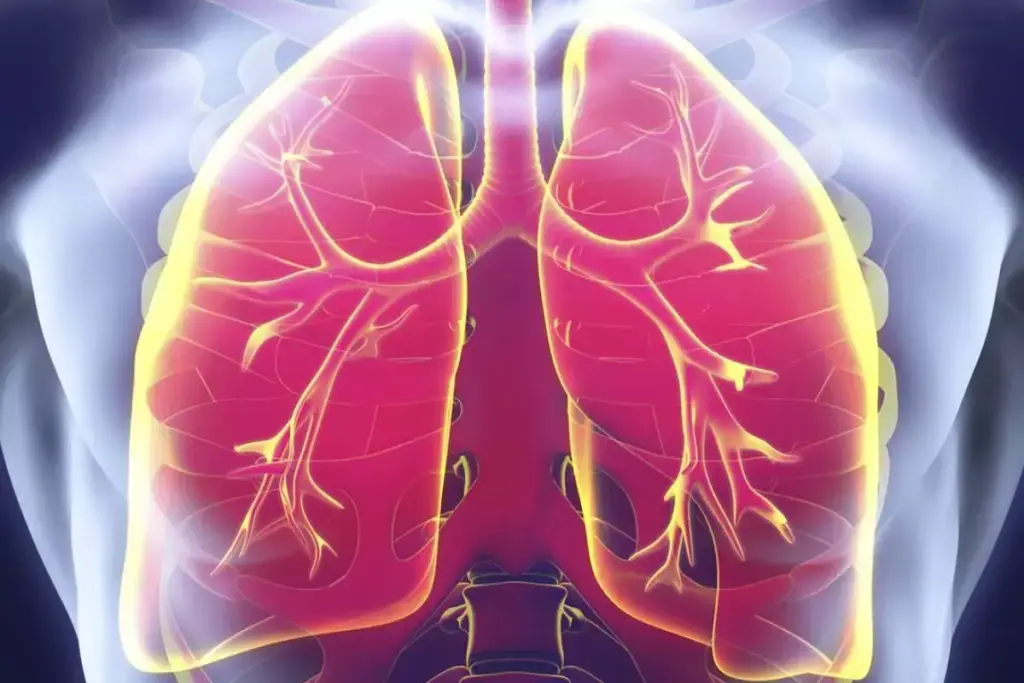
In the world of respiratory medicine, bronchial breath sounds are key for diagnosis. They have a unique sound due to airflow in the larger airways.
Definition of Bronchial Breath Sounds
Bronchial breath sounds are known for their harsh, tubular quality. They are mainly heard when breathing out. The breathing out phase is usually longer than breathing in.
This is important for understanding lung health and spotting respiratory issues.
There are three main types of breath sounds: vesicular, bronchial, and puerile. Each has its own unique traits. Bronchial sounds are linked to the larger airways.
How Bronchial Breathing Differs from Other Breath Sounds
Bronchial breathing is different from vesicular and puerile sounds. Bronchial sounds are louder and have a tubular quality. Vesicular sounds are softer and heard at the lung’s edges.
Puerile sounds, common in kids, are loud but not as harsh as bronchial sounds.
Knowing these differences helps doctors diagnose and treat respiratory problems. Spotting these sounds correctly is key for good patient care.
Normal Locations of Bronchial Breath Sounds

In healthy people, bronchial breath sounds are found in certain spots. These sounds are heard where the trachea and major bronchi are close to the chest.
Anatomical Areas Where Bronchial Breathing is Normally Heard
Three main spots are where bronchial breath sounds are usually heard. These are the trachea, the right clavicle, and the right interscapular space. The trachea is central because it’s near the neck’s surface.
The right clavicle area is another spot. The clavicle is over the major bronchi, making sounds clearer.
The right interscapular space is also a normal spot. It’s between the shoulder blades on the right. This area is where the major bronchi enter the lungs.
Physiological Significance of Normal Bronchial Breathing
Normal bronchial breathing shows a healthy respiratory system. It means air is moving well through the major airways. Knowing where and how these sounds are heard is key for doctors to spot problems.
A study on NCBI says checking breath sounds is vital in respiratory medicine. Knowing the normal patterns helps doctors find any signs of illness.
| Location | Characteristics of Breath Sounds | Clinical Significance |
| Trachea | Loud, high-pitched | Normal finding |
| Right Clavicle | Clear, tubular | Normal finding |
| Right Interscapular Space | Bronchial, loud | Normal finding |
In summary, bronchial breath sounds are heard in specific spots in healthy people. Knowing these spots and their meaning is key for diagnosing and treating lung problems.
Abnormal Bronchial Breathing: Pathological Implications
Abnormal bronchial breathing can signal serious respiratory problems. It’s key to grasp what these sounds mean and what health issues they might point to.
These abnormal sounds are often tubular breath sounds. They are high-pitched and hint at lung issues like consolidation, pleural effusion, fibrosis, or atelectasis.
Tubular Breath Sounds and Their Characteristics
Tubular breath sounds are a type of abnormal breathing. They are high-pitched and show up in lung problems. These sounds are heard over solid lung areas or other lung issues.
- High-pitched sound: Tubular breath sounds are unique because of their high pitch. They differ from normal breathing sounds.
- Association with lung conditions: These sounds are often linked to lung consolidation. This is when lung tissue gets solid due to infection or inflammation.
- Clinical significance: Finding tubular breath sounds is a key clue for diagnosing respiratory diseases.
Medical Conditions Associated with Abnormal Bronchial Breath Sounds
Several health issues are linked to abnormal bronchial breathing sounds, including:
- Lung Consolidation: This is when lung tissue gets solid, often from pneumonia or infections.
- Pleural Effusion: Fluid buildup in the pleural space can cause these abnormal sounds.
- Pulmonary Fibrosis: Scarring in lung tissue can change breath sounds, including tubular sounds.
- Atelectasis or Lung Collapse: When a lung collapses, gas exchange is reduced or stops.
Knowing these conditions and their link to abnormal breathing is vital for correct diagnosis and treatment.
Conclusion
Bronchial breath sounds are key in checking how well our lungs work. We’ve looked into where these sounds come from, what they sound like, and how they differ from other sounds.
When we hear bronchial sounds in some places, it means our lungs are working right. But if we hear them in other spots, it might mean there’s a problem. Knowing what these sounds mean is very important for doctors to make the right diagnosis.
Doctors can spot lung issues early by knowing the difference between normal and abnormal sounds. This skill helps them give better care and improve health results.
FAQ:
What are bronchial breath sounds?
Bronchial breath sounds are loud, high-pitched sounds with a hollow quality heard over the large airways.
Where are bronchial breath sounds typically heard?
They are normally heard over the trachea and manubrium.
How do bronchial breath sounds differ from vesicular breath sounds?
Bronchial sounds are louder, higher-pitched, and have a pause between inspiration and expiration, unlike soft, low-pitched vesicular sounds.
What is the clinical significance of bronchial breath sounds?
Hearing bronchial sounds over lung tissue can indicate lung consolidation, as in pneumonia.
What are tubular breath sounds?
Tubular breath sounds are another term for bronchial breath sounds, often described as hollow and tube-like.
What medical conditions are associated with abnormal bronchial breath sounds?
Conditions include pneumonia, lung consolidation, atelectasis, and pulmonary edema.
Are bronchial breath sounds heard in healthy individuals?
Yes, but normally only over the trachea and major bronchi, not over lung tissue.
Can bronchial breath sounds be heard in other areas of the chest?
Yes, if there is lung consolidation or other pathology, they may be heard over peripheral lung areas.
References:
National Center for Biotechnology Information. Evidence-Based Medical Insight. Retrieved from https://pubmed.ncbi.nlm.nih.gov/24335668/