
Alzheimer’s disease is a complex condition. It is marked by the buildup of amyloid plaques and neurofibrillary tangles in the brain. This buildup leads to damage to neurons and a decline in cognitive function. We look into the mechanisms behind this, focusing on how beta-amyloid plaques affect neural function.what causes amyloid plaques in the brainWhat Is Cardiomyopathy? Explained
At Liv Hospital, we are dedicated to understanding Alzheimer’s disease. We focus on its effects on patients. By studying the Alzheimer’s mechanism, we hope to find new ways to treat it.
Key Takeaways
- Alzheimer’s disease is characterized by the buildup of amyloid plaques and neurofibrillary tangles.
- The accumulation of beta-amyloid plaques disrupts neural communication and triggers neuronal death.
- Understanding the causes and consequences of amyloid plaque buildup is key to finding effective treatments.
- Liv Hospital is committed to providing full care and support for Alzheimer’s patients.
- Our approach includes staying current with the latest research and focusing on patient care.
Understanding Amyloid Plaques and Their Significance
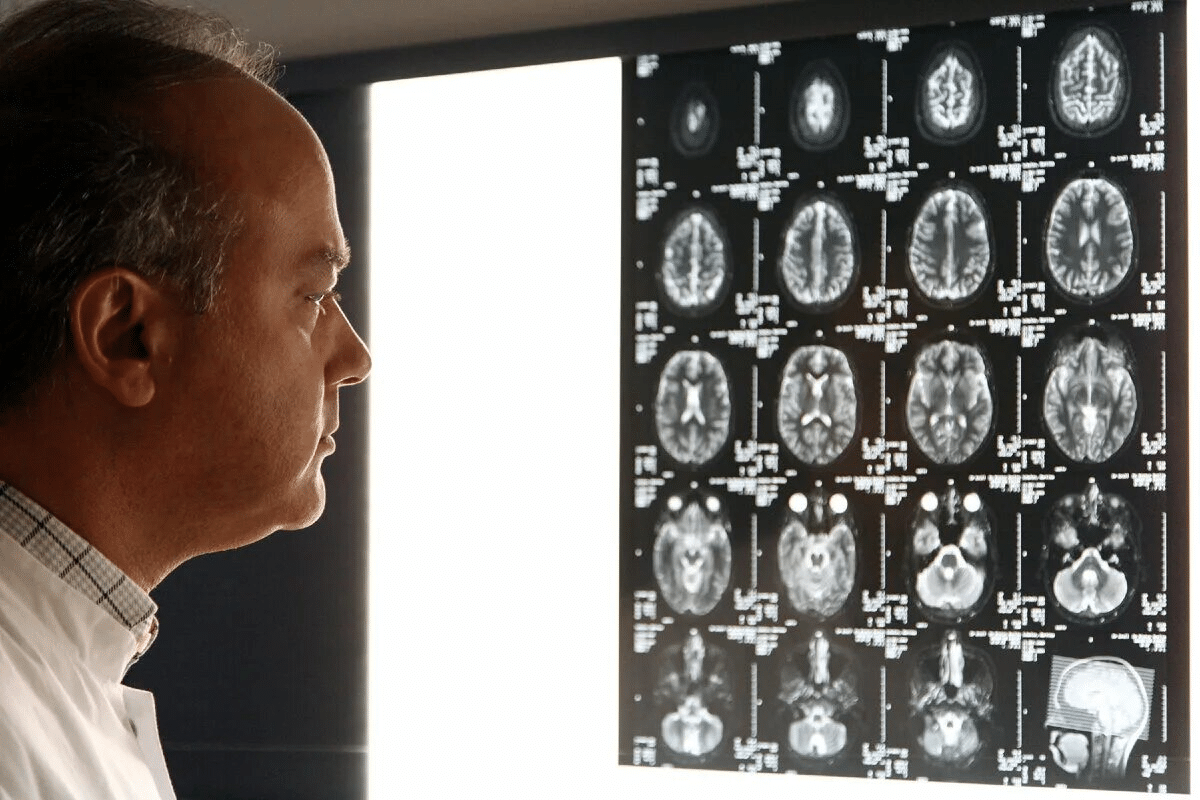
Amyloid plaques are key to understanding Alzheimer’s disease. They are deposits in the brain that mark Alzheimer’s. These deposits harm brain function, causing memory loss and other cognitive problems.
Definition and Composition of Amyloid Plaques
Amyloid plaques are made mainly of amyloid beta peptides. These peptides come from the amyloid precursor protein (APP) in neurons. When amyloid beta builds up outside neurons, it’s a sign of Alzheimer’s.
The makeup of amyloid plaques is complex. They include amyloid beta, other proteins, and parts of cells. Amyloid plaques are linked to brain inflammation and oxidative stress. These factors worsen Alzheimer’s disease.
|
Component |
Description |
Role in Alzheimer’s Disease |
|---|---|---|
|
Amyloid Beta Peptides |
Fragments of APP |
Primary component of amyloid plaques, disrupting brain function |
|
Amyloid Precursor Protein (APP) |
Protein found in neuron membranes |
Source of amyloid beta peptides when cleaved by enzymes |
|
Other Proteins and Cellular Components |
Includes inflammatory markers and oxidative stress indicators |
Contributes to inflammation and oxidative stress |
The Discovery of Plaques in Alzheimer’s Research
Alois Alzheimer discovered amyloid plaques in the early 20th century. He found them in a patient with what we now call Alzheimer’s disease. Research has been ongoing to understand their role in the disease.
Research shows amyloid plaques play a big part in Alzheimer’s. They lead to the loss of neurons and memory problems. This makes them a key focus for Alzheimer’s research and treatment.
The Molecular Structure of Beta-Amyloid Proteins

Understanding beta-amyloid proteins is key to knowing how they form amyloid plaques. These proteins come from the amyloid precursor protein (APP). APP is a protein that gets cut by enzymes to make amyloid beta peptides.
Normal Function of Amyloid Precursor Protein (APP)
The amyloid precursor protein (APP) is found in brain cells and other tissues. Its exact role is being studied, but it seems to help with brain development and function. APP is involved in cell signaling and may help with synapse formation and maintenance.
The Transition from Soluble to Insoluble Forms
APP turns into amyloid beta peptides through a complex process. First, beta-secretase cuts APP, making a soluble piece. Then, gamma-secretase cuts it again, releasing amyloid beta peptides. These peptides can then form insoluble fibrils, which are part of amyloid plaques.
Beta-Sheet Structures and Their Stability in the Brain
Beta-amyloid proteins have beta-sheet structures. These structures make them stable and help them stick together. This stability is why amyloid plaques build up in the brain.
|
Characteristic |
Description |
Relevance to Amyloid Plaques |
|---|---|---|
|
Beta-Sheet Structure |
Contributes to stability and aggregation |
Key factor in amyloid plaque formation |
|
APP Cleavage |
Produces amyloid beta peptides |
Essential for plaque development |
|
Aggregation Properties |
Influences fibril formation |
Affects plaque accumulation |
By studying beta-amyloid proteins, we can learn more about Alzheimer’s disease. This knowledge could help us find new treatments.
What Causes Amyloid Plaques in the Brain: The Formation Process
To understand amyloid plaques, we must explore the proteolytic pathways of APP. These plaques are key in Alzheimer’s disease and mark its progression.
Proteolytic Cleavage Pathways of APP
APP is a transmembrane protein processed by secretase enzymes. The amyloidogenic pathway is most relevant to plaque formation.
First, APP is cleaved by beta-secretase. This creates a soluble fragment and a membrane-bound C-terminal fragment. Then, gamma-secretase cleaves the C-terminal fragment, releasing amyloid beta peptides.
The Critical Role of Beta-Secretase and Gamma-Secretase Enzymes
Beta-secretase and gamma-secretase are key in making amyloid beta peptides. Beta-secretase, or BACE1, starts the pathway by cleaving APP. Gamma-secretase, a complex enzyme, then cuts the APP C-terminal fragment, creating amyloid beta peptides.
The activity of these enzymes is carefully controlled. Any imbalance can lead to more amyloid beta production.
Imbalance Between Production and Clearance Mechanisms
Amyloid plaque formation involves more than just amyloid beta production. It also depends on the balance between production and clearance. Normally, the brain clears amyloid beta through enzymatic degradation and transport across the blood-brain barrier.
|
Mechanism |
Description |
Impact on Amyloid Beta |
|---|---|---|
|
Enzymatic Degradation |
Enzymes like neprilysin degrade amyloid beta peptides |
Reduces amyloid beta levels |
|
Blood-Brain Barrier Transport |
Transport of amyloid beta across the BBB |
Removes amyloid beta from the brain |
|
Glymphatic System |
Clearance of amyloid beta through the glymphatic pathway |
Facilitates removal of amyloid beta |
An imbalance in amyloid beta production and clearance leads to plaque formation. Understanding this balance is key to treating Alzheimer’s disease.
Early-Onset vs. Late-Onset Alzheimer’s Disease Mechanisms
Alzheimer’s disease comes in two main types: early-onset and late-onset. Each type has its own causes. Knowing these differences is key to finding better treatments.
Genetic-Driven Deregulation in Early-Onset Cases
Early-onset Alzheimer’s is often linked to genetic mutations. These mutations can disrupt how the brain handles amyloid-beta peptides. This disruption is caused by changes in genes like APP, PSEN1, and PSEN2.
These genes control how amyloid precursor protein is processed. Changes in these genes lead to more amyloid-beta production. This is why early-onset Alzheimer’s is so serious.
Genetic factors are very important in early-onset cases. This is why genetic testing and counseling are vital for families at risk.
Failure of Proteostasis Networks in Late-Onset Cases
Late-onset Alzheimer’s is linked to the breakdown of proteostasis networks. Proteostasis is about keeping proteins in balance. As we get older, this balance gets worse, leading to protein buildup.
This breakdown is caused by many factors, not just genes. Lifestyle and environment also play a role. Research shows that lifestyle changes might help prevent or delay late-onset Alzheimer’s.
Age-Related Factors Contributing to Amyloid Accumulation
Age is the biggest risk for late-onset Alzheimer’s. As we age, our brains change in ways that help amyloid-beta build up. This includes more oxidative stress and inflammation.
Also, our brains get worse at removing amyloid-beta as we age. This is because of a decline in the glymphatic system. We’re looking into ways to improve this system to help clear amyloid-beta.
The Role of Cholesterol and Astrocytes in Plaque Development
Astrocytes are key cells in the brain that help manage cholesterol. Cholesterol is vital for brain health, helping with signals and connections between brain cells. But, if cholesterol levels get out of balance, it can lead to diseases like Alzheimer’s.
How Astrocytes Regulate Brain Cholesterol Metabolism
Astrocytes control cholesterol in the brain. They make and send cholesterol to brain cells, keeping them working well. Astrocytes do this through complex interactions and transport systems. For example, they release cholesterol-rich lipoproteins that neurons absorb.
Keeping cholesterol levels right is a big job for astrocytes. When they fail, cholesterol builds up, which can affect amyloid beta production and plaque formation.
The Connection Between Elevated Cholesterol and Amyloid Beta Production
High cholesterol is linked to more amyloid beta production. This happens because cholesterol changes how enzymes work on the amyloid precursor protein. This leads to more amyloid beta peptides.
Cholesterol also helps form secretase complexes in cell membranes. This is important for processing APP into amyloid beta, showing how cholesterol affects plaque formation.
Potential Therapeutic Targets in the Cholesterol Pathway
Targeting cholesterol could help treat Alzheimer’s. Changing cholesterol levels or how astrocytes work might reduce amyloid beta and plaques.
- Statins, used to lower cholesterol, might also reduce amyloid beta.
- Working on APOE, a cholesterol transporter, is another approach.
- Fixing how astrocytes handle cholesterol is also being looked into.
These targets show how important it is to understand the link between cholesterol, astrocytes, and Alzheimer’s plaques.
Cerebral Clearance Mechanisms and Their Dysfunction
Cerebral clearance mechanisms are key in removing amyloid beta from the brain. Their dysfunction is linked to Alzheimer’s disease progression. The brain has complex systems to clear waste, including amyloid beta, to keep neurons healthy.
The Glymphatic System and Amyloid Clearance
The glymphatic system is a new discovery that helps remove amyloid beta. It’s most active during sleep, exchanging cerebrospinal fluid with interstitial fluid to clear waste. Studies link dysfunction in this system to more amyloid beta and cognitive decline in Alzheimer’s.
This system’s ability to clear amyloid beta through cerebrospinal fluid is critical. Research shows impaired function leads to less amyloid beta clearance, causing its buildup.
Enzymatic Degradation of Amyloid Beta
Enzymatic degradation is another key way to clear amyloid beta. Enzymes like neprilysin and insulin-degrading enzyme (IDE) break down amyloid beta. This makes it easier to clear from the brain.
Changes in these enzymes’ expression or activity affect amyloid beta levels. For instance, less neprilysin activity is linked to more amyloid beta in Alzheimer’s.
Blood-Brain Barrier Transport Systems
The blood-brain barrier (BBB) is vital for amyloid beta clearance. It controls what enters and leaves the brain. Specific transport mechanisms, like LRP1, help remove amyloid beta from the brain into the bloodstream.
BBB dysfunction is seen in Alzheimer’s, with less LRP1 leading to less amyloid beta clearance. Understanding BBB transport is key to developing treatments for amyloid beta.
In conclusion, mechanisms like the glymphatic system, enzymatic degradation, and BBB transport are essential for brain health. Their dysfunction contributes to Alzheimer’s disease. This highlights the need for research into treatments to improve cerebral clearance.
How Amyloid Plaques Directly Impact Neuronal Function
Amyloid plaques disrupt normal neuronal activity. They cause synaptic dysfunction and trigger neuroinflammatory responses. These plaques are a hallmark of Alzheimer’s disease. Understanding their impact is key to finding effective treatments.
Disruption of Synaptic Signaling and Neurotransmission
Amyloid plaques interfere with synaptic signaling. They bind to synaptic proteins and disrupt synapses. This leads to impaired neurotransmission, affecting memory and learning.
The disruption of synaptic signaling is complex. Research shows amyloid-beta peptides interact with synaptic receptors. This interaction decreases synaptic plasticity, making it hard for neurons to adapt.
Neuroinflammatory Responses to Plaque Formation
The formation of amyloid plaques triggers a neuroinflammatory response. Activated microglia release pro-inflammatory cytokines and chemokines. This response exacerbates neuronal damage and contributes to Alzheimer’s disease progression.
Neuroinflammation is not just a bystander effect. It actively contributes to Alzheimer’s disease pathogenesis. The release of pro-inflammatory molecules by activated microglia can recruit more immune cells, amplifying the inflammatory response.
Oxidative Stress and Mitochondrial Dysfunction in Affected Neurons
Amyloid plaques induce oxidative stress in neurons. The accumulation of amyloid-beta peptides within mitochondria impairs their function. This results in increased production of reactive oxygen species (ROS), causing oxidative damage.
Mitochondrial dysfunction is critical in Alzheimer’s disease. The impairment of mitochondrial function leads to energy deficits and triggers apoptotic pathways. Understanding mitochondrial dysfunction is essential for developing therapeutic strategies.
Tau Protein Tangles and Their Relationship to Amyloid Plaques
Amyloid plaques are closely associated with neurofibrillary tangles composed of tau protein. The presence of amyloid plaques can induce the formation of tau tangles. The interaction between these two pathologies exacerbates neuronal dysfunction.
The interplay between amyloid-beta and tau pathology is a key factor in Alzheimer’s disease progression. Understanding this relationship is critical for developing therapeutic approaches that target both pathologies simultaneously.
Current Research on Preventing and Treating Amyloid Plaques
Researchers are making big strides in fighting amyloid plaques. They’re looking at many ways to stop these harmful proteins. These proteins are key in Alzheimer’s disease.
Anti-Amyloid Antibody Therapies and Clinical Trials
Anti-amyloid antibody therapies are showing promise. They aim to remove amyloid beta proteins from the brain. Many clinical trials are underway to see if these treatments work.
Lecanemab and aducanumab are two antibodies being tested. They might help reduce amyloid plaques. But, more research is needed to know their full effects.
Secretase Inhibitors and Modulators
Secretase inhibitors and modulators are another area of study. These aim to cut down amyloid beta production. They target enzymes that make amyloid beta.
Some secretase inhibitors are being tested in trials. Early results are hopeful. But, the amyloid cascade is complex, and side effects are a concern.
Lifestyle Interventions and Preventive Approaches
Lifestyle interventions are also being explored. Exercise, a healthy diet, and mental stimulation might prevent amyloid plaques. Social engagement is also important.
Eating a Mediterranean diet may lower cognitive decline risk. Exercise is linked to better brain health and less amyloid.
Emerging Technologies in Amyloid Research
New technologies are helping in amyloid research. Advanced imaging and artificial intelligence are key. They help understand amyloid plaques and find new treatments.
PET scans show amyloid plaques in living brains. This gives insights into the disease. Machine learning analyzes big data to find patterns for new treatments.
Conclusion: The Evolving Understanding of Amyloid Plaques in Brain Health
Our journey into amyloid plaques has shown their complex role in brain diseases, like Alzheimer’s. We’ve learned how these plaques form due to an imbalance in brain mechanisms. This imbalance leads to the buildup of beta-amyloid proteins.
Amyloid plaques affect brain cells in many ways. They disrupt communication between cells, cause inflammation, and lead to oxidative stress. Knowing how they work is key to finding treatments.
Today, scientists are exploring ways to stop amyloid plaques. They’re looking at anti-amyloid antibodies, secretase inhibitors, and lifestyle changes. As we learn more, we’re getting closer to treating Alzheimer’s and other brain diseases.
By deepening our understanding of amyloid plaques, we can improve diagnosis and treatment. This will help those with Alzheimer’s and other brain disorders live better lives.
FAQ
What are amyloid plaques and how are they related to Alzheimer’s disease?
Amyloid plaques are abnormal protein clumps in the brain, linked to Alzheimer’s disease. They are mainly made of beta-amyloid proteins. These plaques are a key sign of the disease.
How do beta-amyloid proteins contribute to amyloid plaque formation?
Beta-amyloid proteins come from the amyloid precursor protein (APP) through a process called proteolytic cleavage. These proteins can then form insoluble fibrils, which are the main parts of amyloid plaques.
What is the role of beta-secretase and gamma-secretase enzymes in amyloid plaque formation?
Beta-secretase and gamma-secretase enzymes are key in breaking down APP. This process creates beta-amyloid fragments. These fragments help form amyloid plaques.
How do amyloid plaques affect neuronal function?
Amyloid plaques disrupt how neurons communicate. They also cause inflammation and oxidative stress. This damage impairs how neurons work and leads to cognitive decline.
What is the difference between early-onset and late-onset Alzheimer’s disease?
Early-onset Alzheimer’s is often caused by genetics. Late-onset cases involve genetics, environment, and age.
How does cholesterol metabolism impact amyloid plaque development?
High cholesterol levels can lead to more amyloid beta production. Astrocytes play a big role in managing brain cholesterol. This affects how amyloid plaques form.
What are cerebral clearance mechanisms, and how do they relate to amyloid plaque removal?
Cerebral clearance mechanisms, like the glymphatic system, help remove amyloid beta. These systems include enzymatic degradation and blood-brain barrier transport. When these systems don’t work well, amyloid plaques build up.
What are the current therapeutic approaches targeting amyloid plaques?
Researchers are looking at anti-amyloid antibody therapies and secretase inhibitors. They also explore modulators and lifestyle changes. New technologies aim to prevent or treat amyloid plaques.
How do tau protein tangles relate to amyloid plaques?
Tau protein tangles are another sign of Alzheimer’s disease. Studies show a complex link between tau tangles and amyloid plaques. Both harm neurons.
What is the significance of understanding amyloid plaque formation and its impact on neuronal function?
Knowing how amyloid plaques form and affect neurons is key. It helps in finding effective treatments for Alzheimer’s disease.
References
National Center for Biotechnology Information. Amyloid Plaques, Neuronal Impact, and Cognitive Decline in Alzheimer’s. Retrieved from https://www.ncbi.nlm.nih.gov/pmc/articles/PMC8225911/



 Departments
 Related Videos
 Our Doctors
 News
News