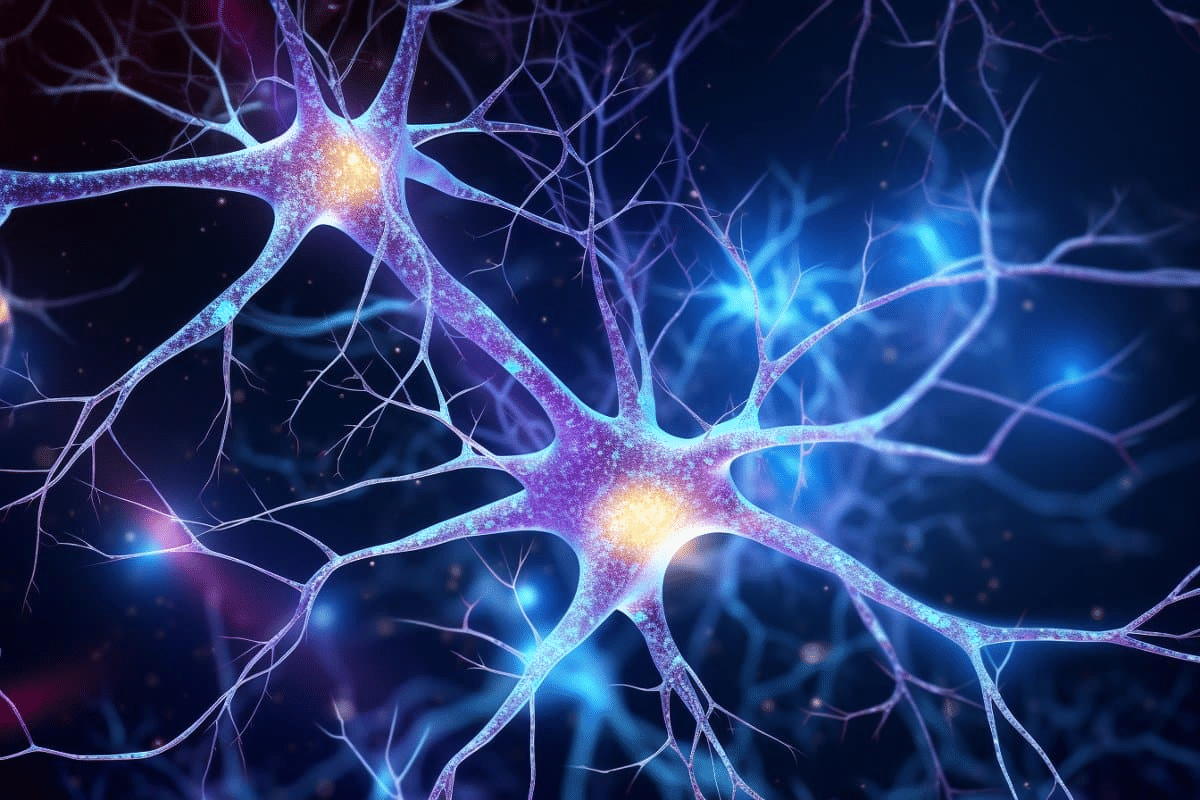
Neurons, or nerve cells, are key parts of our nervous system. They help control many functions in our body. This includes breathing, movement, and even our thoughts.
Human neurons are found in two main areas. They are in the central nervous system, which includes the brain and spinal cord. They are also in the peripheral nervous system.where are neurons locatedWhere Are Embryonic Stem Cells Located and How Are They Harvested from Blastocysts?
The brain neurons form a complex network. This network helps send electrical and chemical signals. It makes it possible for us to make decisions and respond to things automatically.
Knowing where neurons are and how they work is important. It helps us understand human health and diseases better.
Key Takeaways
- The nervous system is made up of billions of specialized cells called neurons.
- Neurons are found in the central and peripheral nervous systems.
- The complex network of neurons enables various bodily functions.
- Understanding neurons is key to understanding human health and disease.
- Neurons transmit electrical and chemical signals.
The Fundamental Building Blocks of the Nervous System
At the heart of the nervous system are neurons, the fundamental cells that enable neural communication. The human brain contains about 86 billion neurons. These cells are key to all neural communication. They receive, integrate, and transmit information throughout the body.
Neurons, also known as nerve cells, are the main parts of the nervous system. They act as messengers, sending information through electrical and chemical signals. This information travels between different parts of the brain and the body.
Definition and Significance of Neurons
Neurons are highly specialized cells that are vital to the nervous system. The term “neuron” refers to these nerve cells that carry information. Knowing about neurons helps us understand how the nervous system works.
- Neurons receive signals from other neurons or sensory receptors.
- They integrate these signals to generate a response.
- Neurons transmit signals to other neurons, muscles, or glands.
The Neuron Doctrine and Scientific Progress
The Neuron Doctrine has been key in understanding neural communication. It says that neurons are the basic units of the nervous system. This doctrine has driven scientific research forward, leading to big steps in neuroscience.
The acceptance of the Neuron Doctrine was a major moment in neuroscience. It gave a clear picture of nerve cells‘ role in the nervous system. It has helped scientists dive into the details of neural communication, leading to many discoveries.
Where Are Neurons Located in the Human Body?
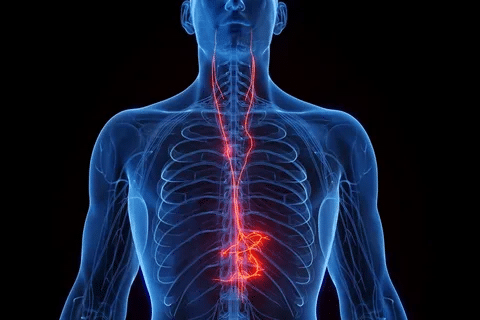
It’s important to know where neurons are to understand how our nervous system works. Neurons, or nerve cells, send and receive information through electrical and chemical signals.
Distribution Throughout the Nervous System
Neurons are found in both the central nervous system (CNS) and the peripheral nervous system (PNS). The CNS includes the brain and spinal cord. The PNS has sensory and motor nerve cells that connect to the brain and spinal cord.
The central nervous system has a lot of neurons. The brain, for example, has billions of neurons. These neurons handle sensory information, control movement, and manage many functions like body temperature and thinking.
- The cerebral cortex, the brain’s outer layer, has a lot of neurons.
- The brain stem, which connects the brain to the spinal cord, controls basic functions like breathing and heart rate.
- The spinal cord, a long tube, has neurons and supporting cells.
Concentration in Different Body Regions
Neurons are not spread out evenly in the body. Some areas have more neurons than others. The brain and spinal cord, which make up the CNS, have the most neurons.
- The cerebral cortex is very dense with neurons and handles complex information.
- Sensory ganglia, near the spinal cord, have sensory neurons that send information to the CNS.
- Motor neurons in the spinal cord’s anterior horn send signals to muscles and glands.
In summary, neurons are all over the nervous system, but they’re most concentrated in the brain and spinal cord. Knowing where they are helps us understand how our nervous system works.
The Central Nervous System: Brain and Spinal Cord Neurons
The human brain has about 86 billion neurons. These brain neurons handle information, control movements, and help with thinking.
Cerebral Cortex Neurons
The outer layer of the brain, called the cerebral cortex, has lots of neurons. These neurons are key for executive functions like making decisions and solving problems. The cortex is split into areas for different tasks, like sensing, moving, and speaking.
Neuroscientist David Eagleman says, “The cerebral cortex is a thin layer of neurons that is highly folded. This lets it fit a lot of surface area in the skull.” This design helps the cortex handle complex info well.
Neurons in the Brain Stem and Cerebellum
The brain stem connects the cerebrum to the spinal cord. It has neurons for basic functions like breathing and heart rate. The cerebellum, at the brain’s base, helps with movement, balance, and posture. Together, they keep the body’s automatic and motor functions working right.
- The brain stem neurons control involuntary actions.
- Cerebellum neurons are essential for motor coordination.
Spinal Cord Neuron Organization
The spinal cord, a part of the brain stem, has neurons for communication between the brain and the body. These neurons are in different tracts. They send sensory info to the brain and motor signals to muscles and glands.
Spinal cord neurons are also key for reflex actions. As
“The spinal cord is capable of mediating reflex actions without input from the brain, allowing for rapid responses to certain stimuli.”
This is important for quick reactions, like pulling your hand away from something hot.
In summary, the central nervous system, including the brain and spinal cord, is full of neurons. These neurons are vital for many body functions. Knowing how they work helps us understand the human nervous system’s complexity.
The Peripheral Nervous System: Neurons Beyond the CNS
The peripheral nervous system (PNS) is a complex network of neurons outside the central nervous system (CNS). It connects the CNS to the rest of the body. This connection helps the brain talk to different parts of the body.
Sensory Neuron Locations
Sensory Neuron Locations
Sensory neurons carry information from sensory receptors to the CNS and brain. They are found in the skin, muscles, and sensory organs. These neurons are key in detecting stimuli and sending signals to the CNS.
Motor Neuron Pathways
Motor neurons send signals from the CNS to muscles for movement. Their paths are complex, reaching different muscle groups. This allows for both voluntary and involuntary movements.
Autonomic Nervous System Neurons
Autonomic Nervous System Neurons
The autonomic nervous system (ANS) is part of the PNS. It controls actions we don’t control, like heart rate and digestion. ANS neurons, split into sympathetic and parasympathetic, keep the body balanced.
In summary, the peripheral nervous system is a key network of neurons outside the CNS. It includes sensory neurons, motor neurons, and autonomic neurons. These neurons help the body function by detecting, controlling, and regulating various actions.
Anatomy of a Neuron: Structural Components
Neurons are key to our nervous system. They help send information all over our body.
The Cell Body (Soma)
The cell body, or soma, is the heart of the neuron. It holds the cell’s DNA and most of its parts. These parts are vital for the neuron to live and work well. The cell body keeps the neuron’s shape and is key to its function.
Axons: The Signal Transmitters
Axons are long, thin parts of the neuron. They send signals from the cell body to other neurons, muscles, or glands. Axons come in different lengths. They are vital for sending information through the nervous system.
Dendrites: The Signal Receivers
Dendrites are the neuron’s branches that get signals from other neurons. They help the neuron understand and react to information. Dendrites can be simple or complex, depending on the neuron.
Synapses: Communication Junctions
Synapses are special spots where neurons talk to each other. They are key for the nervous system to work. Synapses connect axons to dendrites, letting information flow.
In short, neurons have parts like cell bodies, axons, dendrites, and synapses. These parts work together for the nervous system to function. Knowing about these parts helps us understand how neurons work and their role in our bodies.
Neuron Diversity: Types and Specializations
Neurons are the basic units of the nervous system. They come in many forms, each with its own job. This variety is key for the nervous system to work well. It helps us feel, move, and think.
Sensory Neurons: From Stimulus to Signal
Sensory neurons, or afferent neurons, are important for detecting and sending information. They pick up on things like touch, temperature, and pain. Then, they send these signals to the brain.
These neurons are key to how we experience the world. Without them, we wouldn’t be able to feel or react to our surroundings.
Motor Neurons: From Command to Action
Motor neurons, or efferent neurons, send signals to muscles and glands. This causes us to move and perform actions. They help us do things like walk, talk, and write.
Motor neurons are vital for us to interact with the world. They let us do everything from simple actions to complex tasks.
Interneurons: The Neural Intermediaries
Interneurons, or association neurons, connect sensory and motor neurons. They help process and integrate information in the nervous system. They’re involved in reflexes, learning, and memory.
The interneurons help create complex neural circuits. This lets the nervous system handle complex tasks. They are the most common type of neuron and live mainly in the central nervous system.
In short, the main types of neurons—sensory neurons, motor neurons, and interneurons—work together. They help the nervous system to sense, process, and act on the world around us.
How Neurons Work: The Basics of Neural Communication
Understanding neurons is key to knowing how they talk to each other. Neurons are special cells that send messages through electrical and chemical signals. They help our bodies communicate.
Resting Potentials and Membrane Properties
The resting state is important for neurons. It’s when a neuron isn’t sending signals. This state is due to the balance of ions across the membrane.
The membrane lets some ions pass but not others. Sodium, potassium, and chloride are the main ions. Potassium inside and sodium outside create a negative charge inside the neuron.
Action Potentials: The Neural Signals
An action potentials is how neurons send signals. It starts when the membrane gets depolarized to -55 millivolts. This opens sodium channels, letting sodium ions in.
This makes the membrane positive. Then, potassium channels open, letting potassium ions out. This repolarizes the membrane. The quick change is the action signal, moving down the axon.
Synaptic Transmission
Synaptic transmission lets neurons talk to each other. When an action signal reaches the end of an axon, it releases neurotransmitters. These chemicals go into the gap between neurons.
These neurotransmitters bind to receptors on the next neuron. They can either excite or calm the next neuron. This complex process is how neurons work together.
The Remarkable Properties of Neurons
Neurons have unique properties that let them process and send information. These traits are key to grasping how our nervous system works.
Size and Length Variations
Neurons vary in size and length, which is vital for their job. For example, motor neurons can stretch from the spinal cord to the muscles they control. This shows how complex and adaptable our nervous system is.
Speed of Signal Transmission
The speed at which neurons send signals can differ a lot. Some can send signals at up to 120 meters per second. This is thanks to the myelination of their axons, which acts like an insulator.
Neuroplasticity and Adaptation
Neuroplasticity is the brain’s ability to change and adapt. It’s key for learning and recovery from injury. This lets our nervous system evolve and adjust over time.
|
Neuron Type |
Size/Length |
Signal Transmission Speed |
Function |
|---|---|---|---|
|
Motor Neurons |
Up to 1 meter |
Up to 120 m/s |
Control muscle movement |
|
Sensory Neurons |
Varied |
Varied |
Transmit sensory information |
|
Interneurons |
Varied |
Varied |
Process information within the CNS |
The amazing traits of neurons highlight their essential role in our nervous system. Learning about these traits helps us understand both normal brain function and neurological disorders.
Supporting Cast: Glial Cells and Their Relationship with Neurons
Glial cells, or glia, are key in supporting neurons and keeping the nervous system healthy. While neurons send information, glial cells help neurons work well.
Types of Glial Cells
There are many types of glial cells, each with its own job. The main types are:
- Astrocytes: These cells give nutrients to neurons, keep the blood-brain barrier strong, and control the chemical environment around neurons.
- Oligodendrocytes: They wrap axons with myelin sheaths in the central nervous system, making signal transmission faster.
- Microglia: These cells act as the brain’s immune cells, watching over the neural environment and responding to threats or injury.
- Schwann cells: Like oligodendrocytes, they myelinate in the peripheral nervous system, helping signals move quickly.
Glial cells’ variety shows how important they are for neural health and function.
Protective and Supportive Functions
Glial cells have many protective and supportive roles for neurons. Some of these roles include:
|
Function |
Description |
|---|---|
|
Nutritional Support |
Glial cells give neurons the nutrients and oxygen they need. |
|
Regulation of Ion Concentration |
Glial cells help keep the right ionic balance around neurons. |
|
Immune Response |
Microglia are the brain’s first defense against pathogens. |
These roles are key to keeping the environment right for neurons to function.
Glial-Neuron Interactions
The relationship between glial cells and neurons is complex and two-way. Glial cells respond to neuron activity and affect neuron function. For instance, astrocytes release gliotransmitters that change synaptic activity.
This complex relationship shows how vital glial cells are in the nervous system. By supporting neurons, glial cells help with thinking and movement.
Neurological Disorders Affecting Neuron Function
Our body’s neurons can be impacted by many neurological disorders. These changes can greatly affect our daily life. They can alter how we think, move, and sense the world around us.
Neurodegenerative Diseases
Neurodegenerative diseases are a big group of disorders that harm neuron function. Diseases like Alzheimer’s disease, Parkinson’s disease, and Huntington’s disease cause neurons to lose function. This leads to problems with thinking, moving, and feeling.
Alzheimer’s disease causes the brain to form harmful clumps. This messes up how neurons talk to each other, causing memory loss. Parkinson’s disease damages neurons that help us move smoothly, leading to shaking and stiffness.
Traumatic Injuries to Neurons
Accidents or sports injuries can also harm neuron function. Traumatic brain injuries (TBI) and spinal cord injuries (SCI) can damage neurons. This disrupts how our brain and body communicate.
The damage from these injuries can vary. A mild TBI might cause short-term memory and mood issues. But a severe TBI can lead to lasting changes in how we think and move.
Developmental Neurological Disorders
Disorders like autism spectrum disorder (ASD) and attention deficit hyperactivity disorder (ADHD) affect neuron development. They can impact how we interact, focus, and behave. These disorders are more common during important growth periods.
It’s key to understand how these disorders affect neurons. This knowledge helps us find better ways to diagnose and treat them. Scientists are working hard to learn more about these conditions. They aim to improve life for those affected.
Conclusion: The Marvels of Neural Architecture
Neurons are the building blocks of our nervous system. They help us think, feel, and move. By studying how neurons work, we learn a lot about how our bodies process information.
Neurons are found all over our body, playing a key role in controlling it. They range from the brain to the spinal cord. Each type of neuron helps our body do amazing things.
Learning about neurons can help us understand and treat diseases better. Research on neurons is ongoing. It helps us uncover the secrets of human biology.
FAQ
What is the location of a neuron in the human body?
Neurons are found all over the nervous system. This includes the brain, spinal cord, and peripheral nerves.
What are the nerve cells in the brain called?
In the brain, these cells are called neurons.
Are neurons cells?
Yes, neurons are a special kind of cell. They help send and process information.
What is the role of the cell body in a neuron?
The cell body, or soma, holds the nucleus. It keeps the neuron working right.
What part of a neuron sends signals?
The axon sends signals. It can reach other neurons, muscles, or glands.
What are the different types of neurons?
There are many types of neurons. These include sensory, motor, and interneurons. Each has its own job.
How do neurons communicate with each other?
Neurons talk to each other through chemical signals. This is called synaptic transmission.
What is neuroplasticity?
Neuroplasticity is when the brain changes and adapts. This can happen due to new experiences or injuries.
What are glial cells, and how do they support neurons?
Glial cells are not neurons but help them out. They keep neurons healthy and working well.
What are some common neurological disorders that affect neuron function?
Disorders like Alzheimer’s and Parkinson’s can harm neurons. So can injuries and developmental issues.
How long can neurons be?
Neurons can be very long. Some axons stretch for several feet.
What is the shape of a nerve cell?
A nerve cell, or neuron, looks different based on its job. It usually has a cell body, axon, and dendrites.
Reference
National Center for Biotechnology Information. Neuron Location and Function in the Nervous System. Retrieved from https://www.ncbi.nlm.nih.gov/books/NBK21524/