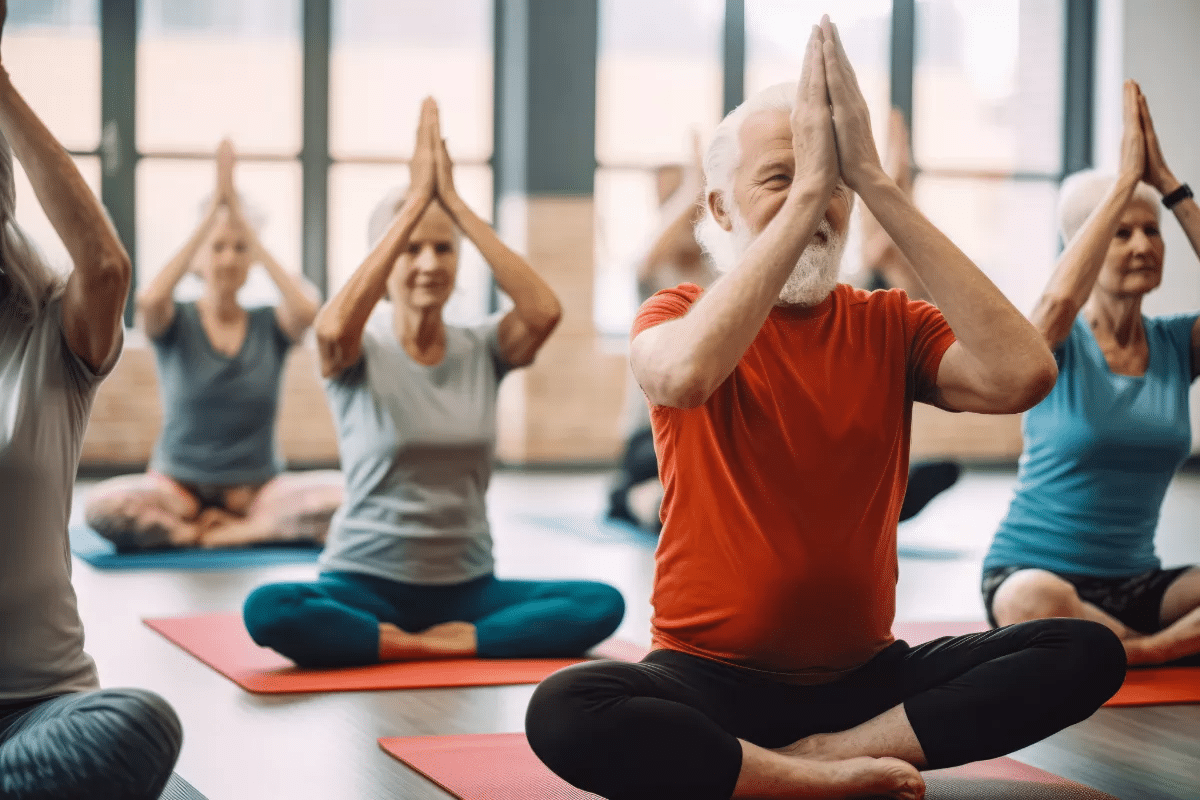
Yoga poses for elderly beginners. The best gentle positions to improve stability and protect against vital fall risks.
As we get older, keeping our bodies and minds healthy is key. Studies show that gentle yoga sequences can really boost seniors’ quality of life. Simple and safe yoga exercises help seniors stay balanced, move better, and feel better overall.
At Liv Hospital, we know how vital personalized care is. We make sure seniors get the right yoga poses for them. This helps them age healthier.
Key Takeaways
- Gentle yoga sequences improve balance and mobility in seniors.
- Simple yoga exercises can enhance mental well-being.
- Personalized yoga guidance supports healthier aging.
- Chair yoga is a safe and accessible option for elderly individuals.
- Regular practice of yoga can lead to improved overall health.
The Science-Backed Benefits of Yoga for Seniors
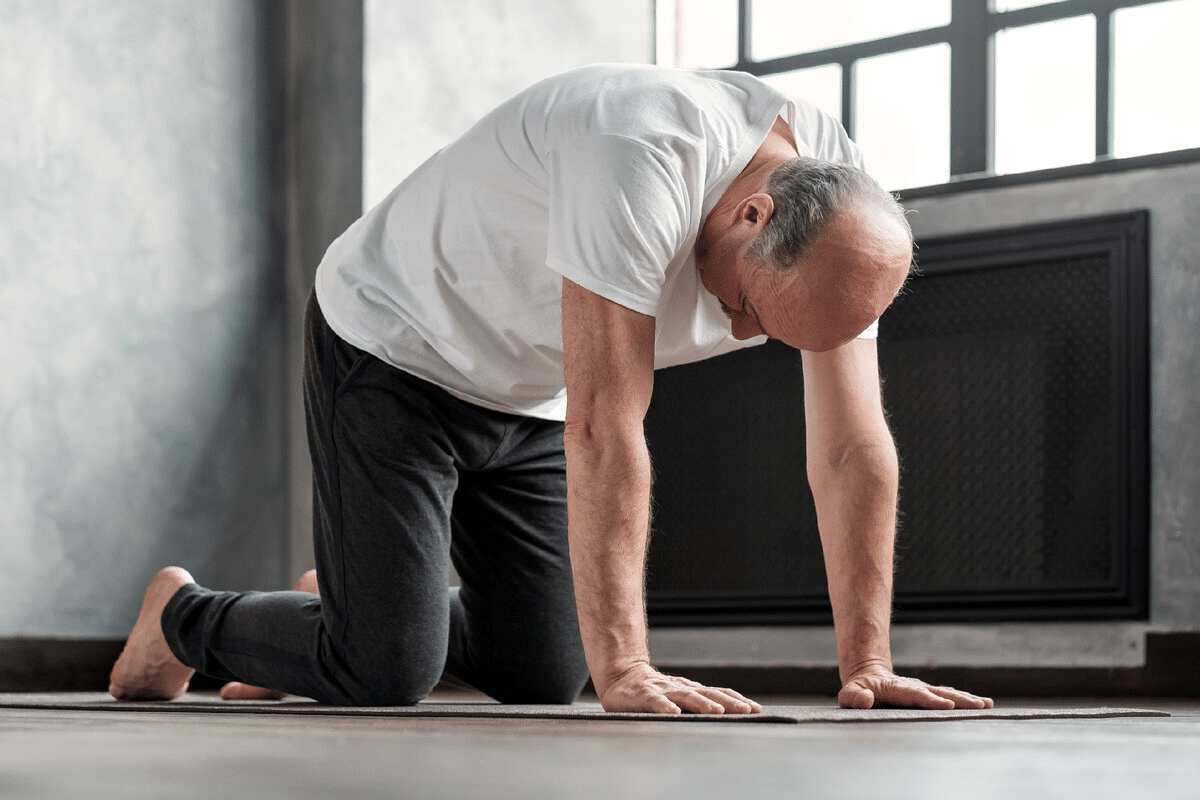
Research shows yoga greatly benefits seniors, improving their health and wellbeing. As we age, our bodies change, affecting our health and life quality. Yoga helps counteract these changes, studies say.
Studies have looked into yoga’s effects on seniors’ health. For example, a study in the Annals of Internal Medicine found yoga boosts walking speed and chair rising. These skills help reduce frailty and increase life span in older adults.
Research on Mobility and Balance Improvements
Yoga greatly improves mobility and balance in seniors. It strengthens muscles, boosts flexibility, and enhances balance, lowering fall risks. A study in the Journal of Gerontology showed yoga improves balance and mobility in older adults.
Effects on Mental Health and Cognitive Function
Yoga benefits seniors’ mental health and cognitive function too. It reduces anxiety and depression, improves mood, and may prevent cognitive decline. A study in the Journal of Alzheimer’s Disease found yoga enhances cognitive function in older adults with mild cognitive impairment.
Cellular Aging and Longevity Benefits
Recent studies have looked into yoga’s effects on cellular aging. Research in Psychoneuroendocrinology found yoga is linked to longer telomeres, a sign of healthy aging. Longer telomeres are associated with better health and longer life. “Yoga may be a valuable adjunct to traditional treatments for promoting healthy aging,” researchers concluded.
In summary, the scientific evidence supports yoga’s benefits for seniors. It improves mobility, balance, mental health, and may slow cellular aging. Yoga significantly enhances the quality of life for older adults.
Essential Preparations for Safe Senior Yoga Practice
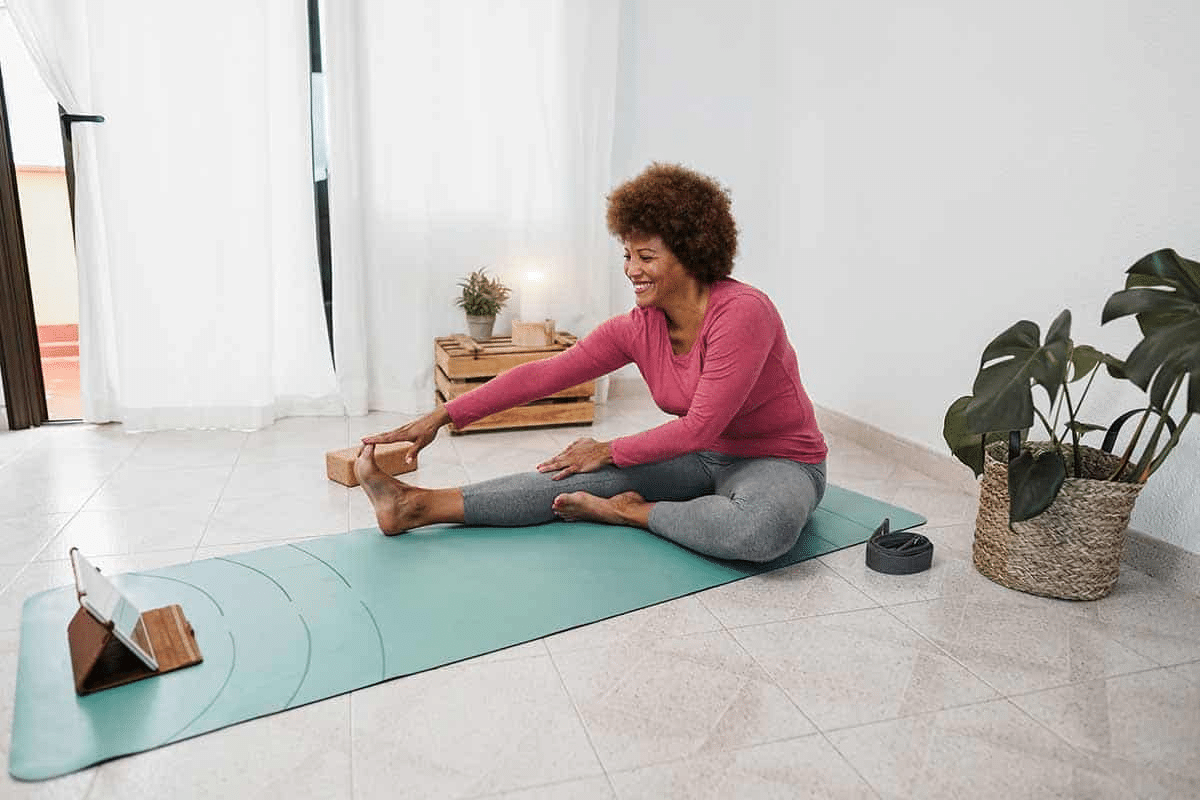
Before starting yoga, seniors need to take important steps for a safe and fun practice. “Yoga is not just about the physical postures; it’s about creating a harmonious balance between body, mind, and spirit,” says a renowned yoga expert. As we age, our bodies change, affecting flexibility, balance, and health. So, it’s key to prepare well for a yoga practice that’s both safe and beneficial.
Necessary Equipment and Props
Having the right equipment and props is vital for a senior’s yoga practice. Yoga mats offer cushioning and grip, lowering the risk of slipping or falling. Blocks, straps, and blankets help modify poses, making them more accessible and comfortable. For extra support, chairs or wall bars are very helpful.
Using props is not a sign of weakness but a smart way to practice yoga safely. As one yoga instructor notes, “Props can help seniors maintain proper alignment, reduce strain on joints, and deepen their practice.” For example, a block under the hand in a forward bend can lessen strain on the lower back.
Creating a Safe Practice Environment
Creating a safe practice environment is as important as having the right equipment. The space should be well-ventilated and free from distractions. Seniors should also make sure the floor is clear of any obstacles that could cause tripping or falling.
- Ensure good lighting to see the poses clearly.
- Use a non-slip floor or mat.
- Practice at a comfortable temperature.
Medical Considerations and Precautions
Before starting any new exercise routine, including yoga, it’s essential to consult with a healthcare provider, specially for seniors with existing health conditions. Certain conditions, such as high blood pressure, glaucoma, or recent injuries, may require modifications or precautions.
“Consulting with a healthcare provider before starting yoga can help seniors understand their limitations and avoid possible risks.”
For safe yoga practice, use support when needed, stay hydrated, and listen to your body to avoid injury. Seniors should be aware of their body’s signals and rest when needed.
Understanding Yoga Poses for Elderly: Modifications and Adaptations
Seniors starting yoga need to know how to change poses for safety. Yoga helps older adults with flexibility, balance, and mental health. But, it’s key to adjust poses for aging bodies.
Common Adaptation Techniques
Changing yoga poses for seniors involves a few main steps. First, we can make poses easier by reducing how far you go. For example, in a forward bend, you can stop when it feels right, keeping knees bent if needed.
Using support, like a chair or wall, is another way to stay stable. This helps a lot in poses that might be tricky.
Also, swapping hard poses for simpler ones is smart. Instead of trying to balance on one leg, you can stand on both with eyes closed. This helps improve balance without the risk of falling.
Using Props for Support and Stability
Props are super helpful in senior yoga, giving the support and stability needed. Things like chairs, blocks, straps, and blankets are great. A chair can help in standing poses or as a base for balance exercises.
Blocks can make poses easier by bringing the ground closer to your hands. This helps avoid straining your back and shoulders.
Using props makes yoga safer and lets seniors try more poses. This deepens their practice and brings more benefits from yoga.
Recognizing and Respecting Physical Limitations
It’s very important to adapt yoga for seniors by knowing and respecting their limits. This means being aware of health issues like arthritis or heart problems. It’s also key to listen to your body and adjust poses if you feel pain.
By understanding and respecting these limits, seniors can enjoy yoga that fits their needs. This promotes health, well-being, and a good relationship with their body.
Chair Yoga: The Perfect Starting Point for Senior Beginners
Chair yoga is great for seniors just starting out. It’s a safe way to try yoga. You can do it while sitting, which is good for those who have trouble moving.
Benefits of Seated Practice for Older Adults
Chair yoga helps seniors in many ways. It improves flexibility, balance, and strength. It also helps reduce stress and makes you feel more relaxed.
Key benefits include:
- Increased flexibility and range of motion
- Improved balance and reduced risk of falls
- Enhanced strength and endurance
- Better stress management and relaxation
- Improved overall physical and mental well-being
5-Minute Chair Yoga Warm-Up Sequence
Here’s a simple 5-minute chair yoga warm-up sequence for seniors:
- Seated Neck Stretch: Slowly tilt your head to the right, bringing your ear towards your right shoulder. Hold for 30 seconds and then switch sides.
- Shoulder Rolls: Roll your shoulders forward and backward in a circular motion. Repeat for 30 seconds.
- Chest Stretch: Place your hands behind you on the chair and gently lean back, stretching your chest. Hold for 30 seconds.
- Seated Twist: Twist your torso to the right, keeping your feet on the floor. Hold for 30 seconds and then switch sides.
- Wrist Extensions: Lift your hands off the armrests and extend your wrists, stretching your forearms. Hold for 30 seconds.
Transitioning Safely from Chair to Standing Poses
When moving from chair yoga to standing poses, safety is key. Here are some tips:
- Stand up slowly and hold onto the chair for support if needed.
- Take a few deep breaths to center yourself before moving into standing poses.
- Use a walking aid or assistance if you’re unsure about your balance.
- Start with simple standing poses like Mountain Pose (Tadasana) before moving into more complex poses.
By following these guidelines and practicing chair yoga regularly, seniors can enjoy the many benefits of yoga while minimizing the risk of injury.
Pose #1: Mountain Pose (Tadasana) for Improved Posture
Tadasana, or Mountain Pose, is a simple yet powerful yoga pose. It helps seniors improve their posture and overall well-being. This foundational standing pose is great for senior beginners. It promotes balance, stability, and good posture.
Step-by-Step Instructions
To practice Mountain Pose, follow these simple steps:
- Stand tall with your feet hip-width apart, ensuring your weight is evenly distributed on both feet.
- Engage your thigh muscles to support your body and maintain straight legs.
- Lengthen your spine, keeping it neutral and relaxed.
- Lift your chest and broaden your shoulders to promote good posture.
- Keep your arms by your sides with your palms facing forward.
- Gaze forward, keeping your head level and your chin parallel to the ground.
Health Benefits for Seniors
Mountain Pose offers numerous health benefits for seniors, including:
- Improved Posture: By strengthening the muscles that support the spine, Mountain Pose can help seniors maintain good posture, reducing the risk of back pain and other musculoskeletal issues.
- Enhanced Balance: Practicing Mountain Pose regularly can improve balance and stability, reducing the risk of falls.
- Reduced Stress: The calming effects of Mountain Pose can help reduce stress and promote relaxation.
Modifications for Different Mobility Levels
Mountain Pose can be modified to accommodate different mobility levels. For seniors with balance issues or mobility limitations, the following adjustments can be made:
- Practice Mountain Pose with your feet wider apart for added stability.
- Use a chair or wall for support if needed.
- If standing is not possible, a seated version of Mountain Pose can be practiced by sitting tall with your feet planted firmly on the ground.
Pose #2: Seated Forward Bend for Flexibility and Calm
The Seated Forward Bend is a gentle yet effective yoga pose for seniors. It helps improve flexibility and reduce stress. It’s a great addition to a senior’s yoga routine.
Step-by-Step Instructions
To practice Seated Forward Bend, follow these steps:
- Sit on the edge of a chair with your feet flat on the floor, hip-width apart.
- Inhale to lengthen your spine, maintaining a straight posture.
- Exhale and slowly fold forward, stretching your hamstrings and calves.
- Keep your knees slightly bent if necessary to avoid straining your back.
- Hold the pose for a few breaths, feeling the stretch in your lower back and legs.
- Slowly return to the upright position on an inhale.
Health Benefits for Seniors
Seated Forward Bend offers many health benefits for seniors, including:
- Improved flexibility in the hamstrings, calves, and lower back.
- Reduced stress and tension.
- Enhanced circulation to the upper body.
- Improved posture through stretching and strengthening of spinal muscles.
Modifications for Different Mobility Levels
To accommodate different mobility levels, consider the following modifications:
|
Mobility Level |
Modification |
|---|---|
|
Low Mobility |
Perform a gentle seated stretch without folding forward too deeply. |
|
Moderate Mobility |
Use a strap or towel to deepen the stretch if needed. |
|
High Mobility |
Fold forward fully, keeping the knees slightly bent. |
By adding Seated Forward Bend to their yoga practice, seniors can enjoy better flexibility, less stress, and overall well-being.
Pose #3: Gentle Warrior II for Strength and Stability
Gentle Warrior II is a foundational standing pose. It boosts strength, stability, and balance in seniors. This pose strengthens the legs, opens the hips, and improves posture.
Step-by-Step Instructions
To practice Gentle Warrior II, follow these steps:
- Stand with your feet wide apart, about 3-4 feet.
- Turn your right foot out 90 degrees, and your left foot in slightly.
- Bend your right knee over your right ankle, keeping your left leg straight.
- Stretch your arms out to the sides, parallel to the ground.
- Gaze over your right hand, keeping your spine long.
- Hold for a few breaths, then switch sides.
Health Benefits for Seniors
Gentle Warrior II offers many health benefits for seniors, including:
Improved Balance and Stability
This pose strengthens the legs and improves balance, reducing the risk of falls.
Enhanced Flexibility
It opens the hips and chest, improving flexibility and range of motion.
Strengthened Muscles
The pose strengthens the muscles in the legs, hips, and core.
|
Benefit |
Description |
|---|---|
|
Improved Balance |
Reduces the risk of falls by strengthening the legs and improving balance. |
|
Enhanced Flexibility |
Opens the hips and chest, improving flexibility and range of motion. |
|
Strengthened Muscles |
Strengthens the muscles in the legs, hips, and core. |
Modifications for Different Mobility Levels
For seniors with different mobility levels, Gentle Warrior II can be modified:
- For those with limited mobility, practice the pose with feet closer together or use a chair for support.
- For those with balance issues, keep the back foot slightly off the ground or use a block under the front foot.
- For more advanced practitioners, deepen the front knee bend or stretch the arms up.
Pose #4: Bridge Pose for Spine Health and Core Strength
Bridge Pose is a gentle backbend that strengthens the core and improves spine health. It’s a foundational yoga exercise that can significantly enhance the quality of life for seniors. It improves their posture, reduces back pain, and strengthens the muscles that support the spine.
Step-by-Step Instructions
To practice Bridge Pose, start by lying on your back. Your knees should be bent and feet flat on the floor, hip-width apart. Your arms should be by your sides with palms facing downwards.
As you inhale, slowly lift your hips towards the ceiling. Squeeze your glutes and lower back muscles. Keep your thighs parallel to each other and your feet firmly planted on the ground.
Hold this position for a few breaths, engaging your core and feeling the stretch in your chest. As you exhale, slowly lower your hips back down to the starting position.
Health Benefits for Seniors
Bridge Pose offers numerous health benefits for seniors, including:
- Improved spine health and flexibility
- Strengthened core muscles, which can help reduce back pain
- Enhanced posture through the stretching of the chest and strengthening of the back muscles
- Better balance and coordination due to the engagement of core and leg muscles
Regular practice of Bridge Pose can also contribute to improved overall physical stability and reduced risk of falls.
Modifications for Different Mobility Levels
For seniors with different mobility levels, Bridge Pose can be modified to suit their needs. For those with limited mobility, a supported Bridge Pose can be practiced by placing a yoga block or pillow under the sacrum for support.
For those who find it challenging to lift their hips, starting with a partial lift and gradually increasing the height as flexibility and strength improve is recommended.
|
Mobility Level |
Modification |
Benefits |
|---|---|---|
|
Low Mobility |
Supported Bridge Pose with a block or pillow |
Reduces strain on the lower back, provides support |
|
Moderate Mobility |
Partial Bridge Pose with gradual increase in lift |
Improves flexibility and strength gradually |
|
High Mobility |
Full Bridge Pose with engaged core and glutes |
Maximizes spine health and core strength benefits |
Poses #5-7: Gentle Twists, Legs Up the Wall, and Relaxation
We’re looking at three yoga poses great for seniors. These include gentle twists for the spine, Legs Up the Wall for better blood flow, and Corpse Pose for deep relaxation. These poses help seniors feel more flexible, less stressed, and overall better.
Seated Gentle Twist for Spinal Mobility
The seated gentle twist is great for keeping the spine flexible. Sit on a chair with your feet on the floor. Slowly twist your torso to one side, keeping your hips facing forward. Hold for a few breaths and then return to the center. Do the same on the other side.
This pose is key for keeping the spine flexible. It’s also good for balance and lowering fall risks.
Legs Up the Wall for Circulation
Legs Up the Wall is a pose that boosts blood flow and reduces leg swelling. Sit with your side against a wall. Gently swing your legs up onto the wall as you lie down. Your body should form an L-shape.
Stay in this pose for 5-10 minutes, breathing deeply. It’s known to reduce inflammation and improve blood flow, which helps seniors with circulatory problems.
Corpse Pose (Savasana) for Deep Relaxation
Corpse Pose, or Savasana, is a key yoga pose for relaxation. Lie on your back with arms and legs apart. Close your eyes and focus on your breath, letting your body relax fully.
This pose is great for seniors as it reduces anxiety and stress, improves sleep, and refreshes the body. It’s a simple yet effective way to end any yoga session.
15-Minute Daily Yoga Sequences for Senior Beginners
Adding yoga to your daily routine can greatly improve your life as a senior. A 15-minute yoga session can be split into three times a day. It includes breathing exercises and gentle movements to boost your health and happiness.
Morning Energizing Sequence
Starting your day with yoga can wake you up. Start with simple stretches and breathing exercises. This helps wake up your body. Some good exercises are:
- Neck stretches to improve flexibility
- Shoulder rolls to reduce tension
- Chest opens to enhance posture
Midday Mobility Sequence
After a busy morning, yoga in the afternoon keeps you flexible and mobile. Focus on gentle flows and stretches. Some examples are:
- Seated forward bends to stretch the back
- Leg raises to improve circulation
- Hip circles to maintain flexibility
Evening Relaxation Sequence
In the evening, yoga helps you relax and get ready for sleep. Use calming poses and deep breathing. Some good ones are:
- Legs up the wall pose to reduce swelling
- Corpse pose to relax the body
- Guided deep breathing to calm the mind
Incorporating Breathing Techniques
Breathing is key in yoga. Ujjayi breathing is calming, and Belly Breathing helps you relax. Practicing these can make your yoga better.
Conclusion: Embracing the Lifelong Benefits of Senior Yoga
Yoga brings many benefits to seniors, improving their health and life quality. It helps with mobility, balance, strength, and mental focus. Seniors can make yoga a part of their daily life.
Yoga can lower the risk of falls and help manage chronic conditions. It also boosts cognitive function. We suggest seniors start with simple poses and gradually move to more challenging ones.
Regular yoga practice can lead to a better life for seniors. It helps them stay independent and healthy. Yoga programs for seniors offer support and expert advice, tailored to their needs.
FAQ
What are the benefits of yoga for seniors?
Yoga helps seniors move better, balance, and feel mentally sharp. It boosts thinking skills, lowers stress, and improves overall health.
Are there any specific yoga poses suitable for seniors?
Yes, seniors can do poses like Mountain Pose, Seated Forward Bend, and Gentle Warrior II. Bridge Pose, Gentle Twists, Legs Up the Wall, and Corpse Pose are also good. These poses can be changed to fit different abilities.
Can seniors practice yoga if they have mobility issues?
Yes, seniors with mobility issues can do yoga. Chair yoga is a great choice, as it lets seniors practice while sitting or using a chair. They can also adjust poses to fit their physical needs.
What precautions should seniors take before starting a yoga practice?
Seniors should talk to their doctor before starting yoga, if they have health issues. They should also make a safe space for practice, use props, and know their limits.
How often should seniors practice yoga?
Seniors can do yoga every day, but gently and for a short time, like 15 minutes. Doing it regularly is important to see yoga’s benefits.
Can yoga help with age-related health issues?
Yes, yoga can help with health problems like osteoporosis, arthritis, and high blood pressure. It can also help sleep better, reduce stress, and improve health and happiness.
Are there any online resources available for senior yoga?
Yes, there are many online resources like YouTube channels and websites. They offer senior yoga videos, tutorials, and guided practices. Popular ones include yoga with Adriene for seniors and gentle yoga for seniors on YouTube.
How can seniors modify yoga poses to suit their needs?
Seniors can change yoga poses by using props like blocks, straps, or chairs. They can also adjust how hard or long they practice to feel comfortable.
Reference
National Center for Biotechnology Information. Evidence-Based Medical Guidance. Retrieved from https://www.ncbi.nlm.nih.gov/pmc/articles/PMC8341166/