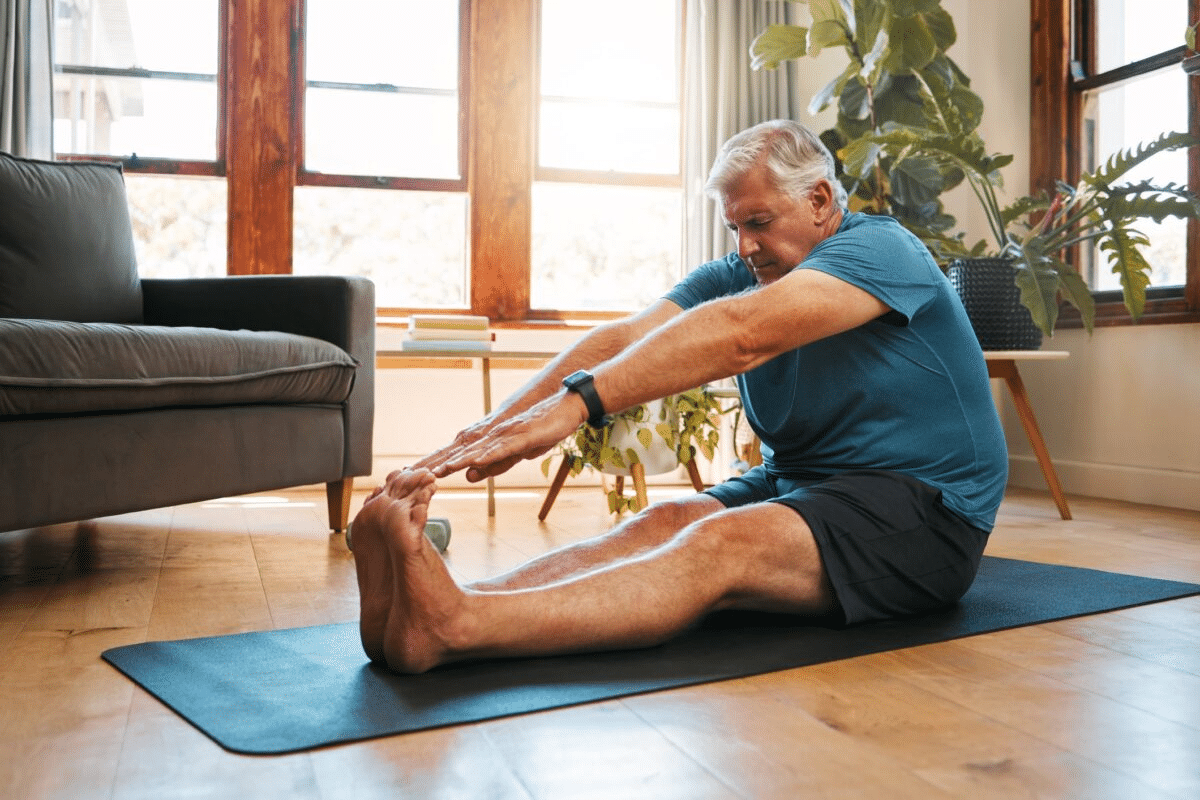
As we get older, keeping our flexibility and mobility is key to a good life. Traditional workouts can be tough for older adults with mobility issues. But, yoga stretches are a gentle, proven way to boost physical skills. They need little equipment and cost very little. Yoga stretches for seniors reduce pain. The best guide to loosening tight muscles and regaining vital ease of movement.
Studies show that yoga programs help older adults balance better, fall less, and feel mentally better. Chair yoga is a safe, effective way to get these benefits without worrying about injuries or falls.
Key Takeaways
- Gentle yoga stretches can improve balance and mobility in older adults.
- Chair yoga is a safe and accessible option for seniors with mobility constraints.
- Specialized yoga programs can reduce the risk of falls and enhance mental well-being.
- Yoga stretches require minimal equipment and low financial investment.
- Regular practice can lead to significant improvements in overall physical capability.
The Benefits of Yoga for Older Adults
Yoga is great for older adults, helping with both physical and mental health. As people get older, they might find it harder to move, balance, and feel mentally well. Yoga helps by being a complete practice that fits different health levels.
Research-Backed Health Improvements
Studies show yoga boosts balance and movement in those over 60. Reviews confirm it improves strength, flexibility, and lowers fall risks. It’s a top choice for older adults to get better physically.
- Improved Balance: Yoga boosts balance, cutting down fall risks, a big worry for seniors.
- Enhanced Flexibility: Regular yoga makes daily tasks easier by increasing flexibility.
- Strengthening: Yoga builds strength, focusing on the core and key muscles.
Physical and Mental Wellness Benefits
Yoga’s benefits aren’t just physical. It also helps with mental health. It lowers stress, lifts mood, and improves mental well-being. Yoga teaches mindfulness and relaxation, helping with anxiety or depression in older adults.
- Yoga cuts down stress and anxiety by teaching relaxation and mindfulness.
- It boosts mood and mental health by releasing happy hormones.
- Yoga fosters a sense of community, reducing loneliness when done with others.
Adding yoga to their lives, older adults can see real improvements in their quality of life. Whether in a class or at home, yoga is a flexible and rewarding activity for seniors.
Understanding Yoga Stretches for Seniors
Senior yoga is made for older adults. It includes gentle stretches and breathing techniques. These help with flexibility and relaxation.
As we age, our bodies change. This can affect how flexible and balanced we are. Yoga stretches for seniors help with these changes. They offer a low-impact way to stay healthy and feel good.
How Senior Yoga Differs from Regular Practice
Yoga for seniors is different because of aging. It’s not like regular yoga. Senior yoga:
- Uses gentle, low-impact stretches
- Includes props like chairs and blocks for support
- Focuses on breathing and relaxation
- Changes traditional poses to fit individual needs
This way, seniors can enjoy yoga’s benefits. They can get better flexibility, balance, and strength. And they can do it safely.
Hatha Yoga: An Ideal Approach for Seniors
Hatha yoga is great for seniors. It focuses on physical poses and breathing. It’s gentle and helps a lot.
- Helps with flexibility and balance
- Makes you relax and feel less stressed
- Improves your overall health and mind
Hatha yoga is slow and calm. It’s perfect for older adults. They can practice at their own speed. They can focus on their breath and how their body feels.
Consulting Healthcare Providers Before Starting
Older adults should talk to their healthcare providers before starting yoga. This step is key to making sure yoga is safe and good for them.
Important Health Considerations
Seniors need to check with their healthcare providers before starting yoga. Certain health issues, like high blood pressure or heart disease, might need special yoga practices.
It’s also important to tell healthcare providers about any medications or recent injuries. This helps them give advice that fits the individual’s health.
|
Health Condition |
Yoga Consideration |
|---|---|
|
High Blood Pressure |
Avoid inverted poses; monitor blood pressure regularly |
|
Heart Disease |
Consult a cardiologist; avoid strenuous poses |
|
Musculoskeletal Issues |
Modify or avoid poses that exacerbate the condition |
Discussing Physical Limitations and Goals
Seniors should talk about their physical limits and yoga goals with healthcare providers. This helps create a yoga plan that’s safe and works well for them.
Starting with a gentle chair yoga program is a good idea. Once they feel comfortable, they can move to more challenging poses with a qualified instructor.
By talking to healthcare providers, seniors can enjoy yoga safely. They can understand their health needs and physical limits better.
Getting Started: Essential Equipment and Space
Starting your yoga journey means knowing what you need for a safe and effective practice. Yoga for seniors is more than just poses. It’s about creating a space that’s comfortable, safe, and easy to access.
Recommended Props for Senior Yoga
Choosing the right props can make yoga better for seniors. Chairs, blocks, and straps are top picks. A chair helps with standing poses and balance. Blocks help reach the floor or keep poses right. Straps deepen stretches and boost flexibility.
For instance, using a chair can help seniors do many poses. They can start with simple ones and get to harder ones as they get stronger and more flexible. Props like chairs, blocks, and straps make yoga safer and more accessible for seniors.
Creating a Safe Practice Environment
It’s key to have a safe space for yoga, which is comfy and safe for seniors. The area should be clear of things that could trip you up. The floor should be easy to stand on, and there should be enough room to move.
Good lighting and a quiet, peaceful place also make yoga better. Seniors should practice in a room that’s not too hot or cold.
- Ensure the practice area is clear of obstacles.
- Use a non-slippery floor or mat.
- Maintain good lighting and a calm atmosphere.
- Practice at a comfortable temperature.
By paying attention to these details, seniors can make a space that supports their yoga. This way, they can enjoy all the good things yoga has to offer.
Preparing Your Body for Yoga Practice
As we age, getting ready for yoga is key to a safe and good experience. We’ll look at the important steps to get ready for yoga. This includes warm-up exercises and breathing techniques made for seniors.
Warm-Up Exercises for Seniors
It’s smart to do gentle warm-up exercises before yoga. Warm-up exercises boost blood flow and lower injury risk. Simple moves like marching, arm circles, or neck stretches work well.
Start with light cardio to raise your heart rate. Then, do dynamic stretches to move your joints. This gets your body ready for yoga poses.
Breathing Techniques for Beginners
Breathing techniques are a big part of yoga, calming the mind and body. Diaphragmatic breathing, or belly breathing, is great for newbies. It means breathing deeply into your belly, not just your chest.
To do diaphragmatic breathing, sit up straight. Put one hand on your belly and the other on your chest. Breathe in deeply through your nose, letting your belly rise. Your chest should stay the same. Breathe out slowly through your mouth, feeling your belly fall. This reduces stress and boosts oxygen.
Adding these breathing techniques to your daily life can make your yoga better. It helps you relax and lowers anxiety.
Effective Yoga Stretches for Seniors
Chair yoga is great for seniors to stay healthy and comfortable. As we get older, our flexibility and movement can slow down. It’s key to find easy exercises that we can do.
Yoga brings many benefits to older adults. It helps with flexibility, balance, and strength. By doing chair-based poses and upper body stretches, seniors can feel better overall.
Chair-Based Poses for Limited Mobility
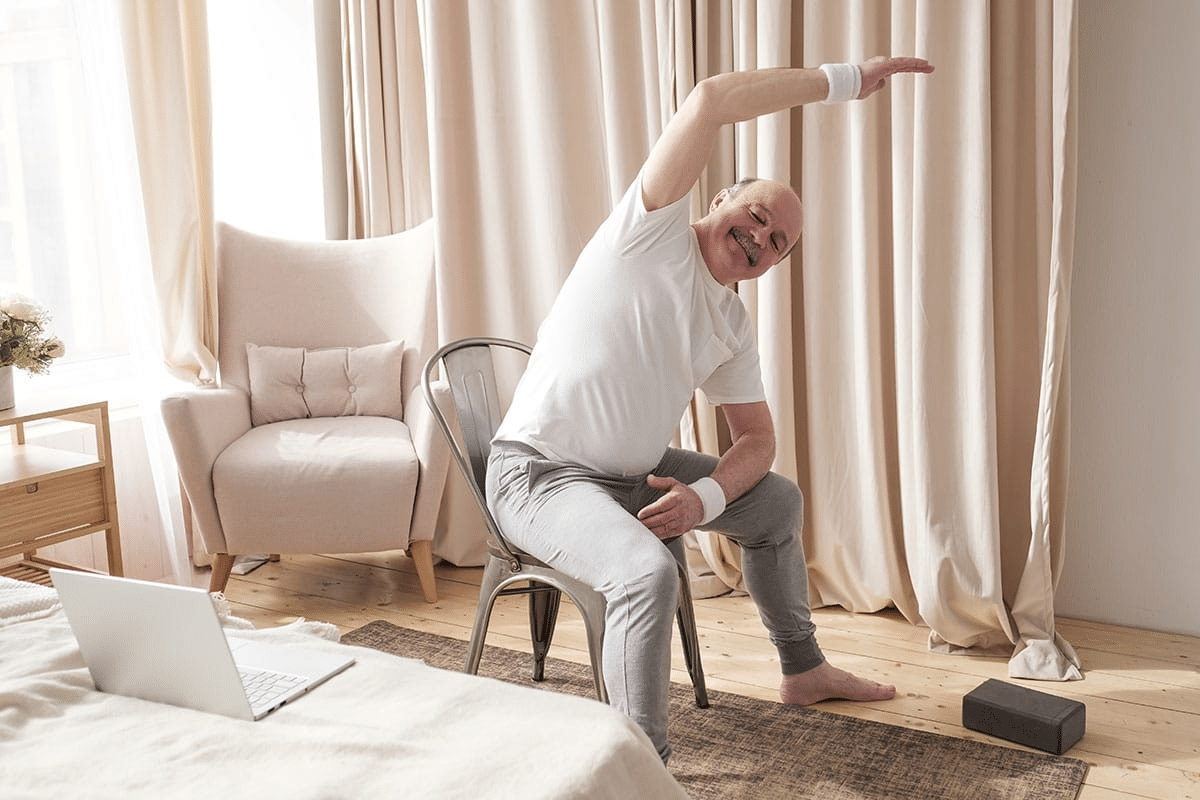
Chair yoga is perfect for seniors who move less easily. It lets them do yoga while sitting or using a chair for help. Some good chair poses are:
- Seated Forward Fold: This pose stretches the back and shoulders.
- Seated Twist: It helps improve flexibility and movement.
- Seated Leg Lifts: These strengthen muscles and boost blood flow.
Upper Body Stretches for Spine Health
Stretches for the upper body are key for a healthy spine and less pain. Some good stretches are:
- Shoulder Rolls: They help relax and loosen the shoulders.
- Chest Opens: This stretch improves posture and eases tension.
- Neck Stretches: They gently stretch the neck, easing stress and improving movement.
Adding these upper body stretches to their daily routine helps seniors. They can improve their posture, lessen pain, and live better lives.
Standing Yoga Poses for Balance and Strength
Standing yoga poses are great for older adults to improve balance and strength. As we get older, our balance and strength decrease. This makes us more likely to fall and get hurt. But, with the right changes and support, standing yoga can help seniors stay stable and confident.
Modified Standing Poses with Support
Seniors with balance or mobility issues need to modify standing yoga poses. Using a chair or wall for support can help prevent falls. It also lets them enjoy the benefits of the poses. Some good modified poses include:
- Supported Mountain Pose: Stand with feet hip-width apart and hold a chair for support. This pose helps with posture and balance.
- Chair-Assisted Tree Pose: Stand on one leg while holding a chair. This pose boosts balance and stability.
These modified poses not only improve balance but also strengthen the legs and ankles. This is key to preventing falls.
Balance-Enhancing Postures for Fall Prevention
Some standing yoga poses are great for improving balance and preventing falls. Practicing these poses regularly can make you more stable and reduce fall risks. Some important poses include:
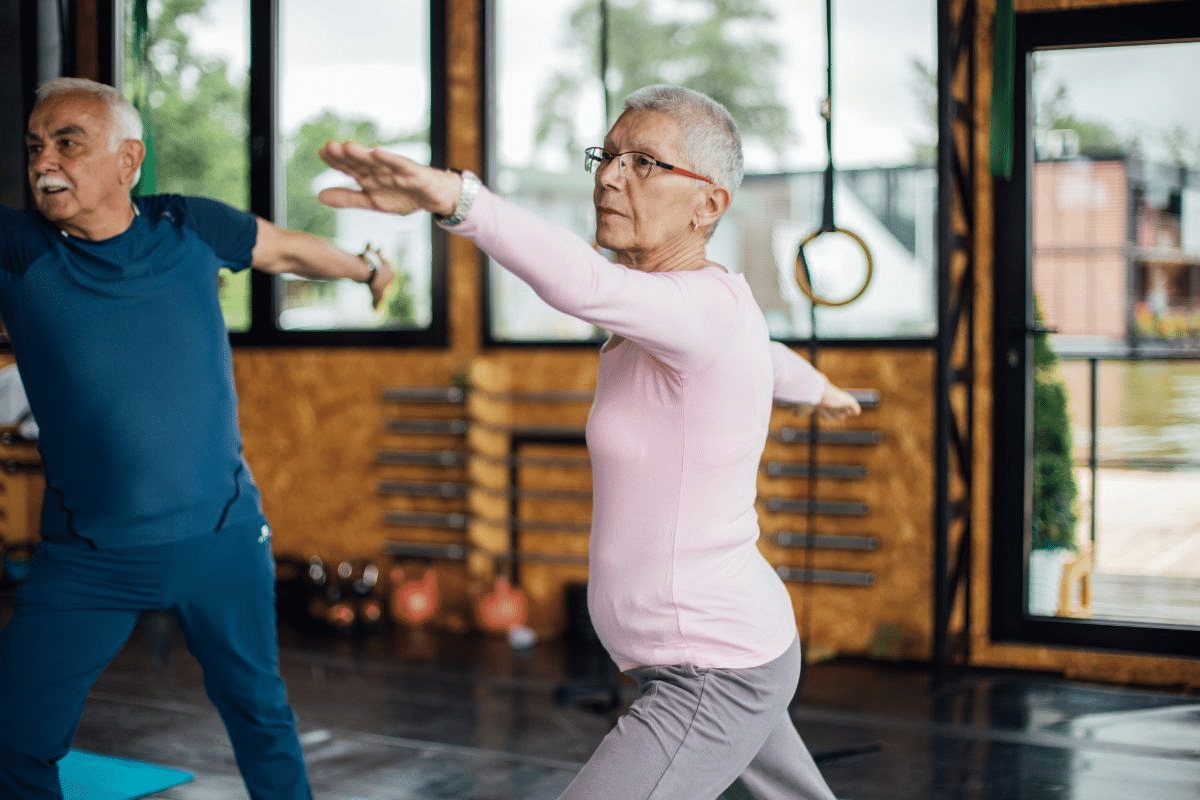
- Standing Warrior Pose: This pose strengthens the legs and improves balance. Stand with feet wide apart and turn one foot outwards.
- Supported Side Leg Lift: Hold onto a chair and lift one leg out to the side. This pose improves balance and strengthens the hips.
Yoga experts say that practicing standing yoga poses can greatly lower fall risks in older adults. It improves balance and strength.
“Yoga is not just about the physical postures; it’s about creating awareness and balance in the body, which is very beneficial for seniors.”
Seniors can enjoy better balance, strength, and well-being by adding these poses to their routine. It’s important to practice with a qualified instructor to stay safe and get the most benefits.
Floor-Based Gentle Yoga Stretches for Flexibility
Floor-based yoga is great for seniors to boost flexibility and ease stiffness. As we get older, moving around can become harder. Gentle yoga stretches on the floor can help with this.
Start with simple poses to improve flexibility and well-being. Adding these stretches to daily routines can greatly enhance movement and lessen pain.
Supine Poses for Back Health
Supine poses, lying on your back, are good for the back. They help ease spine tension and boost flexibility.
- Reclined Pigeon Pose: This pose stretches the hips and lower back, improving flexibility and easing stiffness.
- Supine Spinal Twist: Gently twisting the spine keeps it mobile and can prevent back pain.
Gentle Twists for Spinal Mobility
Gentle twists are key for keeping the spine flexible. They help prevent back pain and keep the spine moving well.
|
Pose |
Benefits |
|---|---|
|
Supine Spinal Twist |
Improves spinal mobility, reduces back pain |
|
Bharadvajasana (Seated Twist) |
Enhances flexibility, promotes detoxification |
Adding gentle twists to yoga can improve spinal health and flexibility for seniors.
Safety Considerations and Modifications
When it comes to yoga for older adults, safety is top priority. It’s important to know how to adjust poses for safety. We must teach seniors to listen to their bodies and respect their limits.
Changing yoga poses to fit physical needs is vital for a safe practice. We need to think about the special challenges seniors face. These include health issues, less flexibility, and balance problems.
Common Concerns for Senior Practitioners
Senior yoga practitioners often deal with unique challenges. Some common worries include:
- Joint pain and stiffness: Many seniors face joint pain or stiffness. Gentle stretches and modified poses can help manage this.
- Balance issues: Balance problems can lead to falls. Using props and practicing balance poses can help.
- Chronic health conditions: Conditions like hypertension, diabetes, and heart disease need special care in yoga practice.
Knowing these concerns helps seniors take steps to stay safe and enjoy yoga.
Adapting Poses for Physical Limitations
It’s key to adjust yoga poses for seniors’ physical needs. This might mean using props, changing poses, or skipping some. For instance:
- Using a chair for support in standing poses or as a seat for chair yoga.
- Modifying deep twists or bends to avoid strain on the spine or joints.
- Doing gentle, restorative yoga to relax and stretch without overdoing it.
We suggest seniors practice with a qualified yoga teacher. This teacher can offer personalized advice and adjustments.
Seniors should avoid pushing too hard and rest when needed. This way, they can enjoy yoga’s benefits while staying safe and happy.
Creating a Sustainable Yoga Routine
A good yoga routine can really help older adults feel better. It’s important to practice regularly. This way, you can get stronger, more flexible, and healthier.
To make a yoga routine that lasts, start small and grow. Begin with short sessions and make them longer as you get used to the poses.
Sample 15-Minute Daily Practice
Starting with a 15-minute daily practice is a great idea for seniors. Here’s a simple routine you can adjust to fit your needs:
- Warm-up (2 minutes): Gentle neck stretches and shoulder rolls.
- Breathing exercises (3 minutes): Focus on deep, controlled breathing.
- Chair-based poses (5 minutes): Include seated forward bends, chair twists, and leg raises.
- Balance exercises (3 minutes): Use a chair for support if needed.
- Final relaxation (2 minutes): Conclude with deep breathing and relaxation techniques.
You can change this routine to fit your comfort and how well you can move.
Progressive Approach to Building Strength
As you get more comfortable, you can make your practice harder and longer. Here’s how to do it:
- Slowly add 2-3 minutes to your practice each week.
- Try more challenging poses or hold poses longer.
- Include more movement, like flowing from one pose to another.
|
Week |
Practice Duration (minutes) |
Additional Poses/Intensity |
|---|---|---|
|
1 |
15 |
Basic chair poses |
|
2 |
17 |
Add simple standing poses |
|
3 |
20 |
Introduce gentle flows between poses |
|
4 |
22 |
Increase hold time for poses |
By slowly adding more to your practice, you can get stronger, more flexible, and enjoy yoga more.
Conclusion
Yoga for seniors brings many benefits, like better physical health and mental well-being. It can greatly improve their quality of life. By adding yoga to their daily routine, older adults can see big changes.
Chair yoga is great for anyone, needing just basic stuff and little setup. It’s perfect for seniors with mobility issues or health problems.
Yoga has lots of benefits for seniors. Starting or keeping up with yoga helps them stay healthy and mentally sharp. We suggest trying out the yoga stretches and poses we talked about. Also, talk to your doctor to make a yoga plan that’s right for you.
Yoga helps seniors live a healthier, more balanced life. We believe yoga will keep helping older adults stay well as they get older.
FAQ
What are the benefits of yoga for older adults?
Yoga helps older adults in many ways. It improves flexibility, balance, and strength. It also boosts physical and mental health. Regular yoga can make life better for seniors by reducing stress and helping them relax.
Is chair yoga suitable for seniors with limited mobility?
Yes, chair yoga is great for seniors with mobility issues. It lets people practice yoga while sitting or using a chair for support. This makes it safe and accessible for those with mobility problems.
What type of yoga is best for seniors?
Hatha yoga is a good choice for seniors. It’s gentle and focuses on physical postures and breathing. This makes it perfect for older adults.
Do I need to consult my healthcare provider before starting yoga?
Yes, talking to your healthcare provider before starting yoga is important. This is true if you have health conditions or physical limitations. They can help you find the right yoga and suggest how to modify poses for your needs.
What equipment do I need to practice yoga as a senior?
A yoga mat is a good start. Seniors might also use blocks, straps, and chairs for comfort and support. It’s also important to have a quiet, safe place to practice.
How can I prepare my body for yoga practice?
Start with gentle warm-ups and breathing exercises. Begin with simple movements and then move to more dynamic stretches. Focus on relaxation and flexibility.
What are some effective yoga stretches for seniors?
Chair-based poses, upper body stretches, and gentle twists are good for seniors. These poses help improve flexibility, balance, and physical wellness while being gentle on the joints.
Can standing yoga poses help improve balance and strength?
Yes, standing yoga poses can help seniors improve balance and strength. Modified poses with support can help reduce the risk of falls and improve physical stability.
How can I create a sustainable yoga routine?
Begin with a 15-minute daily practice and gradually increase the time and intensity. Being consistent and gradually improving is key to a lasting yoga practice.
Are there any safety considerations I should be aware of when practicing yoga as a senior?
Yes, listen to your body and practice safely. Be aware of joint pain, balance issues, and physical limitations. Adapt poses to ensure a safe and enjoyable practice.
Can I practice yoga if I have mobility issues or chronic health conditions?
Yes, yoga can be adapted for different needs and abilities. Talk to your healthcare provider and work with a qualified yoga instructor. They can help you create a practice that fits your physical limitations and health conditions.
How can I find gentle yoga videos for seniors on YouTube?
Search for “gentle yoga for seniors,” “chair yoga for seniors,” or “beginner yoga for older adults” on YouTube. Look for videos by experienced instructors who focus on gentle, therapeutic practices for seniors.
What are some beginner-friendly yoga stretches for flexibility?
Start with gentle stretches like neck stretches, shoulder rolls, and seated forward bends. Begin with slow, gentle movements. Gradually increase the depth and range of motion as you become more comfortable.
Reference
National Center for Biotechnology Information. Evidence-Based Medical Guidance. Retrieved from https://www.ncbi.nlm.nih.gov/pmc/articles/PMC8341166/